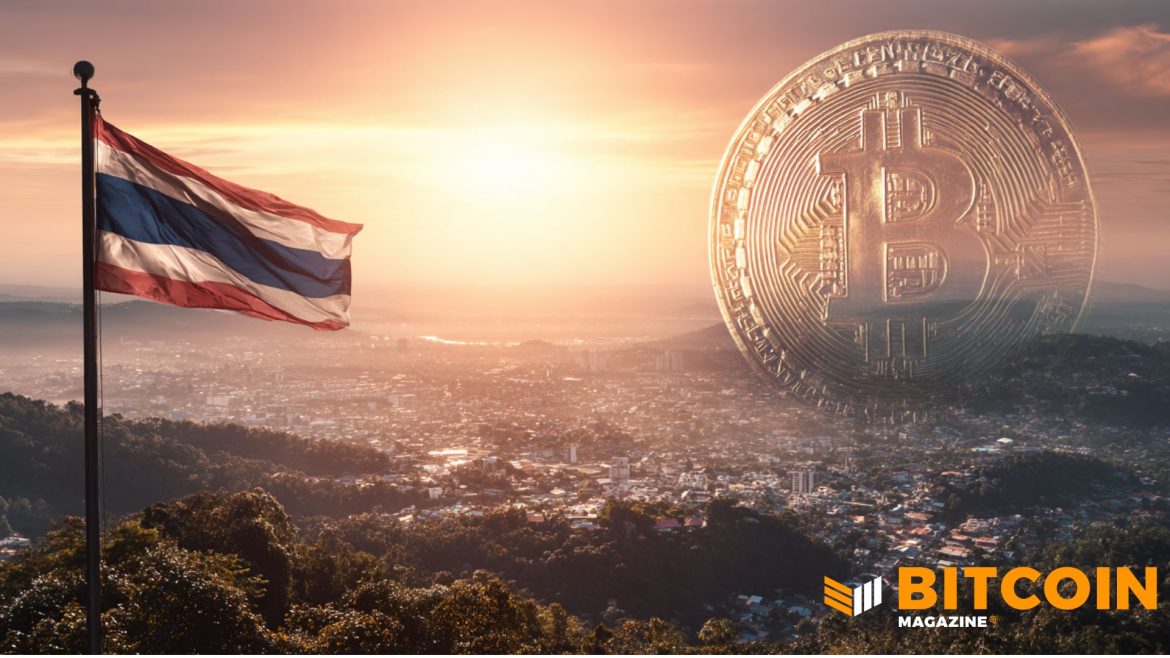
Thailand is taking a major step toward integrating digital assets into its regulated financial markets.
The country’s Cabinet recently approved a proposal allowing digital assets, including cryptocurrencies and tokens, to be used as underlying assets in the derivatives and capital markets. The decision reflects a growing recognition that digital assets are evolving beyond speculative instruments into a legitimate asset class capable of reshaping capital markets.
Nirun Fuwattananukul, chief executive of Binance Thailand, described the move as a “watershed moment” for the country’s capital markets. “It sends a strong signal that Thailand is positioning itself as a forward-looking leader in Southeast Asia’s digital economy,” he told the Bangkok Post.
Under the plan, the Securities and Exchange Commission (SEC) will amend the Derivatives Trading Act to formally recognize digital assets as reference assets for derivatives contracts.
This expansion allows licensed operators to offer contracts tied to crypto, like futures and options, under appropriate regulatory supervision.
“The expansion of permissible goods and variables is designed to support emerging asset classes such as digital assets,” said SEC Secretary-General Pornanong Budsaratragoon. “This will strengthen recognition of crypto as an asset class, enhance portfolio diversification, and improve risk management for investors.”
The SEC is developing detailed rules and licensing frameworks for derivatives brokers, exchanges, and clearinghouses to accommodate crypto-based products. It is also working with the Thailand Futures Exchange (TFEX) to finalize contract specifications that align with the risk characteristics and practical uses of digital assets in trading.
In addition to cryptocurrencies, the amendments reclassify carbon credits as “goods” rather than “variables,” allowing the launch of physically delivered carbon credit futures alongside cash-settled contracts. This initiative aligns with Thailand’s climate change and carbon neutrality objectives, as outlined in the draft Climate Change Act.
Thailand’s bitcoin ETF push
Thailand recently finalized a major regulatory framework aimed at positioning itself as a bitcoin hub in Asia. The country’s SEC said its rolling out rules for bitcoin and crypto exchange-traded funds (ETFs), futures trading, and tokenized investment products, creating a formal legal foundation for digital assets under existing derivatives law.
The SEC approved crypto ETFs in principle and is now setting operational guidelines covering custody, liquidity, and cooperation between asset managers and licensed exchanges.
Investors could allocate up to 4–5% of diversified portfolios to digital assets, with domestic ETFs trading on the Stock Exchange of Thailand, allowing exposure without direct crypto ownership.
Thailand approved its first spot bitcoin ETF in 2024 and plans to expand to other cryptocurrencies, including ether and diversified baskets.



 The list of best choices in the crypto market must also include Ethereum as it is the second biggest cryptocurrency. Ethereum is one of the answers to “Which is the best crypto to invest right now?” as it still remains one of the formidable drivers of innovation in the crypto space. Ethereum introduced smart contracts and provided the most crucial resources to create decentralized applications. The advancements in Ethereum such as protocol upgrades have elevated security and scalability of the blockchain.


 The top performers in the crypto space will also face competition from Cardano blockchain. The ADA token might become another investor favorite in crypto for its utility in designing the future of blockchain. Cardano adopts a research-driven approach to blockchain development with the support of scalable and secure infrastructure. The Cardano blockchain has been making significant improvements in network capabilities alongside ensuring rapid expansion of its ecosystem.