Bernstein sees Robinhood’s crypto business shifting toward infrastructure as new products like prediction markets and perps gain ground.


 Live Chat
Bernstein sees Robinhood’s crypto business shifting toward infrastructure as new products like prediction markets and perps gain ground.
The US Commodity Futures Trading Commission (CFTC) announced legal action against Utah officials after the state’s attorney general said he would sue to compel Kalshi and its affiliates to return up to $60 million in profits allegedly obtained illegally.
In a Monday filing in the US District Court for the District of Utah, lawyers for the commodities regulator sued the State of Utah and its Attorney General Derek Brown a week after officials announced legal action against prediction market platform Kalshi and its affiliates over allegedly illegal betting.
According to the CFTC, Utah was attempting to bypass congressional intent to “federally preempt state law” by “restrict[ing] the functioning of CFTC-registered exchanges.” CFTC Chair Michael Selig has been claiming for months that the regulator has “exclusive jurisdiction” over prediction markets, leading to several lawsuits between state and federal authorities.
“The event contracts targeted by Utah are ‘swaps’ under the federal [Commodity Exchange Act], and the exchanges that offer these event contracts for trading are CFTC-regulated Designated Contract Markets [DCMs],” said the lawsuit. “Utah’s efforts to prevent a CFTC-regulated DCM from offering CFTC-approved financial products intrude on the exclusive federal scheme Congress designed to oversee United States commodity derivatives markets.”
Kalshi spokesperson Jacki McGavick told Cointelegraph in response to the Utah lawsuit:
“As a national derivatives market overseen by the CFTC, Kalshi answers to federal law, and no single state should have a veto over it.“
The case is another dispute between federal and state authorities over prediction markets that may be resolved only by a Supreme Court decision. In September, New Jersey officials petitioned the high court to weigh in on their case against Kalshi, similar to other lawsuits pending in Michigan, Ohio, Kentucky, Nevada, Massachusetts, Wisconsin and New York. As of Tuesday, the Supreme Court has not announced whether it will hear arguments in the case.
Related: NBA names Kalshi, Polymarket preferred exchanges, signs CFTC deal

Chicago improved to 5-2 with a 30-24 victory over New England on Thursday night, extending its winning streak to two games. Seattle (3-3) has lost two straight, including a 17-14 overtime defeat at Denver. The Seahawks host undefeated Kansas City in Week 7 before facing the Bears, who get some extra prep time after the TNF appearance.
The early Week 8 prices establish a baseline ahead of the remaining Week 7 games, with several matchups positioned for potentially meaningful shifts as the schedule unfolds.
Kansas City enters Week 7 undefeated but holds only a narrow advantage over Denver in their upcoming AFC West showdown. Minnesota is also unbeaten, yet Detroit is favored in their NFC North matchup. Both markets will be worth monitoring after the Chiefs face Seattle and the Lions host Green Bay.
Elsewhere, Atlanta–Tampa Bay and Las Vegas–New York are priced almost evenly, leaving little separation between the teams. Baltimore–Buffalo is another market to watch, particularly as the Ravens navigate Lamar Jackson’s injury situation.
Week 7 results and updated injury reports could reshape these early prices. We’ll track the most significant changes as the Week 8 board develops.
San Francisco continues to lead Kalshi’s Super Bowl LXI winner market at 16%, followed by Kansas City (11%) and Buffalo (10%). The 49ers and Chiefs have each gained one percentage point in Kalshi’s displayed change column, while the Bills have slipped two points.
Chicago is the standout mover among the leading contenders, climbing four points to 7% following its strong start to the season. Baltimore, Jacksonville, and the Rams are also priced at 7%, with Seattle next at 6%. The Rams have fallen three points, while Baltimore has declined two.
The NFL MVP market remains a two-man race at the top, with Buffalo quarterback Josh Allen narrowly leading San Francisco’s Brock Purdy, 27% to 26%. Patrick Mahomes is a distant third at 8%, followed by Trevor Lawrence (6%), Joe Burrow (5%), and Jordan Love (5%).
Allen has gained two points, Mahomes and Burrow have declined three, and Love has gained two points. Both futures markets remain sensitive to weekly results. We’ll see some shifts based on what happens in Week 7.

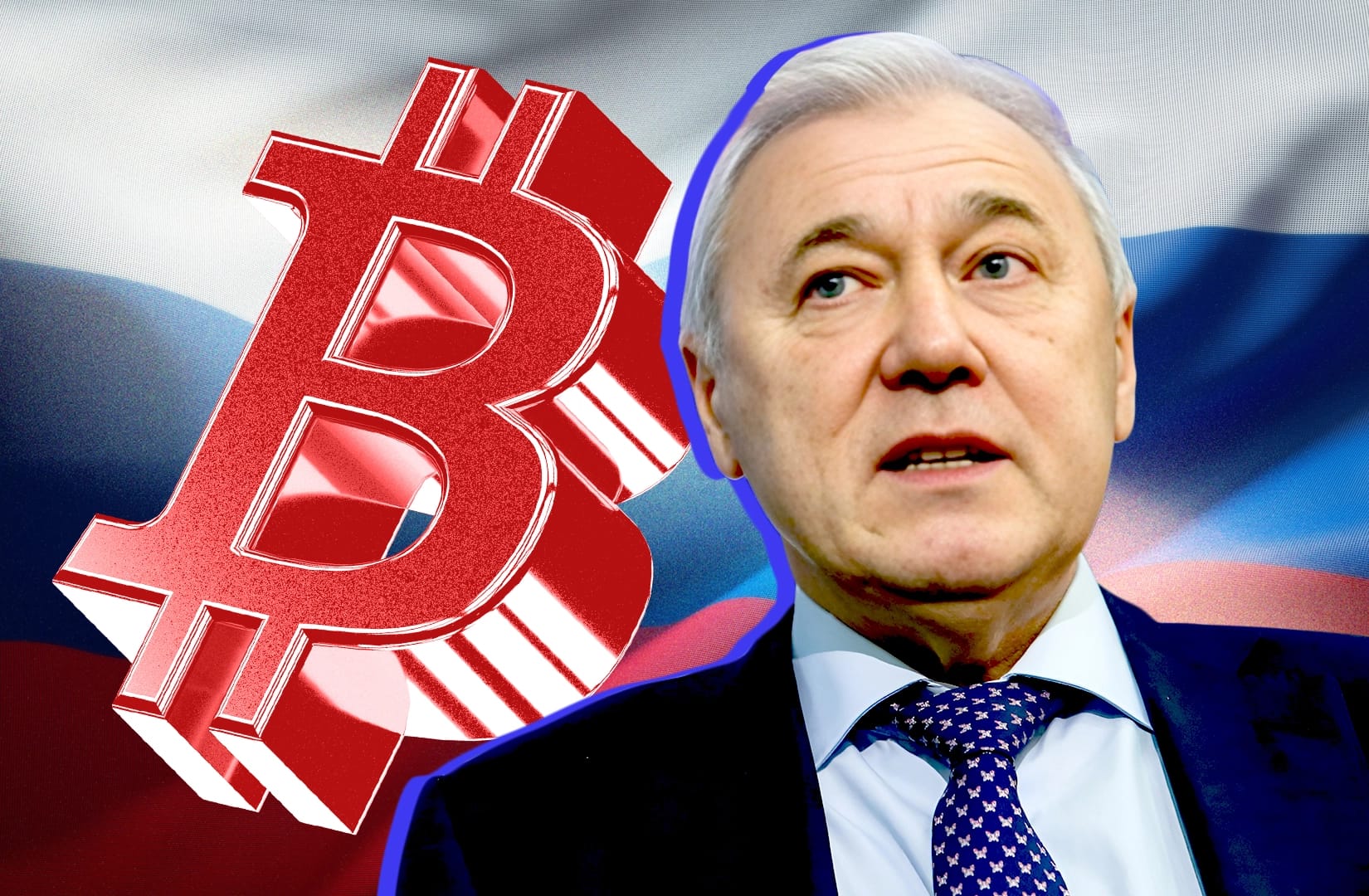
Russia’s central bank is rapidly widening the list of firms allowed to trade crypto, as the country’s two biggest lenders prepare to sell Bitcoin and other coins to ordinary customers before the end of the year.
The Bank of Russia added a 17th company, Prosto LLC, to its register of crypto exchange providers on Thursday, according to a notice on the regulator’s website. The register had four members when it opened on 6 October. The separate register of digital depositories, which record who owns which coins, now has eight.
The registrations put into practice a law “On Digital Currencies and Digital Rights”, which took effect on 1 September and brings crypto trading inside Russia’s regulated financial system for the first time.
Sberbank and VTB, Russia’s largest state-controlled banks, were among the first five digital depositories approved on 6 October, the central bank said. VTB was also listed as a crypto exchange provider that day. Sberbank joined the exchange register on 12 October, Interfax reported.
Holding both statuses lets a bank buy and sell crypto in its own name and keep the record of clients’ holdings. Exchange providers can trade digital currencies for their own account outside organised venues, while depositories record and transfer the assets and give clients access to the addresses where they are held, according to the central bank.
VTB’s broker carried out its first stablecoin deals for corporate clients on 6 October, settling them through accounts at its new digital depository, the bank said.
“We expect to open access to digital currency trading for a broad range of investors through VTB My Investments and directly through the bank’s exchange in November and December 2026 respectively,” Vitaly Sergeichuk, VTB’s deputy president and chairman of the management board, said, according to Interfax.
Sberbank plans to launch its first crypto products on 1 December through apps its customers already use, though the timing depends on the regulations being ready, Interfax reported. The bank is already testing Bitcoin, Ether and USDT trades in its app, CoinDesk reported.
The new rules draw a sharp line between retail and professional investors.
Non-qualified investors will be able to buy only the most liquid cryptocurrencies, up to 300,000 roubles, or about $3,800, a year through any one intermediary, and only after passing a test, the central bank said in July. Qualified investors must also pass the test but can buy and sell any cryptocurrency without a limit.
Using crypto to pay for goods and services inside Russia remains banned.
Exporters and importers, however, can use crypto for cross-border settlements without restrictions, either through intermediaries or directly from any type of wallet.
Sberbank moved first on that front. On 1 September it launched crypto payments for companies engaged in foreign trade, with wallet-to-wallet transfers taking a couple of minutes, no minimum payment and an average cost of 0.3%, first deputy chairman Alexander Vedyakhin said, according to Interfax.
The service followed a central bank pilot that had run under an experimental legal regime since September 2024, Vedyakhin said.
The two state banks are not alone. T-Technologies, the parent of T-Bank, has registered its units Atomyze as a depository and T-Invest Lab as an exchange provider.
A string of newly formed companies have since joined the exchange register, central bank records show. MTS Bank has said it plans to launch basic crypto services in the fourth quarter, Interfax reported.
Banks and other licensed institutions can join the registers through a simplified procedure that takes one working day, according to the central bank.
Firms already on the registers have until 1 September 2027 to bring their operations fully in line with the law, the central bank said.
From 1 July 2027, Russian residents will be allowed to trade crypto only through registered intermediaries, the regulator said, which would effectively end peer-to-peer trading settled through Russian bank accounts. Authorities plan to introduce penalties for unlicensed crypto intermediaries from the same date, mirroring those for illegal banking.
Kyle Pare is a reporter for DL News. Have a tip? Contact Kyle at kyle@dlnews.com.
Scheduled replacement can let two keys overlap. Suspected exposure makes that overlap a security decision, not just a way to avoid downtime…. Read the full story at The Defiant

Solana activated Alpenglow on mainnet on Oct. 21 at slot 459,653,000, replacing TowerBFT with a consensus design that targets about 150 milliseconds to finality. Under the new protocol, confirmed and finalized become the same state.
At the National Securities Clearing Corporation (NSCC), multilateral netting cuts the value of equities payment obligations by an average of 98%.
Alpenglow shortens the time until a transaction becomes irreversible, and netting reduces the amount of money participants must move to complete trades.
The first phase of Solana’s Alpenglow upgrade, Votor, has validators exchange votes directly and aggregate them into certificates, which allows finalization in one or two voting rounds. Transaction execution, the Solana Virtual Machine, and fee mechanics stay as they were.
The second phase, Rotor, handles block propagation and remains unscheduled.
Solana’s documentation says production applications read mostly at the confirmed level, and that every confirmed block has historically finalized.
The gain concentrates in workflows that wait for full finality before releasing assets or recognizing settlement.
Solana’s documentation cites 12.8 seconds for TowerBFT finality at the older 400-millisecond slot time. Solana cut slots to 200 milliseconds on Oct. 9. Applying TowerBFT’s documented 32-slot finalization rule to that slot time gives a nominal 6.4-second baseline, rather than a measured end-to-end settlement time.
NSCC acts as central counterparty for eligible equities trades, guaranteeing qualifying obligations and offsetting purchases and sales among participants so residual payments settle.
The Depository Trust & Clearing Corporation (DTCC) reports the 98% average reduction in payment value and $608 trillion of equity transactions processed in 2025.
The figure covers payment obligations and is separate from margin, regulatory capital, and peak intraday funding. It also reflects a market structure with central clearing, participant agreements, and risk management.
NSCC settles on T+1, the gap between trade date and settlement date, which differs from the time a system takes to process a payment.
Solana’s delivery-versus-payment program shows that both parties fund separate escrow accounts, a settlement authority signs the exchange, and both legs execute atomically.
Applications are told to recognize settlement when the transaction is finalized, and the documentation separates network finality from finality under the parties’ legal arrangements. Faster finality shortens the last step, and the parties must source and commit the assets beforehand.
A sensitivity model assumes strictly sequential settlements, identical transactions, and instant reuse of funds, isolating latency as a measure separate from institutional savings.
From the nominal 6.4-second baseline to 0.15 seconds, the theoretical turnover multiplier is 42.7 times when consensus time is the full cycle and 10.6 times with half a second of other processing. It falls to 3.9 times with two seconds and 2.2 times with five, and to about 1.1 times with 60 seconds.
Against the 12.8-second baseline, the same steps give 85.3, 20.5, 6.9, 3.5 and 1.2 times.
Custody checks, funding transfers, compliance reviews and signatures are the usual sources of non-consensus delay, so the value of faster consensus depends on what holds capital back.
A turnover multiplier measures how often funds can cycle through serial settlements. It is separate from reductions in broker collateral or clearinghouse margin.
The Bank for International Settlements warned in its 2023 blueprint that atomic settlement can raise liquidity demands unless liquidity-saving mechanisms accompany it. Real-time gross settlement raised funding needs relative to deferred net settlement in the same way.
A December 2025 BIS working paper simulated an auction-based mechanism on payment-system data from Peru, South Africa, the Southern African regional system and Switzerland.
It found liquidity savings of 2.6% to 12.2%, with the auction succeeding on average 79% of the time.
Settling every trade the moment it executes can also leave fewer outstanding obligations to offset. A design that preserves netting might batch compatible transfers into short programmable windows and then finalize quickly, with the window length set by matching rates, intraday liquidity and tolerable delay.
DTCC announced on July 15 that tokenized DTC-held securities had moved through live production transactions with more than 30 firms, covering Treasury and equity delivery-versus-payment, securities lending, collateral pledging and central-counterparty margin workflows.
DTCC used Besu and Canton. Its Tokenization Hub describes a voluntary service for eligible DTC participants under a December 2025 SEC no-action authorization.
Solana’s September data, with $18 billion in stablecoin supply, about $4 billion of tokenized-stock trading against $684 million of tokenized-equity supply, and $78 billion of DEX volume, predates Solana’s Alpenglow.
The upgrade also removes validator votes from blocks, so transaction-count comparisons across Oct. 21 need to exclude votes on both sides.
If on-chain markets add enforceable offsetting, intraday credit and settlement rules before the residual transfer, the combination becomes the point.
With a hypothetical $10 billion of gross obligations and 90% netting, $1 billion remains to settle, and two seconds of other processing yields a 6.9 times turnover ceiling against the older baseline.
The offset ratio is a design assumption that depends on two-way order flow, institutional credit, custody, and usable cash-equivalent settlement assets.
If institutions prefund each trade and settle it separately, with obligations unoffset, Solana’s finality yields a theoretical gain of about 1.2 times against the older baseline once 60 seconds of other processing is counted.
Against the recent baseline, the gain is 1.1 times, and gross liquidity needs stay the same. Retail and crypto-native applications could grow in that case while institutional securities clearing adopts the technology more slowly.
Observed mainnet finality, end-to-end settlement times, residual obligations against gross flows, peak prefunded liquidity, and legal finality will show which path Solana follows.

Layer 2 scaling solutions help blockchains like Ethereum process more activity without forcing every transaction to happen directly on the base chain.
Ethereum’s main network is secure and decentralized, but blockspace is limited. When demand rises, fees increase and users can get priced out. Layer 2s address this by moving transaction activity to scaling systems that sit around Ethereum while still using it for settlement, security, data posting, or verification.
The most important Layer 2 designs today are rollups. Rollups process transactions off-chain, bundle them together, and post data or proofs back to Ethereum. This makes transactions cheaper and faster while keeping a connection to Ethereum’s trust foundation.
The platform tracks tokenized securities ownership and transfers, linking to Malaysia’s RENTAS+ system to settle corresponding payments in central bank money.

On Monday, the Hyperliquid Policy Center (HPC) filed a comment letter supporting the U.S. Securities and Exchange Commission’s (SEC) proposed Regulation Crypto Assets, urging the regulator to adopt the rule with five refinements.
According to HPC, the proposal could give developers long-sought clarity on when US securities laws apply to tokens, but it also argued that gaps around the safe harbor, secondary trading, and state preemption could leave projects with little reason to build in the US.
The SEC proposed Regulation Crypto Assets in August, building on a March interpretation of how securities laws apply to token distributions. This also included airdrops, a marketing strategy that was widely used during DeFi summer in 2020 when prominent crypto companies would gift free tokens to users to incentivize liquidity, platform activity, and decentralize project governance.
Regulation Crypto Assets would create two exemptions for token offerings:
· A startup exemption of up to $5 million over four years
· A fundraising exemption of up to $75 million in any 12-month period.
Additionally, a new safe harbor would provide a clear legal off-ramp, officially confirming when a token has become independent enough to no longer be classified as an investment contract subject to strict SEC rules.
Joseph Hall, a partner at Davis Polk & Wardwell, wrote in a September op-ed for Bloomberg Law that the SEC’s proposal still leaves uncertainty because it builds on the Howey test, a legal standard used to determine whether a transaction qualifies as an investment contract.
HPC pointed to the same test as the root of the problem.
According to Hyperliquid, the current draft of the SEC’s Regulation Crypto Assets will not deliver the certainty the SEC intended. It has thus asked the SEC to consider five key changes:
· Write the SEC’s March airdrop analysis into the final rule text.
· Address resales and intermediary status directly.
· Allow projects to certify that their token was never tied to an investment contract.
· Fold the SEC staff’s buyback guidance into the final rule or adopting release.
· Make federal preemption of state registration requirements durable.
Speaking with DeFi Rate, Amir Forouzani, co-founder and CEO of Puffer Labs, noted that the stronger point in Hyperliquid’s letter is that the company focuses on “what comes next.”
“Institutions need clear rules for trading and confidence that those rules remain workable as networks evolve,” Forouzani said. “Builders need certainty while developing those networks, too.
“The SEC has an opportunity to connect these pieces and give onchain markets a predictable path from launch to adoption, with clear accountability and investor protections throughout.”
Hyperliquid has asked the SEC to treat an airdrop as not involving an “investment of money” when the network is already functional, eligibility depends on the recipient’s own contributions, and the distribution is not a capital raise, regardless of when it is announced. It said such airdrops may be recurring or programmatic.
The argument is that a user who earns tokens by using a network, running a validator, supplying liquidity, or voting in governance has not funded the project or put money at risk. HPC also wants steps such as connecting a wallet, signing a claim transaction, or completing sanctions screening confirmed as not counting as payment, and for the same analysis to apply to past airdrops.
“If projects are becoming more selective about airdrops, I see that as a reassessment of what incentives can realistically achieve,” Forouzani said.
He noted that an airdrop’s success can be measured months after distribution through protocol activity, contributions, and governance participation.
Qubic says 87.1% of the drained QU remains immobilized on its network, while MEXC froze the account receiving the rest…. Read the full story at The Defiant


