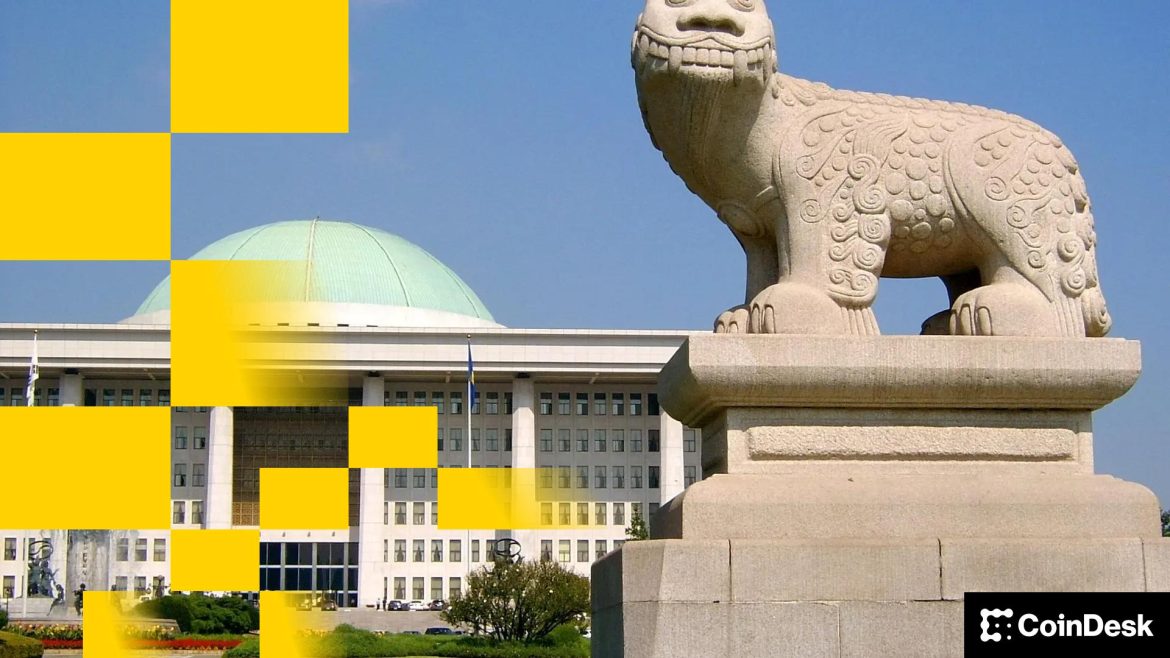
South Korea’s long-awaited Digital Asset Basic Act (DABA), a sweeping framework meant to govern crypto trading and issuance in one of Asia’s most active digital asset markets, has been delayed amid disagreements among regulators over stablecoin issuance.
The most significant disagreement centers on who should have the legal authority to issue KRW-pegged stablecoins, according to a Korea Tech Desk article. The Bank of Korea (BOK) argued that only banks with majority (51%) ownership should be permitted to issue stablecoins. It said financial institutions are already subject to stringent solvency and anti-money-laundering requirements and therefore the only ones in position to ensure stability and protect the financial system.
The Financial Services Commission (FSC), which oversees financial policy-making, is more flexible. It acknowledged the need for stability, but warned that a strict “51% rule” could stifle competition and innovation, blocking fintech firms with the technical expertise to build scalable blockchain infrastructure from participating, according to the report.
The FSC cited the European Union’s Markets in Crypto-Assets regulation, in which most licensed stablecoin issuers are digital asset firms rather than banks. It also pointed to Japan’s fintech-led yen stablecoin projects as an example of regulated innovation.
The deadlock highlights a broader global debate over whether banks or fintech firms should control fiat-backed stablecoins, a decision that could shape competition, innovation and monetary oversight.
The ruling Democratic Party of Korea (DPK) also opposes the BOK’s 51% rule, a Korea Times article reported last week.
“A majority of participating experts voiced concerns about the BOK’s proposal, with many questioning whether such a framework could deliver innovation or generate strong network effects,” DPK lawmaker Ahn Do-geol said. “It is also hard to find global legislative precedents in which institutions from a specific sector are required to hold a 51%.”
He said the BOK’s stability concerns could be mitigated through regulatory and technological measures, a view the lawmaker added, “is broadly shared among policy advisors”.
Foreign-issued stablecoins are also another key sticking point. According to an earlier draft of the government proposal prepared by the FSC, foreign-issued stablecoins would be allowed in South Korea if they are licensed and have a branch or subsidiary in the country. That would require issuers such as Circle, which issues USDC, the world’s second-largest stablecoin, to establish a local presence for the token to be legally used in the country.
The regulatory deadlock is expected to delay the bill’s passage until at least January, with full implementation now unlikely before 2026, according to AInvest. South Korea’s digital assets act marks a significant shift in a country that for nine years banned crypto, a stance that its financial watchdog began to soften earlier this year.







 We have introduced the new “AI Pro” learning plan as we add new courses and certifications on AI on our platform. In this year’s Christmas sale, you will get a discount of 40% on the AI Pro learning plan and capitalize on its various benefits for a career in artificial intelligence. Our online Christmas sale welcomes you to step into the world of AI with unlimited access to all our AI courses in the AI Pro learning plan. You will also get unlimited access to all
  The most comprehensive and recommended learning plan that we have to offer you this Christmas is our Premium learning plan. The amazing Christmas discount of 40% on the Premium learning plan will help you get unlimited access to all our learning materials at low prices. You will get all the benefits of the Standard and AI Pro learning plans with our Premium learning plan, as well as additional benefits. It is the most reliable package that you can leverage to prepare for a career in blockchain, web3, or AI.
 The 101 Blockchains Christmas Sale 2025 will also offer a 40% discount on all our accredited certification programs. You will find 16 professional certifications on our platform, spanning various domains, including blockchain, web3, AI, fintech, and IoT. We have introduced three new certifications this year: the
  You will get a 40% discount on all our learning plans and accredited certifications in the year-end sale. This is an opportunity for you to gain unlimited access to courses and certifications that you want for professional training and career growth.