


Germany’s opposition to Chat Control highlights growing concerns about surveillance, encryption, privacy, and the future of online digital freedom.
The debate over the future of the internet is no longer confined to technologists, policymakers, or privacy activists. It is becoming a mainstream political and societal question: what kind of digital systems should people be expected to live under?
Last week, Germany’s data protection authorities called for a definitive end to proposals commonly referred to as “Chat Control,” warning against creating infrastructure that could enable indiscriminate mass surveillance while defending the importance of end-to-end encryption.
The significance of this moment extends far beyond a single legislative debate and more clearly reflects a growing recognition that the architecture of digital life is no longer neutral. The systems people use every day to communicate, transact, organise, create, and belong increasingly shape not only online behaviour, but power itself.
The Internet Runs on Extraction
For years, the dominant economic model of the internet has revolved around observation.
To participate online often means accepting systems that monitor behavior, profile relationships, track location, analyse interactions, and collect vast amounts of personal data. Surveillance is not simply an accidental byproduct of modern platforms; in many cases, it has become deeply embedded within the business model itself.
Users are asked to consent through cookie banners, permissions, and privacy notices that are often impossible to meaningfully negotiate or reject. Participation increasingly comes at the cost of exposure.
Now, artificial intelligence is raising the stakes further because the same behavioral data used to optimise advertising and recommendation systems is increasingly being used to train models, automate decisions, influence visibility, and shape the information people encounter online.
This is why debates around encryption and digital privacy matter far beyond technical circles. They are ultimately debates about agency, trust, autonomy, and the relationship between individuals and the systems surrounding them.
Privacy is Not About Secrecy
One of the persistent misunderstandings in digital policy debates is the idea that privacy exists in opposition to safety, accountability, or social participation.
In reality, privacy is what allows people to participate with dignity.
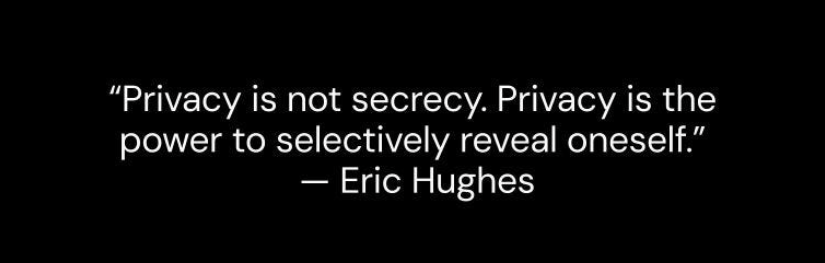
People should be able to communicate securely without assuming constant observation. They should be able to prove eligibility without exposing their entire identity, make payments without permanently broadcasting financial history, and join communities without surrendering ownership of their relationships and data to centralised platforms.
Privacy is not about hiding wrongdoing. It is about preserving boundaries, proportionality, and personal agency within digital life. That is increasingly difficult in environments where surveillance capabilities continue to expand while transparency and user control remain limited.
Why Germany Matters
Germany occupies a uniquely important place in these conversations.
Its political and cultural sensitivity toward surveillance, data protection, and civil liberties is deeply shaped by historical experience. Questions around digital rights and state or corporate overreach are not treated as abstract technical matters, but as societal ones with real historical weight.
Berlin adds another layer to that backdrop.
The city has long been associated with hacker culture, open-source experimentation, independent media, art, political activism, and alternative visions of technology. It remains one of Europe’s most important meeting points for people questioning how digital systems should be designed and who they should ultimately serve.
That makes Berlin a fitting place to explore one of the defining questions of this era: Can technology evolve in a direction that increases human agency rather than reducing it?
Beyond Speculation
Public conversations around Web3 are still frequently dominated by speculation, volatility, and financial narratives. But underneath that noise sits a more important provocation: what if the internet did not need landlords?
At its best, Web3 is not simply about tokens or markets. It is about building systems in which users can hold their own keys, identity, permissions, reputation, and assets, rather than permanently renting access from centralised platforms.
The technologies already exist in various forms:
- end-to-end encryption
- decentralised identity
- zero-knowledge proofs
- proof of personhood primatives
- decentralised storage
- self-custody
- open protocols
The challenge now is not merely a matter of technical capability. It is usability, governance, accessibility, and whether these systems can mature into something ordinary people can realistically use in everyday life. Because if privacy-preserving systems remain too difficult, too fragmented, or too niche, most users will continue to choose convenience over control.
Why These Conversations Matter Now
The debate around Chat Control demonstrates that the future of digital society is no longer a theoretical discussion reserved for niche communities. Questions around surveillance, encryption, identity, platform power, AI, and digital rights are rapidly becoming some of the defining political and technological issues of the coming decade.
https://medium.com/media/8da66c2b58d67c670ec51cf9e4e9012c/href
In a nutshell, the internet is entering a legitimacy crisis.
People increasingly understand that while digital platforms have connected the world, they have also concentrated extraordinary power over communication, behaviour, visibility, and participation itself. The challenge now is not simply building new technology. It is deciding what values digital systems should embody moving forward.
That is precisely why gatherings that bring together technologists, artists, researchers, builders, and cultural thinkers matter. Not because they have all the answers, but because the questions themselves are becoming impossible to ignore.
Web3 Summit 2026 takes place in Berlin on June 18–19 as part of Berlin Blockchain Week, bringing together developers, researchers, artists, philosophers, and builders exploring what digital freedom could realistically look like in practice and whether it can move from principle to usable reality.
https://medium.com/media/f861d4edc567cbcbbeaf50d797566c80/href
Get tickets now: https://web3summit.com/tickets/
Holding BTC? No problem, get crypto tickets: https://tickets.web3summit.com/
Germany’s Push Against Chat Control Shows Why Digital Freedom Matters was originally published in Web3 Foundation on Medium, where people are continuing the conversation by highlighting and responding to this story.


