Mirae Asset reportedly plans to use the South Korean crypto exchange as a hub for tokenized assets, stablecoins and digital finance.
The CBDC limit expires at the end of 2030, though there was little chance that a Fed digital currency would have been executed by then. There’s been limited appetite at the central bank, where its previous leadership — even before the arrival of Trump’s newest Fed chair, Kevin Warsh — had long said that such an effort would require backing from the White House and congressional authorization. There’s never been wide support for a CBDC in Congress.
But the idea — strongly opposed by the crypto industry for its potential to compete with privately issued stablecoins — has been pursued in other jurisdictions, such as Europe and China, and it became a popular political target for U.S. politicians. So Republicans managed to slip it into the unrelated housing legislation, after previously trying to include it in a range of bills including the Foreign Intelligence Surveillance Act.
Despite the overall housing bill’s popularity, Trump took an unexpected, last-minute stand against signing it, for which he’d previously scheduled a ceremony and had a stage erected. He declared that he wouldn’t sign anything until lawmakers approved a bill that would impose new proof-of-citizenship and identity checks on voters — an effort without sufficient current support to pass in Congress.
Morning Minute is a daily newsletter written by Tyler Warner. The analysis and opinions expressed are his own and do not necessarily reflect those of Decrypt. And check out our new daily news show covering all of the top stories in 5 minutes, downloadable on Apple Pod or Spotify.
GM!
Today’s top news:
🏛️ Vanguard, Crypto’s Last Big Holdout, Is Hiring a Head of Digital Assets
Vanguard, the roughly $11T asset manager that spent years telling clients it wouldn’t touch crypto, posted its first-ever Head of Digital Assets role. The job calls for an executive to build a multi-year digital-assets roadmap covering tokenization, stablecoins, custody, and blockchain settlement, and to represent the firm with regulators.
For the most crypto-skeptical name in traditional finance, staffing a senior role dedicated to the space is a real shift. And Vanguard’s resistance wasn’t passive. When BlackRock, Fidelity, and Franklin Templeton rushed into spot Bitcoin ETFs in early 2024, Vanguard refused to even let clients trade them on its brokerage, calling Bitcoin an immature asset class inconsistent with its long-term philosophy. That stance only began to soften last December, when it started allowing brokerage clients to trade third-party crypto funds.
It’s just the latest sign that all the old walls are falling down. Institutional adoption is fully here. Now let’s see if Vanguard’s user base actually wants crypto exposure…
🔒 Zcash Jumps 10% as Tachyon Upgrade Nears a Fix for Its Counterfeiting Scare
Zcash climbed more than 10% on Tuesday, briefly reclaiming $500 for the first time since early June, after developers reported progress on a mathematical proof that its upcoming shielded pool is free of hidden counterfeiting bugs. The move retraced overnight alongside the broader crypto selloff.
The catalyst was Project Tachyon, Zcash’s scaling and privacy overhaul. Founder Zooko Wilcox said the team is close to formally proving that its new “Ironwood” shielded pool contains no undetectable counterfeiting vulnerabilities, the same class of flaw behind June’s Orchard disclosure. That earlier bug, a four-year-old soundness issue, was patched within days and appears never to have been exploited, but Zcash’s privacy model made it impossible to cryptographically prove no counterfeit coins were ever created, which sent ZEC down more than 40% in two days. Ironwood introduces a fresh shielded pool and a migration path that lets users move funds out of Orchard while proving no hidden inflation occurred, and it’s scheduled to deploy this month, with AI-assisted verification compressing work that once took years into weeks.
Beyond the counterfeiting proof, Tachyon aims to scale private transactions to thousands per second, a throughput leap the community likens to Solana’s Firedancer, while also improving quantum readiness by removing onchain data a future quantum attacker could harvest. Privacy, scale, and quantum resistance is quite the combo in 2026. Now the market awaits full confirmation that the earlier bug was not exploited and participants can fully look forward…
Corporate Treasuries & ETFs
Meme Coin Tracker
Start every day with the top news stories right now, plus original features, a podcast, videos and more.
Franklin Templeton has completed its acquisition of 250 Digital, the crypto investment firm spun out of CoinFund in January 2026, and used the closing to launch a new institutional business line called Franklin Crypto.
The deal, first announced in April, marks one of the most concrete moves by a major legacy asset manager to build a dedicated crypto operation from within.
250 Digital came into existence at the start of 2026 as a standalone entity carved out of CoinFund Management, bringing with it a team built around liquid crypto strategies and institutional-grade portfolio construction.
Christopher Perkins, who leads the firm, will now head Franklin Crypto. Seth Ginns, 250 Digital’s chief investment officer, will carry that title into the new division. Both spent years at CoinFund before the spinout and bring deep roots in the institutional digital asset world.
The new Franklin Crypto unit is aimed at pensions, sovereign wealth funds, and large asset allocators that want exposure to digital assets through regulated structures. Its strategy spans liquid token markets, venture exposure, and structured products tied to blockchain infrastructure.
One of the more striking details of the transaction is how it was paid. Franklin Templeton used BENJI tokens — the on-chain representation of its Franklin OnChain U.S. Government Money Fund — as part of the acquisition consideration.
That makes this deal among the first major M&A transactions in financial services to be settled using tokenized fund shares rather than cash or conventional securities.
BENJI tokens give holders exposure to a regulated U.S. money market fund recorded on a public blockchain. Franklin Templeton has spent years building out that infrastructure, and using it as M&A currency signals that the firm views its tokenization stack as a live commercial tool, not a proof of concept.
Franklin Templeton CEO Jenny Johnson has been direct about her view of blockchain’s threat to traditional finance — she has argued that blockchains put pressure on Wall Street’s fee structures, not just its technology.
That posture runs through the firm’s recent moves: filing for a Bitcoin ETF years before institutional demand caught up, launching ETFs that reinvest stock dividends into Bitcoin, and now acquiring a crypto-native team to run an institutional operation at scale.
The 250 Digital acquisition is the most structural step yet. Rather than wrapping crypto exposure inside an ETF or a fund sleeve, Franklin Templeton is building a division with its own leadership, its own investment philosophy, and a mandate to go after the institutional market head-on.
With over $1.5 trillion in assets under management, Franklin Templeton’s full commitment to a dedicated crypto unit sends a signal to the rest of the asset management industry. The firm is not treating digital assets as a side product.
It is staffing, acquiring, and deploying capital as if crypto is a permanent fixture in institutional portfolios.
CFTC staff issued release 9252-26 on Friday, giving designated contract markets a no-action path to convert existing perpetual-style digital commodity futures into true perpetuals, advancing the agency’s buildout of a regulated US crypto derivatives market.
CFTC staff issued a no-action letter Friday enabling designated contract markets to convert existing perpetual-style digital commodity futures into true perpetual futures, the latest piece of regulatory plumbing in the agency’s construction of a domestic crypto derivatives market.
The letter, release 9252-26, was announced via the CFTC’s official X account. It allows DCMs holding perpetual-style contracts, which carry multi-year expiry dates rather than an open-ended structure, to relist them as true perpetuals without triggering full re-certification under Regulation 40.3. The practical effect is that exchanges already running the funding-rate mechanism on long-dated futures can drop the expiry and migrate open interest into the genuine perpetual structure the CFTC approved in May.
A true perpetual futures contract has no expiry. Instead of converging on a settlement date, it uses a periodic funding rate, typically paid between long and short holders, to keep the contract price anchored to the spot price of the underlying asset. Perpetual-style futures, the workaround US venues had used since at least December 2025, mimic that economic function through a long-dated cash-settled contract, usually with a 10-year maturity and a daily funding adjustment.
Cboe announced bitcoin (PBT) and ether (PET) continuous futures planned to begin trading December 15, 2025, subject to regulatory review, with a 10-year expiration at listing and a daily cash adjustment. That structure gave institutional participants a regulated proxy, but it was not the native perpetual structure that dominates offshore crypto derivatives trading.
Today’s no-action letter bridges the two. DCMs can now submit conversion plans without going through the full 40.3 case-by-case review that the CFTC’s May 29 policy statement on perpetual contracts prescribed for new perpetual listings on asset classes beyond bitcoin.
The CFTC has moved in a concentrated burst. On May 29, the agency approved KalshiEX’s BTCPERP contract, the first true perpetual futures product to receive Commission approval and list on a domestic DCM. The order was accompanied by the policy statement setting the Regulation 40.3 review standard for future applicants and a separate action clearing Coinbase Financial Markets to route customers to its offshore Deribit affiliate’s perpetuals as foreign futures.
Three days later, Kalshi filed to list perpetual futures on 12 altcoins, following the bitcoin approval with the first broad altcoin perp slate submitted for Commission review under the new 40.3 framework.
Today’s conversion-path letter adds a fourth piece: relief for incumbents already operating perpetual-style products, so they do not have to build a parallel listing from scratch to offer the true perpetual structure.
CME Group CEO Terry Duffy offered the incumbent view, calling US crypto perpetual futures “a disaster waiting to happen,” citing excessive leverage and retail risk.
CME has not announced plans to list a perpetual contract. Duffy’s framing positions CME’s existing crypto futures suite, which uses standard expiry and lower leverage, as the more conservative alternative in the regulated US perp debate.
KINGSTOWN, St. Vincent and the Grenadines, June 4th, 2026, Chainwire
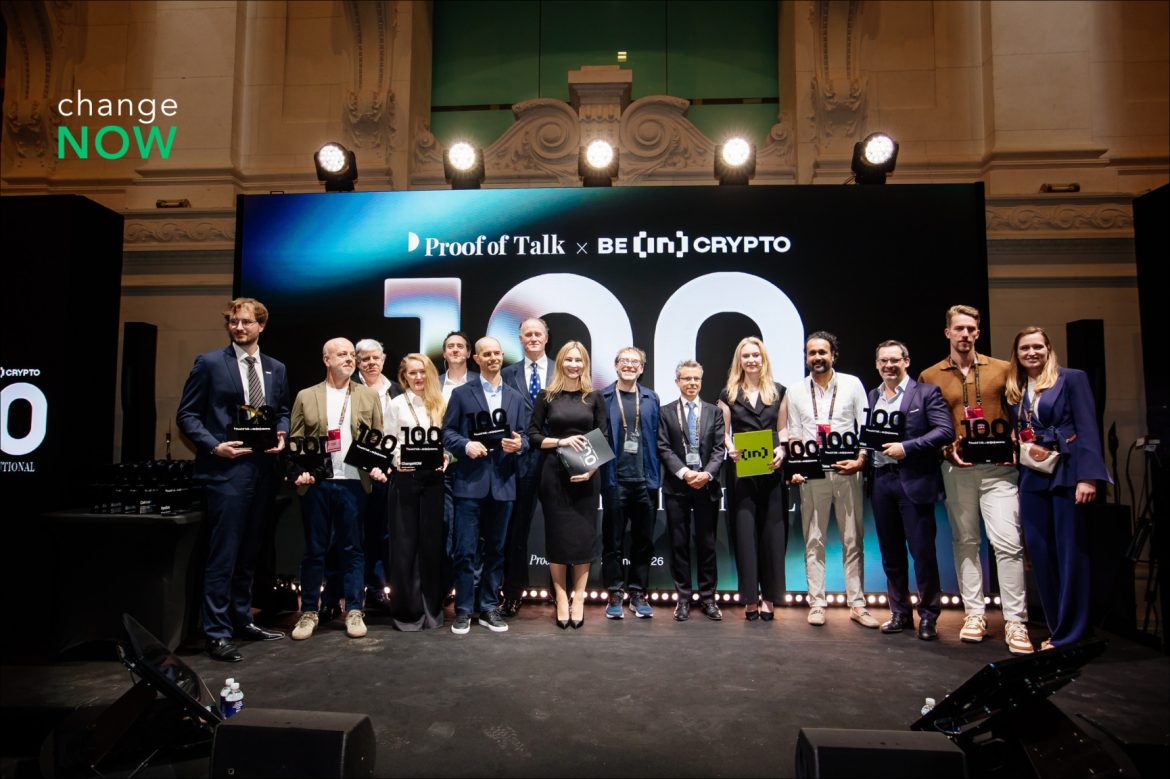
ChangeNOW, a non-custodial crypto management platform extending beyond exchange services with a full suite of B2B solutions for businesses in the digital asset space, is pleased to announce that it has been named “Best Digital Assets Fintech” at the BeInCrypto x Proof of Talk Institutional 100 Awards 2026. The award, which honors the businesses influencing institutional cryptocurrency adoption worldwide, was given out at the actual ceremony, which took place live at Proof of Talk, the Louvre Palace in Paris.
About the BeInCrypto Institutional 100 Awards
The BeInCrypto x Proof of Talk Institutional 100 is one of the most credible and rigorous independent media award programmes in the digital assets space. The awards, which cover 24 competitive categories across six pillars: Regulation & Governance, Capital Markets & Infrastructure, Retail to Crypto Bridge, Digital Assets, Tokenization & On-Chain Finance, and Enterprise Blockchain, are assessed using a two-stage process that includes blind scoring by an independent Expert Council of leaders in traditional finance and digital assets after proprietary quantitative screening using on-chain data and company disclosures.
With a global audience of 7–11 million monthly readers across 26 languages and a B2B community of over 20,000 verified professionals (70% of whom operate at C-level) a win at the BeInCrypto Institutional 100 carries significant weight across the digital finance industry.
ChangeNOW received the Best Digital Assets Fintech nomination in the Retail to Crypto Bridge category alongside Revolut, a European neobank. This award recognizes platforms that provide exceptional service at the intersection of traditional finance and the crypto economy.
ChangeNOW the Best Digital Assets Fintech Winner
ChangeNOW initially is a non-custodial cryptocurrency exchange that was established in 2017 with the goal of making it easy and accessible for everyone to trade digital assets. It serves eight million people globally and supports over 1500 digital assets.
Today its robust infrastructure spans both retail and business use cases. Alongside its web platform, iOS and Android apps, and NOW Wallet for self-custody, ChangeNOW offers a range of B2B products including NOWPayments for crypto payment processing, NOWNodes for blockchain infrastructure access, NOW Custody for digital asset storage, and a business API that enables wallets, fintech platforms, and financial services to integrate exchange functionality directly into their products.
Over the years, ChangeNOW has processed millions of transactions and built a client base that includes both individual clients and commercial partners across the digital asset space.
Industry Recognition and Company Response
Winning the Best Digital Assets Fintech Award goes way beyond just picking up a new industry title. Getting this nod from BeInCrypto matters immensely to the team. The BeInCrypto team’s endorsement indicates that the ChangeNOW platform’s speed and institutional standing truly stand out in a competitive market because of their robust reputation for editorial independence and strict grading.
These kinds of milestones don’t happen by coincidence. This win is the direct result of serious work from the whole ChangeNOW crew, alongside the trust of millions of clients who choose the platform over the alternatives. It keeps them right where they want to be: acting as a reliable fintech bridge connecting regular folks to the wider digital asset economy.
“This recognition means a lot to our team because it reflects the trust our clients place in us every day. From the beginning, our goal has been to make crypto simple, accessible, and reliable for everyone, regardless of their experience level. We’re honoured to be recognised by BeInCrypto and see this award as both a celebration of what we’ve achieved and a motivation to keep raising the standard for the industry,” says Elena Dali Bey, Senior Business Development Manager at ChangeNOW.
Planned Platform Developments
Rather than pause to applaud, ChangeNOW is taking advantage of this momentum to accelerate the extension and improvement of its service offerings. The organization intends to outperform the changing needs of both regular traders and institutional clients. In the following months, work will focus on several key initiatives:
ChangeNOW views this award not as a destination, but as a benchmark. The team remains committed to the values that earned this recognition: transparency, accessibility, and relentless improvement.
About ChangeNOW
Founded in 2017, ChangeNOW is a non-custodial crypto management platform that makes it easy to swap more than 1500 digital assets quickly and without unnecessary complexity. The platform is used by over eight million people globally. ChangeNOW has a robust B2B infrastructure that includes NOWPayments for crypto payment processing, NOWNodes for access to blockchain infrastructure, NOW Custody for institutional-grade digital asset storage, and a business API that lets wallets, fintech platforms, and exchanges plug swap functionality directly into their own products. The intent behind the suite is practical: most companies building in crypto share a common problem, they need core infrastructure that would take years to develop independently. ChangeNOW’s B2B offering is designed to remove that constraint.
ChangeNOW PR Team
CHN Group LLC
pr@changenow.io
Sequans Communications (NYSE: SQNS), the Paris-based cellular IoT semiconductor company, has completed the full redemption of its remaining convertible debt, funded by the sale of a portion of its Bitcoin holdings — bringing a short-lived and costly digital asset treasury experiment to a close.
The company now holds approximately 658 BTC, described as “fully unencumbered,” following the retirement of all convertible notes issued in July 2025. Sequans said it plans to monetize the remaining Bitcoin over time, though it did not specify a timeline or method.
The retreat caps a strategy that began in June 2025, when Sequans announced plans to raise $385 million through debt and equity to start a Bitcoin treasury.
By late July, CEO Georges Karam described Bitcoin as a “long-term store of value for our shareholders,” with a target of accumulating 3,000 BTC within weeks. The company crossed that threshold by month’s end.
The unwind began in November 2025 after Bitcoin fell from an all-time high above $126,000 to roughly $80,000. Sequans sold 970 BTC that month, followed by 125 BTC in February 2026, and another 1,025 BTC during the first quarter — reducing holdings to 1,114 BTC as of April 30. Thursday’s announcement confirmed a further reduction to 658 BTC, reflecting total sales of more than 80% of peak holdings.
Investors who bought shares at the height of Bitcoin enthusiasm last July are sitting on losses of more than 90%. SQNS shares rose 10% on Thursday following the announcement.
With the debt retired, Sequans transitions to what it calls a “near debt-free balance sheet,” giving the company greater financial flexibility heading into the second half of 2026. The move eliminates collateral obligations tied to Bitcoin’s price volatility, a risk that management had flagged in prior filings.
“We have strengthened our balance sheet, simplified our capital structure, and are now fully focused on scaling our IoT semiconductor business,” Karam said in Thursday’s statement.
Sequans’ renewed focus centers on its 4G LTE-M and Cat-1bis chipsets, which serve markets including smart metering, asset tracking, telematics, security, and industrial IoT. The company is also advancing its 5G eRedCap platform — a next-generation cellular IoT standard — as a long-term growth driver.
Karam framed Thursday’s announcement as the start of a focused operational phase. “Execute on our growing 4G and RF transceiver product portfolio, accelerate our path to profitability, and advance our 5G roadmap,” he said.
Canada’s first regulated dollar stablecoin just got a serious institutional upgrade. Tetra Digital Group’s CADD is now available for custody through Anchorage Digital, a federally chartered digital asset platform, starting May 22.
CADD isn’t just another stablecoin claiming regulatory credibility — it’s actually the first Canadian dollar stablecoin issued by a regulated financial institution in Canada. That’s a pretty meaningful distinction in a market where most stablecoins are issued by non-bank entities operating in murky jurisdictions. Tetra Digital Group built CADD specifically to meet the kind of compliance bar that institutional money desks actually care about. And now, with Anchorage Digital handling custody, institutions can hold CADD without the usual headaches around counterparty risk and regulatory exposure. The federally chartered status of Anchorage Digital isn’t window dressing — it’s basically the gold standard for digital asset custody in the United States, and it carries real weight with compliance teams at banks, asset managers, and family offices.
Not a small deal.
Anchorage Digital’s decision to add CADD to its custody platform fits into a broader push to serve institutional clients who want regulated, fiat-backed digital assets. The platform has been expanding its offerings steadily, and CADD slots in as a Canadian dollar option for clients who need currency diversification beyond USD-pegged stablecoins. For institutions already using Anchorage Digital’s infrastructure, adding CADD exposure is now operationally straightforward — no new custodian relationships, no fresh compliance reviews from scratch, just a new asset on a trusted platform.
There’s real demand here. Institutional appetite for stablecoins has grown sharply across global markets, driven partly by the need for faster settlement, partly by treasury diversification strategies, and partly by the broader normalization of digital assets in professional finance. But most of that demand has been funneled into USD stablecoins. A regulated Canadian dollar option, backed by a financial institution and held through a federally chartered custodian, fills a gap that’s been sitting open for a while.
Unclear how many institutional clients are lined up already. No details on that from either side.
For Tetra Digital Group, the Anchorage Digital partnership is probably the most credibility-building move available right now. You can issue a regulated stablecoin, but if institutions can’t hold it through a custodian they already trust, adoption stalls. The custody piece was the missing link, and Anchorage Digital’s federally chartered status essentially validates CADD for the institutional audience Tetra Digital is targeting.
More context: Fed Eyes Wider Dollar Swap Network as Global Liquidity Pressure Builds
The logic is straightforward. Institutional investors don’t take custody risk lightly. Security standards, regulatory compliance, insurance frameworks — these aren’t nice-to-haves, they’re hard requirements. Anchorage Digital meets those requirements. So CADD, by extension, now meets them too. That’s the reputational transfer Tetra Digital was probably looking for.
And it’s not just about today’s institutional clients. Other stablecoin issuers are watching. If CADD gains traction through Anchorage Digital’s platform, it sets a template — regulated issuance plus federally chartered custody — that other non-USD stablecoin projects will likely try to replicate. Canadian dollar, Australian dollar, Singapore dollar — there’s a whole universe of fiat-backed stablecoin projects that haven’t cracked institutional distribution yet.
Whether CADD actually breaks through depends on factors that aren’t fully visible yet. Liquidity depth, integration with trading desks, DeFi compatibility — none of that was specified. What’s clear is that the custody infrastructure is now in place.
Anchorage Digital, for its part, seems to be positioning itself as the go-to custodian for exactly this kind of regulated, compliance-first digital asset. Adding CADD builds out a multi-currency stablecoin custody offering that USD-only platforms can’t match. That’s a competitive differentiator as institutional clients increasingly want exposure across currency zones, not just dollar-denominated assets.
Read also: Krakens Dubai Approval Opens Dirham Trading and Margin Access for UAE Crypto Market
The stablecoin market has matured fast. Regulators in multiple jurisdictions have moved from skepticism to active framework-building, and institutional demand has followed. CADD landing Anchorage Digital custody on May 22 is a concrete step in that direction — a Canadian dollar stablecoin, issued by a regulated financial institution, now sitting inside the most credentialed custody platform in the space.
Tetra Digital Group’s next move probably involves pushing CADD into active use cases — payments, settlement, treasury management — where the regulated, custodied structure actually generates transaction volume rather than just sitting as a held asset.
CADD is the first regulated Canadian dollar stablecoin issued by a financial institution in Canada, created by Tetra Digital Group.
Institutional clients can now securely hold CADD through Anchorage Digital, a federally chartered digital asset platform, giving them a compliant and trusted pathway to access the Canadian dollar stablecoin.
Hong Kong, Hong Kong, May 21st, 2026, Chainwire
OSL Group (863.HK) (OSL), a global stablecoin payment and trading platform, today announced that its Hong Kong-licensed digital asset exchange OSL HK has officially listed USDKG, the gold-backed stablecoin issued by the Kyrgyz Republic. The listing marks a significant step in bringing a state-supervised, asset-backed digital currency to one of the world’s most established licensed virtual asset markets.
Pegged 1:1 to the U.S. Dollar and fully backed by physical gold reserves, USDKG is now accessible to professional investors through OSL’s institutional-grade infrastructure. The initial trading pair USDKG/USDT is now available to professional investors across OSL HK’s over-the-counter (OTC) platform.
The listing of USDKG aligns with OSL’s commitment to contribute to the development of a secure and compliant digital asset ecosystem in Asia and beyond. It also expands USDKG’s reach into new markets through a regulated platform aligned with institutional standards, supporting its use in cross-border settlement and broader financial applications.
Jason Liu, Global Exchange COO of OSL, said: “OSL is dedicated to providing investors with access to regulated, innovative assets. The listing of USDKG not only enriches OSL’s product offerings for the market, but also strengthens its compliant stablecoin ecosystem, as the introduction of a state-backed, compliant digital asset further underscores OSL’s credibility and leadership within the industry.”
Biibolot Mamytov, CEO of Gold Dollar (USDKG), said: “This listing represents an important milestone for USDKG as we enter one of the most established and highly regulated digital asset markets globally. Hong Kong is widely regarded as the gold standard for digital asset regulation, and working with OSL reflects our focus on transparency, gold-backed reserves, and institutional-grade infrastructure.”
About USDKG
USDKG is issued by OJSC Virtual Asset Issuer, a state-owned entity under Kyrgyzstan’s Ministry of Finance, with an initial issuance of $50 million backed by physical gold reserves audited by Kreston Global. The stablecoin is deployed on Ethereum and TRON, with smart contract audits conducted by ConsenSys Diligence.
The token is already accessible through decentralized exchanges, including Curve and Uniswap, and supported by major wallets such as Ledger Live, MetaMask, Trust Wallet, and TronLink. The stablecoin is fully compliant with FATF KYC/AML standards and is designed to facilitate financial inclusion and efficient cross-border value transfer.
With this listing, Kyrgyzstan continues to position itself as a regional first-mover in regulated, asset-backed digital currencies, bridging traditional finance and blockchain infrastructure while maintaining full sovereign oversight and public accountability.
About OSL Group
OSL Group (HKEX: 863) is a global stablecoin payment and trading platform that strives to provide compliant and efficient digital financial infrastructure services globally, empowering enterprises, financial institutions and individuals to seamlessly exchange, pay, trade, and settle between fiat and digital currencies. Grounded in the core values of Open, Secure, and Licensed, it is committed to building a more efficient ecosystem that connects global markets and enables instant, seamless and compliant value movement worldwide. For media inquiries, users can contact: media@osl.com
Disclaimer
This article is for informational purposes only and does not constitute, and shall not be construed as, an offer, solicitation, invitation, recommendation, or inducement to buy, sell, subscribe for, or otherwise deal in any digital assets, securities, or financial products. It does not constitute financial, investment, legal, tax, accounting, or other professional advice and should not be relied upon as such. The views, statements, and information contained herein do not necessarily reflect the official positions or commitments of OSL Group or any of its affiliates. Any descriptions of products, services, promotions, or programmes are for general reference only. Participation in any products, services, or promotions mentioned is subject to applicable terms, conditions, and regulatory requirements. This article may contain forward-looking statements or indicative information. Actual outcomes may differ materially, and OSL Group assumes no obligation to update such information.
Gold Dollar — USDKG
business@usdkg.com
The digital economy is rapidly evolving toward systems centered around personalization, predictive analytics, and user-specific experiences. While blockchain, cryptocurrency platforms, and AI-driven applications dominate discussions about the future of technology, another category is quietly gaining momentum: AI-powered self-discovery platforms.
Modern users increasingly seek tools that combine intelligent automation with personal relevance. This trend has created opportunities for platforms that merge symbolic systems with advanced computational technologies.
One notable example is HintApp, an AI astrology platform designed to generate personalized natal charts, horoscopes, and compatibility insights through machine learning and adaptive interpretation systems.
HintApp is an AI-driven astrology platform that transforms birth-related data into personalized astrological insights. The platform focuses on natal chart analysis, horoscope generation, compatibility evaluation, and soulmate-oriented interpretations.
You can explore public user discussion here: Hint App
From a technology perspective, HintApp operates similarly to modern recommendation engines and personalization platforms.
Modern digital products increasingly rely on adaptive experiences. Whether in fintech, blockchain dashboards, gaming ecosystems, or AI-driven SaaS platforms, personalization has become a critical competitive advantage.
HintApp reflects this trend through:
This positions the platform within the broader movement toward intelligent consumer-facing technologies.
Artificial intelligence now powers many aspects of digital infrastructure:
HintApp applies similar AI concepts to astrology by interpreting symbolic datasets and transforming them into readable, individualized outputs.
The platform operates through a structured multi-stage system.
Users provide:
This information forms the foundation of the natal chart calculation process.
The platform calculates planetary positions and symbolic relationships using astrological frameworks.
Machine learning models analyze the generated astrological structures and produce personalized interpretations.
Users receive:
The system continuously updates outputs to encourage recurring engagement.
| Feature | Technology Perspective |
| Natal Chart Generator | Structured data mapping |
| AI Horoscope Engine | Dynamic content generation |
| Compatibility Analysis | Similarity and pattern recognition |
| Soulmate Insights | Predictive relationship modeling |
| Mobile UX | Continuous user engagement |
A major trend in modern digital ecosystems is the creation of identity-based experiences. Platforms increasingly adapt around who users are rather than simply what they do.
Examples include:
HintApp aligns with this evolution by focusing on emotional and personality-oriented personalization.
Technology is expanding beyond productivity and automation into emotional and behavioral analysis.
HintApp belongs to this growing category of emotionally aware digital tools.
While astrology and crypto technology may seem unrelated, both ecosystems share several conceptual similarities.
Both rely heavily on:
Just as crypto communities discover new projects through online ecosystems, astrology platforms gain traction through social interaction and recommendation networks.
Both environments are deeply connected to structured data interpretation and predictive models.
HintApp demonstrates behavioral patterns commonly seen in modern digital products.
These loops mirror retention mechanics used in SaaS, gaming, and fintech applications.
As AI personalization technologies evolve, platforms like HintApp could expand into broader intelligent ecosystems.
More adaptive and context-aware interpretations.
Synchronization across apps and digital services.
Advanced compatibility systems powered by behavioral modeling.
Integration with wellness, productivity, and social platforms.
Consumer technology increasingly focuses on personalized experiences rather than generic tools.
HintApp reflects how traditional symbolic frameworks can evolve into scalable AI-driven products.
HintApp represents the intersection of artificial intelligence, personalization technology, and digital self-discovery. By combining natal chart analysis, horoscope systems, compatibility tools, and AI-generated insights, the platform demonstrates how symbolic systems can evolve into modern data-driven experiences.
As digital ecosystems continue moving toward identity-centered and emotionally aware technologies, platforms like HintApp illustrate the broader shift toward intelligent personalization across consumer applications.
In an era increasingly defined by AI, adaptive systems, and digital identity, astrology platforms powered by machine learning are becoming part of the next generation of interactive digital experiences.