President Donald Trump said US intel chief Clayton will lead the SIF, reporting to the president and Chief of Staff Susie Wiles.

 Live Chat
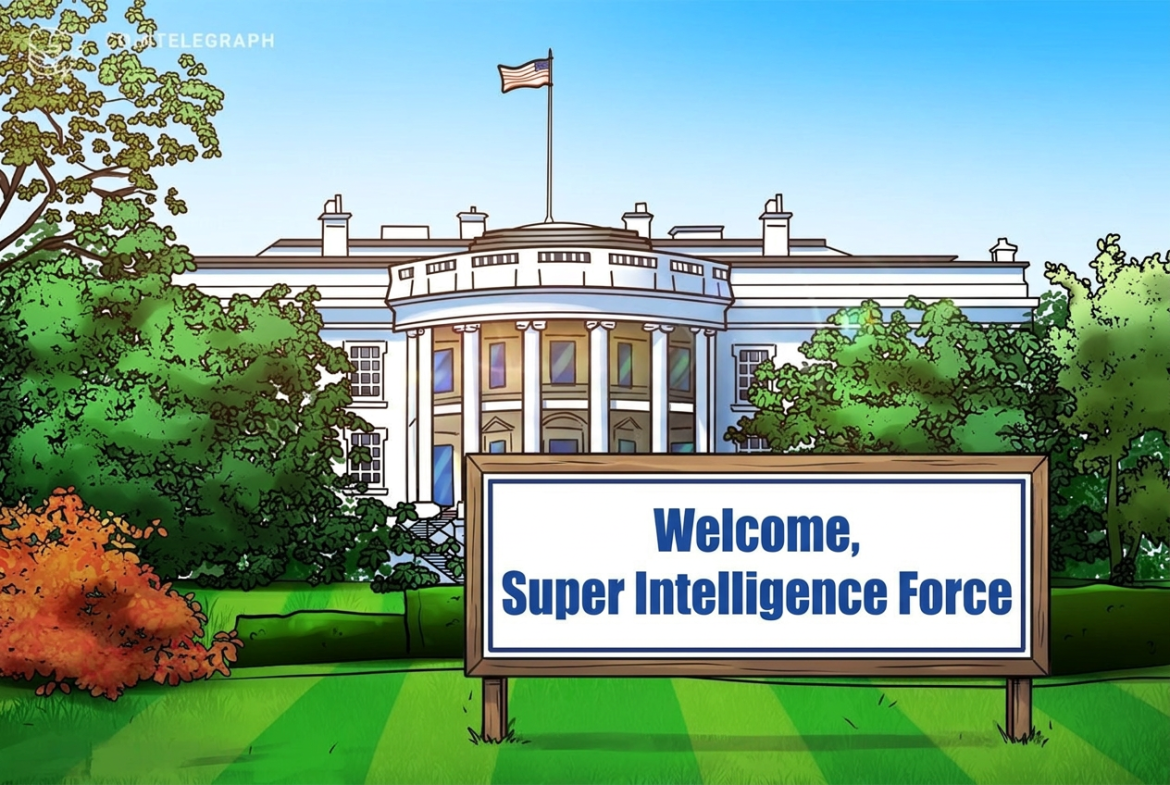
President Donald Trump said US intel chief Clayton will lead the SIF, reporting to the president and Chief of Staff Susie Wiles.

The Tennessee Bankers Association (TBA), a trade group representing the state’s commercial banks, has selected Stablecore as a preferred technology provider for digital asset services, highlighting growing interest among regional lenders in crypto infrastructure.
In a Tuesday announcement, the TBA said Stablecore will provide infrastructure that enables community and regional banks to offer products such as stablecoins, tokenized deposits and digital asset-backed lending through their existing systems.
The endorsement gives Stablecore exposure to the association’s roughly 175 member institutions, potentially accelerating adoption among smaller banks that lack in-house digital asset capabilities.
The partnership reflects a broader trend among traditional financial institutions of seeking third-party providers to integrate crypto-related services rather than building the infrastructure internally.
Stablecore develops backend infrastructure that allows banks to issue and manage tokenized assets, including stablecoins and deposit tokens, while handling compliance and integration with core banking systems.
As previously reported by Cointelegraph, Stablecore recently joined the Jack Henry Integration Network, which provides digital banking technology to around 1,670 banks and credit unions across the United States.
Related: Crypto Biz: Capital has no consensus
TSA’s endorsement of Stablecore comes as more regional lenders look to roll out digital asset services, even as US lawmakers continue to debate the regulatory framework.
Tennessee’s junior US Senator Bill Hagerty, a member of the Senate Banking Committee, said last month that there is “still a lot more work to do” before Congress can advance comprehensive market structure legislation.
Meanwhile, Senator Thom Tillis told reporters last week that he plans to push the Senate Banking panel to take up crypto market-structure legislation when lawmakers return to session on May 11.
Proposed bills aim to clarify how stablecoins are issued and supervised, which could give banks a clearer path to offering tokenized deposits and related services.
Source: Eleanor Terrett
At the same time, banking groups continue to raise concerns about stablecoin design, particularly whether issuers should be allowed to offer yield or interest. Industry advocates argue that recent compromises fall short of fully restricting yield-bearing stablecoins, potentially blurring the line between bank deposits and digital assets.
The Independent Community Bankers of America last month called on Congress to ensure the measure addresses concerns with what it called “the harmful impact on local economies of allowing crypto exchanges and other intermediaries to pay interest or yield on payment stablecoins.”
Related: Key US senator lifts block on Trump’s Fed pick Kevin Warsh

Kalshi just cut a deal with ProCap Financial. The prediction market platform is handing over direct data feeds so ProCap can build investment research using AI. ProCap gets raw access to Kalshi’s market data and plans to turn it into actionable signals for subscribers.
The move is Kalshi’s third big distribution play in recent months. FOX, CNN, and CNBC already use Kalshi’s prediction odds in their news coverage. ARK Invest teamed up with Kalshi to create markets tied to research signals. ProCap brings something different to the table—independent, third-party analysis that sits outside Kalshi’s own walls.
Kalshi wants to do what stock exchanges did decades ago. Those venues didn’t just run markets—they built entire ecosystems of data vendors, analysts, and research shops around their pricing information. Kalshi is basically trying to replicate that model for prediction markets.
Anthony Pompliano from ProCap laid out how they’ll use the data. AI agents will pull specific data points—interest rate outcomes, macro events, things like that. The goal is to offer more targeted insights than you’d get from watching traditional assets. Instead of guessing what the Fed might do based on bond yields, you can see what actual market participants think will happen.
The partnership gives ProCap real-time access to crowd-sourced intelligence. Tarek Mansour, Kalshi’s CEO, said prediction markets convert uncertainties into actionable signals. By working with ProCap, Kalshi wants to get that intelligence into the hands of retail and institutional investors who might not trade on Kalshi directly.
Kalshi is monetizing its market intelligence. Not just through trading fees anymore. The company is treating its data like a commodity that other financial players will pay for. ProCap is the test case—can you build a subscription research product around prediction market data that people will actually pay for?
The AI angle matters here. ProCap isn’t just repackaging Kalshi’s odds and calling it research. They’re running algorithms to isolate specific signals from the noise. If the market shows a 73% chance of a rate cut in June, ProCap’s AI might cross-reference that against corporate earnings expectations or currency movements to generate trade ideas.
Whether this works depends entirely on ProCap’s subscriber base. If they find the insights valuable enough to act on, Kalshi has proof of concept. If not, it’s just another co-branding exercise that sounds better in a press release than it performs in reality.
The numbers will tell the story. ProCap needs subscribers who see enough edge in the AI-enhanced data to justify whatever they’re charging. Kalshi needs ProCap to succeed so it can pitch similar deals to other research shops and data vendors.
Prediction markets have always struggled with the monetization question. Trading volumes are fine, but building a sustainable business means finding multiple revenue streams. Kalshi is betting that data licensing can be one of them.
The collaboration adds a layer to Kalshi’s distribution strategy. Media partnerships get the brand out there. The ARK Invest deal brings credibility. ProCap represents the next step—proving that third parties can build profitable products on top of Kalshi’s infrastructure.
ProCap’s approach involves deploying AI agents to scan prediction markets for specific metrics. They’re looking for granular data points that traditional financial assets don’t surface cleanly. A stock price reflects everything the market knows, but it’s murky. A prediction market on whether the Fed cuts rates by June is pretty direct.
The challenge is scale. Can ProCap produce enough differentiated insights to justify a subscription? And can Kalshi sign enough ProCaps to build a real data licensing business? Right now it’s one partnership with one research firm.
Kalshi’s strategy reflects a broader push to mainstream prediction markets. The company isn’t content to be a niche platform for political junkies and macro traders. It wants to be infrastructure—the kind of thing that financial professionals check daily without thinking about it.
The ARK partnership showed Kalshi could work with big-name investors. The media deals proved prediction odds could fit into news coverage without feeling forced. ProCap is the next test—can independent researchers build viable products from Kalshi’s data?
If ProCap’s subscribers bite, expect more announcements. Other research shops will want similar deals. Kalshi could start charging meaningful licensing fees. The platform becomes more valuable as distribution expands.
If ProCap’s product flops, Kalshi still has its core business. But the dream of building a Bloomberg-style data empire around prediction markets gets harder to sell. Investors want to see multiple revenue streams, not just trading fees.
Mansour’s bet is that crowd-sourced intelligence beats traditional forecasting. Prediction markets aggregate information from thousands of participants who have money on the line. That’s different from analyst opinions or economic models. ProCap’s job is to prove that difference translates into alpha.
The AI component is what makes this partnership different from a simple data resale agreement. ProCap isn’t just showing clients Kalshi’s odds. They’re processing those odds through algorithms to generate specific trade ideas and risk assessments. The value-add is in the analysis, not the raw data.
Kalshi is embedding itself into the financial research ecosystem one partnership at a time. Media outlets, asset managers, research firms—each deal expands the platform’s reach and validates the underlying premise that prediction markets belong in mainstream finance.
ProCap’s subscriber count over the next six months will matter more than any press release. That’s the real measure of whether this model works.
Post Views: 16
ProCap gets direct access to Kalshi’s prediction market data feeds and will use AI technology to generate investment insights and data points for its subscribers.
Kalshi partnered with FOX, CNN, and CNBC to integrate prediction odds into news coverage, and teamed up with ARK Invest to create markets for research signals.

On sports hedging.
The sports insurance and re-insurance industry is big: the annual market is around $9 billion and is projected to double by 2030. There are a variety of insurance products including brand sponsorships, game cancellations, team/player performance, off player… pic.twitter.com/ld7kVaxnL5
— Tarek Mansour (@mansourtarek_) February 12, 2026
Start every day with the top news stories right now, plus original features, a podcast, videos and more.
OKX has strengthened its European footprint with Standard Chartered.
OKX has announced the expansion of its partnership with Standard Chartered Bank into the European Economic Area (EEA), as it extended a collaboration that first began in the United Arab Emirates earlier this year. The move introduces OKX’s collateral mirroring programme to institutional clients across Europe, which allows users to hold their assets securely with Standard Chartered, a Global Systemically Important Bank (G-SIB), while maintaining corresponding balances on OKX for trading purposes.
The arrangement enables institutions to benefit from both bank-grade custody and direct access to digital asset markets, effectively reducing counterparty risk and enhancing trading efficiency.
With the latest collaboration, Standard Chartered has become the first and only G-SIB to partner directly with a crypto exchange. OKX said the expansion depicts growing regulatory confidence in the model and indicates a push toward aligning crypto market infrastructure with established financial standards. The partnership’s rollout in the EEA is expected to provide institutional clients with a unified framework for secure, compliant, and scalable digital asset management across Europe.
Standard Chartered’s Global Head of Financing and Securities Services, Margaret Harwood-Jones, said the initiative combines the bank’s existing custody infrastructure with OKX’s regulatory framework to ensure “the highest standards of security and compliance for institutional clients in Europe.”
The exchange also highlighted that the partnership builds on its long-term commitment to Europe, supported by its Markets in Crypto-Assets (MiCA) license.
In March, Bloomberg had reported that OKX’s decentralized trading and self-custody platforms are reportedly under scrutiny by European regulators after being linked to the laundering of $1.5 billion stolen in the Bybit hack by North Korea’s Lazarus Group. The exchange denied the allegations, even as the report suggested that it may risk losing the MiCA license granted earlier this year.
After regulatory challenges in Europe, OKX made a push to re-establish itself in the United States. In April, the exchange announced it was reopening its US crypto platform and introducing a multi-chain Web3 wallet, following a $505 million settlement with the Department of Justice earlier this year.
OKX appointed Roshan Robert as US CEO and set up headquarters in San Jose, California.
LIMITED OFFER for CryptoPotato readers at Bybit: Use this link to register and open a $500 FREE position on any coin!


