Blockchain data reviewed by CoinDesk shows wallets tied to North Korea’s Lazarus Group sold more than $30 million in bitcoin on the platform in the last three weeks alone.

 Live Chat
Blockchain data reviewed by CoinDesk shows wallets tied to North Korea’s Lazarus Group sold more than $30 million in bitcoin on the platform in the last three weeks alone.
American Bitcoin Corp (Nasdaq: ABTC) has moved its treasury past 8,000 bitcoin, the company said. The total marks a climb from about 5,401 BTC at the end of 2025, a gain of close to 50% across six months.
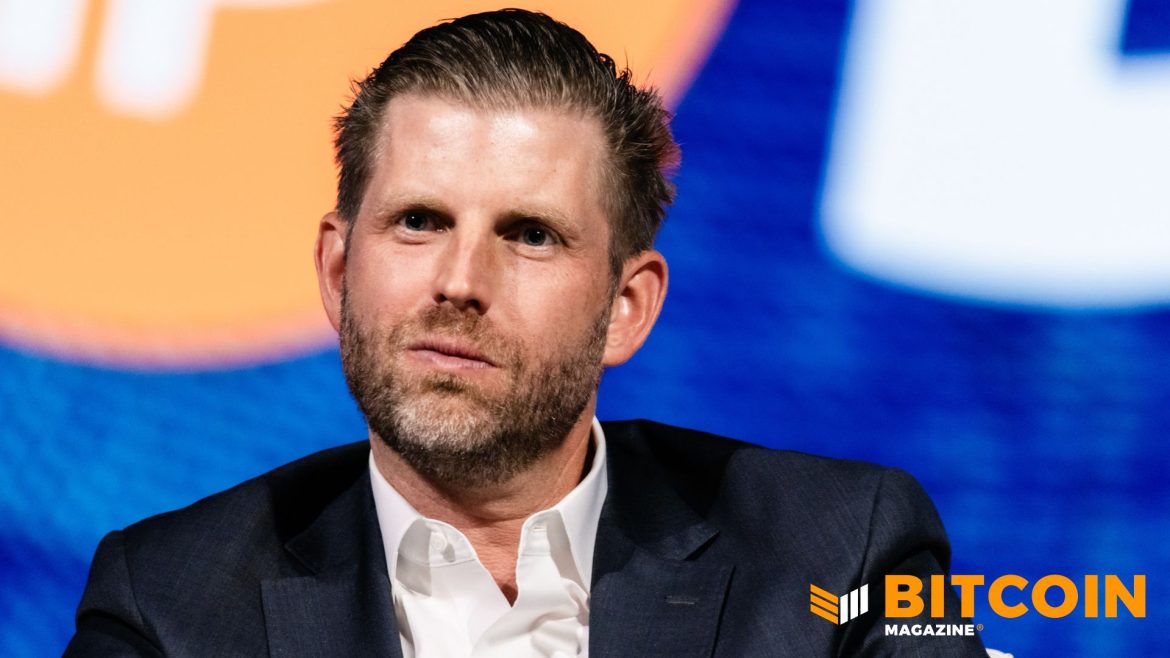
The company, a majority-owned subsidiary of Hut 8 Corp and backed by the Trump family, said its bitcoin reserve and its bitcoin-per-share have grown close to threefold since its Nasdaq debut. Co-founder Eric Trump has framed the growth as disciplined and large in scale.
American Bitcoin builds its stack through two channels: mining production and treasury purchases. In the first quarter of 2026, the firm mined 817 BTC and added 1,620 BTC to its reserve, a rise of about 30 percent in three months. That pace has carried into the summer.
Mining capacity has grown to match the treasury ambitions. In March, the company deployed 11,298 ASIC miners at its site in Drumheller, Alberta, a move that lifted capacity by about 12 percent and added 3.05 EH/s. The cost to mine a single bitcoin fell to about $36,200 in the first quarter, a drop of 23 percent from $46,900 in the prior quarter.
The financial picture remains mixed. American Bitcoin reported a net loss of $81.8 million for the first quarter on revenue of $62.1 million, a result that reflects a wider crypto market decline and the heavy spending behind its expansion.
The company also reshaped its share structure. A 1-for-15 reverse stock split took effect at 5:00 p.m. on July 2, with shares trading on a split-adjusted basis from July 6. Shareholders approved the measure at the annual meeting on June 22.
The strategy sets American Bitcoin apart from a segment of the mining industry that has shifted resources toward artificial-intelligence data centers. Rather than pivot, the firm has doubled down on bitcoin mining and treasury accumulation, a bet that ties its fortunes to the price of the asset it collects.
At more than 8,000 BTC, American Bitcoin ranks among the larger corporate holders of the asset, and its stack has, at points, surpassed that of Galaxy Digital.
The company positions itself as a pure-play bitcoin accumulation platform, a structure that gives public investors exposure to both mining output and a growing reserve.
Whether the model rewards shareholders depends on the path of bitcoin and the discipline of the company’s spending. For the moment, the treasury keeps its climb.
Shares of ABTC were up 7% at time of writing.

Start every day with the top news stories right now, plus original features, a podcast, videos and more.
US Treasury Secretary Scott Bessent is calling on the Senate Banking Committee to proceed with confirmation hearings for Federal Reserve chair nominee Kevin Warsh, despite a standoff over an ongoing probe into current Fed chair Jerome Powell.
Speaking with Fox News’ Sunday Morning Futures, Bessent referenced recent pushback from Republican Senator Thom Tillis, who said he plans to stall on the confirmation of the next Fed chair until the Department of Justice probe into Powell is resolved.
“Senator Tillis has come out and said he thinks that Kevin Warsh is an extreme candidate,” Bessent said, adding:
“So I would say, why don’t we get the hearings underway and see where Jeanine Pirro’s investigation goes?”
Despite his support for Warsh, Tillis, a member of the Senate Banking Committee, has vowed on multiple occasions to block the nomination until the DOJ gets “to the truth” of the matter, as part of a push to protect Fed independence.
“I’d be one of the first people to introduce Mr. Warsh if we’re behind this and support him, but not before this matter is settled,” Tillis told CNBC on Wednesday.
Republicans control 13 of the 24 seats in the Senate Banking Committee, meaning that they could vote as a bloc to push through Warsh. However, with Tillis looking to halt the process, he could use his vote to oppose Warsh, putting the ultimate decision in the hands of the Democrats.
The DOJ, led by attorney Jeanine Pirro, initially opened up an investigation into Powell in early January, serving the Fed with grand jury subpoenas and threats of criminal charges relating to expenses on a multi-year renovation project at Fed office buildings.
Powell promptly denied the assertions and argued on Jan. 11 that the investigation was politically motivated, as the Fed’s interest rate policy was at odds with the wishes of US President Donald Trump.
On Jan. 30, Trump officially nominated Kevin Warsh to succeed Powell as the next Fed chair.
Related: Federal Reserve entering ‘gradual print’ mode — Lyn Alden
Following a presidential nomination, the nominee must then appear before the Senate Banking Committee for a review hearing. The committee then votes on whether to send the nominee to the full senate with a favorable or non-favorable recommendation, or no recommendation at all.
Finally, the full Senate then holds a debate and vote, and if the nominee is confirmed, they can be officially sworn in as the next Fed chair.
Magazine: The critical reason you should never ask ChatGPT for legal advice
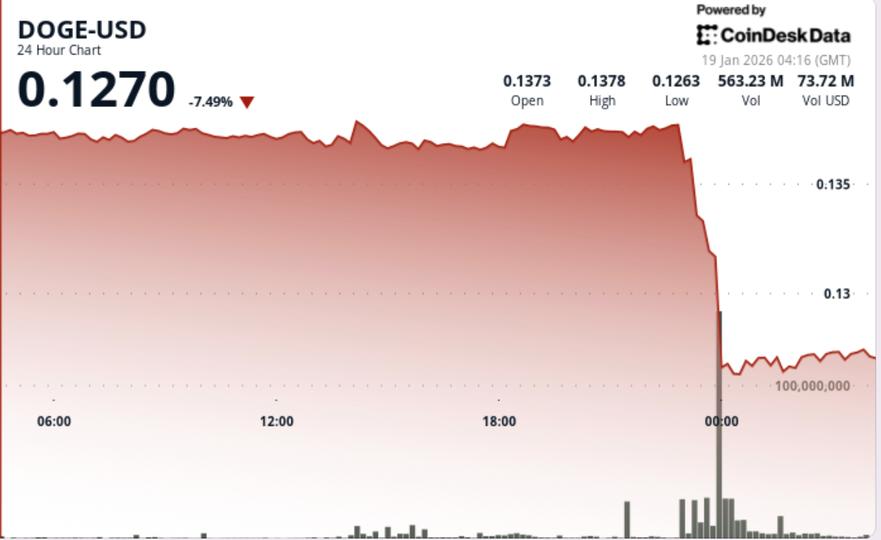
Traders are watching $0.127 as near-term support, with $0.137 now the key level DOGE must reclaim to stabilize.

Binance co-founder CZ said he was somewhat surprised at receiving a pardon from United States President Donald Trump and denied having a business relationship with the Trump family during an interview on Friday.
CZ told Fox News that he never physically met or spoke with Trump before or after receiving a presidential pardon in October, and only met with Trump’s son Eric once at the Bitcoin Middle East and North Africa conference in Abu Dhabi, United Arab Emirates.
“There is no business relationship between me, Binance, and World Liberty Finance,” CZ said. He added that he was unaware of the status of his pardon during the process:
“I did not know when or if it was going to happen. I believe my lawyers submitted the petition in April, and it took a few months. I didn’t know the progress. There was no indication of how far it went along, etc. Then, it happened one day.”
The pardon drew mixed reactions, with the crypto community celebrating it as a win for the industry and a reversal of the anti-crypto policies of the Biden administration, while Democratic lawmakers were critical of the pardon, accusing Trump of political corruption.
Related: How Changpeng Zhao regained power between prison and pardon
In a press conference following the pardon, Trump said that he does not personally know CZ, but was advised that the case against him was politically motivated.
“He had a lot of support, and they said that what he did is not even a crime, it wasn’t a crime. He was persecuted by the Biden administration,” Trump said.
Democratic Rep. Maxine Waters accused Trump of entering into a “pay-to-play” agreement, pardoning CZ in exchange for crypto investments into projects and platforms associated with the Trump family, including World Liberty Financial (WLFI).

The allegations also prompted several Democratic lawmakers, including Massachusetts senator Elizabeth Warren and Vermont senator Bernie Sanders, to pen an open letter to attorney general Pam Bondi, scrutinizing Trump and the pardon.
Magazine: Financial nihilism in crypto is over — It’s time to dream big again


