Bitcoin and altcoins saw strong double-digit price rebounds after this week’s brutal sell-off, but do technical charts forecast a longer-term recovery, or is today’s rally just a dead cat bounce?

 Live Chat
Bitcoin and altcoins saw strong double-digit price rebounds after this week’s brutal sell-off, but do technical charts forecast a longer-term recovery, or is today’s rally just a dead cat bounce?

Over the past year, Binance has experienced a noticeable reduction in its XRP holdings, with billions of dollars in the cryptocurrency moving off the exchange. This substantial shift is capturing attention within the crypto market. Analyst Niels reports that Binance’s XRP reserves have decreased by nearly 45%, from $10.16 billion to $5.55 billion in just 12 months. This trend indicates a major transfer of XRP from the exchange into private wallets, suggesting a reduced interest in selling among holders for the near future.
On-chain data from Glassnode highlights that XRP’s current market structure resembles that of early 2022 when prices significantly dropped. At that time, XRP prices fell from $0.78 to below $0.30 over several months. The current market conditions show newer investors acquiring XRP at lower prices than long-term holders, building psychological pressure on top buyers. If prices fail to recover, some long-term investors might decide to sell their holdings.
Since mid-2025, the $2 price level has triggered substantial realized losses, according to Glassnode. This price point has consistently aligned with losses ranging from $500 million to $1.2 billion weekly, marking it as a critical level where many traders choose to exit.
Despite reaching a multi-month high above $2.40 earlier this month, XRP has recently declined, losing its $2 support and dropping to $1.84 before recovering to around $1.90. According to CoinGecko data, XRP has decreased by over 11% in the past week. Analyst Steph Is Crypto notes that the price weakness is accompanied by declining trading volumes, reminiscent of trends seen in 2021–2022. A decrease in trading volume during a downtrend can indicate waning buyer interest, further slowing momentum.
Additionally, U.S.-based XRP ETFs reported their largest outflows this week, with significant investor activity pulling back amidst rising global tensions and economic uncertainties. The decrease in interest reflects broader market concerns.
In the context of market dynamics, analyst Egrag Crypto observes a pattern of compressed price action in the XRP/BTC pairing, alongside tight moving averages. This scenario, known as compression, can potentially lead to expansion when a clear trend emerges. Egrag describes the current situation as a “bullish rectangle,” suggesting a potential accumulation phase following a decline, although the uptrend is not yet confirmed.
The ongoing changes in XRP supply on exchanges and market conditions remain a focus for investors as they navigate the evolving landscape. The future movements of XRP will depend on various factors, including market sentiment and broader economic conditions.
The decline in XRP holdings on Binance coincides with broader market trends affecting cryptocurrencies. Since January 2026, the crypto market has faced challenges, with economic factors such as inflation and interest rate hikes exerting pressure on digital asset prices. These elements have contributed to a cautious approach among investors, as highlighted by various market analysts.
Furthermore, the interplay between XRP’s price movements and investor sentiment is evident in the behavior of large holders. According to Glassnode data, the reduction in XRP supply on exchanges suggests that major holders are opting for long-term storage, potentially anticipating future price appreciation. This shift in strategy reflects a broader trend among cryptocurrency investors who seek to mitigate risk by holding assets off exchanges.
Despite the current price volatility, some analysts maintain an optimistic outlook for XRP. They point to the potential for increased adoption of Ripple’s technology in cross-border payments as a long-term driver of value. However, the immediate market conditions, marked by substantial outflows and declining prices, present challenges that may influence short-term sentiment.
Egrag Crypto’s analysis of the XRP/BTC chart underscores the importance of technical indicators in assessing market trends. The compression phase observed in the chart suggests that XRP is poised for a potential breakout, although the timing and direction remain uncertain. This technical setup is closely watched by traders looking for signals of market shifts, with the potential for significant price movements if a clear trend emerges.
Market analysts have noted that the shifting dynamics in XRP supply on exchanges like Binance could have broader implications for liquidity and trading strategies. As XRP reserves decrease, the available supply for trading on exchanges becomes limited, potentially leading to increased price volatility. This situation is being closely monitored by traders who are assessing the impact of lower liquidity on their trading decisions.
In the context of market sentiment, the recent outflows from U.S.-based XRP ETFs, which reached record levels this week, underline the cautious approach investors are adopting. The economic uncertainties and global tensions are influencing capital movements, as reported by financial experts. This trend is indicative of a broader reluctance among investors to engage heavily in the crypto market under current conditions.
Furthermore, the psychological impact on XRP holders is becoming evident, as noted by Glassnode. The ongoing price pressure and the failure to sustain key support levels, such as the $2 mark, are contributing to a challenging environment for investors. The combination of realized losses and declining market interest poses significant hurdles for those holding XRP, as they navigate the volatile market landscape.
The recent activity surrounding XRP has sparked discussions among market analysts about the potential implications for the cryptocurrency’s future trajectory. On January 20, 2026, Niels highlighted that the drastic reduction in Binance’s XRP reserves might indicate a shift in investor behavior, with a growing preference for long-term holding strategies. This trend aligns with broader patterns in the crypto market, where investors often move assets off exchanges in anticipation of future gains or to mitigate risk during volatile periods.
Steph Is Crypto, commenting on the current market conditions, noted that the decline in XRP’s trading volume is a critical factor impacting its price momentum. The analyst emphasized that reduced buyer interest, as seen in the current environment, can prolong periods of price weakness. This sentiment is echoed by other market observers who are closely watching trading volume metrics as a key indicator of market sentiment and potential price movements.
Egrag Crypto’s technical analysis of the XRP/BTC chart suggests a phase of accumulation, despite the absence of an immediate uptrend. The analyst’s observation of a “bullish rectangle” formation indicates that XRP may be preparing for a breakout, contingent on market conditions and investor sentiment. This technical setup is being scrutinized by traders who are assessing the potential for significant price shifts once a clear direction emerges.
Furthermore, the correlation between XRP’s price fluctuations and broader economic factors is becoming more apparent. As global economic uncertainties persist, investors are increasingly cautious, influencing capital flows in the crypto market. This caution is reflected in the recent outflows from U.S.-based XRP ETFs, as investors reassess their positions amid rising geopolitical tensions and economic challenges.
Post Views: 1
Roundhill Investments has filed an amended registration statement for its XRP ETF, which it could launch as soon as January 29. Notably, the XRP fund differs from the spot XRP funds and will only seek to provide investors with income from the altcoin rather than provide spot exposure.
Roundhill filed a post-effective amendment for its XRP Covered Call Strategy ETF, noting that the filing was intended to delay the fund’s effectiveness until January 29. In line with this, the fund could launch this month, unless another amendment delays its effectiveness. The potential launch of Roundhill’s XRP ETF could provide a major boost for the altcoin, as the fund offers another avenue for institutional investors to gain exposure to the token.
Roundhill’s XRP fund differs from the spot XRP ETFs, as it doesn’t provide spot exposure to the altcoin. Instead, it seeks to provide current income and exposure to the price return of one or more ETFs that provide exposure to XRP and whose shares trade on a U.S.-regulated exchange. Basically, the fund tracks the performance of other XRP ETFs that provide direct exposure to the altcoin and doesn’t invest directly in the altcoin.
Roundhill’s XRP ETF prospectus also revealed that the Fund seeks to achieve its investment objectives through the use of a synthetic covered call strategy that provides current income. In tracking the price return of other XRP ETFs, the Fund isn’t just limited to spot XRP funds. It can also track the price return of ETFs that derive exposure to XRP through investments in exchange-traded futures contracts that utilize XRP as the reference asset.
In an X post, crypto pundit Richard stated that Roundhill’s XRP ETF filing confirms that XRP is an approved underlying asset for regulated derivatives. He further remarked that this means that XRP-linked options are permissible inside an ETF wrapper and that risk committees, counterparties, and clearing structures are already signed off on.
Richard also noted that covered-call ETFs don’t appear first and only come into play after an asset is legally and structurally accepted. Meanwhile, the pundit alluded to the fact that the sole purpose of the latest filing was to delay the effectiveness. He explained that this means that the product structure is complete, that approval is not the issue, and that timing is the variable.
The pundit further stated that Roundhill isn’t trying to capture upside but is simply monetizing XRP’s volatility. As such, they have a different objective from the spot XRP ETFs, although the same asset and pipeline are involved for this Fund. Richard added that this is derivatives validation, not price discovery, a development he claimed occurs only when an asset is institutionally cleared.
At the time of writing, the XRP price is trading at around $1.84, down almost 2% in the last 24 hours, according to data from CoinMarketCap.
Featured image from Peakpx, chart from Tradingview.com

Editorial Process for bitcoinist is centered on delivering thoroughly researched, accurate, and unbiased content. We uphold strict sourcing standards, and each page undergoes diligent review by our team of top technology experts and seasoned editors. This process ensures the integrity, relevance, and value of our content for our readers.
My name is Godspower Owie, and I was born and brought up in Edo State, Nigeria. I grew up with my three siblings who have always been my idols and mentors, helping me to grow and understand the way of life.
My parents are literally the backbone of my story. They’ve always supported me in good and bad times and never for once left my side whenever I feel lost in this world. Honestly, having such amazing parents makes you feel safe and secure, and I won’t trade them for anything else in this world.
I was exposed to the cryptocurrency world 3 years ago and got so interested in knowing so much about it. It all started when a friend of mine invested in a crypto asset, which he yielded massive gains from his investments.
When I confronted him about cryptocurrency he explained his journey so far in the field. It was impressive getting to know about his consistency and dedication in the space despite the risks involved, and these are the major reasons why I got so interested in cryptocurrency.
Trust me, I’ve had my share of experience with the ups and downs in the market but I never for once lost the passion to grow in the field. This is because I believe growth leads to excellence and that’s my goal in the field. And today, I am an employee of Bitcoinnist and NewsBTC news outlets.
My Bosses and co-workers are the best kinds of people I have ever worked with, in and outside the crypto landscape. I intend to give my all working alongside my amazing colleagues for the growth of these companies.
Sometimes I like to picture myself as an explorer, this is because I like visiting new places, I like learning new things (useful things to be precise), I like meeting new people – people who make an impact in my life no matter how little it is.
One of the things I love and enjoy doing the most is football. It will remain my favorite outdoor activity, probably because I’m so good at it. I am also very good at singing, dancing, acting, fashion and others.
I cherish my time, work, family, and loved ones. I mean, those are probably the most important things in anyone’s life. I don’t chase illusions, I chase dreams.
I know there is still a lot about myself that I need to figure out as I strive to become successful in life. I’m certain I will get there because I know I am not a quitter, and I will give my all till the very end to see myself at the top.
I aspire to be a boss someday, having people work under me just as I’ve worked under great people. This is one of my biggest dreams professionally, and one I do not take lightly. Everyone knows the road ahead is not as easy as it looks, but with God Almighty, my family, and shared passion friends, there is no stopping me.
Crypto analyst Dark Defender has been one of the most vocal supporters of XRP, and this stance has not changed despite the altcoin’s current price action. If anything, the analyst believes that the current downtrend actually plays into the XRP long-term target, claiming that the cryptocurrency remains inherently bullish. If the analyst is right, then it means that the XRP price could be gearing up for another major uptrend that could send it to new peaks.
In the post that was shared on X, Dark Defender explained that the XRP cryptocurrency was not in any kind of bear market. Instead, the current downtrend is only a result of the altcoin entering Wave 4 of the Elliot Wave, leading to the decline.
Given that Wave 4 is a historically bearish wave, it would explain why the XRP price has dropped so quickly. However, the crypto analyst explained that this wave did not just start, as it has been in play since February 2025. Hence, it would need to play out completely before the next wave can begin.
Going by this analysis, it would mean that the last and final wave of the theory is yet to play out, which is often the most bullish of all the waves. As a result, the analyst urges XRP investors not to panic as the price continues to play out according to plan. In the end, the target remains $5.85, according to Dark Defender, beating its previous all-time high of $3.8.
Another analyst also contributes that the XRP price is not in a bear market, and could, in fact, be putting in a bottom. STEPH IS CRYPTO points out that the XRP RSI is actually showing a rare bullish divergence on the daily chart, one of the few times that this has happened over the years.
This is significant because back in 2022, a similar bullish divergence had appeared on the daily chart ,and the result was a rapid rise once the distribution was done. As the crypto analyst explains, the fact that this bullish RSI divergence has appeared on the XRP daily chart again suggests that the sellers are actually running out of steam.
While there is no set target for where the XRP price is headed, the prediction suggests that a rally could be in the works. “Nothing is guaranteed — but from a technical perspective, this is one of the strongest early reversal signals you can get,” the analyst stated.
Featured image from Dall.E, chart from TradingView.com
Hex Trust launched wrapped XRP across Ethereum, Solana, Optimism, and HyperEVM on Dec. 12 with $100 million in initial liquidity, positioning the token as a trading pair for Ripple’s RLUSD stablecoin.
This latest move to make XRP available across multiple ecosystems adds to Coinbase’s cbXRP on Base and Axelar’s eXRP on the XRPL EVM sidechain.
Within months, XRP will exist in at least four distinct wrapped formats across a dozen networks, each with different custody arrangements and bridge infrastructure.
Additionally, RLUSD has over $1 billion in circulation, mostly on Ethereum, and deep XRP/RLUSD pairs on chains where capital already sits, expanding XRP’s addressable market beyond XRPL’s native orderbooks.
But the expansion trades one risk profile for another. Native XRP operates as a trustless protocol asset, while wrapped XRP replaces that model with a custodian holding real XRP, a bridge coordinating cross-chain state, and smart contracts managing the synthetic token.
The question is whether the liquidity gains compensate for the new layers of trust, operational complexity, and attack surface.
Hex Trust issues wXRP tokens 1:1 with native XRP held in segregated institutional custody, with minting and redemption restricted to authorized participants via a KYC/AML-compliant flow.
The token uses LayerZero’s Omnichain Fungible Token standard, synchronizing supply via message-passing contracts across multiple chains. Hex Trust seeded the launch with $100 million in TVL and positioned wXRP as a counterpart to RLUSD on EVM chains.
Wrapped.com has offered Wrapped XRP as an ERC-20 token on Ethereum since December 2021, with Hex Trust as the custodian.
Coinbase’s cbXRP on Base follows the same structure: 1:1 backing by XRP held in Coinbase custody, redeemable through Coinbase’s operational flow.
Ripple’s XRPL EVM Sidechain, live on mainnet since June 2025, provides a different on-ramp. Users lock XRP on the XRP Ledger and receive eXRP on the EVM sidechain via Axelar’s bridge.
The sidechain uses eXRP as its gas token, and Axelar’s interoperability layer connects it to 80 additional chains, routing eXRP into broader EVM DeFi.
Firelight’s stXRP adds another synthetic layer: users stake XRP on Flare and receive a liquid staking derivative.
The proliferation is rapid, as each product targets a different use case, but all replace native XRPL settlement with a trusted intermediary.
RLUSD reached $1 billion in circulation within a year of launch, with most issued on Ethereum rather than XRPL.
That gives XRP a large, liquid stablecoin counterpart on chains where trading volume already concentrates. Hex Trust’s $100 million initial TVL seeds deep orderbooks from day one.
Wrapping XRP on Ethereum, Solana, and Base plugs it into the deepest on-chain trading venues.
Native XRPL has a functional DEX, but its liquidity is thin compared to Uniswap, Curve, or Raydium. A wrapped token on those platforms gains access to better execution, tighter spreads, and integration into lending and yield protocols that do not exist on XRPL.
The XRPL EVM sidechain and Axelar bridge create a direct path from XRPL into multi-chain DeFi. Lock XRP, mint eXRP, route it through Axelar to Arbitrum or Polygon, and XRP functions as collateral in protocols that have never integrated XRPL directly.
But the liquidity improvement assumes wrappers maintain tight pegs, custodians process redemptions reliably, and bridges do not become attack vectors. Each assumption introduces new points of failure that native XRPL does not have.
The shift from native XRP to wrapped representations transfers risk from protocol-level consensus to custodial and bridge infrastructure.
Custodian and issuer risk comes first. Every wrapped XRP product requires someone to hold the underlying asset. For wXRP, that is Hex Trust. For cbXRP, Coinbase. For eXRP, Axelar’s validator network controls the bridge state and mint/burn logic.
XRP wrappers add another layer of risk on top of the XRP Ledger’s consensus, as they are centralized entities that promise to hold and redeem XRP. If the custodian halts withdrawals, declares insolvency, or suffers a hack, the wrapped token’s backing disappears regardless of what happens on XRPL.
Bridge and interoperability risk is the second layer. Hex Trust’s wXRP uses LayerZero’s OFT standard for cross-chain coordination, managing supply via off-chain message-passing and on-chain validation.
Axelar’s eXRP depends on validators relaying state between XRPL and the EVM sidechain.
Bridges have been the single largest target in DeFi exploits. Hacken’s 2025 Web3 Security Report showed that over $1.5 billion of the $3.1 billion stolen from crypto services in this year’s first half relates to bridges, accounting for over 50% of DeFi losses.
Vitalik Buterin’s argument against cross-chain architectures emphasizes that bridges do not diversify risk but rather concentrate it. A bug in a bridge contract can drain reserves across all connected chains simultaneously.
Redemption mechanics form the third risk domain. Hex Trust’s wXRP restricts minting and redemption to authorized participants, not end users. If those merchants become insolvent or halt operations, liquidity providers holding wXRP have no direct path to redeem for native XRP.
The token can trade freely on secondary markets, but its convertibility depends on intermediaries remaining functional.
XRP already exhibits fragmentation: Wrapped.com’s Ethereum wXRP, Hex Trust’s multi-chain wXRP, Coinbase’s cbXRP on Base, and Axelar’s eXRP all claim 1:1 backing but operate on separate infrastructure.
A liquidity shock or operational pause in one version creates arbitrage gaps, temporary de-pegs, and user confusion about which wrapper holds value.
| Risk type | What it is (plain English) | Where it shows up in XRP’s multi-chain setup |
|---|---|---|
| Custody / issuer risk | Someone has to hold the real XRP and promise 1:1 backing for the wrapped token. If they fail, the wrapper can be under-collateralized or unrecoverable. | Hex Trust for wXRP; Coinbase for cbXRP; any custodian behind older ERC-20 wXRP; entities holding locked XRP for bridges or sidechains. |
| Bridge / messaging risk | Cross-chain value moves via bridge contracts and message relayers. Bugs or attacks can mint extra wrapped tokens, block redemptions, or steal locked XRP. | LayerZero OFT stack for multi-chain wXRP; Axelar bridge for XRPL EVM eXRP; any third-party bridges linking XRP to EVM or Solana. |
| Smart-contract / protocol risk | Wrapped tokens and bridges rely on smart contracts with upgrade keys and governance. A bug, admin error, or malicious upgrade can break the wrapper. | wXRP contracts on Ethereum, Solana, Optimism, HyperEVM; cbXRP contracts on Base; eXRP contracts on XRPL EVM; DeFi protocols that list these assets as collateral or LP tokens. |
| Redemption and peg risk | The promise that 1 wrapped token always redeems 1 native XRP depends on smooth mint/burn flows and cooperative issuers/merchants. Stress events can break that. | Authorized-merchant model for wXRP; institution-only redemption flows at Coinbase; bridge withdrawal queues when moving back to XRPL. |
| Liquidity fragmentation | Multiple different “XRP” tickers across chains split order books and depth. Some wrappers may be deep and tight, others thin and fragile. | Native XRP on XRPL; Hex Trust wXRP; legacy ERC-20 wXRP; cbXRP on Base; eXRP on XRPL EVM; any future competing wrappers. |
| Regulatory / compliance risk | Wrapped assets and custodial bridges sit squarely in regulated territory. Enforcement or licensing changes can force abrupt pauses or wind-downs. | Hex Trust’s regulated custody; Coinbase’s cbXRP; RLUSD–wXRP pairs on KYC venues; any wrapper issued under a specific jurisdiction’s rules. |
| Operational / key-management risk | Custodians, bridge operators, and protocols all depend on ops processes and key security. Human error or compromised keys can be fatal. | Custody setups for the underlying XRP; multisigs or HSMs securing bridge and token contracts; relayer and oracle infrastructure that reports cross-chain state. |
| Narrative / functional drift | Once XRP is wrapped and paired with RLUSD or other stables, its role can shift from “payments asset” to “volatile DeFi collateral,” changing who uses it and why. | wXRP–RLUSD pairs on Ethereum/Solana; DeFi protocols that treat wrapped XRP mainly as yield collateral, not as a settlement rail. |
The expansion can be evaluated through four questions that reveal whether the product improves market plumbing or adds synthetic layers without reducing systemic risk.
First, who holds the XRP, and under what regime? Hex Trust and Coinbase position themselves as regulated custodians with segregated client assets.
RLUSD is regulated by the New York Department of Financial Services, and Ripple just got a national bank charter. That regulatory scaffolding determines whether users have legal recourse if custody fails.
A wrapper that cannot clearly identify its custodian, audit trail, and reserve attestation is not infrastructure, it is an unregulated promise.
Second, how many dependencies sit between the user and native XRP? A Solana DeFi user holding wXRP depends on XRP remaining on XRPL, Hex Trust maintaining reserves, LayerZero OFT messages propagating correctly, and Solana smart contracts executing as designed.
Native XRPL settlement depends on XRPL’s consensus. Wrapped XRP has four or five.
Third, what economic role does XRP serve once wrapped? RLUSD’s $1 billion circulation and positioning as a payments stablecoin create tension. A stable, regulated dollar token may be better suited for institutional settlement than volatile XRP.
If true, wrapped XRP ceases to function as a transactional medium and becomes collateral sitting atop a stablecoin-based payments layer.
Fourth, is the risk compensated and transparent? Bridges remain the industry’s preferred attack surface, with billions in losses since 2022. If a wrapper offers marginal convenience but depends on an opaque custodian or experimental bridge design, the trade-off is asymmetric.
By contrast, if wXRP/RLUSD pairs develop deep liquidity on audited protocols with circuit breakers, the risk/return calculation becomes defensible.
XRP’s expansion across Ethereum, Solana, Base, and the XRPL EVM sidechain is not a decentralization narrative. It is a liquidity-for-custody trade.
The wrapped tokens improve access to deeper markets and richer protocol integrations. However, they replace the XRP Ledger’s trustless settlement with trusted custodians, experimental bridges, and fragmented redemption flows.
For institutions evaluating whether to deploy capital into wrapped XRP, the calculus is not “does this expand XRP’s reach?” but “does the custodial and bridge infrastructure meet the same reliability standard as the native ledger it wraps?”
The current architecture works as long as nothing breaks. The question is what happens when something does.
A debate over the XRP Ledger’s (XRPL) economy model has ignited after Ripple’s Chief Technology Officer (CTO), David Schwartz, directly addressed questions about taxation on the blockchain. Critics have suggested that if XRP holders do not earn from the ecosystem, someone must be collecting a tax. Schwartz’s response challenges this assumption, framing the XRP Ledger as a public utility rather than a profit-generating mechanism for token holders. The debate has since sparked broader conversations about real-world use cases, passive income expectations, and the underlying purpose of the XRPL blockchain.
In a post on X social media, Schwartz clarified that the XRP Ledger does not impose a tax on its users. He explained that the ledger allows holders to issue assets, trade, create NFTs, and make payments without central authority extracting value from these financial activities. He also stated that transaction fees and reserves exist solely as anti-spam measures, not as a mechanism for wealth extraction.
The Ripple CTO emphasized that ownership of XRP does not give anyone the right to collect fees or profits from the ledger itself. He drew a comparison to Bitcoin’s blockchain, highlighting that the XRPL provides similar decentralized functionality while also supporting features such as Decentralized Exchanges (DEXs), stablecoins, and NFTs. These features work without XRP holders needing to profit from the system’s operations.
Schwartz’s remarks on taxes on the XRPL blockchain come after Matthew Sigel, head of digital asset research at VanEck, raised questions about who benefits if XRP holders do not earn anything from the ecosystem and the protocol itself does not generate value. In response, other members of the community, including XRPL dUNL validator Vet, emphasized that the absence of a tax encourages developers and users to focus on building meaningful, functional use cases rather than relying on passive income.
The XRPL tax debate between Schwartz and Sigel also intersected with discussions about the blockchain’s real-world applications. In a much earlier post, Sigel questioned the blockchain’s relevance, subtly hinting that its supporters overstate its functionality.
In response, an XRP community member pointed to the recent collaboration between Ondo Finance, Ripple, and BlackRock, in which the XRP Ledger will be utilized for stablecoin issuance, minting, Treasury asset redemption, and liquidity enhancement in financial markets. While Sigel acknowledged the innovative initiative, he reiterated that these applications do not directly generate revenue for XRP token holders, highlighting a gap between network activity and personal gain.
Schwartz responded by explaining that the value of XRPL stems from enabling financial independence and reducing reliance on intermediaries, rather than providing passive income. He added that focusing on tax collection as a measure of success can overshadow the blockchain’s purpose of promoting open access and meaningful innovation.
Featured image from Peakpx, chart from Tradingview.com
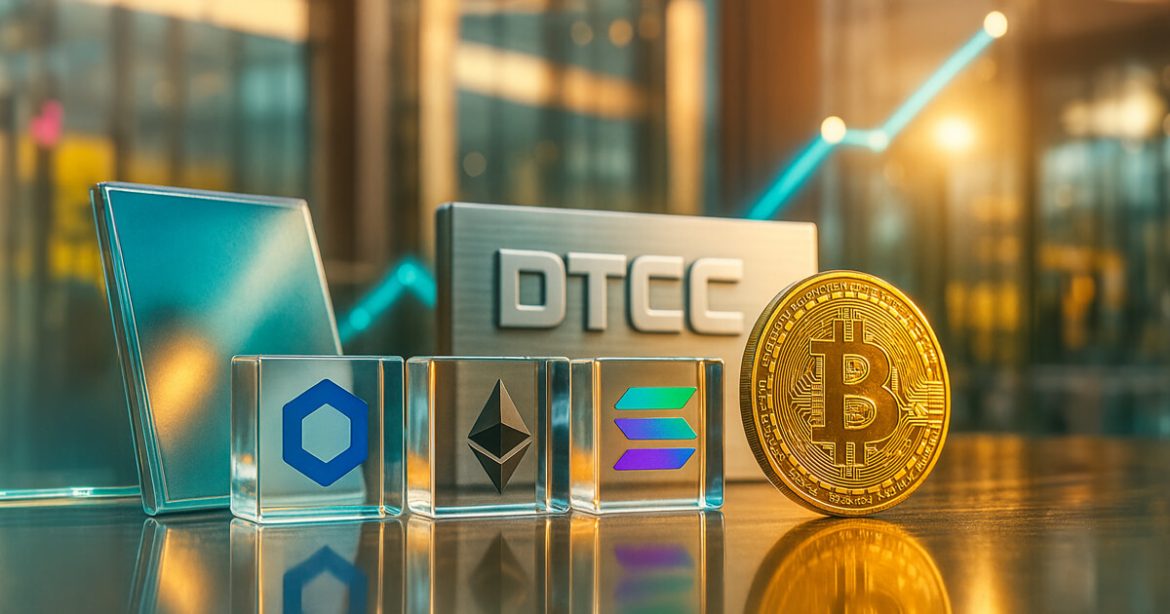
When Chainlink briefly appeared on a DTCC reference list, the crypto industry jumped to claim a “LINK ETF confirmed.”
In reality, just like with XRP and Bitcoin, this was just a routine DTCC plumbing update, preparing for potential ETFs long before the SEC signs off. LINK had made it into the settlement system, not past the approvals gate.
However, it is generally a good sign. Most crypto ETFs that appear on the list eventually go live within 6 months. Bitcoin ETFs were listed in October 2023 and finally went live in January 2024, while Canary Capital’s XRP ETF appeared on DTCC this month and went live today.
Still, the distinction matters because it helps ground you in reality, as DTCC’s role begins where speculation usually ends. It’s a post-trade clearinghouse, not a regulator, and its data reflects operational readiness, not policy blessing. Bitcoin, Ethereum, and even XRP have undergone a similar rumor cycle.
The difference between BTC and ETH was that these came after the formal filings were already underway, including exchange rule changes and registration statements that form the backbone of ETF approval. Without both, a ticker on DTCC’s website is just scaffolding: an empty doorway with no house behind it.
To reach day-one trading for a crypto ETF, two main approvals are required in a specific order. First, the exchange seeking to list the ETF must obtain approval for a Rule 19b-4 filing. This filing requests SEC permission to change an exchange rule to list the new product.
This step has often been a stumbling block for crypto ETFs. The SEC evaluates whether there is a “market of significant size” to detect and deter manipulation, or if an alternative surveillance arrangement exists that achieves the same goal.
This standard was the issue in Grayscale’s case, forcing the SEC to clarify the criteria. That led to the approval of spot Bitcoin and Ethereum ETFs in 2024.
SEC orders said that oversight deals with markets like CME address manipulation. For Ethereum, exchanges could use correlation analysis to demonstrate that futures and spot prices move together.
Once the 19b-4 approval is in hand, the ETF issuer must submit an S-1 registration statement, detailing the fund’s structure, custodian, pricing, risks, and fees. The SEC reviews this document and may ask follow-up questions, as was the case with the Ether ETF. No trading can begin until the S-1 is declared effective.
In summary, the exchange must first obtain listing approval (19b-4), and the issuer must then obtain offering approval (Form S-1). Only when both approvals are granted can an ETF debut.
In 2025, the SEC introduced a generic-listing framework designed to make these two approval steps simpler for digital-asset ETFs that closely resemble previously approved products. While it certainly shortened the timeline, exchanges still need to demonstrate the underlying market’s liquidity and price reliability. For tokens like LINK, meeting both approval requirements remains challenging.
If a LINK ETF eventually clears all these steps, it could reshape how both crypto natives and everyday investors gain exposure to digital assets.
For the average person, it would mean buying LINK in the same brokerage account where they hold Apple stock or an S&P 500 fund.
No wallet setup, no seed phrases, no learning curve. Tax reporting would also be simpler: 1099 forms instead of the patchwork spreadsheets most self-custody users wrestle with every April.
However, convenience comes with trade-offs. ETF holders pay management fees and may face tracking differences, the small but persistent gap between an ETF’s price and the coin’s actual market value. Early on, spreads can be wide if trading volume is thin.
There’s also a conceptual cost: ETF investors won’t be using LINK in DeFi, staking it (yet), or voting on governance proposals. They’ll be holding exposure, not utility.
Advisors will most likely view altcoin ETFs as a niche asset class in a diversified portfolio, allocating perhaps only a few percentage points of total assets, balanced against the riskier volatility.
ETFs utilize authorized participants and market makers to maintain prices in line with their net asset value. For LINK, thinner markets mean large creations or redemptions could affect prices or DeFi liquidity.
If an ETF holds a significant amount of LINK, it could reduce liquidity on exchanges and staking pools, leading to more pronounced price swings in stressed markets. That’s why the SEC reviews custody and creation-redemption processes closely.
Staking adds complexity. If an ETF stakes LINK, the SEC would likely require more disclosures about the risks akin to BSOL, so it would be harder but entirely plausible.
DTCC’s role is operational, handling settlement and record-keeping. When LINK appeared in its data, it only meant a potential ETF was being readied for possible approval.
To distinguish real ETF progress from rumor, focus on official process steps: actual regulatory filings, not screenshots, indicate significant movement toward an ETF launch.
The market now has a clear template, thanks to Bitcoin, Ethereum, Solana, and now XRP; yet, each new asset will face its own liquidity and integrity tests. What matters most to investors is that the structure to make altcoin exposure mainstream is now in place. The next phase will determine who gets to walk through it.
DTCC tickers may cause excitement, but they are only a step in the ETF process. The process only concludes when both of the SEC’s approvals, 19b-4 and S-1, are officially granted.
When this happens, it will be evident through formal filings, not screenshots, marking the actual start of the ETF timeline.
The chance of a Chainlink ETF going live in 2025 sat around 30% but after today’s launch of XRPC from Canary Capital, the timeline could well be moved up.
So, keep an eye out for any of the filings mentioned above if you’re chomping at the bit to buy into a LINK ETF.
When Chainlink briefly appeared on a DTCC reference list, the crypto industry jumped to claim a “LINK ETF confirmed.”
In reality, just like with XRP and Bitcoin, this was just a routine DTCC plumbing update, preparing for potential ETFs long before the SEC signs off. LINK had made it into the settlement system, not past the approvals gate.
However, it is generally a good sign. Most crypto ETFs that appear on the list eventually go live within 6 months. Bitcoin ETFs were listed in October 2023 and finally went live in January 2024, while Canary Capital’s XRP ETF appeared on DTCC this month and went live today.
Still, the distinction matters because it helps ground you in reality, as DTCC’s role begins where speculation usually ends. It’s a post-trade clearinghouse, not a regulator, and its data reflects operational readiness, not policy blessing. Bitcoin, Ethereum, and even XRP have undergone a similar rumor cycle.
The difference between BTC and ETH was that these came after the formal filings were already underway, including exchange rule changes and registration statements that form the backbone of ETF approval. Without both, a ticker on DTCC’s website is just scaffolding: an empty doorway with no house behind it.
To reach day-one trading for a crypto ETF, two main approvals are required in a specific order. First, the exchange seeking to list the ETF must obtain approval for a Rule 19b-4 filing. This filing requests SEC permission to change an exchange rule to list the new product.
This step has often been a stumbling block for crypto ETFs. The SEC evaluates whether there is a “market of significant size” to detect and deter manipulation, or if an alternative surveillance arrangement exists that achieves the same goal.
This standard was the issue in Grayscale’s case, forcing the SEC to clarify the criteria. That led to the approval of spot Bitcoin and Ethereum ETFs in 2024.
SEC orders said that oversight deals with markets like CME address manipulation. For Ethereum, exchanges could use correlation analysis to demonstrate that futures and spot prices move together.
Once the 19b-4 approval is in hand, the ETF issuer must submit an S-1 registration statement, detailing the fund’s structure, custodian, pricing, risks, and fees. The SEC reviews this document and may ask follow-up questions, as was the case with the Ether ETF. No trading can begin until the S-1 is declared effective.
In summary, the exchange must first obtain listing approval (19b-4), and the issuer must then obtain offering approval (Form S-1). Only when both approvals are granted can an ETF debut.
In 2025, the SEC introduced a generic-listing framework designed to make these two approval steps simpler for digital-asset ETFs that closely resemble previously approved products. While it certainly shortened the timeline, exchanges still need to demonstrate the underlying market’s liquidity and price reliability. For tokens like LINK, meeting both approval requirements remains challenging.
If a LINK ETF eventually clears all these steps, it could reshape how both crypto natives and everyday investors gain exposure to digital assets.
For the average person, it would mean buying LINK in the same brokerage account where they hold Apple stock or an S&P 500 fund.
No wallet setup, no seed phrases, no learning curve. Tax reporting would also be simpler: 1099 forms instead of the patchwork spreadsheets most self-custody users wrestle with every April.
However, convenience comes with trade-offs. ETF holders pay management fees and may face tracking differences, the small but persistent gap between an ETF’s price and the coin’s actual market value. Early on, spreads can be wide if trading volume is thin.
There’s also a conceptual cost: ETF investors won’t be using LINK in DeFi, staking it (yet), or voting on governance proposals. They’ll be holding exposure, not utility.
Advisors will most likely view altcoin ETFs as a niche asset class in a diversified portfolio, allocating perhaps only a few percentage points of total assets, balanced against the riskier volatility.
ETFs utilize authorized participants and market makers to maintain prices in line with their net asset value. For LINK, thinner markets mean large creations or redemptions could affect prices or DeFi liquidity.
If an ETF holds a significant amount of LINK, it could reduce liquidity on exchanges and staking pools, leading to more pronounced price swings in stressed markets. That’s why the SEC reviews custody and creation-redemption processes closely.
Staking adds complexity. If an ETF stakes LINK, the SEC would likely require more disclosures about the risks akin to BSOL, so it would be harder but entirely plausible.
DTCC’s role is operational, handling settlement and record-keeping. When LINK appeared in its data, it only meant a potential ETF was being readied for possible approval.
To distinguish real ETF progress from rumor, focus on official process steps: actual regulatory filings, not screenshots, indicate significant movement toward an ETF launch.
The market now has a clear template, thanks to Bitcoin, Ethereum, Solana, and now XRP; yet, each new asset will face its own liquidity and integrity tests. What matters most to investors is that the structure to make altcoin exposure mainstream is now in place. The next phase will determine who gets to walk through it.
DTCC tickers may cause excitement, but they are only a step in the ETF process. The process only concludes when both of the SEC’s approvals, 19b-4 and S-1, are officially granted.
When this happens, it will be evident through formal filings, not screenshots, marking the actual start of the ETF timeline.
The chance of a Chainlink ETF going live in 2025 sat around 30% but after today’s launch of XRPC from Canary Capital, the timeline could well be moved up.
So, keep an eye out for any of the filings mentioned above if you’re chomping at the bit to buy into a LINK ETF.
Start every day with the top news stories right now, plus original features, a podcast, videos and more.


