Three bets totaling about $173 were placed before news outlets reported Zacharia’s pick and are expected to pay out roughly $9,600 combined.


 Live Chat
Three bets totaling about $173 were placed before news outlets reported Zacharia’s pick and are expected to pay out roughly $9,600 combined.
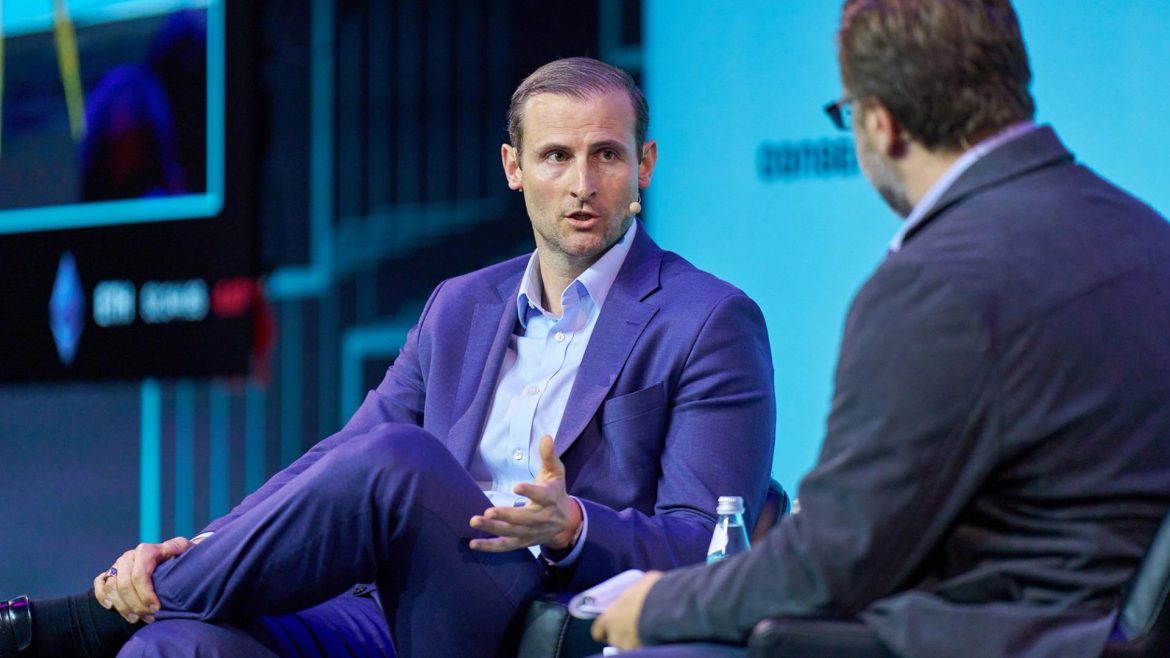
This negotiation over the government conflict-of-interest piece had delayed progress on the Clarity Act for months — now potentially beyond the window in which it could most easily become law in 2026. This week’s release of the final working draft of Clarity included the first ethics language openly circulated, so Democrats are now responding — many of them with disdain.
“Donald Trump raked in more than $1.4 billion from cryptocurrency ventures, and this bill does nothing to prevent him from vacuuming up his next $1.4 billion in crypto profits,” said Senator Elizabeth Warren, the Massachusetts Democrat who is her party’s ranking member on the Senate Banking Committee, referring to the crypto earnings Trump disclosed for 2025. She said the president will “simply ignore the law” as it’s proposed.
So what does the language do? It temporarily bans senior government officials (including the president, vice president, members of Congress and federal judges) from issuing or sponsoring cryptocurrencies.
However, it excuses activity in the past, and there are plenty of crypto business pursuits that don’t check the boxes of issuance or sponsorship, so it’s unlikely Trump would be forced to abandon some of his most prominent ties, such as his ownership stake in World Liberty Financial. He might have to create some legal distance for himself, such as placing certain investments in trusts that he can’t access directly.
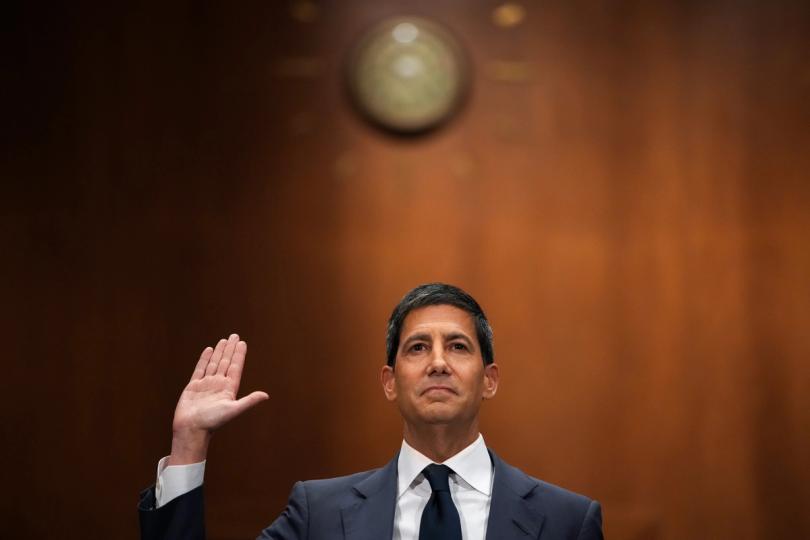
President Donald Trump’s command of U.S. financial and economic policy may have taken a step closer now that his Department of Justice has backed down from an investigation of Federal Reserve Chair Jerome Powell, meaning his nominee to replace Powell may now have an open path to confirmation.
Fed chair nominee Kevin Warsh, whose own considerable wealth includes some crypto-world assets, is awaiting a final vote from the Senate after appearing in a confirmation hearing this week. Trump, who has relentlessly blamed Powell for maintaining overly high U.S. interest rates, chose Warsh to remedy that, but Republican Senator Thom Tillis had promised to block the confirmation as long as the DOJ pressed an investigation against Powell for cost overruns in a Fed building project.
That criminal probe was dropped on Friday, and Attorney General Jeanine Pirro said the DOJ asked the Fed’s inspector general to look into the renovation situation and issue a report. When the news emerged, Kalshi’s prediction betting on Walsh’s confirmation before May 15 shot up from about 30% odds to more than 80%.
“I expect a comprehensive report in short order and am confident the outcome will assist in resolving, once and for all, the questions that led this office to issue subpoenas,” Pirro wrote in a post on social media site X. “Accordingly, I have directed my office to close our investigation as the IG undertakes this inquiry. Note well, however, that I will not hesitate to restart a criminal investigation should the facts warrant doing so.”
Putting his own people atop the Federal Reserve not only equates with Trump’s greater influence over U.S. monetary policy, but it also leaves him with more allies on the Fed board as it makes decisions about financial policy — including implementing rules that govern the crypto industry and stablecoin issuers.
Because of Tillis’ threat, Warsh may have been in a holding pattern as long as the DOJ pursued its investigation, which could have left Powell in charge of the Fed indefinitely, well beyond the May 15 expiration of his term. Now, the Republican-majority Senate may be able to move more quickly toward confirmation of the nominee, who insisted during his hearing that he would act independently of White House direction.
Senator Elizabeth Warren, the ranking Democrat on the Senate Banking Committee that’s considering his nomination, dismissed the move and noted the administration is still pursuing Fed Governor Lisa Cook in court.
“This is just an attempt to clear the path for Senate Republicans to install President Trump’s sock pocket Kevin Warsh as Fed chair,” Warren said in a statement. “Let’s be clear what the Justice Department announced today: They threatened to restart the bogus criminal investigation into Fed Chair Powell at any time while failing to drop their ridiculous criminal probe against Governor Lisa Cook.”
Tillis called Warsh a “great nominee.” In his own posting this week on X, the senator said he’d vote yes on Warsh once the DOJ backs off of Powell:
“I look forward to supporting him out of committee once the DOJ drops their bogus investigation into Chairman Powell that threatens the independence of the Fed.”

The odds of the United States invading Iran this year surged to 63% on the Polymarket prediction platform on Sunday, following comments made by US President Donald Trump on social media.
The odds of an invasion before 2027 are still down from the high of 68% on March 29, which occurred due to a US troop buildup and comments from the Trump administration that the US was considering capturing Kharg Island, a major Iranian oil shipping station.
The Polymarket trading volume for a potential US invasion of Iran was about $3.74 million at the time of publication.
On Tuesday, after Trump signaled that the US might leave Iran in the next two to three weeks, Bitcoin (BTC) jumped by about 2.6% and the S&P 500 index added about 2.91%. However, Trump reversed course with his latest statement on Sunday. He wrote:
“Tuesday will be power plant day, and bridge day, all wrapped up in one, in Iran. There will be nothing like it! Open the fuckin’ strait, you crazy bastards, or you’ll be living in hell.”
Bitcoin’s price remained anchored around the $67,500 level following the comments, according to data from TradingView.
The mixed signals from the Trump administration on the war and how long it will last continue to create investor uncertainty and an impact on all risk asset prices, as market analysts, traders and economists attempt to forecast the effects of the war.

Related: Polymarket takes down market on missing US pilot after backlash
“I wish Trump would stop threatening Iranian civilian infrastructure. It’s a lose-lose for us: backing down hurts his negotiating credibility,” economist Peter Schiff said in response to Trump’s comments.
“Carrying it out escalates the war, damages US standing, generates sympathy for Iran and fuels Iranian hatred for America,” Schiff continued.
“I assumed this was a fake, it isn’t — wild,” podcaster and Bitcoin advocate Peter McCormack said.
Brent crude oil, the most widely used pricing benchmark for the international spot oil market, remains elevated, closing Thursday at more than $109 per barrel. Trading is scheduled to resume on Monday following the Easter holiday weekend.
Magazine: Inside the Iranian Bitcoin mining industry
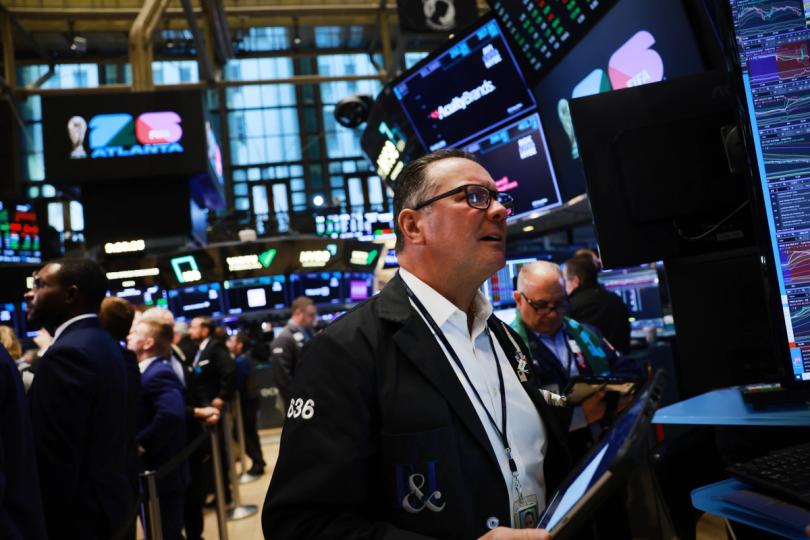
Bitcoin briefly pushed toward $74,000 this week, buoyed by a string of bullish developments that have tied the crypto industry ever closer to traditional finance.
Some market observers began calling this a bullish rally, with one analyst even saying that the new run ‘has legs.’
Yet the rally didn’t last. By the end of the week, the largest cryptocurrency had slipped back below $69,000, losing $110 billion in market cap.
The pullback came despite what might otherwise have been considered one of the most positive stretches of institutional news for the sector in months.
Morgan Stanley named Bank of New York Mellon as a custodian for its spot bitcoin ETF exposure, adding another layer of Wall Street infrastructure around the asset class. Crypto exchange Kraken gained access to the Federal Reserve’s payment system, a milestone in integrating crypto firms with the U.S. banking network. Intercontinental Exchange (ICE), the owner of the New York Stock Exchange, invested in crypto exchange OKX, valuing it at $25 billion, while U.S. President Donald Trump publicly suggested traditional banks should strike a workable relationship with the crypto industry.
Individually, any one of these developments might have sparked a market rally in earlier crypto cycles, when institutional adoption was seen as the catalyst that would send crypto into a massive bull run. Instead, now that adoption is here, the market is ignoring it as macro forces have taken over.
The selloff was mainly triggered by U.S. dollar strengthening as the conflict in Iran intensified, after U.S. President Donald Trump seemingly quashed any chance of some sort of negotiated settlement with Iran, saying, “There will be no deal with Iran.”
This spurred a spike in oil prices, new inflation concerns and shifting expectations around interest rates (despite jobs data showing a weakening market), which put pressure on risk assets globally. Equities moved to the downside as the dollar index rose, and crypto — which has increasingly traded alongside technology stocks (read: risk assets) — followed.
If that’s not enough, Cracks in the global private credit market expanded to Wall Street giant BlackRock, which reportedly began limiting withdrawals from its $26 billion private credit fund amid rising redemption requests. Following similar stress at Blue Owl, which sold $1.4 billion in loans last month to meet withdrawals, the events started to rattle investors.
So what does this week’s episode mean? A growing reality in crypto markets: macro matters more than crypto-native news.
Over the past several years, bitcoin has become more tightly correlated with the Nasdaq and other risk assets as institutional investors entered the market. Hedge funds, asset managers and ETF flows increasingly treat bitcoin as part of a broader portfolio of macro-sensitive assets, reacting to liquidity conditions, interest rates and dollar strength.
Ironically, the same institutional adoption that many in the industry have long sought may be contributing to this dynamic.
As bitcoin becomes embedded in traditional financial portfolios, its price is increasingly influenced by the same forces that move equities, commodities and currencies. When the dollar rallies or interest-rate expectations rise, liquidity tightens across markets — and crypto is rarely immune.
That doesn’t mean the steady drumbeat of institutional developments is irrelevant. The expansion of custody services, banking access, and exchange investment points to a deeper, more mature crypto market structure forming beneath the surface.
One question investors ask when such conflicting price action batters the markets is: Who is selling?
The macro risk seemed to have spooked mostly the short-term bitcoin holders, who cashed out as bitcoin hit $74,000.
These short-term holders transferred more than 27,000 BTC ($1.8 billion) to exchanges in profit over the past 24 hours — one of the largest spikes in recent months, according to CryptoQuant analyst Darkfost.
Short-term holders are typically the most reactive group in the market, and their selling reflects lingering caution amid the ongoing war in Iran and other macro uncertainties. These holders act more like traders, going in and out of an asset to make quick profits, rather than investors who want to buy and hold for the long term. And with bitcoin’s thin liquidity, these moves make a dent in the price action
And the data shows that.
The only short-term investors currently in profit are those who accumulated bitcoin between one week and one month ago, at a realized price of roughly $68,000, suggesting some recent buyers above that price are choosing to lock in gains rather than extend their positions.
In the short term, with crypto in the midst of a bear market dating back to early October and macro uncertainty, price is the only thing that matters to investors.
But it’s not all doom and gloom.
A recent Binance Research report noted that U.S. spot bitcoin ETFs recorded roughly $787 million in net inflows last week — their first positive weekly flows since mid-January — suggesting that some institutional investors may be beginning to re-engage with the market after several weeks of persistent outflows.
In fact, in a recent conference, giant university endowment funds, which tend to focus on long-term return, said that they have begun looking into other alternative investment ideas, including digital assets-related ETFs, given the sky-high valuations of traditional equities.
The report also pointed to signs that speculative excess may already have been flushed out.
Bitcoin funding rates have fallen to their lowest levels since 2023, indicating that leveraged long positions have largely been unwound — conditions that historically create a cleaner foundation for more durable rallies driven by spot demand rather than short-term speculation.
In the end, it all comes down to conviction and market moves.
Some traders called the sharp rally earlier this week a “bull trap” — a brief breakout that lures in late buyers before reversing lower. While institutional conviction is on the rise, with thin liquidity, a skittish market, macro headwinds and a lack of clear catalysts, bitcoin’s price action, at least this week, seems to have proven them right so far.
Read more: Bitcoin is stuck in a rut but JPMorgan says new legislation could be the ultimate spark
World Liberty Financial (WLFI) became the latest firm on Wednesday to apply for a national trust bank charter. It joined digital asset companies like Circle, Ripple, Fidelity Digital Assets, BitGo, and Paxos in a move that would allow it to expand stablecoin services.
However, the announcement caused significant concern. Established banks argue that it represents an effort to secure federal recognition while sidestepping the stricter regulatory and supervisory requirements that apply to fully licensed national banks.
Sponsored
The Trump-backed crypto venture WLFI announced that its affiliate, WLTC Holdings LLC, has submitted a de novo application to the Office of the Comptroller of the Currency (OCC) to establish the World Liberty Trust Company, National Association (WLTC).
The planned institution would function as a national trust bank with a primary focus on stablecoin-related activities. Such charters allow firms to operate across the US under a single federal framework, eliminating the need for individual state licenses.
Trust banks differ from full banks in that they generally can’t take deposits or make loans.
In anticipation of an approval, WLFI stated that WLTC will operate under full federal supervision and comply with the GENIUS Act, implementing strict AML, sanctions screening, and cybersecurity standards.
Sponsored
Customer assets will be segregated, with reserves independently managed, and operations subject to regular examinations. Mack McCain, General Counsel of World Liberty Financial, is set to serve as Trust Officer.
Banking industry groups have pushed back, warning that issuing trust charters in this way could increase systemic risk while eroding the integrity and original purpose of the charter framework.
One of the most contentious aspects surrounding the riskiness of these actions focuses on regulatory and supervisory gaps.
While crypto firms may receive bank-like status, they are not subject to the full suite of prudential regulations that traditional banks face. These include comprehensive capital, liquidity, and risk-management standards.
Sponsored
Given the increasing popularity of crypto firms seeking these licenses, banks have started to raise alarms.
“The conditional approvals of five national trust bank charters from the OCC further stretches the national trust bank charter beyond its statutory and historical purpose, endangers consumers, and creates institutions the OCC is not equipped to resolve in an orderly way,” said Rebeca Romero Rainey, the president and CEO of the Independent Community Bankers of America, in a December statement.
Traditional banks have also warned that this could create regulatory arbitrage, where crypto firms benefit from federal oversight without the same safeguards. In turn, consumer protection and financial stability become points of weakness.
Sponsored
Meanwhile, national trust charters do not automatically include Federal Deposit Insurance Corporation (FDIC) insurance for customer assets in the same way retail banks do.
If a crypto-chartered bank fails, customers might not have the same insurance protections, potentially leading to losses for individuals and institutions that misunderstand the risk.
This could undermine trust in the broader financial system if widely used crypto-bank services experience stress or failure.
The OCC typically requires 12 to 18 months to evaluate applications for national trust bank charters, meaning WLFI is unlikely to receive a final decision before 2027.

The White House’s freshly unveiled National Security Strategy reads less like a traditional diplomatic blueprint and more like a call for global fiscal expansion. For the crypto market, addicted to the idea of rapid-fire interest rate reductions in the U.S. and worldwide, this seems to be a cold shower nobody ordered.
The core of the strategy, signed by President Donald Trump, explicitly champions an “America First” agenda backed by significant economic and military reorientation both at home and abroad.
Consider the directives: the strategy mandates that NATO allies raise defense spending to 5% of GDP, a hefty increase from its long-standing mandate of 2%. Japan and South Korea are also expected to spend more.
“Given President Trump’s insistence on increased burden-sharing from Japan and South Korea, we must urge these countries to increase defense spending, with a focus on the capabilities—including new capabilities—necessary to deter adversaries and protect the First Island Chain,” the strategy says.
It adds further, “We will also harden and strengthen our military presence in the Western Pacific, while in our dealings with Taiwan and Australia we maintain our determined rhetoric on increased defense spending.”
The document explicitly calls on U.S. allies to spend far more of their national gross domestic product on their own defense, and on greater American military investment in the Indo-Pacific to strengthen vigilance in that region.
Funding this kind of monumental expenditure inevitably means more government borrowing or bond supply worldwide, which would drive up bond yields, the cost of capital, and inflation, making it harder for central banks to cut rates. In fact, rate cuts may have little impact as increasing bond supply will likely keep yields elevated.
Moreover, increased borrowing by many of the already heavily indebted advanced nations could raise fiscal crisis risks.
If that’s not enough, the strategy explicitly states that the “era of mass migration is over.” It means that the U.S. may not import cheap labour at a pace seen in earlier years, which could make wages sticky, adding to inflation.
All this looks like a bullish tailwind for assets seen as inflation hedges and safe havens, such as gold. Bitcoin
Gold has surged 60% this year despite the U.S. 10-year yield staying stubbornly above 4%, while BTC is now down nearly 5% on a year-to-date basis. Only time will tell if it evolves into digital gold in a world increasingly fiscally emboldened.
The Fed is expected to cut rates by 25 basis points next week, pushing the benchmark rate down to 3.5%. But with the security strategy calling for global expansion, the odds of steep rate cuts appear bleak.

US President Donald Trump brought together some of the most influential names in crypto at a White House fundraiser this week. Coinbase, Ripple, Tether, and the Winklevoss twins prominently represented the industry.
The gala unveiled plans for a massive new ballroom at the presidential residence, part of Trump’s privately funded expansion efforts. Guests were invited to contribute to the construction project.
Sponsored
Sponsored
Trump hosted 128 leading figures from business and finance at a gala on Wednesday. The event was part of his ongoing campaign to construct a $250 million ballroom for the White House.
The dinner’s guest list notably featured several prominent figures from the cryptocurrency sector. Among them were representatives from Coinbase, Ripple, Tether, and the Winklevoss twins of the Gemini exchange.
In addition to crypto, the event drew executives from major corporations such as Google, Microsoft, Amazon, Apple, Meta, and Palantir and representatives from telecom leaders T-Mobile and Comcast. Tobacco producers Altria and Reynolds American were also present.
The guest list also included several wealthy families and longtime Trump allies, including the Lutnick family, oil magnate Harold Hamm, and Tampa Bay Buccaneers owners Edward and Shari Glazer.
The event quickly raised questions about how wealthy donors might use these contributions to gain influence over Trump.
Sponsored
Sponsored
Over the summer, the Trump administration revealed plans for a 90,000-square-foot ballroom for the presidential residence’s East Wing. The White House said private donors, rather than taxpayers, will entirely finance the construction costs.
Trump noted that the new venue would hold up to a thousand guests and feature bulletproof glass on all sides. Officials described the project as a long-awaited upgrade to accommodate large-scale events such as state dinners.
Although it remains uncertain how many of the 128 attendees contributed, Trump reportedly thanked those present for donating “tremendous amounts of money.” He also stated that the project’s funding was already “fully taken care of.”
The event quickly sparked criticism. Leaders like Senator Elizabeth Warren questioned whether Trump’s acceptance of ballroom donations could be tied to favorable treatment for attendees.
Although YouTube representatives did not attend Wednesday’s gala, the platform agreed last month to contribute $22 million to the ballroom project as part of a settlement with Trump. The donation resolved a lawsuit he had filed against YouTube and its CEO over the temporary suspension of his account following the 2021 Capitol riot.
The gathering also echoed Trump’s earlier private dinner at his Virginia golf club in May, organized for the top 220 holders of his meme coin. The 25 largest investors were also treated to a private tour of the White House.

US President Donald Trump hosted a dinner for companies pledging funds to build a new ballroom in the White House, with attendees reportedly including Gemini co-founders Cameron and Tyler Winklevoss, and executives from Coinbase and Ripple.
According to a Wednesday Wall Street Journal report, among the donors and attendees of the dinner at the White House were the Winklevosses and representatives from Coinbase Global and Ripple Labs. The dinner was reported to be aimed at funding for the White House ballroom proposed by Trump in July, which was estimated to cost $250 million.
The ballroom is projected to add about 90,000 square feet — 8,361 square meters — to the White House. Cointelegraph reached out to Coinbase, Ripple, Gemini and the White House for comment on the amount of the donations, but had not received a response at the time of publication.
The fundraising dinner came at the end of the 15th day of a US government shutdown, when many federal agencies are operating with limited staff and employees have been furloughed. As of Thursday, there have been no reports of a deal between Democrats and Republicans in Congress to pass a bill to continue to fund the government.
Related: Trump’s second term fuels a $1B crypto fortune for his family: Report
Other attendees reported at the fundraising event included representatives from Meta, Google, Amazon, Lockheed Martin and Microsoft. Former Bakkt CEO Kelly Loeffler, currently working as the administrator of the Small Business Administration under Trump, reportedly attended as well.
Before the Wednesday fundraising dinner, representatives of crypto companies, including CEOs and executives, had visited lawmakers and regulators in Washington, D.C., as part of a push toward greater adoption of digital assets and blockchain.
During Trump’s 2024 presidential campaign, the Winklevosses pledged $2 million in Bitcoin (BTC) to the then-candidate. The brothers have continued to be a presence in Washington and at the White House by attending a signing ceremony for the GENIUS stablecoin bill in July and donating $21 million to a pro-Trump political action committee before the 2026 midterms.
Ripple CEO Brad Garlinghouse and Chief Legal Officer Stuart Alderoty have also developed close ties to the Trump administration since his election win. The pair met with the then-president-elect in November and attended inauguration events in January, with Ripple advertisements visible in metro stations across the city.
Garlinghouse also met with Trump and other industry leaders at a crypto summit at the White House in March.
Coinbase CEO Brian Armstrong has also been a consistent presence on Capitol Hill, meeting with US lawmakers to support the GENIUS Act and crypto market structure legislation. The crypto exchange also donated $1 million to Trump’s inauguration fund, with Armstrong meeting with the president one-on-one in November.
Magazine: Quitting Trump’s top crypto job wasn’t easy: Bo Hines

US President Donald Trump’s second term in office has coincided with an extraordinary increase in his personal wealth, much of it linked to a sprawling cryptocurrency empire built by the president and his family.
According to a Financial Times investigation, Trump’s crypto ventures have generated more than $1 billion in pre-tax profit over the past year. Trump’s son, Eric, confirmed to the outlet that the family’s actual profits were “probably more.”
At the center of this new fortune is World Liberty Financial, a crypto company founded by Trump’s sons and allies, which has sold billions of dollars in tokens and stablecoins. The project, whose website identifies President Donald Trump as “co-founder emeritus,” launched last year with plans for a crypto-lending app.
In June, Trump disclosed $57.4 million in income from his involvement with World Liberty Financial. Last month, the Trump family’s stake in the project surged to $5 billion after a token unlock. The FT estimates the family has earned $550 million from WLFI this year.
The Trump family has also profited from memecoins like Official Trump (TRUMP) and Official Melania Meme (MELANIA), which collectively brought in hundreds of millions of dollars through sales and trading fees.
Related: Trump confirms US is in a trade war with China
Per the FT report, the TRUMP memecoin has brought the family $362 million in profit, while MELANIA has made $65 million. Notably, the TRUMP memecoin is down by more than 90% from its all-time high, while MELANIA has performed even worse, down more than 99% from its high.
Finally, the Trump family bagged $42 million from USD1, the stablecoin issued by World Liberty. Since its launch in early April, the Trump family-backed stablecoin has become the world’s fifth-largest stablecoin with a market cap of $2.68 billion, according to CoinMarketCap.
Meanwhile, Trump’s personal stake in Trump Media & Technology Group, the parent company of Truth Social and a Bitcoin treasury operation, is now valued at about $1.9 billion, according to the FT report.
On Wednesday, billionaire Peter Thiel–backed Erebor received preliminary regulatory approval to launch a bank aimed at serving crypto, AI and tech startups. The bank reportedly has ties to Trump.
Related: Bitcoin miners rally as Trump eases China tariff fears
Last week, it was reported that the startup behind Trump’s official memecoin is seeking to raise at least $200 million to build a digital-asset treasury aimed at buying back the token to shore up its value.
In August, ALT5 Sigma Corporation announced plans to raise $1.5 billion through the sale of 200 million common shares at $7.50 each to build out its WLFI corporate treasury.
Magazine: EU’s privacy-killing Chat Control bill delayed — but fight isn’t over


