President Donald Trump said US intel chief Clayton will lead the SIF, reporting to the president and Chief of Staff Susie Wiles.

 Live Chat
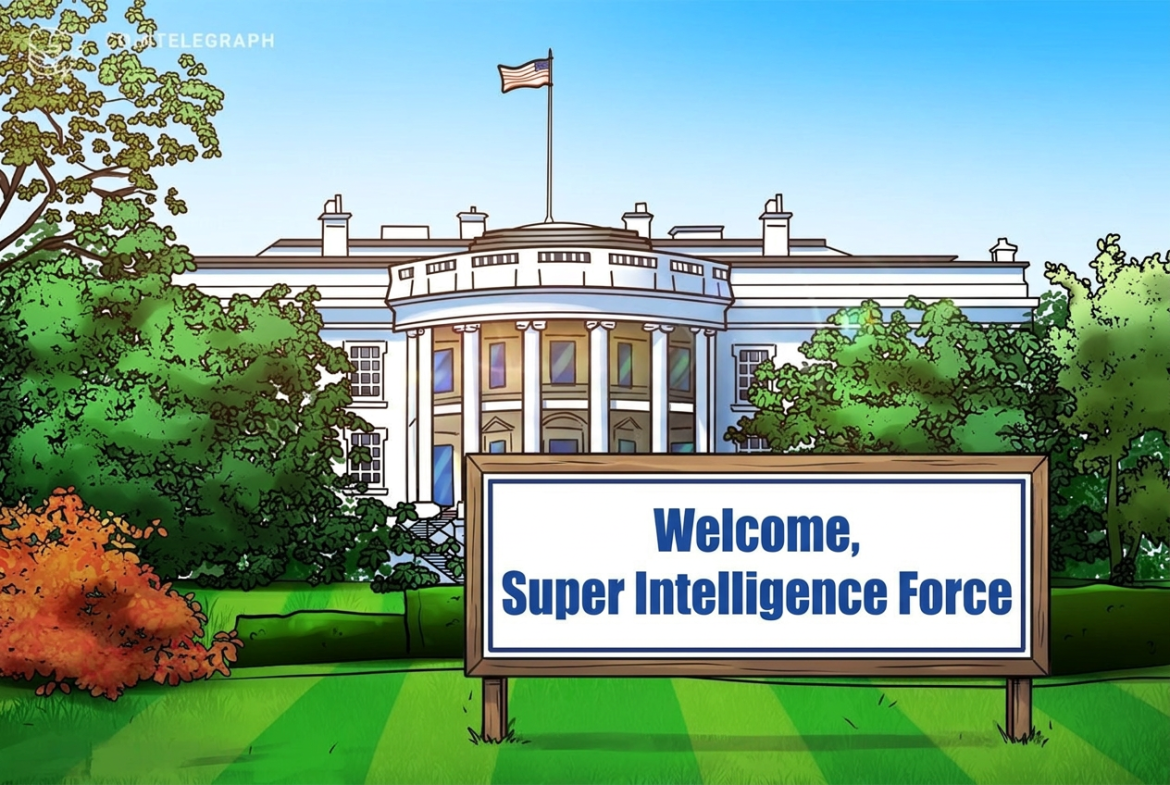
President Donald Trump said US intel chief Clayton will lead the SIF, reporting to the president and Chief of Staff Susie Wiles.
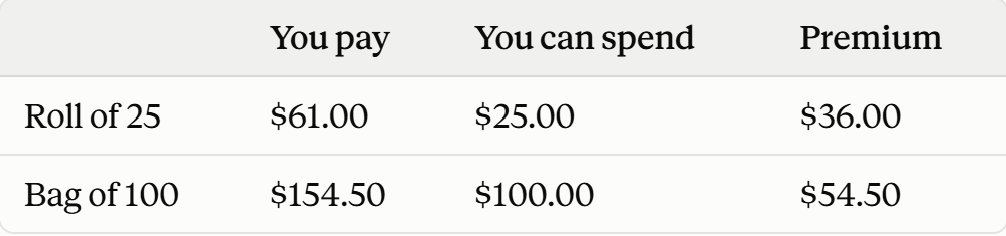
The US Mint began selling the 2026 President Donald J. Trump $1 coin at noon ET Wednesday. A roll of 25 costs $61. A bag of 100 costs $154.50.
Buyers chasing the rare version face long odds. The Mint hid 250,000 coins struck on Independence Day inside those same rolls and bags.
Each coin is legal tender worth $1. So a $61 roll holds $25 you could actually spend, and a $154.50 bag holds $100. The rest is the collector price.
“People are waiting an hour to buy $100 for $154.5,” one user remarked.
The bag is the better deal, working out to $1.55 a coin while the roll costs $2.44 a coin, or about 58% more. Both prices sit above face value.
Still, the Mint charges the same $61 and $154.50 for its routine dollar releases. The premium is standard, not a Trump surcharge.
What changed is the size of the run. The Mint capped this one at 150,000 rolls and 50,000 bags. Its 2026 American Innovation dollar offered just 7,350 Philadelphia rolls, roughly 20 times fewer. That release carried no household cap. This one allows two of each.
A privy mark is a small extra symbol stamped into the die. This one reads July 4th. If both products sell out, 250,000 marked coins will spread across 8.75 million, or about 1 coin in 35.
Checking your change may not work yet. The Mint urged buyers to look in their pockets. However, its own campaign page gives a fall 2026 date for circulation. That page also sells the rolls and bags exclusively through the Mint.
Philadelphia started striking the coin in July. The Mint has published no production figures for it so far.
One rule is narrower than most people assume. Federal law allows only a deceased person on US currency and securities. Coins sit outside that sentence.
A second rule does cover dollar coins. It bars any living president from the Presidential $1 Coin Program. Treasury went around it by using a different section of the code.
That authority comes from the Circulating Collectible Coin Redesign Act of 2020. The law lets the Mint redesign dollar coins for the 250th anniversary. Trump signed it in January 2021.
Congress tried twice to shut the gap and failed. Representative Ritchie Torres filed the TRUMP Act in October 2025. Senators Catherine Cortez Masto and Jeff Merkley followed with the Change Corruption Act in December.
“If you can’t appear on the U.S. dollar while you’re alive, you shouldn’t appear on any U.S. coins,” said Representative Sam Liccardo, a California Democrat who co-sponsored the bill.
The precedent is a century old. In 1926 the Mint paired sitting President Calvin Coolidge with George Washington on a half dollar. By its own account, no president had appeared on a coin while alive before. That coin marked the 150th anniversary of independence.
Elsewhere, Eric Trump posted a short video of a new US passport the same day. He has fronted other Trump branding reveals too. The inside page shows his father leaning over the Resolute Desk, set against the Declaration of Independence.
That book is the Patriot Passport. The State Department released 250,000 more in July after demand climbed. Applicants pay no extra fee.
Getting one takes effort. The department requires an in-person appointment at limited events. Honolulu hosted one on Wednesday. Seattle and Houston follow on September 12.
The launch also confused crypto traders again. Official Trump (TRUMP) is the Solana meme coin tied to the president. It changed hands near $2.21 on Wednesday, down 6.4% over the last 24 hours. The token hit the same mix-up in July when the White House promoted the metal coin.

Buyers of the metal coin now wait on the mail. None will know whether they hold a July 4 strike until the box arrives.
The post How to Get the Trump $1 Coin: Buy It or Hunt Your Change appeared first on BeInCrypto.

Blockchain data reviewed by CoinDesk shows wallets tied to North Korea’s Lazarus Group sold more than $30 million in bitcoin on the platform in the last three weeks alone.
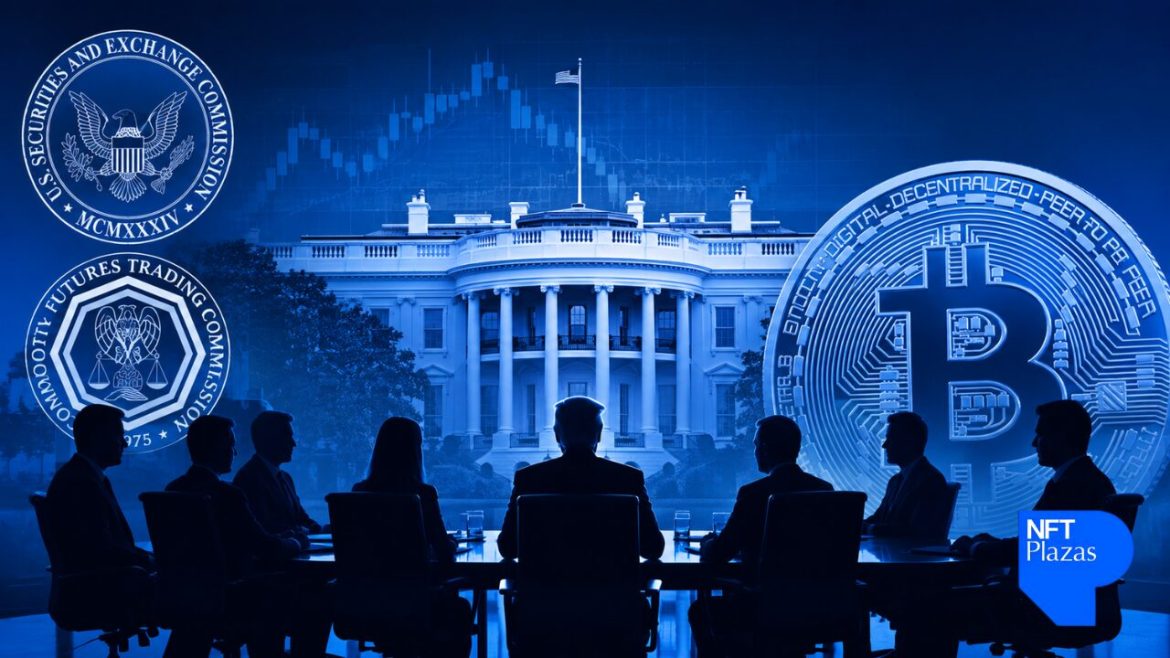
The White House is preparing to host a major meeting with cryptocurrency and prediction-market executives on Wednesday, August 19, bringing together President Donald Trump, senior U.S. regulators and some of the industry’s biggest companies as Washington weighs the future of digital-asset regulation.
Trump is expected to participate alongside Securities and Exchange Commission (SEC) Chairman Paul Atkins and Commodity Futures Trading Commission (CFTC) Chairman Michael Selig. Executives from Coinbase, Ripple, Gemini, Robinhood, Polymarket and Kalshi are among those expected or invited to attend, according to reports citing people familiar with the plans.
The gathering comes at a critical moment for the U.S. crypto industry. Congress has failed to advance the market-structure legislation that has become the sector’s top regulatory priority, while the SEC and CFTC are increasingly moving ahead with their own initiatives to establish clearer rules for digital assets.
The meeting is expected to take place at the Eisenhower Executive Office Building and is being positioned as a precursor to a major CFTC regulatory discussion scheduled for the following day.
Executives from a16z, Chainlink, Paradigm and the Digital Chamber could also participate. Traditional financial-market institutions, including Nasdaq and the New York Stock Exchange, have also been linked to the broader gathering.
Treasury Secretary Scott Bessent and Commerce Secretary Howard Lutnick are expected to be involved, although the final attendee list and agenda had not been formally released as of August 16.
The composition of the meeting is notable because it puts crypto exchanges, blockchain companies and prediction-market operators alongside established financial institutions and federal regulators.
It also reflects the growing integration of digital assets into the broader U.S. financial system. Rather than being treated solely as an emerging technology sector, crypto is increasingly being discussed alongside traditional exchanges, market infrastructure and financial institutions.

Eleanor Terrett dispatch adds the New York Stock Exchange and Nasdaq to the invite list alongside Kraken. (Source: X)
The White House event will take place one day before the CFTC’s Innovation Advisory Committee holds its first major session.
The committee is designed to advise the agency on technological developments affecting financial markets and the economy. Its membership includes representatives from crypto companies, prediction-market platforms and traditional financial institutions, with CFTC Chairman Michael Selig overseeing the initiative.
The timing gives Wednesday’s gathering additional significance. It could serve as an opening discussion ahead of broader regulatory conversations involving cryptocurrency, blockchain infrastructure and prediction markets.
Prediction markets have become an increasingly important issue in Washington. Platforms such as Kalshi and Polymarket have expanded rapidly, while regulators continue to debate how event contracts should be regulated and where federal oversight should begin and end.
The CFTC has taken a particularly active role in defining the boundaries for these markets, making the participation of Kalshi and Polymarket executives especially relevant.
The meeting also comes as the Digital Asset Market CLARITY Act faces an increasingly difficult path through Congress.
The legislation is designed to establish clearer rules for determining which digital assets fall under SEC securities regulation and which should be overseen by the CFTC as commodities. The crypto industry has broadly backed the bill, viewing it as a potential foundation for long-term regulatory certainty.
However, the Senate left Washington for its August recess without advancing the legislation. Senate Majority Leader John Thune has scheduled a procedural vote for September 15, giving lawmakers another opportunity to move the bill forward when they return.
The delay has sharply reduced expectations that the legislation will become law this year. Galaxy Digital research head Alex Thorn recently lowered his estimated probability of passage in 2026 to just 10%, highlighting the increasingly difficult political path.
Still, support for the bill has not disappeared. Citigroup CEO Jane Fraser has said she would like to see the CLARITY Act become law, although she has raised concerns about provisions involving stablecoin rewards and their potential impact on traditional bank deposits.
The weakening outlook for the CLARITY Act has increased the importance of regulatory action from the SEC and CFTC themselves.
Under Atkins, the SEC has adopted a considerably more crypto-friendly approach than during the previous administration. The agency has been developing a broader framework known as “Regulation Crypto,” alongside an anticipated innovation exemption that could give companies more flexibility to experiment with blockchain-based financial products.
An SEC meeting scheduled for August 14 to consider new crypto-related regulatory proposals was unexpectedly canceled, however, adding uncertainty to the agency’s timetable.
The cancellation does not necessarily signal a change in direction. Industry participants continue to expect the SEC to release some elements of its crypto framework in the coming weeks or months, potentially providing regulatory clarity even if Congress remains unable to pass comprehensive legislation.
For the crypto industry, Wednesday’s meeting could provide an important signal of the Trump administration’s regulatory priorities.
Coinbase and Ripple represent major segments of the digital-asset economy, while Kalshi and Polymarket represent the rapidly expanding prediction-market sector. Their presence alongside the SEC, CFTC and traditional financial institutions suggests Washington increasingly views digital assets as part of the future architecture of U.S. financial markets.
The meeting is unlikely to immediately resolve the CLARITY Act’s legislative deadlock. However, it could offer insight into how the administration intends to proceed if Congress fails to deliver comprehensive market-structure legislation in 2026.
For investors, the focus will likely be on whether the gathering signals closer coordination between the White House, SEC and CFTC.
With Bitcoin and the broader crypto market struggling for momentum this year, regulatory clarity remains one of the sector’s most closely watched potential catalysts. The White House meeting could offer an early indication of whether that catalyst will ultimately come from Congress—or increasingly from regulators acting on their own.
Cointelegraph is committed to providing independent, high-quality journalism across the crypto, blockchain, AI, and fintech industries.
All news, reviews, and analyses are produced with full journalistic independence and integrity. For more details on our standards and processes, please read our Editorial Policy.
The White House is pushing Senate Democrats to accept a conflict-of-interest agreement that President Donald Trump worked out with Republicans, a move that negotiators hope will settle the last major dispute in the Digital Asset Market Clarity Act.
A White House official, who spoke on the condition of anonymity, told CoinDesk that Trump “has agreed to the most comprehensive and wide-ranging ethics provision in history.”
No details have emerged on what crypto restrictions Trump has consented to, and Democrats have been kept out of the loop on the provision.
The ethics section would restrict senior government officials from personal business ties to the crypto industry, including Trump, whose family holdings have generated more than $2 billion in new wealth since he returned to office, according to Reuters. Release of the final draft has stalled for several days as negotiators work through the language.
Democratic lawmakers have not received a briefing on the concession, though Republicans and the crypto industry have begun a sales campaign that casts Democrats as the obstacle.
“If Senate Democrats block this historic legislation after the administration has bent over backward to accommodate their concerns, stakeholders should make no mistake: It is the Democrats who are blocking this legislation because they were never serious about a legislative outcome,” the White House official said.
Treasury Secretary Scott Bessent has added his voice to the push, saying that lawmakers stood at the “1-yard line” on the Clarity Act and urging Congress to pass the bill before the recess.
Democratic negotiators such as Senators Kirsten Gillibrand, Ruben Gallego and Angela Alsobrooks have not seen details of the agreement with Trump, who met with Republican senators at the White House last week.
Many of the Democrats have drawn a line that the ethics provision needs to be strong. Trump has pressed the Senate to pass the Clarity Act, and his disclosure that he made more than $1 billion from crypto in 2025 has given critics fresh ammunition.
The Clarity Act’s text cleared the Senate Banking Committee in a 15-9 vote, with Gallego and Alsobrooks joining Republicans to advance it.
Both said in May they would not back the final passage without an ethics provision. During the committee markup, an amendment from Senator Chris Van Hollen to bar the president, vice president and members of Congress from crypto business ties failed 11-13.
The industry expects full circulation of the legislative text this week, according to CoinDesk.
The Senate has fewer than three weeks to finish the bill and clear a floor vote before Majority Leader John Thune’s August 7 deadline, when lawmakers break for their reelection campaigns and enter a narrow stretch to finish the bill.
Galaxy Research puts the odds of passage at 50-50.
Dollar-linked stablecoins already account for roughly 90% of crypto transaction volume in Brazil, most of it used for payments and settlement, according to tax authority data.
Brazil processes between $6 billion and $8 billion in crypto each month, much of it using dollar-denominated stablecoins instead of the country’s own currency.
However, even as dollar stablecoins have proliferated, Brazil’s central bank has moved to limit their role in regulated cross-border payments. Resolution 561, effective October 1, is set to bar payment firms from settling cross-border payments in stablecoins or other crypto, closing a back-end channel that had routed reais through dollar tokens. The central bank has cast stablecoins as a threat to monetary sovereignty, tax enforcement and anti-money laundering controls.
Pix now faces pressure from both sides after Washington named it a trade barrier, while Brazilian regulators shield it from growing competition from dollar-backed stablecoins.
Pix, however, may not be competing with stablecoins.
“In practice, they are complementary,” Rodrigo Caggiano, founder of Brazilian real-world asset monitoring platform RWA Monitor, told CoinDesk. “Pix has addressed domestic instant payments well, while stablecoins expand what is possible by operating on blockchain networks.”
U.S. pressure is likely to accelerate Brazil’s regulatory debate on stablecoins and digital financial infrastructure, Caggiano said, as the central bank builds its own tokenized-settlement system, Drex, on similar programmable rails.

Trump Media, the company that operates the Truth Social network, said Thursday it was launching a new paid-for API that gives Wall Street firms “the fastest” access to posts from the most influential Truth Social accounts, including US President Donald Trump.
The API is targeted to be available to institutional customers from Aug. 1, 2026, and is aimed at high-frequency and algorithmic trading firms that require a low-latency, machine-readable feed, said the company on Thursday.
“Markets already move on Truth Social posts,” said Kevin McGurn, interim CEO of TMTG in a statement. “Truth API delivers a direct, licensed, real-time feed of the platform’s most market-moving Truths while advancing our strategy to monetize proprietary assets through a high-margin, recurring revenue stream.”
Posts from Trump’s Truth Social account have moved markets, with the most recent examples being his posts relating to the ongoing conflict between Iran and the US. Other major accounts on Truth Social include Donald Trump Jr, Eric Trump and FBI Director Kash Patel.
“Companies have previously tried to scrape data from Truth Social, which is in violation of its terms of service,” McGurn said, according to CNN.
“We’re going to create a lot of friction for those folks that aren’t coming to us directly,” he added.

Nearly 1 million people have lost a total of $3.8 billion after buying President Donald Trump’s $TRUMP memecoin, according to cryptocurrency analytics firm Nansen.
The New York Times reports that Nansen’s analysis is based on transactions that are publicly visible on the blockchain, showing that 988,905 accounts had lost money on the memecoin as of the end of June. That represents around two out of three $TRUMP buyers.
On Sunday, $TRUMP was trading at $1.69, down nearly 98% from its high of $75.35.
Trump announced the memecoin three days before his inauguration in 2025. He’d previously co-founded a crypto startup, World Liberty Financial, with his sons. The $WLFI coin has also declined significantly in value.
In a recent financial disclosure, the president revealed that he made $636 million from the $TRUMP memecoin, accounting for nearly half of the $1.4 billion that the president made from the crypto industry last year.
Under the Trump administration, the Securities and Exchange Commission has said it will not regulate memecoins as securities and has dropped a number of lawsuits against crypto companies. A White House spokesperson told the NYT, “President Trump proudly made the United States the crypto capital of the world.”

US President Donald Trump says he got involved in crypto “for politics” and became pro-crypto after seeing how much money the industry was making.
At a press conference in the Oval Office on Monday to announce “Trump Accounts,” an investment account for children under 18, Trump was asked whether the accounts would allow for Bitcoin (BTC).
“I’ve become a big crypto guy only for one reason: If we don’t have it, China’s going to have it,” Trump answered. “I’m a fan, I wasn’t initially, I didn’t know much about it, but, for some of my first term, I wasn’t much involved, and I watched it grow, and it’s a huge industry.”
“I got involved in it a little bit for politics,” Trump added. “I realized there are a lot of people that love crypto.”
The comments shed new light on why Trump pivoted his stance towards crypto. In his first term, Trump said he was “not a fan” of crypto and called Bitcoin “a scam.” Since then, he and his family have built deep business interests in crypto, and Trump has faced criticism for his pro-crypto stance while being connected to the industry.
“As a businessman, I see a lot of money starting to come in with Bitcoin and, you know, the different forms, and I said: ‘This thing’s got a lot of life,’ and then I hear China was going to make a heavy move on it,” he added. “If we didn’t do it, China would do it.”
Trump’s pro-crypto pivot attracted the help of the crypto lobby, which spent around $170 million in the 2024 election to help elect mostly Republicans, and is set to spend even more backing pro-crypto candidates in the November midterms.
Donald Trump speaks to reporters about “Trump Accounts” at the White House on Monday. Source: YouTube
Trump said he doesn’t talk to his family about their involvement in crypto, an area that made him more than $1.4 billion last year, according to financial disclosures released June 30.
Trump and his sons are listed as co-founders of World Liberty Financial, a crypto platform that generated a large portion of Trump’s crypto-related income last year, but the president said his interest in crypto is “not a question of a personal thing.”
Related: Donald Trump says ‘nothing wrong’ with $1.4B crypto windfall while in office
“I let my kids do whatever the hell they do. I don’t talk to them, ever, talk to them about it,” Trump said.
Trump claimed that the Biden administration “dropped all investigations” related to crypto when he “went very pro-crypto.”
However, under the Trump administration, the Securities and Exchange Commission stopped multiple investigations and withdrew or settled enforcement actions filed against crypto companies, some of which had donated to Trump.
“Every time I see a crypto guy where they dropped an investigation, I said: ‘You’re lucky I’m president,” Trump said.
Magazine: SBF will never get a pardon, Trump peace deal boosts Bitcoin: Hodlers Digest


