Bitcoin and altcoins saw strong double-digit price rebounds after this week’s brutal sell-off, but do technical charts forecast a longer-term recovery, or is today’s rally just a dead cat bounce?
Key takeaways:
SOL funding rates signal low bullish conviction after a 46% price drop, despite Firedancer’s launch and rising Solana network transactions.
Solana DApp revenues and DEX activity have weakened sharply, suggesting broader market fatigue even as Solana’s ecosystem grows.
Solana’s native token, SOL (SOL), has failed to sustain prices above $145 for the past four weeks. A decline in network activity amid reduced demand for decentralized applications has negatively impacted SOL’s outlook.
With Solana’s TVL now down more than $10 billion from its September peak, onchain metrics are flashing signs that user participation is cooling faster than expected.
The total value locked (TVL) on Solana has been in decline since reaching its all-time high of $15 billion in September. Falling smart contract deposits increase the immediately available SOL supply for sale. Meanwhile, revenues from decentralized applications (DApps) on Solana dropped to $26 million per week, down from $37 million two months earlier.
Traders’ appetite for memecoins has also weakened since the cryptocurrency market flash crash on Oct. 10, an event that exposed critical flaws in leveraged positions and the overall liquidity of smaller altcoins. Regardless of whether derivatives markets amplified the move, traders became less comfortable with DEX platforms following the $19 billion liquidation event.

Memecoins have been a major driver for SOL, especially after the Official Trump (TRUMP) launch in January, which pushed decentralized exchange (DEX) volumes on Solana to $313.3 billion that month. According to DefiLlama data, this activity has since dropped by 67%, partly explaining the softer revenue trends across Solana DApps.
Still, the reduced demand for blockchain-based applications may reflect a broader market slowdown rather than a specific weakness in Solana.

Solana network fees fell by 21% over the past 30 days, yet competing blockchains experienced steeper declines. Fees on the BNB Chain dropped 67%, while Ethereum saw a 41% decrease over the same period, according to Nansen data. Additionally, the number of transactions on Solana increased by 6%, while activity on the BNB Chain decreased by 42%.
SOL perpetual futures can provide a useful gauge of traders’ sentiment, as exchanges charge either buyers (longs) or sellers (shorts) based on leverage demand. In neutral conditions, the funding rate typically ranges between 6% and 12% per year, with longs paying to keep their positions open given the cost of capital. Conversely, a negative funding rate signals broader bearish sentiment.

SOL’s annualized funding rate stood at 6% on Friday, showing weak demand for bullish leverage. The unusual 11% negative reading on Thursday should not be interpreted as heavy demand for bearish positions, as market makers moved quickly to stabilize imbalances. Still, it may take time for bulls to rebuild conviction after SOL’s 46% price decline over three months.
Several recent developments in the Solana ecosystem are expected to draw renewed investor interest, including Friday’s mainnet launch of Firedancer, a new validator client designed to expand processing capacity. The project took more than three years to build under the guidance of Jump Trading, one of the industry’s top market makers. Developers reported a strong response after the validator node re-synced in under two minutes.
Related: J.P. Morgan taps Solana for Galaxy’s tokenized corporate bond issuance
Kamino, the second-largest Solana DApp by TVL, also announced new products on Friday, including fixed-rate and fixed-term borrowing, offchain collateral, private credit and an onchain Bitcoin-backed institutional credit line. Kamino’s $69 million in annualized fees and an average 10% annualized yield on deposits offer a clear indication of the ecosystem’s expansion.
Whether SOL can reclaim the $190 level last seen two months ago remains uncertain, and it is unlikely that improved validation software or expanded DApp offerings alone will restore the confidence needed to support a sustainable bullish trend.
This article is for general information purposes and is not intended to be and should not be taken as, legal, tax, investment, financial, or other advice. The views, thoughts, and opinions expressed here are the author’s alone and do not necessarily reflect or represent the views and opinions of Cointelegraph. While we strive to provide accurate and timely information, Cointelegraph does not guarantee the accuracy, completeness, or reliability of any information in this article. This article may contain forward-looking statements that are subject to risks and uncertainties. Cointelegraph will not be liable for any loss or damage arising from your reliance on this information.
This article does not contain investment advice or recommendations. Every investment and trading move involves risk, and readers should conduct their own research when making a decision. While we strive to provide accurate and timely information, Cointelegraph does not guarantee the accuracy, completeness, or reliability of any information in this article. This article may contain forward-looking statements that are subject to risks and uncertainties. Cointelegraph will not be liable for any loss or damage arising from your reliance on this information.
CLS Mining states that the new solution uses an intelligent resource scheduling system, allowing users to contribute to the network of mainstream assets without complex operations. The system automatically adjusts hashrate based on on-chain activity, difficulty changes, and real-time network data, making rewards more stable and transparent.
“Our goal is to simplify mining and make technology truly serve users. The ‘Simple Mining, Smart Rewards’ solution allows more people to easily participate in encrypted networks without needing to understand the underlying hardware or complex maintenance.”
Several technical highlights include:
Automated Reward Model: The system distributes rewards based on network conditions, providing users with a smoother reward experience;
Multi-Asset Support: Currently supports smart mining strategies for mainstream assets such as BTC, DOGE, LTC, SOL, ETH, and XRP;
Simplified Participation Process: No need to manage hardware or build a mining farm, lowering the entry barrier.
How to Get Started
Visit the official website and complete account registration to receive a $15 reward.
Choose a suitable service plan based on your individual needs and flexibly decide on resource allocation methods.
Daily automatic settlement of mining revenue, enabling continuous passive income.
CLS Mining significantly reduces the cost for retail users to participate in mining by eliminating the burden of purchasing mining equipment, offering lower-threshold hashrate allocations, and supporting multi-currency mining (BTC, DOGE, LTC, and SOL combined mining). The platform, with its highly competitive pricing (starting at just $100), restores hashrate control for individual investors, further promoting true decentralization of mining resources. Users can continuously follow the world’s leading retail mining service portal for the latest hashrate supply and platform updates.
About CLS Mining:
CLS Mining is a next-generation cloud mining platform jointly developed by several top global mining infrastructure partners. It provides retail and institutional users with real, transparent, and verifiable global mining farm hashrate. CLS Mining’s highly integrated ecosystem not only supports instant settlement but also offers additional rewards through affiliate referrals, helping users participate in the construction of the underlying blockchain hashrate network in a lighter way, achieving deeper participation and value sharing in crypto infrastructure.
Media inquiries: info@clsmining.com
Most Solana users have the same silent problem, their wallets are filled with tiny locked balances they don’t even know exist.
These come from rent fees tied to SPL token accounts, NFTs, old trades, or projects they interacted with months ago.
For most people, these forgotten accounts sit idle forever. But in recent months, a growing number of users have been sharing the same discovery:
“I recovered SOL, I didn’t even know I lost.”
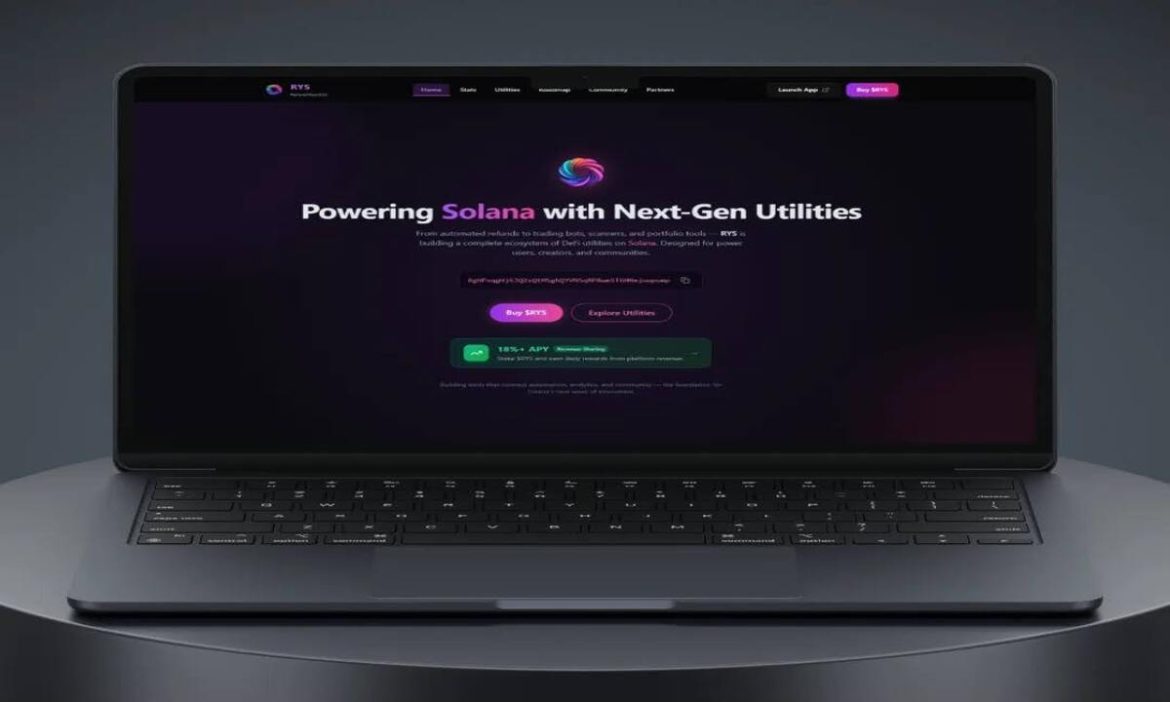
That trend is tied to one project, RefundYourSOL, a Solana-based utility designed to scan wallets, identify inactive accounts, close them, and instantly return rent-locked SOL back to the user. What started quietly is now becoming one of the most practical tools on Solana as the chain continues to grow.
RefundYourSOL isn’t aiming to be the next hype-driven meme token. Instead, it focuses on a boring but important task: cleaning wallets. Every time a user interacts with a token or mints an NFT, Solana creates an account for it, and that account requires rent.
When that token is moved or emptied, the rent doesn’t automatically return.
Multiply that across hundreds of dApps and millions of wallets, and the lost value becomes massive.
RefundYourSOL fixes this by automating the entire recovery process. Users simply connect their wallet, run a scan, and reclaim their locked-up SOL in seconds. It’s simple, transparent, and directly useful to anyone active on Solana.
According to the latest data from CoinGecko, the project’s native token RYS is growing rapidly has it gain 7.2% overtime:
This positions RefundYourSOL as a micro-cap with meaningful utility, sitting well below its previous highs but showing clear on-chain activity and increasing awareness.
While not a large-cap token, the rebound from its all-time low and consistent trading activity signal that investors are beginning to revisit smaller Solana projects with clear use-cases.
Purchase your RYS on:
RefundYourSOL has grown beyond wallet cleanup, with initiatives that will expand its impact across the Solana ecosystem:
These features aim to make RefundYourSOL an essential, integrated tool for everyday Solana wallet management.
Note: RefundYourSOL is also in the progress of making a portfolio tracker which will track solana holdings, performance, and portfolio value across all wallets.
Check their progress tracker here

1. It solves a real, widespread issue: Every Solana user who has ever traded, minted, or used dApps has rent-locked SOL. The demand is built-in, not manufactured.
2. It provides instant, measurable value: The project isn’t promising future utility. It delivers value right now, by giving users back SOL.
3. It sits at the intersection of growth and necessity: As Solana handles more transactions, launches more NFT collections, and expands its DeFi ecosystem, rent-locked accounts only increase. RefundYourSOL grows naturally with the network.
4. It’s a micro-cap with upside potential: With a ~$700K+ market cap and active usage, even moderate adoption or integration with Solana wallets could significantly shift its position.
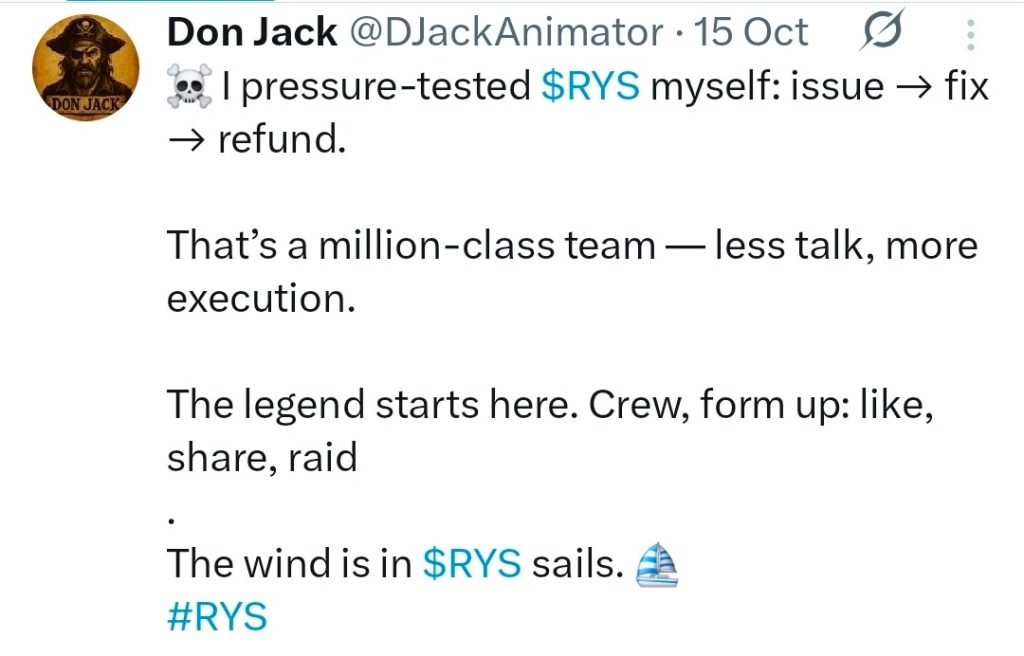
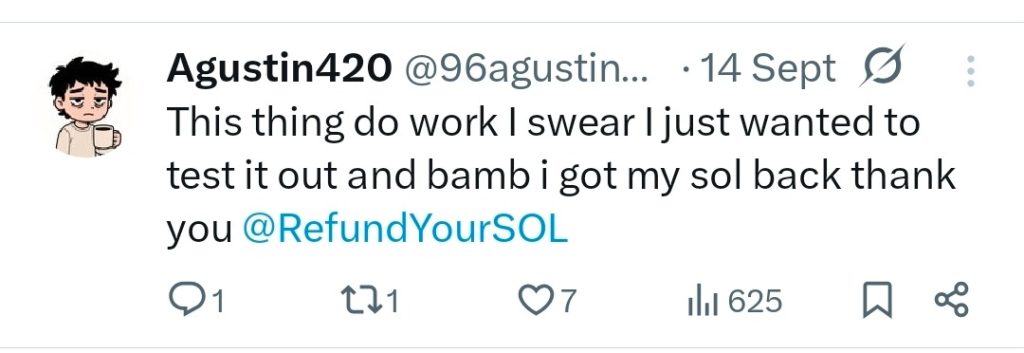
Across X/Twitter, users have been posting how they tested RYS and how satisfying they are.

The amounts differ, but the reaction is the same:

“I had no idea this money was still in my wallet.”
This organic hype has driven more users to explore the platform, especially as the Solana ecosystem continues to expand.
RefundYourSOL sits in a valuable niche:
A cleaner, more efficient Solana ecosystem benefits everyone, users, developers, and new projects.
By turning forgotten rent deposits into usable SOL, the project injects value back into wallets and encourages more activity on the chain.
For investors, the combination of low market cap, real utility, growing user interest, and the overall health of the Solana network makes RYS an interesting token to monitor, especially at current levels.
RefundYourSOL is not trying to compete with the biggest Solana projects, and that’s exactly why it works. It fixes a real issue, adds value instantly, and scales naturally with user activity.
In a crypto market where many tokens fight for attention without offering anything tangible, RefundYourSOL stands out for delivering something simple and valuable: giving users back what they already own.
Website: refundyoursol.com
Telegram: t.me/refundyoursol
Telegram BOT: t.me/refundyoursolbot
Twitter: https://x.com/refundyoursol

When Chainlink briefly appeared on a DTCC reference list, the crypto industry jumped to claim a “LINK ETF confirmed.”
In reality, just like with XRP and Bitcoin, this was just a routine DTCC plumbing update, preparing for potential ETFs long before the SEC signs off. LINK had made it into the settlement system, not past the approvals gate.
However, it is generally a good sign. Most crypto ETFs that appear on the list eventually go live within 6 months. Bitcoin ETFs were listed in October 2023 and finally went live in January 2024, while Canary Capital’s XRP ETF appeared on DTCC this month and went live today.
Still, the distinction matters because it helps ground you in reality, as DTCC’s role begins where speculation usually ends. It’s a post-trade clearinghouse, not a regulator, and its data reflects operational readiness, not policy blessing. Bitcoin, Ethereum, and even XRP have undergone a similar rumor cycle.
The difference between BTC and ETH was that these came after the formal filings were already underway, including exchange rule changes and registration statements that form the backbone of ETF approval. Without both, a ticker on DTCC’s website is just scaffolding: an empty doorway with no house behind it.
To reach day-one trading for a crypto ETF, two main approvals are required in a specific order. First, the exchange seeking to list the ETF must obtain approval for a Rule 19b-4 filing. This filing requests SEC permission to change an exchange rule to list the new product.
This step has often been a stumbling block for crypto ETFs. The SEC evaluates whether there is a “market of significant size” to detect and deter manipulation, or if an alternative surveillance arrangement exists that achieves the same goal.
This standard was the issue in Grayscale’s case, forcing the SEC to clarify the criteria. That led to the approval of spot Bitcoin and Ethereum ETFs in 2024.
SEC orders said that oversight deals with markets like CME address manipulation. For Ethereum, exchanges could use correlation analysis to demonstrate that futures and spot prices move together.
Once the 19b-4 approval is in hand, the ETF issuer must submit an S-1 registration statement, detailing the fund’s structure, custodian, pricing, risks, and fees. The SEC reviews this document and may ask follow-up questions, as was the case with the Ether ETF. No trading can begin until the S-1 is declared effective.
In summary, the exchange must first obtain listing approval (19b-4), and the issuer must then obtain offering approval (Form S-1). Only when both approvals are granted can an ETF debut.
In 2025, the SEC introduced a generic-listing framework designed to make these two approval steps simpler for digital-asset ETFs that closely resemble previously approved products. While it certainly shortened the timeline, exchanges still need to demonstrate the underlying market’s liquidity and price reliability. For tokens like LINK, meeting both approval requirements remains challenging.
If a LINK ETF eventually clears all these steps, it could reshape how both crypto natives and everyday investors gain exposure to digital assets.
For the average person, it would mean buying LINK in the same brokerage account where they hold Apple stock or an S&P 500 fund.
No wallet setup, no seed phrases, no learning curve. Tax reporting would also be simpler: 1099 forms instead of the patchwork spreadsheets most self-custody users wrestle with every April.
However, convenience comes with trade-offs. ETF holders pay management fees and may face tracking differences, the small but persistent gap between an ETF’s price and the coin’s actual market value. Early on, spreads can be wide if trading volume is thin.
There’s also a conceptual cost: ETF investors won’t be using LINK in DeFi, staking it (yet), or voting on governance proposals. They’ll be holding exposure, not utility.
Advisors will most likely view altcoin ETFs as a niche asset class in a diversified portfolio, allocating perhaps only a few percentage points of total assets, balanced against the riskier volatility.
ETFs utilize authorized participants and market makers to maintain prices in line with their net asset value. For LINK, thinner markets mean large creations or redemptions could affect prices or DeFi liquidity.
If an ETF holds a significant amount of LINK, it could reduce liquidity on exchanges and staking pools, leading to more pronounced price swings in stressed markets. That’s why the SEC reviews custody and creation-redemption processes closely.
Staking adds complexity. If an ETF stakes LINK, the SEC would likely require more disclosures about the risks akin to BSOL, so it would be harder but entirely plausible.
DTCC’s role is operational, handling settlement and record-keeping. When LINK appeared in its data, it only meant a potential ETF was being readied for possible approval.
To distinguish real ETF progress from rumor, focus on official process steps: actual regulatory filings, not screenshots, indicate significant movement toward an ETF launch.
The market now has a clear template, thanks to Bitcoin, Ethereum, Solana, and now XRP; yet, each new asset will face its own liquidity and integrity tests. What matters most to investors is that the structure to make altcoin exposure mainstream is now in place. The next phase will determine who gets to walk through it.
DTCC tickers may cause excitement, but they are only a step in the ETF process. The process only concludes when both of the SEC’s approvals, 19b-4 and S-1, are officially granted.
When this happens, it will be evident through formal filings, not screenshots, marking the actual start of the ETF timeline.
The chance of a Chainlink ETF going live in 2025 sat around 30% but after today’s launch of XRPC from Canary Capital, the timeline could well be moved up.
So, keep an eye out for any of the filings mentioned above if you’re chomping at the bit to buy into a LINK ETF.

When Chainlink briefly appeared on a DTCC reference list, the crypto industry jumped to claim a “LINK ETF confirmed.”
In reality, just like with XRP and Bitcoin, this was just a routine DTCC plumbing update, preparing for potential ETFs long before the SEC signs off. LINK had made it into the settlement system, not past the approvals gate.
However, it is generally a good sign. Most crypto ETFs that appear on the list eventually go live within 6 months. Bitcoin ETFs were listed in October 2023 and finally went live in January 2024, while Canary Capital’s XRP ETF appeared on DTCC this month and went live today.
Still, the distinction matters because it helps ground you in reality, as DTCC’s role begins where speculation usually ends. It’s a post-trade clearinghouse, not a regulator, and its data reflects operational readiness, not policy blessing. Bitcoin, Ethereum, and even XRP have undergone a similar rumor cycle.
The difference between BTC and ETH was that these came after the formal filings were already underway, including exchange rule changes and registration statements that form the backbone of ETF approval. Without both, a ticker on DTCC’s website is just scaffolding: an empty doorway with no house behind it.
To reach day-one trading for a crypto ETF, two main approvals are required in a specific order. First, the exchange seeking to list the ETF must obtain approval for a Rule 19b-4 filing. This filing requests SEC permission to change an exchange rule to list the new product.
This step has often been a stumbling block for crypto ETFs. The SEC evaluates whether there is a “market of significant size” to detect and deter manipulation, or if an alternative surveillance arrangement exists that achieves the same goal.
This standard was the issue in Grayscale’s case, forcing the SEC to clarify the criteria. That led to the approval of spot Bitcoin and Ethereum ETFs in 2024.
SEC orders said that oversight deals with markets like CME address manipulation. For Ethereum, exchanges could use correlation analysis to demonstrate that futures and spot prices move together.
Once the 19b-4 approval is in hand, the ETF issuer must submit an S-1 registration statement, detailing the fund’s structure, custodian, pricing, risks, and fees. The SEC reviews this document and may ask follow-up questions, as was the case with the Ether ETF. No trading can begin until the S-1 is declared effective.
In summary, the exchange must first obtain listing approval (19b-4), and the issuer must then obtain offering approval (Form S-1). Only when both approvals are granted can an ETF debut.
In 2025, the SEC introduced a generic-listing framework designed to make these two approval steps simpler for digital-asset ETFs that closely resemble previously approved products. While it certainly shortened the timeline, exchanges still need to demonstrate the underlying market’s liquidity and price reliability. For tokens like LINK, meeting both approval requirements remains challenging.
If a LINK ETF eventually clears all these steps, it could reshape how both crypto natives and everyday investors gain exposure to digital assets.
For the average person, it would mean buying LINK in the same brokerage account where they hold Apple stock or an S&P 500 fund.
No wallet setup, no seed phrases, no learning curve. Tax reporting would also be simpler: 1099 forms instead of the patchwork spreadsheets most self-custody users wrestle with every April.
However, convenience comes with trade-offs. ETF holders pay management fees and may face tracking differences, the small but persistent gap between an ETF’s price and the coin’s actual market value. Early on, spreads can be wide if trading volume is thin.
There’s also a conceptual cost: ETF investors won’t be using LINK in DeFi, staking it (yet), or voting on governance proposals. They’ll be holding exposure, not utility.
Advisors will most likely view altcoin ETFs as a niche asset class in a diversified portfolio, allocating perhaps only a few percentage points of total assets, balanced against the riskier volatility.
ETFs utilize authorized participants and market makers to maintain prices in line with their net asset value. For LINK, thinner markets mean large creations or redemptions could affect prices or DeFi liquidity.
If an ETF holds a significant amount of LINK, it could reduce liquidity on exchanges and staking pools, leading to more pronounced price swings in stressed markets. That’s why the SEC reviews custody and creation-redemption processes closely.
Staking adds complexity. If an ETF stakes LINK, the SEC would likely require more disclosures about the risks akin to BSOL, so it would be harder but entirely plausible.
DTCC’s role is operational, handling settlement and record-keeping. When LINK appeared in its data, it only meant a potential ETF was being readied for possible approval.
To distinguish real ETF progress from rumor, focus on official process steps: actual regulatory filings, not screenshots, indicate significant movement toward an ETF launch.
The market now has a clear template, thanks to Bitcoin, Ethereum, Solana, and now XRP; yet, each new asset will face its own liquidity and integrity tests. What matters most to investors is that the structure to make altcoin exposure mainstream is now in place. The next phase will determine who gets to walk through it.
DTCC tickers may cause excitement, but they are only a step in the ETF process. The process only concludes when both of the SEC’s approvals, 19b-4 and S-1, are officially granted.
When this happens, it will be evident through formal filings, not screenshots, marking the actual start of the ETF timeline.
The chance of a Chainlink ETF going live in 2025 sat around 30% but after today’s launch of XRPC from Canary Capital, the timeline could well be moved up.
So, keep an eye out for any of the filings mentioned above if you’re chomping at the bit to buy into a LINK ETF.
In the world of cryptocurrency, the powerful combination of Dogecoin (DOGE) and Solana (SOL) presents new opportunities for investors. Through this collaboration between these two top cryptocurrencies, users can not only easily participate in efficient liquidity staking but also enjoy daily returns of up to $5,997! This model combines the community influence of DOGE with the high-speed blockchain technology of SOL, offering investors unprecedented stability and returns. If you want to seize the Bitcoin fortune, join us now and seize this golden opportunity!
8HOURSMining Platform Advantages:
⦁ Registration Bonus: Complete your account registration and receive an $18 new user bonus to experience the benefits of cloud mining immediately.
⦁ Asset Protection: The platform utilizes a bank-grade risk control system and fund custody mechanism to fully protect user funds.
⦁ Multi-Currency Compatibility: Supports deposits and withdrawals in a variety of mainstream currencies, including BTC, ETH, LTC, USDC, BCH, SOL, DOGE, XRP, USDT-TRC20, and USDT-ERC20.
⦁ Flexible Operation: Users can freely adjust their computing power and mining strategies to easily maximize returns.
⦁ Transparent Fees: No additional fees or management costs, and profits are settled in real time.
⦁ Referral Rewards: Earn up to 3% + 2% referral commissions by inviting friends, and enjoy up to $50,000 in monthly bonuses.
⦁ Security: McAfee® and Cloudflare® dual protection ensures stable system operation and provides 24/7 technical support.
How to Get Started with 8HOURSMining Cloud Mining:
① Create an Account: Visit the 8HOURSMining official website and quickly register and log in using a valid email address.
② Choose a Mining Contract: The platform offers a variety of high-performance, high-return cloud computing contracts. Different plans vary in computing power scale and period, resulting in different profit ratios.
High-yield Contract Examples:
③ Obtain Stable Returns: After purchasing a contract, users will automatically receive daily returns starting the next day. The system will settle the returns on schedule and deposit them into the user’s 8HOURSMining account.
Summary: 8HOURSMining
8HOURSMining has become a leading and reputable platform in the cryptocurrency cloud mining sector. Dedicated to making digital asset mining accessible to everyone, the platform has steadily expanded since its inception, offering flexible and diverse mining solutions for both novice and professional miners. Through continuous technological innovation and a transparent operational mechanism, the platform excels in security, stability, and efficiency, making it a trusted and preferred cloud mining platform for users worldwide.
Official Website: https://www.hoursmining.com
Contact Email: info@hoursmining.com
Caroline Bishop
Oct 18, 2025 14:20
Solana price prediction shows potential bounce to $204.14 as SOL finds support near 200-day MA at $174. Technical analysis reveals mixed signals ahead.
• SOL short-term target (1 week): $181.59 (+/-2%)
• Solana medium-term forecast (1 month): $195-$204 range
• Key level to break for bullish continuation: $197.42 (EMA 12)
• Critical support if bearish: $168.79
The latest SOL price prediction consensus from leading analysts shows cautious optimism despite recent bearish momentum. Changelly’s consistent forecasts over the past five days project short-term stabilization around $181, while CoinCodex presents a more bullish Solana forecast with a $204.14 target for the medium term.
The convergence of analyst predictions around the $181 level is significant, as this aligns closely with Solana’s current 200-day moving average at $174.23. This technical confluence suggests institutional analysts are watching the same critical support zone that has historically provided strong buying interest for SOL.
What’s particularly noteworthy is the contrast between short-term caution and medium-term optimism. While immediate SOL price predictions hover around current levels, the 30-day Solana forecast from CoinCodex anticipates a 4.86% rally despite the Fear & Greed Index sitting at 38, indicating market fear.
Current Solana technical analysis reveals a coin positioned at a critical juncture. Trading at $184.61, SOL sits just above its 200-day moving average support at $174.23, which has been rising since September 14, 2025. This ascending long-term support suggests the underlying trend remains intact despite recent weakness.
The bearish momentum is evident in the MACD histogram reading of -3.3783, while the RSI at 40.12 indicates SOL has moved from oversold territory into neutral ground. This RSI positioning often precedes consolidation phases that can lead to directional breakouts.
Bollinger Bands analysis shows SOL trading in the lower 17% of its range, with the %B position at 0.1701. This extreme positioning near the lower band at $171.80 historically generates mean-reversion rallies toward the middle band at $209.46.
The daily ATR of $15.72 indicates elevated volatility, which could facilitate rapid moves in either direction once the current consolidation resolves.
The primary SOL price target in a bullish scenario points to $204.14, representing the medium-term analyst consensus. This target aligns with the Fibonacci 38.2% retracement from SOL’s 52-week high of $247.50.
For this bullish Solana forecast to materialize, SOL needs to reclaim its EMA 12 at $197.42, which would signal short-term momentum shift. A sustained break above this level opens the path to test immediate resistance at $237.79.
The ascending 200-day moving average provides the foundation for this bullish case, as long as SOL maintains support above $174. Volume confirmation above 700 million daily would strengthen the conviction for higher prices.
Should the current support fail, the bearish SOL price prediction targets the strong support zone at $168.79. This level coincides with the lower Bollinger Band and represents a 8.5% decline from current prices.
A break below $168.79 would invalidate the near-term bullish structure and could trigger algorithmic selling toward the psychological $150 level. The declining 50-day moving average at $215.32 confirms the bearish intermediate-term momentum that could accelerate on support breaks.
Risk factors include potential Bitcoin weakness, broader crypto market fear as indicated by the current Fear & Greed Index of 38, and failure of the 200-day moving average to hold as dynamic support.
Based on current Solana technical analysis, a disciplined entry strategy involves waiting for confirmation signals rather than catching falling knives. The optimal buy zone for SOL exists between $174-$179, representing the confluence of 200-day moving average support and previous resistance turned support.
For aggressive traders, the current price near $184 offers a reasonable risk-reward setup with a stop-loss at $168.79 and initial profit target at $204.14. This provides a 2.4:1 reward-to-risk ratio.
Conservative investors should wait for SOL to reclaim and hold above $197.42 (EMA 12) before initiating positions. This approach sacrifices some upside but significantly reduces downside risk in case the support at $174 fails to hold.
Position sizing should not exceed 3-5% of portfolio allocation given the current mixed technical signals and elevated volatility environment.
The SOL price prediction for the next 30 days points to a recovery rally toward $204.14, representing approximately 10.6% upside from current levels. This forecast carries medium confidence based on the technical confluence of analyst targets and key support holding.
The critical indicator to watch is SOL’s ability to maintain support above the 200-day moving average at $174.23. A decisive break below this level would invalidate the bullish Solana forecast and open downside risks toward $168.79.
Timeline for this prediction centers on the next 2-4 weeks, with initial confirmation expected if SOL can reclaim $197.42 within the next 7-10 trading days. The success of this SOL price target depends heavily on broader market sentiment improvement and Bitcoin’s ability to maintain stability above its own key support levels.
Traders should monitor daily volume for confirmation, as any sustainable rally will require participation above the 20-day average volume of approximately 600 million to validate the bullish thesis.
Image source: Shutterstock
Luisa Crawford
Oct 17, 2025 16:38
Solana trading at $183.07 after SEC postpones ETF decision, testing key support near 200-day moving average while breaking year-long downtrend signals conflicting signals.
• SOL trading at $183.07 (down 2.3% in 24h) • SEC delays Solana ETF decision citing market integrity concerns • Testing critical support near 200-day moving average at $173.95 • Following broader crypto weakness as Bitcoin declines
The SEC’s decision yesterday to delay multiple Solana ETF applications has created immediate selling pressure on SOL price, with the token dropping from Tuesday’s highs near $192 to current levels around $183. The regulatory setback comes at a particularly sensitive time, as institutional investors had been positioning for potential ETF approval following the success of Bitcoin and Ethereum spot ETFs.
The postponement, citing concerns over “market integrity and investor protection,” represents a significant headwind for near-term SOL price appreciation. This regulatory uncertainty has overshadowed what was otherwise a constructive technical development earlier this week when Solana broke its year-long macro downtrend on October 13th.
Despite the ETF setback, the successful reclaim of the downtrend line as support suggests underlying strength in Solana’s market structure. However, the immediate focus has shifted to whether SOL can hold key technical levels amid this regulatory overhang.
SOL price currently sits just above its 200-day moving average at $173.95, marking the first significant test of this key long-term support level since the recent breakout. The token remains well below its shorter-term moving averages, with the 20-day SMA at $210.83 now acting as overhead resistance.
Trading volume on Binance spot market reached $1.23 billion in the past 24 hours, indicating heightened institutional interest during this technical test. The fact that SOL is holding above the 200-day MA despite negative news suggests some underlying buying support at these levels.
The RSI at 39.10 has moved into neutral territory from previously oversold levels, suggesting the selling pressure may be stabilizing. However, the MACD histogram at -3.54 continues to show bearish momentum, indicating the downward pressure hasn’t fully dissipated.
Bollinger Bands analysis shows SOL price positioned at just 0.11 within the bands, placing it very close to the lower band support at $175.10. This positioning often precedes either a bounce or a breakdown, making the next 24-48 hours critical for Solana technical analysis.
• Resistance: $192.33 (24-hour high and 7-day SMA convergence) • Support: $173.95 (200-day moving average and psychological level)
A break below $173.95 would target the strong support zone at $168.79, representing a potential 7-8% decline from current levels. Conversely, a successful defense of the 200-day MA with a move back above $192 would suggest the ETF delay impact is being absorbed and could target the immediate resistance at $210.
• Bitcoin: SOL is closely following Bitcoin’s weakness today, maintaining its typical 0.7-0.8 correlation during risk-off periods in crypto markets • Traditional markets: Limited impact from equity markets today, with crypto-specific regulatory concerns driving price action • Sector peers: Solana showing relative weakness compared to other layer-1 tokens due to ETF-specific headwinds
A successful hold above $173.95 combined with any positive regulatory clarity could trigger a sharp recovery toward $200-210 levels. The year-long downtrend break remains intact, providing structural support for higher prices once the ETF uncertainty clears.
Failure to hold the 200-day moving average would likely trigger algorithmic selling toward $168.79, with further downside risk to $155-160 if broader crypto markets deteriorate. Extended regulatory delays could keep SOL price suppressed through Q4.
Conservative traders should consider stops below $170 to limit downside exposure. Given the 14-day ATR of $16.43, position sizing should account for potential 8-10% daily moves during this volatile period.
Image source: Shutterstock
As global markets heave amid selloff pressure, major assets like Bitcoin (BTC), Ethereum (ETH), and Solana (SOL) are trading near pivotal support levels.
A similar outlook prevails across the rest of the crypto market, with a few coins experiencing double-digit losses over the past 24 hours.
The cryptocurrency market’s downturn on October 17 stems primarily from escalating US-China trade frictions.
In the past few days, events around the two trading partners have injected significant uncertainty into global risk assets.
President Donald Trump’s renewed threats of 100% tariffs on Chinese technology exports reverberated through financial corridors.
It prompted a broad sell-off that began on October 10 and persists today.
This policy escalation, aimed at curbing China’s dominance in rare earth minerals and semiconductors, has amplified fears of retaliatory measures, inflationary pressures, and supply chain disruption.
Together, these factors have disproportionately impacted high-volatility sectors like crypto.
Adding to the macro headwinds, on top of the market witnessing over $19 billion in liquidations across leveraged positions last Friday, is the continued profit taking.
Low liquidity during Asian trading hours today has exacerbated the rot.
Institutional sentiment souring as US spot Bitcoin and Ethereum ETFs record significant net outflows adds to the weakness.
Analysts note that while the Federal Reserve’s anticipated rate cut at the October 28-29 FOMC meeting could provide a counterbalance, short-term volatility remains elevated due to the absence of positive catalysts.
Crypto ETF hype around major altcoins has also cooled.
Overall, the total crypto market capitalisation has contracted by 4.6% to $3.58 trillion.
Nearly all of the top 100 coins are in the red as risk-off sentiment spills over from equities.
Meanwhile, Coinglass data shows that over $1.01 billion has been wiped off the market in terms of 24-hour liquidations.
Bitcoin, the bellwether of the crypto ecosystem, has mounted a fierce but futile defence against gravity.

After a brief rebound to above $115k, BTC has dropped to under $106,000.
Bears reached lows of $105,918 in early trades on Friday, and despite bulls’ efforts, the benchmark digital asset is trading at $105,906 at the time of writing.
Bitcoin is thus firmly below the psychological mark of $110,000.
The US-China rhetoric and other factors risk pushing BTC lower. Immediate support is likely in the $103,000-$100,000 zone.
As Bitcoin struggles below $110k, Ethereum has fared no better.
The top altcoin has plummeted 3.5% to $3,780 in the past 24 hours.
That means the Ethereum price is well below the $4,000 support level.
This dip has cascaded across the broader altcoin market.
Weakness in ETH also reflects in Solana, XRP and BNB among other altcoins.
XRP’s price hovers below the critical $3.00 mark as sellers push bulls to lows of $2.24.
Meanwhile, Solana has cratered to below $200 to trade around $178 as bears target further strengthening.
As the market grapples with the downturn, BNB has retreated to near $1,000, and Dogecoin has slipped 9% to $0.17.