PayMe users will be able to activate a stablecoin wallet in-app in the coming days for peer-to-peer and peer-to-merchant payments.


 Live Chat
PayMe users will be able to activate a stablecoin wallet in-app in the coming days for peer-to-peer and peer-to-merchant payments.
Post-quantum infrastructure company QuFi Network has launched a verification platform designed to protect digital assets against future quantum computing threats without requiring changes to existing blockchain settlement networks.
The platform separates verification from settlement, using a decentralized network of nodes to validate transactions with post-quantum cryptography before they are settled on existing blockchain networks.
QuFi also launched uBTC, a proof-of-concept that applies the verification system to Bitcoin (BTC) and is currently operating on Bitcoin Testnet4. The uBTC system verifies BTC collateral and generates cryptographic proofs governing how value moves between settlement environments, while redemptions ultimately settle as standard Bitcoin transactions.
The platform uses three post-quantum cryptographic standards — ML-DSA-65, SLH-DSA and ML-KEM-1024 — for digital signatures and secure key exchange.
QuFi said the external verification layer is intended to avoid the added storage, bandwidth and computing demands that can come with adopting larger post-quantum signatures directly on individual blockchains.
Related: Crypto’s first quantum attack will look like unexplained breach: Quantus founder
The platform arrives amid a series of recent efforts to prepare blockchain networks for potential quantum computing threats.
In August, StarkWare tested a quantum-resistant Bitcoin transaction on mainnet without requiring a fork. However, the transaction took hours of computation and cost roughly $150 to $200, and its nonstandard format required direct submission to a miner.
Jonas Nick announces the BIP SHRINCS proposal on Aug. 26. Source: Jonas Nick
The same month, banks and regulators across Europe, the Middle East and Asia joined a pilot testing post-quantum wallets and onchain transfers using ML-DSA-65, one of the same cryptographic standards incorporated into QuFi’s platform. Meanwhile, the Ethereum Foundation dropped the Poseidon hash function from its planned post-quantum architecture in favor of established alternatives such as SHA or BLAKE.
Bitcoin developers are also exploring protocol-level defenses. In August, Blockstream researchers published a Bitcoin Improvement Proposal for SHRINCS, an experimental post-quantum signature scheme designed to reduce the size and performance costs associated with quantum-resistant signatures.
The approach comes with trade-offs. SHRINCS uses stateful signatures to reduce their size, requiring wallets to track previously used signing keys. The scheme remains in an early stage without a completed security proof, and its design adds complexity and potential user failure modes.
Magazine: Bitcoin’s new quantum defenses, 18.9M SOL cancelled: Hodler’s Digest
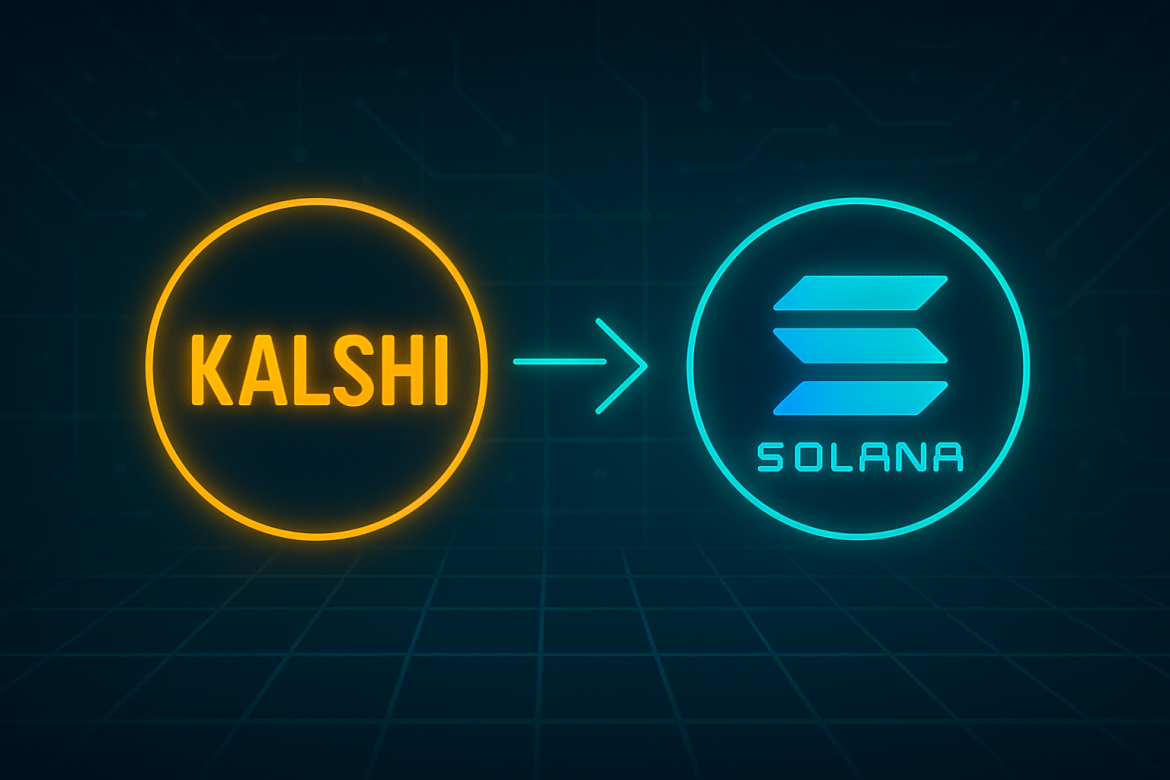
With tokenized event contracts now live on Solana, Kalshi is stepping directly into territory dominated by Polymarket and other decentralized platforms. The race just got a lot more interesting.
The federally-regulated prediction market is rolling out tokenized versions of its event contracts on Solana, enabling traders to buy and sell their Kalshi positions – just like any other on-chain asset.
The move looks like a direct swing at Polymarket, which until now has owned the lion’s share of on-chain prediction market traffic.
These tokens mirror the exact same payouts as the regular, off-chain contracts on Kalshi – the key difference is now they’re tokenized and can move freely throughout the Solana ecosystem.
This provides Kalshi users with:
Its Solana support is already live, with DFlow and Jupiter already plugged in as the first platforms bridging Kalshi’s off-chain orderbook to Solana liquidity.
It’s no secret that crypto traders are already power users of prediction markets.
They typically drive large position sizes, churn out significant volume, and are obviously bigtime proponents of self-custody and privacy.
Until now, Polymarket has owned that crowd, by being fully on-chain from the beginning.
But Kalshi’s move is likely to take a bite out of that Polymarket pie, bridging its federally-approved platform to the on-chain world.
The timing couldn’t be better, as prediction markets cross $28 billion in cumulative volume this year.
Kalshi itself has been on a tear, including thousands of new betting contract markets, rapid global expansion, and a fresh $1 billion raise at a whopping $11 billion valuation.
Any growth from its on-chain presence will likely only compound that growth further.
Kalshi’s head of crypto, John Wang, has a very straightforward view on liquidity:
“If you don’t have liquidity, you don’t have a market.”
Tapping into the $3 trillion crypto market opens the floodgates to the kind of liquidity Kalshi needs to stay competitive – especially as Polymarket comes around to relaunching in the US.
More liquidity means tighter spreads, more accurate pricing, and the ability for large players to size in without severely impacting the order books.
Prediction markets look like they’re entering a new era.
Regulated platforms like Kalshi are realizing they can’t ignore the pull of on-chain liquidity, while fully on-chain platforms like Polymarket push hard for mainstream adoption and user growth.
Traders, on the other hand, just want the best of both worlds: deeper liquidity, tighter spreads, more anonymity, and smoother UX.
Kalshi’s move to tokenize its contracts on Solana sits right at that intersection.
Crypto-native users get the privacy and permissionless access they’re used to, without abandoning the regulatory clarity that Kalshi has fought years to secure.
If Kalshi can keep expanding its markets and nail the on-chain integration, this could be the first prediction platform that is both legally clean and genuinely crypto-native.
Not just bridging two ecosystems, but blending them into something entirely new.

Steak ‘n Shake has rolled out a themed burger tied to its move into crypto payments. According to company materials and multiple reports, the limited-edition item arrives with Bitcoin-themed packaging and a suggested price of $7.19. The chain framed the launch as a celebration of its wider push to accept Bitcoin at the counter.
The new burger is being sold as a short run. Packaging is stamped with Bitcoin imagery, and the chain has described supplies as limited. Based on reports, the product was timed to follow the restaurant’s broader payment change that went live earlier this year.
Some outlets note the burger’s pricing and the playful nod to crypto culture, while the rollout itself is being treated as a marketing push as much as a menu update.
Five months ago today, Steak ‘n Shake began accepting Bitcoin payments. In celebration we are launching the Bitcoin Steakburger! Hurry to any Steak n Shake and enjoy them while they last. Supplies are limited….just like Bitcoin. 🍔🚀
The support we have received from the…
— Steak ‘n Shake (@SteaknShake) October 16, 2025
According to announcements from the company, Steak ‘n Shake began accepting Bitcoin payments over the Lightning Network on May 16, 2025. The Lightning rails are being used to handle fast, low-fee payments at the point of sale.
The chain’s COO, Dan Edwards, has said that payment processing fees have been cut by about 50% since the change. On the first day of the rollout, the chain claimed it accounted for one in every 500 global Bitcoin transactions processed that day.
Reports have disclosed that the company saw a lift in sales after the payments switch. In Q2 2025, Steak ‘n Shake reported same-store sales growth of nearly 11%, and company spokespeople linked part of that increase to engagement from Bitcoin users.
The move to crypto was presented as both a cost-saving measure and a way to draw a curious customer base. Some of the figures come from the chain’s own public statements and were picked up by several crypto and business outlets.
Not all details about the rollout are clear. It’s still uncertain how many Steak ‘n Shake locations are offering the Bitcoin Steakburger or how long it will stay on the menu. The company has also claimed a 50% cut in payment processing costs since adopting Bitcoin, but full details on how that figure was reached haven’t been shared.
Featured image from Shop4Tesla, chart from TradingView

Editorial Process for bitcoinist is centered on delivering thoroughly researched, accurate, and unbiased content. We uphold strict sourcing standards, and each page undergoes diligent review by our team of top technology experts and seasoned editors. This process ensures the integrity, relevance, and value of our content for our readers.


