Hayes revealed his new role as Flop Labs CEO and teased a “massive airdrop” from the AI inference protocol in the fourth quarter of 2026.

 Live Chat
Hayes revealed his new role as Flop Labs CEO and teased a “massive airdrop” from the AI inference protocol in the fourth quarter of 2026.
Start every day with the top news stories right now, plus original features, a podcast, videos and more.
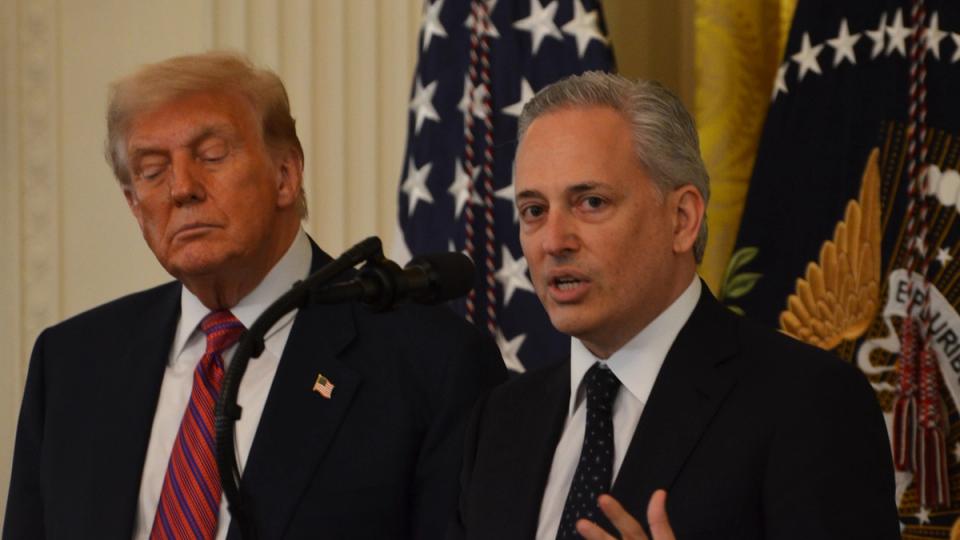
White House AI and Crypto Czar David Sacks is changing titles and joining the President’s Council of Advisors on Science and Technology as co-chair, he announced Thursday.
Sacks, who was named U.S. President Donald Trump’s crypto and AI czar before Trump retook office last January, has overseen the White House’s early work on crypto initiatives, including the passage of the stablecoin-focused GENIUS Act and more recently, work around the crypto market structure bill.
“PCAST is the principal body of external advisors tasked with shaping science, technology, and innovation policy for the President and the White House,” he said in a post on X (formerly Twitter). “Thirteen of the world’s most accomplished leaders in science and technology will join us as this PCAST’s initial members.”
Sacks told Bloomberg earlier Thursday that his czar role was designated as a “special government employee,” meaning he legally could only serve in that position for 130 working days. Democrats in Congress had already raised concerns that he had exceeded this period last fall.
He does not have this same issue serving as a co-chair on the advisory committee.
Sacks said in the Bloomberg interview that the council would make policy recommendations and conduct studies around artificial intelligence, quantum computing, nuclear power and other “cutting edge technologies.”
“I think you can expect us to make some recommendations in those areas. We want to push forward the president’s A.I. framework that was already released just last week,” Sacks said in the interview. “So you’ll see, I think, a lot of activity around that. But it will also be other areas as well.”
Sacks did not mention crypto in the interview.
Other members of the committee include Andreessen Horowitz co-founder Marc Andreessen, Google co-founder Sergey Brin, Dell founder Michael Dell, early Coinbase backer Fred Ehrsam, NVIDIA CEO Jensen Huang, AMD CEO Lisa Su and Meta (formerly Facebook) founder Mark Zuckerberg, among others. Michael Kratsios, who’s served in both of Trump’s administrations, will serve as the co-chair.
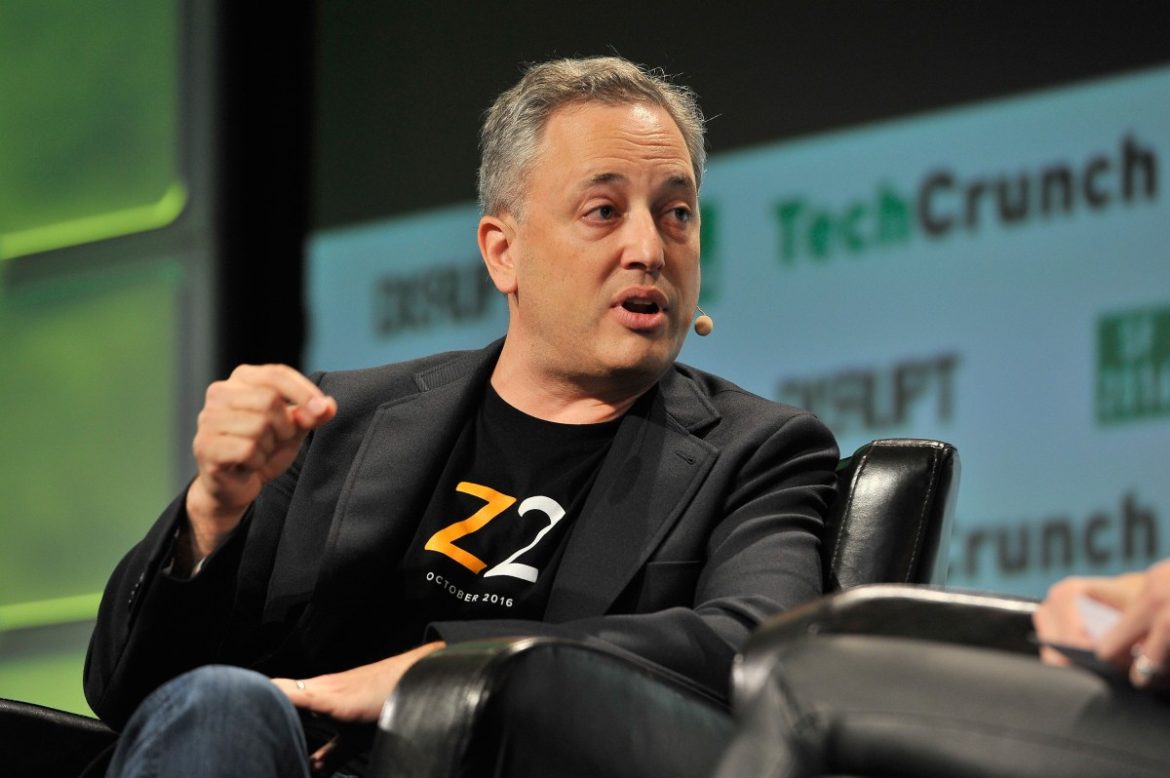
David Sacks’ role as President Donald Trump’s artificial intelligence and crypto czar could work out very well for his investments, as well as his friends, according to a new report The New York Times.
However, Sacks fired back in a post on X, in which he described a five-month reporting process in which accusations were “debunked in detail.”
“Today they evidently just threw up their hands and published this nothing burger,” Sacks said. “Anyone who reads the story carefully can see that they strung together a bunch of anecdotes that don’t support the headline.”
This isn’t the first time critics have suggested that there may be conflicts of interest between Sacks’ political role and his investments. For example, Senator Elizabeth Warren — a Democrat from Massachusetts — said earlier this year that Sacks “simultaneously leads a firm invested in crypto while guiding the nation’s crypto policy,” an “explicit conflict of interest” that would “normally” be prohibited under federal law.
But the NYT’s story (under the headline “Silicon Valley’s Man in the White House Is Benefiting Himself and His Friends,” and credited to five bylined reporters) seems to offer a more comprehensive view, with an analysis of his financial disclosures suggesting that among Sacks’ 708 tech investments, 449 are AI companies that could benefit from the policies he supports.
Sacks has received two White House ethics waivers declaring he would sell most of his crypto and AI assets. However, the NYT said his public ethics filings do not disclose the remaining value of his crypto and AI investments, nor do they say when he sold off the assets he divested.
Kathleen Clark, a Washington University law professor specializing in government ethics, made similar points in July after reviewing Sacks’ crypto waiver, telling TechCrunch, “This is graft.”
Techcrunch event
San Francisco
|
October 13-15, 2026
The NYT also said that Sacks’ filings classify hundreds of investments as hardware or software, rather than AI, while the companies pitch themselves as AI businesses in their marketing.
To illustrate Sacks’ “intertwined interests,” the NYT pointed to the White House summit in July where Trump unveiled his AI roadmap — White House chief of staff Susie Wiles reportedly stepped in to prevent the All-In podcast (which Sacks co-hosts) from being the only host of the event. And All-In asked potential sponsors to pay $1 million for access to a private reception and other events, the NYT claimed.
The NYT also reported that Sacks became close with Nvidia CEO Jensen Huang this spring and has played a role in removing restrictions on Nvidia chip sales around the world, including in China.
Right-wing media personality and former Trump adviser Steve Bannon (who’s made no secret of his animosity toward some of Trump’s Silicon Valley allies) said Sacks is emblematic of an administration where “the tech bros are out of control.”
Sacks’ spokesperson Jessica Hoffman told the NYT that “this conflict of interest narrative is false.” Hoffman said Sacks has complied with the rules for special government employees, that the Office of Government Ethics determined which investments he had to sell, and that his role in the government has cost him, rather than benefited him.
White House spokesperson Liz Huston said Sacks has been “an invaluable asset for President Trump’s agenda of cementing American technology dominance.”
Sacks’ post responding to the NYT includes a letter written to the newspaper from Clare Locke, a law firm that Sacks hired, claiming that the reporters had been given “clear marching orders: find and report on a conflict of interest between Mr. Sacks’ duties in the White House and his background in the private technology sector.”
The letter also addresses some of the specifics of the NYT story, including the All-In podcast’s role in the White House AI event. Sacks’ lawyers said the AI summit was a not-for-profit event, and that the All-In podcast “lost money hosting the event.”
“Two sponsors were brought on to help partially defray the cost of the event, for which they received nothing but logo placements,” the letter said. “No access to President Trump was ever offered, and no VIP reception ever took place.”
Check out the latest reveals on everything from agentic AI and cloud infrastructure to security and much more from the flagship Amazon Web Services event in Las Vegas. This stream is brought to you in partnership with AWS.
Disclosure: This is a sponsored post. Readers should conduct further research prior to taking any actions. Learn more ›
Geneva, Switzerland – October 17, 2025 – CoinDesk Data the institutional research division of CoinDesk, a leading global media outlet in the cryptocurrency and blockchain industry, together with prominent blockchain analytics and risk assessment firms Nansen and Particula, have each released independent Q3 2025 reports analyzing onchain activity on the TRON network. Collectively, the findings highlight TRON’s continued dominance in global stablecoin settlements, retail payment infrastructure, and its rapid evolution into a mature, institutional-grade blockchain powering the next generation of decentralized finance.
CoinDesk Q3 2025 Quarterly Report: TRON Network highlights TRON’s continued leadership in stablecoin settlements, supported by strategic network upgrades and strong ecosystem growth.
Key Insights from CoinDesk:
Read the full report from CoinDesk here.
Nansen’s TRON Quarterly Report – Q3 2025 emphasizes TRON’s evolution into a mature, institutional-grade financial infrastructure operating at scale across global stablecoin and DeFi ecosystems.
Key Insights from Nansen:
Read the full report from Nansen here.
Particula’s Joint Research piece with TRON DAO — Beyond Reserves: Linking Blockchain Performance to Stablecoin Peg Stability explores how blockchain operational efficiency directly affects stablecoin price stability. The study identifies TRON’s technical robustness and liquidity depth as key factors supporting efficient arbitrage and peg maintenance.
Key Insights from Particula:
Read the full report from Particula here.
Together, the findings from CoinDesk, Nansen, and Particula reaffirm TRON’s position as a leading blockchain infrastructure for global stablecoin settlements and retail payments. Its combination of high reliability, cost efficiency, and institutional trust underscores its growing importance as a foundational layer for digital finance.
With continuous technical upgrades, ecosystem expansion, and adoption across both retail and institutional sectors, TRON is cementing its role as critical infrastructure for the global digital economy, advancing accessible, efficient, and scalable blockchain-based financial services worldwide.
TRON DAO is a community-governed DAO dedicated to accelerating the decentralization of the internet via blockchain technology and dApps.
Founded in September 2017 by H.E. Justin Sun, the TRON blockchain has experienced significant growth since its MainNet launch in May 2018. Until recently, TRON hosted the largest circulating supply of USD Tether (USDT) stablecoin, which currently exceeds $77 billion. As of October 2025, the TRON blockchain has recorded over 338 million in total user accounts, more than 11 billion in total transactions, and over $26 billion in total value locked (TVL), based on TRONSCAN. Recognized as the global settlement layer for stablecoin transactions and everyday purchases with proven success, TRON is “Moving Trillions, Empowering Billions.”
TRONNetwork | TRONDAO | X | YouTube | Telegram | Discord | Reddit | GitHub | Medium | Forum
Media Contact
Yeweon Park
[email protected]


