The Bitcoin miner has continued to expand its data-center business as well.

 Live Chat
The Bitcoin miner has continued to expand its data-center business as well.

Vietnam is set to introduce its toughest cryptocurrency enforcement measures to date, with domestic investors facing fines of up to 50 million Vietnamese dong (approximately $1,900) for trading digital assets through unlicensed platforms. The new penalties, which take effect on September 1, 2026, form part of the country’s broader effort to establish a regulated crypto market under a five-year pilot program.
The rules are outlined in Decree No. 284/2026/NĐ-CP, issued by the Vietnamese government on July 17. The decree establishes administrative penalties for violations involving crypto assets and the pilot crypto market launched under Resolution 05/2025, marking the first time Vietnam has introduced direct sanctions against retail investors who use unauthorized crypto exchanges.
Under the new framework, Vietnamese individuals who trade crypto assets through organizations that have not been licensed by the Ministry of Finance will face fines ranging from 30 million VND to 50 million VND ($1,150–$1,900).
The measure represents a significant shift in Vietnam’s regulatory approach. While the country has long ranked among the world’s most active cryptocurrency markets, investors have largely operated through overseas exchanges without a dedicated domestic legal framework.
Authorities hope the new penalties will encourage users to migrate toward licensed platforms as the government gradually rolls out a regulated crypto ecosystem.
The decree also introduces stricter sanctions for investors who trade crypto assets that are authorized exclusively for foreign investors. In those cases, domestic traders may be fined between 70 million VND and 100 million VND (approximately $2,700–$3,800).

Vietnam will fine crypto traders up to $1,900 for using unlicensed platforms
The regulations extend well beyond individual investors, imposing substantial penalties on crypto exchanges, service providers, and token issuers that fail to comply with licensing and operational requirements.
Crypto service providers that neglect customer identity verification (KYC) when opening trading accounts can be fined 50 million VND to 70 million VND.
Meanwhile, businesses operating crypto services without obtaining a Ministry of Finance license, or promoting crypto-related services without authorization, face the highest administrative penalties under the decree, ranging from 180 million VND to 200 million VND (around $7,700).
Token issuers are also subject to strict compliance obligations. Companies may receive fines of 150 million VND to 200 million VND if they:
In addition, unauthorized collection, storage, transfer, exchange, sale, or disclosure of crypto trading account data carries fines of up to 200 million VND, reflecting the government’s growing focus on consumer protection and data security.
The decree establishes separate penalty ceilings for individuals and organizations.
Organizations may receive administrative fines of up to 200 million VND, while the maximum penalty for individuals is capped at 100 million VND. As a general rule, individuals committing the same violations as organizations will be fined half the amount imposed on businesses.
Beyond monetary penalties, authorities may also confiscate illegal gains, seize assets related to violations, suspend operations, or temporarily revoke licenses depending on the severity of the offense.
The new enforcement measures operate within Vietnam’s five-year crypto asset pilot program established under Resolution 05/2025, which began in September 2025.
The pilot serves as the country’s first comprehensive legal framework governing crypto assets while allowing regulators to monitor market development before adopting permanent legislation.
Under the framework, crypto assets are defined as digital assets created, issued, stored, and transferred using cryptographic or other digital technologies. All issuance, trading, and settlement activities conducted within the pilot market must be settled in Vietnamese dong, reinforcing the government’s oversight of capital flows.
The regulations will remain effective throughout the duration of the pilot program.

Chainalysis ranked Vietnam 4th in its 2025 adoption index (Source: Chainalysis)
Vietnam is deliberately taking a cautious approach to licensing.
The government has previously stated that it intends to authorize no more than five crypto exchanges during the pilot’s initial phase to better assess market risks and regulatory effectiveness.
Exchange operators seeking licenses must meet demanding financial requirements, including minimum charter capital of 10 trillion VND (approximately $382 million). Foreign investors may own up to 49% of licensed exchange operators.
Although the Ministry of Finance has already accepted applications from several domestic exchange operators, including VIXEX, SCEX, CAEX, TCEX, and another Vietnamese digital asset company — no exchange has yet received official approval.
Authorities have also clarified that investors will not be required to move all of their crypto holdings onto licensed domestic platforms. Instead, users may continue storing assets in private wallets but must execute transactions through licensed service providers once the new framework becomes fully operational.
Notably, under Resolution 05, mandatory trading through licensed platforms will only begin six months after the first domestic exchange receives its operating license, giving investors time to transition into the regulated system.
Decree 284 replaces an earlier draft regulation circulated for public consultation, which had proposed significantly lighter penalties of up to 30 million VND for trading on unlicensed platforms. The final version raises the maximum fine to 50 million VND, signaling the government’s stronger commitment to enforcing compliance.
The decree complements several other regulatory initiatives introduced this year, including accounting and taxation guidance for crypto assets under Circulars 15, 32, and 41. Together, these measures form the legal foundation for Vietnam’s emerging digital asset market.
For investors, the message is becoming increasingly clear: as Vietnam transitions from an unregulated crypto environment toward a licensed ecosystem, using approved exchanges will become a legal requirement rather than a matter of preference.
With penalties beginning on September 1 and exchange licensing expected to accelerate, both traders and crypto businesses will need to closely monitor regulatory developments as Vietnam moves toward one of Southeast Asia’s most structured digital asset frameworks.

Day trading in 2026 is becoming faster, more data-driven, and more difficult for beginners to approach without the right tools. Short-term price movements can be influenced by earnings reports, inflation data, Federal Reserve expectations, AI-sector momentum, ETF flows, analyst ratings, and sudden changes in market liquidity. For new traders, the challenge is not only finding stocks to watch, but also building a structured workflow for analysis, timing, execution, and risk management.
This is why many beginners are looking for day trading platforms that offer faster charts, stock screeners, alerts, paper trading, mobile access, and automation support. A useful platform should not simply make trading feel exciting. It should help users practice, understand risk, track price movement, and make more disciplined decisions.
The platforms in this guide are not all the same. Some are brokerages with order execution tools. Some are charting and alert platforms. Some focus on AI-assisted trading workflows. Others provide advanced tools that beginners may grow into over time.
This article looks at eight day trading platforms beginners may consider in 2026: BulkQuant, Webull, Robinhood Legend, thinkorswim, TradingView, Moomoo, TradeStation, and Interactive Brokers.
Important: Day trading involves risk. Faster tools do not guarantee better results. Beginners should start with education, simulated trading, small position sizes, and clear risk controls.
| Platform | Primary Use Case | Beginner-Friendly Feature | Key Consideration |
| BulkQuant | AI-assisted trading workflow | Market monitoring and strategy execution support | Users should review risks, terms, and platform settings |
| Webull | Mobile and web-based active trading | Paper trading, charts, alerts, and technical indicators | Useful for practice, but live trading still carries risk |
| Robinhood Legend | Simple active trading interface | Desktop and mobile charting tools | Easy interface, but beginners still need a trading plan |
| thinkorswim | Advanced trading and simulation | paperMoney virtual trading environment | Powerful but may require more learning time |
| TradingView | Charting, alerts, and market screening | Visual charts, alerts, and screeners | Usually works well alongside a broker |
| Moomoo | Research, paper trading, and screeners | Paper trading and stock screening tools | Tool-rich interface may require practice |
| TradeStation | Active trading technology | Advanced platforms, education, and simulated trading | Better for users ready to learn more complex tools |
| Interactive Brokers | Scalable trading platform | Multiple platforms for different experience levels | Powerful, but may feel complex for absolute beginners |
BulkQuant is included in this list for users who want to explore AI-assisted trading workflows rather than manually building every part of a short-term trading process. The platform describes support for stock trading, forex trading, and cryptocurrency trading, with tools focused on market monitoring, strategy execution, and risk control.
For beginners, the appeal is not that a platform can remove trading risk. It cannot. The more realistic value is that AI-assisted tools may help organize the trading process. New traders often struggle with watching too many markets, reacting emotionally, changing plans too quickly, or entering trades without a clear structure. A platform that supports monitoring, execution workflows, and risk settings may help users approach short-term trading in a more systematic way.
BulkQuant may be worth reviewing for users who want a more guided introduction to trading automation. Instead of requiring users to code strategies or build a full technical system from the beginning, it presents a more accessible workflow for exploring AI-assisted market tools.
BulkQuant may suit beginners who want:
That said, users should carefully review account terms, risk controls, fees, supported markets, and execution rules. Trial access or promotional rewards can help users explore a platform, but they should not be treated as evidence of future trading results.
Webull is often considered by newer active traders because it combines mobile access, web trading, charts, alerts, and paper trading. Its paper trading page says users can practice with stocks, ETFs, options, and futures, access real-time quotes, use integrated charts, set price alerts, and test strategies before live trading.
For beginners, this practice environment is important. Day trading requires fast decisions, but beginners should not learn only by risking real money. A simulator can help users understand order types, chart movement, position sizing, and how quickly short-term trades can change.
Webull may also appeal to users who prefer a mobile-first trading experience. For short-term traders, being able to monitor watchlists, charts, and alerts from different devices can make the workflow more flexible.
Webull may suit beginners who want:
The main limitation is that paper trading does not fully recreate the pressure of live markets. Beginners should avoid assuming that simulated results will transfer directly to real trading.
Robinhood Legend is Robinhood’s active trading platform designed for users who want a more powerful desktop experience than a basic mobile brokerage app. Robinhood describes Legend as a desktop platform for stocks, options, and crypto trading with real-time data, customizable charts, and advanced analysis tools.
For beginners, Robinhood’s main appeal has often been simplicity. Legend adds more active-trading features while keeping the interface relatively approachable. The platform highlights chart-based tools such as technical indicators, drawing tools, custom intervals, and trading from the chart.
This can help beginners who want to move beyond basic buy-and-sell screens but are not ready for highly complex professional platforms.
Robinhood Legend may suit beginners who want:
The risk is that a clean interface can make trading feel easier than it is. Beginners still need a plan for entries, exits, risk limits, and trade review.
thinkorswim, now under Charles Schwab, is one of the better-known platforms for active traders who want advanced charts, education, and multi-asset tools. Schwab says thinkorswim supports trading across stocks, ETFs, options, futures, and forex, and includes paperMoney, a virtual trading environment for testing strategies in live market simulation.
For beginners, paperMoney is one of the most useful features. A new trader can practice placing orders, testing chart setups, and learning platform tools without immediately risking real funds.
However, thinkorswim can feel more complex than beginner-first apps. It may be better for users who are serious about learning and willing to spend time understanding chart layouts, order tickets, alerts, and risk tools.
thinkorswim may suit beginners who want:
For absolute beginners, the learning curve may be higher. But for users who want to study short-term trading seriously, thinkorswim can provide a more complete environment.
TradingView is not primarily a brokerage for most users. It is better known as a charting, alert, and market analysis platform. This makes it useful for beginners who want to learn how to read charts, create watchlists, set alerts, and scan markets before placing trades through a broker.
TradingView says its alerts can notify users when price movements, indicator conditions, strategies, or other market conditions are met. It also notes that alerts are designed to help users avoid constantly watching the market manually.
For day trading beginners, this can be valuable because watching charts all day without a system often leads to impulsive decisions. Alerts can help users wait for predefined conditions instead of chasing every price move.
TradingView may suit beginners who want:
TradingView is most useful when paired with a clear trading plan. Alerts should not replace judgment. They should support a structured decision-making process.
Moomoo is another platform beginners may review if they want a mix of research tools, paper trading, and stock screening features. Its paper trading materials describe a free simulator for practicing stock and options trading, while its screener tools help users filter stocks using different market, quote, financial, and technical indicators.
For short-term traders, screeners can help narrow the market. Instead of watching random tickers, beginners can search for stocks based on volume, volatility, price movement, or technical conditions.
Paper trading also makes Moomoo relevant for users who want to practice before live trading. This can be especially helpful for beginners who are still learning how fast intraday trades can change.
Moomoo may suit beginners who want:
The possible drawback is information overload. Beginners may need time to understand which data actually matters for their strategy.
TradeStation is generally more advanced than the simplest beginner apps, but it can be useful for traders who want to grow into a more active trading environment. Its website highlights stocks, options, futures, ETFs, simulated trading, APIs, education, advanced platforms, and market insights.
TradeStation may appeal to beginners who already know they want to take short-term trading seriously and are willing to learn platform features. It offers advanced charting, customizable layouts, and tools built for active traders.
The platform also provides a clear reminder that past performance and historical strategy testing do not guarantee future results, and that online trading is not suitable for all investors.
TradeStation may suit beginners who want:
For complete beginners, TradeStation may require more time to learn than simpler apps. It may be better for users who are comfortable studying platform tools before trading live.
Interactive Brokers is known for its broad market access and professional-grade tools, but it also offers multiple platforms for different experience levels. IBKR says it provides desktop, mobile, and online platforms, and labels its platforms by trading experience, including beginner, intermediate, and advanced categories.
For beginners, this matters because not every new trader wants a simple app forever. Some want a platform that starts with basic access but can support more advanced tools later.
Interactive Brokers may be useful for users who care about global market access, desktop tools, mobile trading, and a more scalable platform environment. However, it can feel more complex than beginner-first apps such as Webull or Robinhood.
Interactive Brokers may suit beginners who want:
The main consideration is complexity. Beginners should avoid using advanced tools before they understand how orders, margin, fees, and risk controls work.
A beginner-friendly day trading platform should support learning and discipline, not just speed.
Important features include:
Beginners should be able to test strategies before risking real money. Platforms such as Webull and thinkorswim place strong emphasis on simulated trading environments.
Short-term traders need to understand price movement, volume, support and resistance, and trend changes. A platform should make charts easy to read.
Alerts can help beginners avoid staring at charts all day. They also encourage traders to define conditions before acting.
Stop orders, position sizing tools, account alerts, and margin information are important. A platform that makes trading fast but hides risk can be dangerous for beginners.
Day trading has a learning curve. Platforms with tutorials, simulations, and support materials may be more suitable for new users.
Beginners should understand commissions, spreads, regulatory fees, margin costs, data fees, and withdrawal rules.
Fast execution depends on technology. Delays, outages, and order errors can affect short-term trading results.
U.S. day trading rules are changing in 2026. FINRA says it is replacing the current pattern day trader framework with new intraday margin requirements. Under the new framework, there is no $25,000 minimum equity requirement for day trading and no pattern day trader designation based on counting trades; firms instead monitor whether the account has adequate equity during the trading day.
This does not mean day trading becomes risk-free or unrestricted. FINRA also states that traders using margin still need to meet margin account requirements, and accounts with intraday margin deficits may face restrictions if deficits are not handled properly.
Beginners should always check the latest rules with their broker, especially if they trade on margin.
A platform can make trading faster, but it cannot make trading safe by default.
The main risks include:
A safer approach is to start with education, use paper trading, define risk per trade, review every trade, and avoid increasing position size too quickly.
| Platform | How Beginners May Use It | Main Caution |
| BulkQuant | Explore AI-assisted market monitoring and trading workflow support | Review all terms, risks, and execution settings |
| Webull | Practice with paper trading and learn chart-based tools | Simulated results may not match live trading |
| Robinhood Legend | Use a simpler interface for active chart-based trading | Easy design can still lead to impulsive trades |
| thinkorswim | Practice with paperMoney and grow into advanced tools | Learning curve may be higher |
| TradingView | Build watchlists, alerts, and technical analysis workflows | Usually needs to be paired with a broker |
| Moomoo | Use screeners, research tools, and paper trading | Beginners may face information overload |
| TradeStation | Learn active trading tools and simulated trading | More suitable for users ready to study seriously |
| Interactive Brokers | Start with simpler platform options and scale up later | Advanced features can be complex |
A day trading platform is software that helps users analyze markets, place trades, monitor positions, create watchlists, set alerts, and manage short-term trading workflows. Some platforms are brokerages, while others focus more on charts, alerts, research, or automation support.
Beginners may prefer platforms with paper trading, simple charts, clear order entry, and educational tools. Webull, Robinhood Legend, Moomoo, and BulkQuant may be easier to explore than more advanced platforms, while thinkorswim, TradeStation, and Interactive Brokers may require more learning time.
BulkQuant may be worth reviewing for beginners who want to explore AI-assisted trading workflows, market monitoring, and strategy execution support. Users should still review risks, account terms, fees, and platform settings before using real capital.
Yes. Paper trading can help beginners practice order placement, test strategies, and understand market movement before risking real funds. However, paper trading does not fully recreate the emotional pressure and execution conditions of live trading.
No platform can guarantee consistent income. Day trading is risky, and many beginners lose money when they trade without a tested strategy, risk limits, or emotional discipline. Beginners should treat trading as a skill-building process rather than a guaranteed income source.
Beginners should avoid choosing a platform only because it looks exciting, offers leverage, or promotes fast trading. They should focus on risk controls, education, simulation tools, cost transparency, and whether the platform matches their experience level.
The leading day trading platform for a beginner is not always the most advanced one. A useful platform should help traders build better habits: practicing before live trading, tracking clear setups, managing risk, and reviewing decisions.
BulkQuant may be considered by users who want to explore AI-assisted trading workflows and simplified strategy execution support. Webull, Robinhood Legend, and Moomoo may appeal to beginners who want accessible trading tools and paper trading practice. thinkorswim and TradeStation offer deeper tools for users willing to study more seriously. TradingView can support charting and alerts, while Interactive Brokers may suit beginners who want a platform with room to grow.
In 2026, faster short-term trading tools are widely available. The more important question is whether beginners can use them with discipline, realistic expectations, and a clear risk management process.

Start every day with the top news stories right now, plus original features, a podcast, videos and more.

As a trader, knowing the best crypto staking platforms saves you from wasting time, locking funds in low yield pools, or trusting platforms that don’t deliver on rewards or security. With so many options promising high returns, it’s easy to feel overwhelmed or make a costly mistake. The right choice can help you grow passive income steadily, while the wrong one can eat into your profits or limit flexibility when the market shifts.
In this review, we will explain the best staking platforms to use in 2025, how they compare on rewards, ease of use, and safety, and which ones make sense depending on your goals, experience level, and preferred assets. We’ll break everything down clearly so you can stake with confidence and maximize returns without guesswork. Keep reading
| Platform | Cryptocurrencies Supported | Maximum Reward Rate | Fees | Exchange Type |
| Binance | BTC, ETH, BNB, ADA, etc. | Up to 10% | 0%-3.75% | Centralized |
| Crypto.com | BTC, ETH, CRO, DOT, etc. | Up to 19% | 0%-4% | Centralized |
| ByBit | BTC, ETH, USDT, XRP, etc. | Up to 10% | 0%-2% | Centralized |
| Coinbase | BTC, ETH, SOL, ADA, etc. | Up to 13% | 0% – 3.99% | Centralized |
| KuCoin | BTC, ETH, KCS, DOT, etc. | Up to 13% | 0.1% | Centralized |
| Kraken | BTC, ETH, DOT, ADA, etc. | Up to 21% | 0-0.1% | Centralized |
| Lido | ETH | Up to 8% | 10% of staking rewards | Decentralized |
| Rocket Pool | ETH | Up to 3.27% | 15% of staking rewards | Decentralized |
| Nexo | BTC, ETH, USDT, etc. | Up to 15% | No fees for staking | Centralized |
| Stakely | ETH, ADA, DOT, etc. | Up to 34% | Validator fees vary (low) | Decentralized |
| Gemini | BTC, ETH, GUSD, etc. | Up to 8% | No fees for staking | Centralized |
| Margex | BTC, ETH, USDT, etc. | Up to 11% | No infom | Centralized |
| Aave | ETH, USDT, DAI, etc. | Up to 9% | 0.09% | Decentralized |
| Bake | BTC, ETH, DFI, etc. | Up to 20% | 0.1% – 0.2% | Centralized |
| Babylon Labs | ETH, BTC, etc. | Up to 10% | No info | Decentralized |
When it comes to earning passive income through cryptocurrency, choosing the right platform is crucial. With numerous options available, finding the best crypto platforms for staking rewards can be overwhelming. To make your decision easier, we’ve reviewed the top 15 platforms, highlighting their staking options, key features, and what sets them apart.
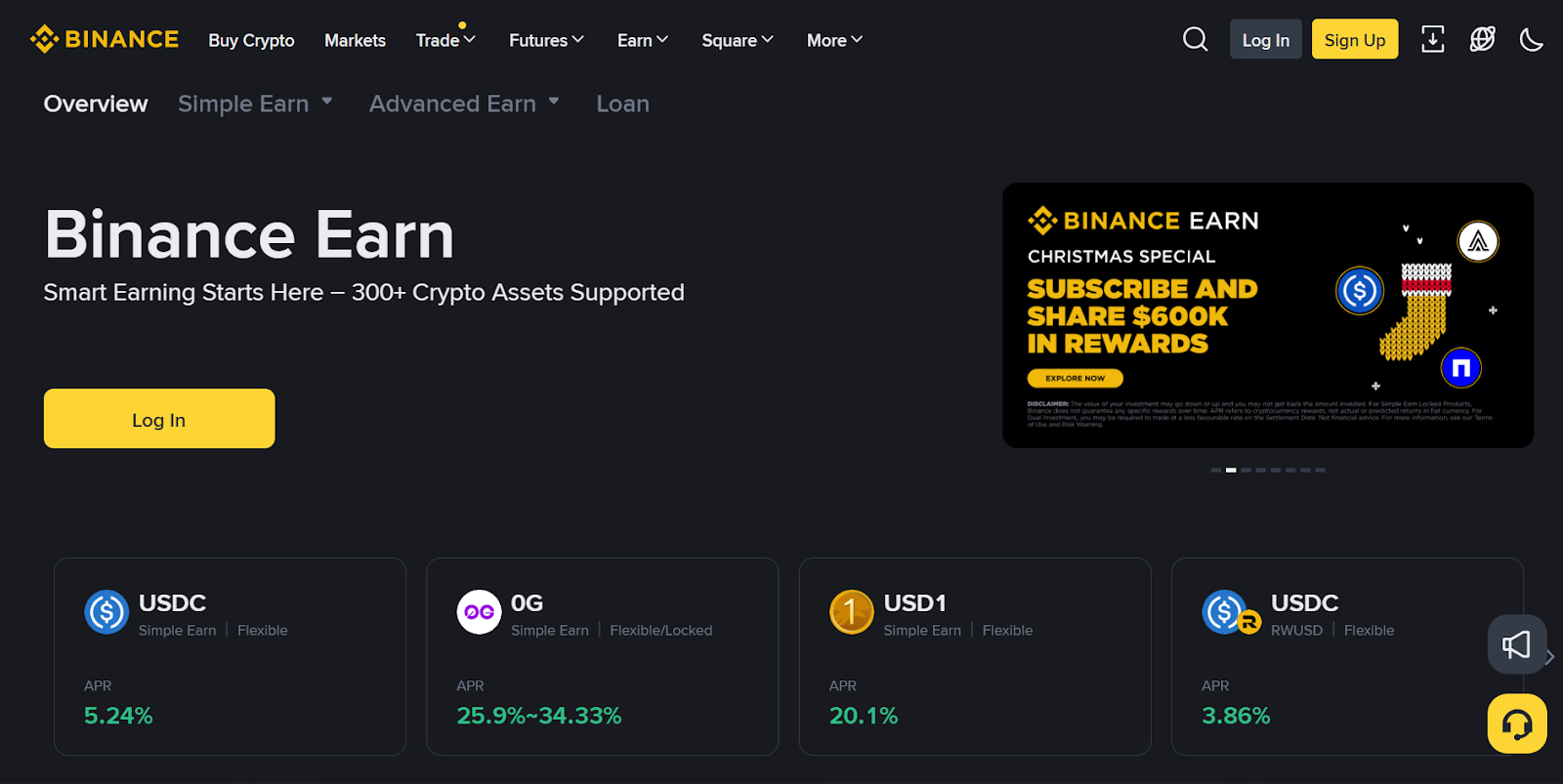
Binance remains one of the most widely used options for staking come 2025, especially if you want everything in one place. You can trade, stake, and manage your portfolio without transferring funds between platforms, saving time and reducing complexity. Supporting over 60 proof-of-stake coins, Binance provides both flexibility and control, making it a top choice for maximizing rewards. Its competitive APY rates and robust security measures ensure a reliable and rewarding staking experience. Whether you’re new to staking or a seasoned investor, Binance’s user-friendly interface makes it easy to get started.

Binance offers both flexible and locked staking options. Flexible staking allows you to withdraw your funds anytime, while locked staking provides higher rewards for committing your assets for a set period. Popular coins like Ethereum (ETH), Binance Coin (BNB), and Solana (SOL) are available for staking.
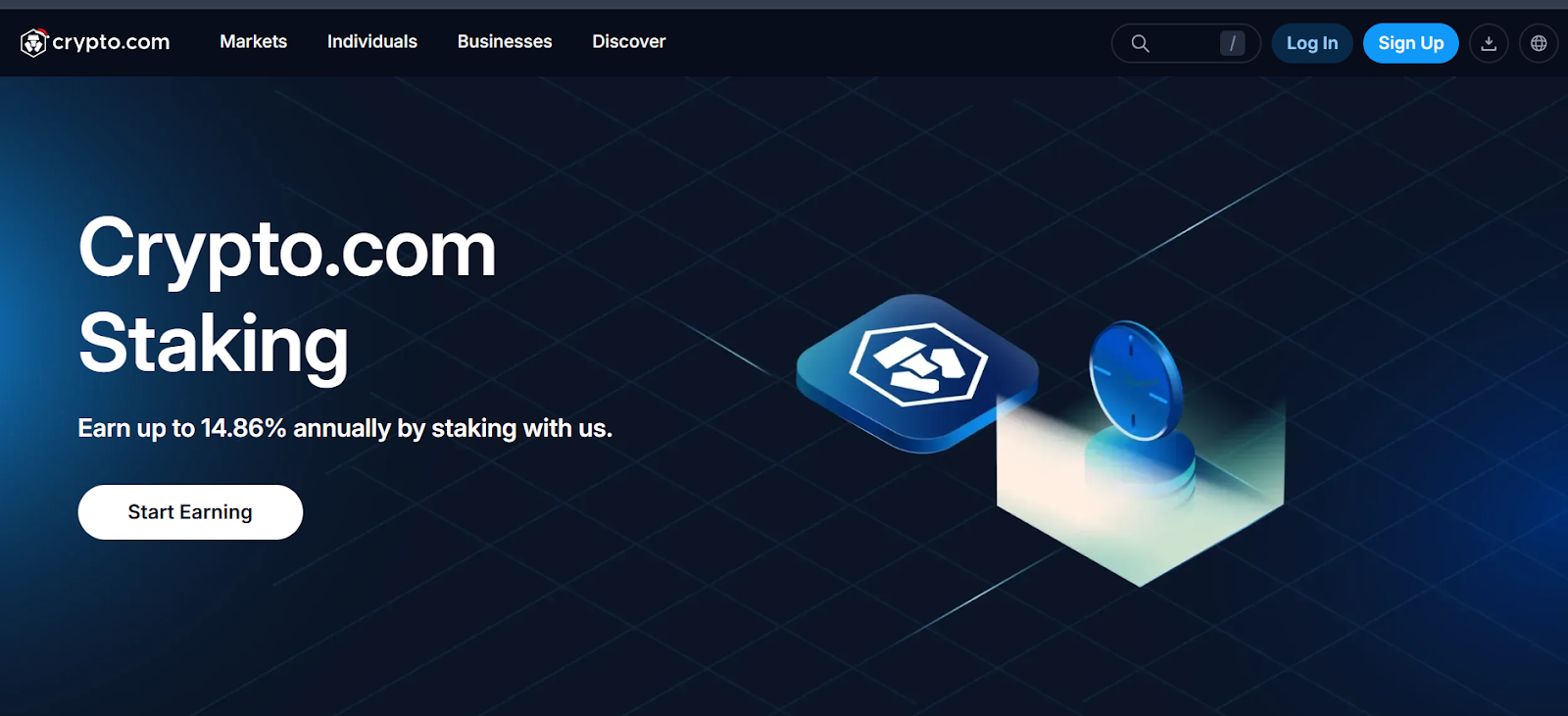
Crypto.com simplifies staking by integrating it into its broader ecosystem, making it easy to manage alongside trading and spending. With support for over 250 cryptocurrencies, it’s a versatile platform for earning passive income. The platform’s focus on predictability and clear terms makes it ideal if you prefer stability over chasing high-risk returns. Its intuitive app design ensures that managing rewards, spending, and trading feels effortless, even for beginners.

Crypto.com offers flexible and fixed-term staking options. Fixed-term staking provides higher APY rates, while flexible staking allows you to maintain liquidity. CRO token holders enjoy additional benefits, including boosted rewards and exclusive perks.
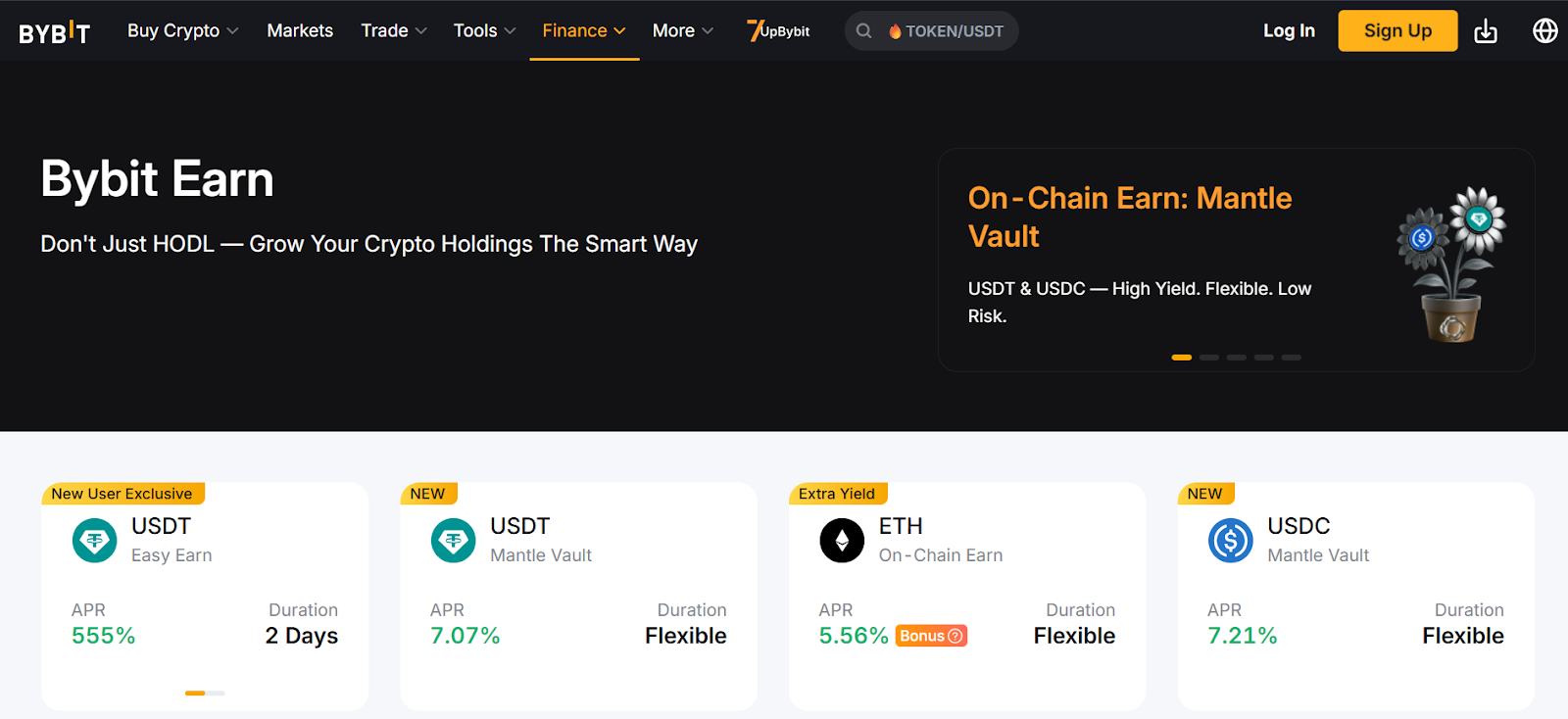
ByBit is tailored for active traders who want to earn staking rewards without interrupting their trading activities. Supporting over 650 cryptocurrencies, ByBit combines flexibility with high-yield opportunities. Its frequent limited-time promotions with boosted returns make it a dynamic choice for maximizing rewards. ByBit’s focus on speed and flexibility ensures that you can move funds easily and track rewards in real time.

ByBit provides flexible staking products, allowing you to withdraw funds anytime. It also offers promotional staking events with higher APY rates for a limited period. Popular assets like Bitcoin (BTC), Ethereum (ETH), and Solana (SOL) are available for staking.
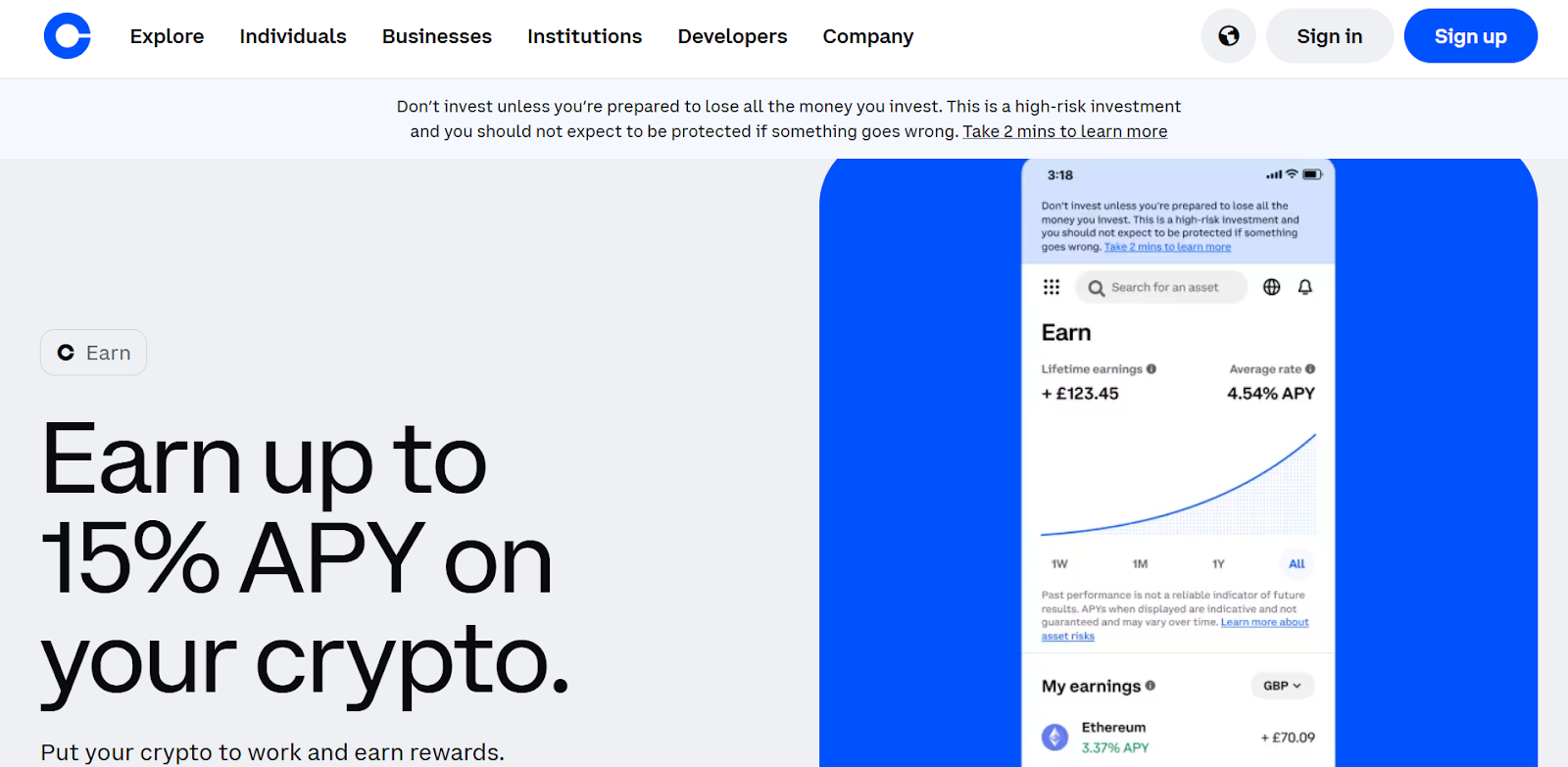
Coinbase is a trusted name in the crypto space, known for its transparent and regulated approach to staking. It’s an excellent choice if you value simplicity and security over maximizing yields. With support for six major cryptocurrencies, Coinbase ensures a straightforward staking experience. Its reputation as a secure and regulated exchange adds an extra layer of trust, making it a favorite among long-term holders.

Coinbase offers staking for Ethereum (ETH), Solana (SOL), and other popular assets. Most staking options come with no lockup periods, providing flexibility for long-term holders. Rewards are calculated transparently, and payouts are consistent.
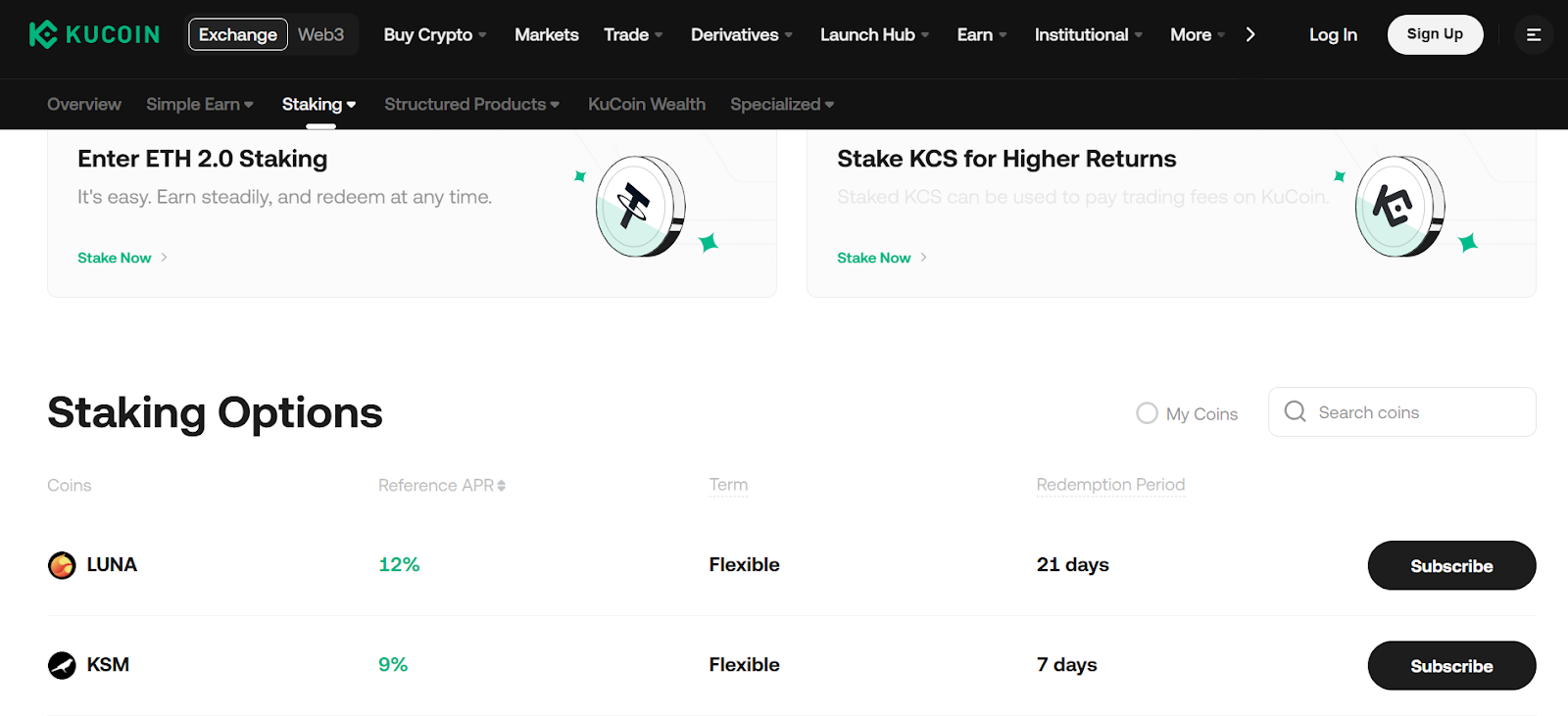
KuCoin is a go-to platform for those who enjoy exploring lesser-known coins. With support for over 50 cryptocurrencies, it offers a variety of staking options to suit different investment strategies. KuCoin’s promotional events and high APY rates on emerging assets make it a standout choice. Its strong security measures and global reach ensure a safe and rewarding staking experience.

KuCoin provides both flexible and locked staking options. Locked staking offers higher rewards, while flexible staking ensures liquidity. The platform also supports staking for newer and less common coins, giving you access to unique opportunities.
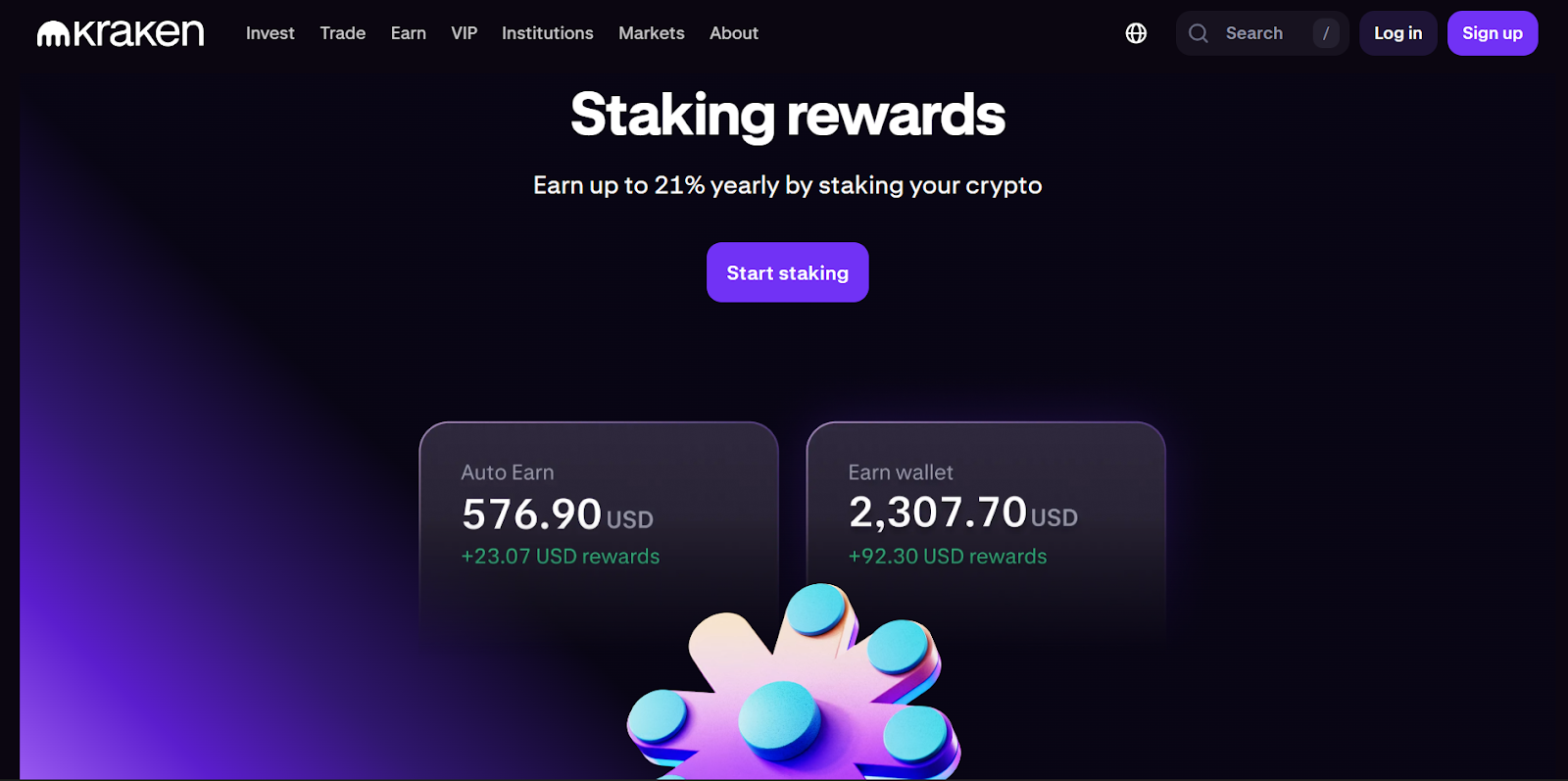
Kraken focuses on stability and consistency, offering staking for over 200 cryptocurrencies with APY rates of up to 21%. The platform’s clear reward schedules and carefully selected assets make it a reliable choice if you value predictability. Kraken’s low fees and transparent reward schedules add to its appeal, making it a trusted name in the crypto space.
Kraken provides both flexible and bonded staking options. Bonded staking offers higher rewards but requires a longer commitment period. Supported assets include Ethereum (ETH), Polkadot (DOT), and Cardano (ADA).
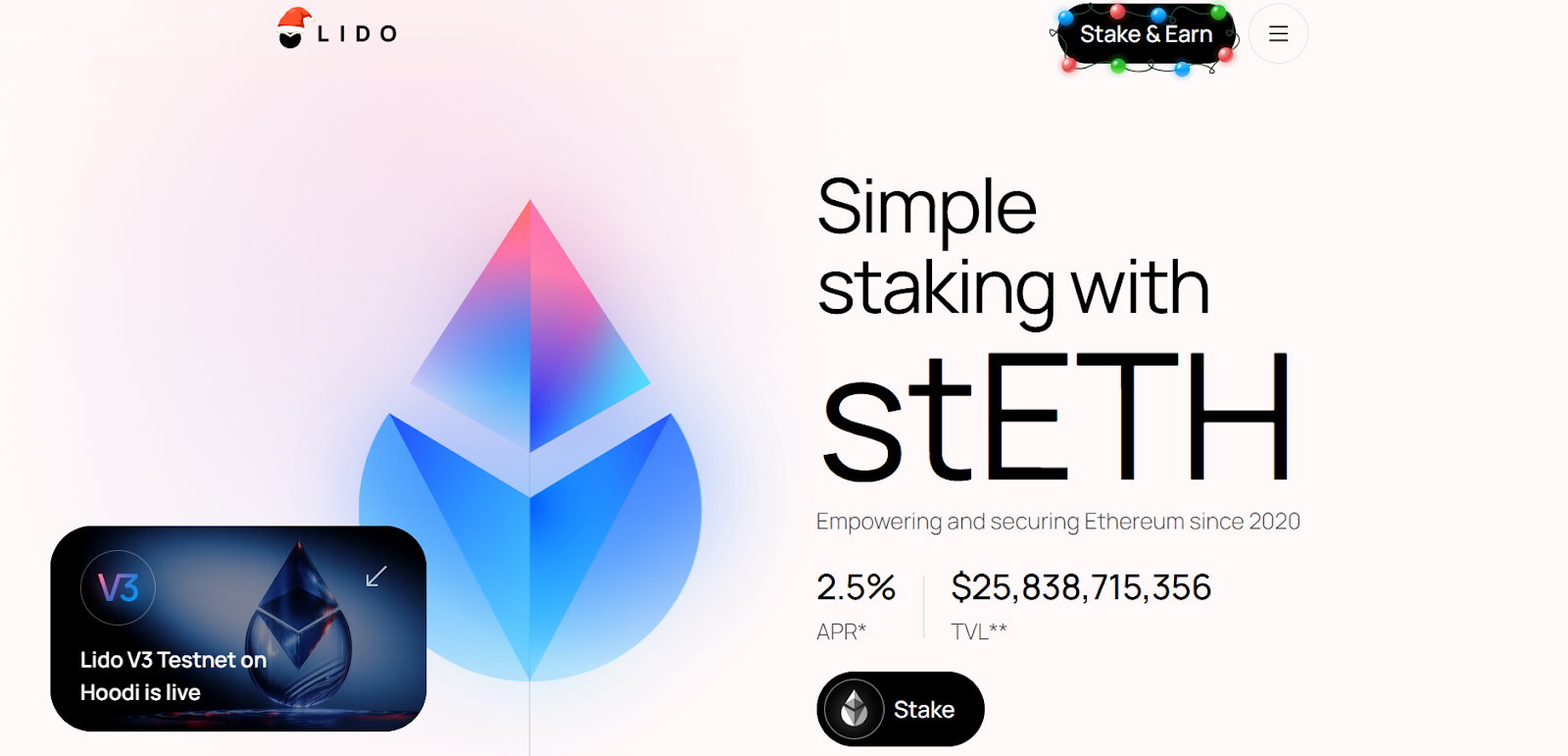
Lido is a decentralized platform specializing in liquid staking, particularly for Ethereum. It allows you to stake ETH while keeping your assets usable across decentralized applications. This unique approach makes Lido a favorite among DeFi enthusiasts. Its non-custodial nature ensures that you retain control of your assets, while its focus on security and transparency has earned it a strong reputation.
Lido supports liquid staking for Ethereum, where you receive stETH tokens representing your staked ETH. These tokens can be used in DeFi protocols for additional earning opportunities.
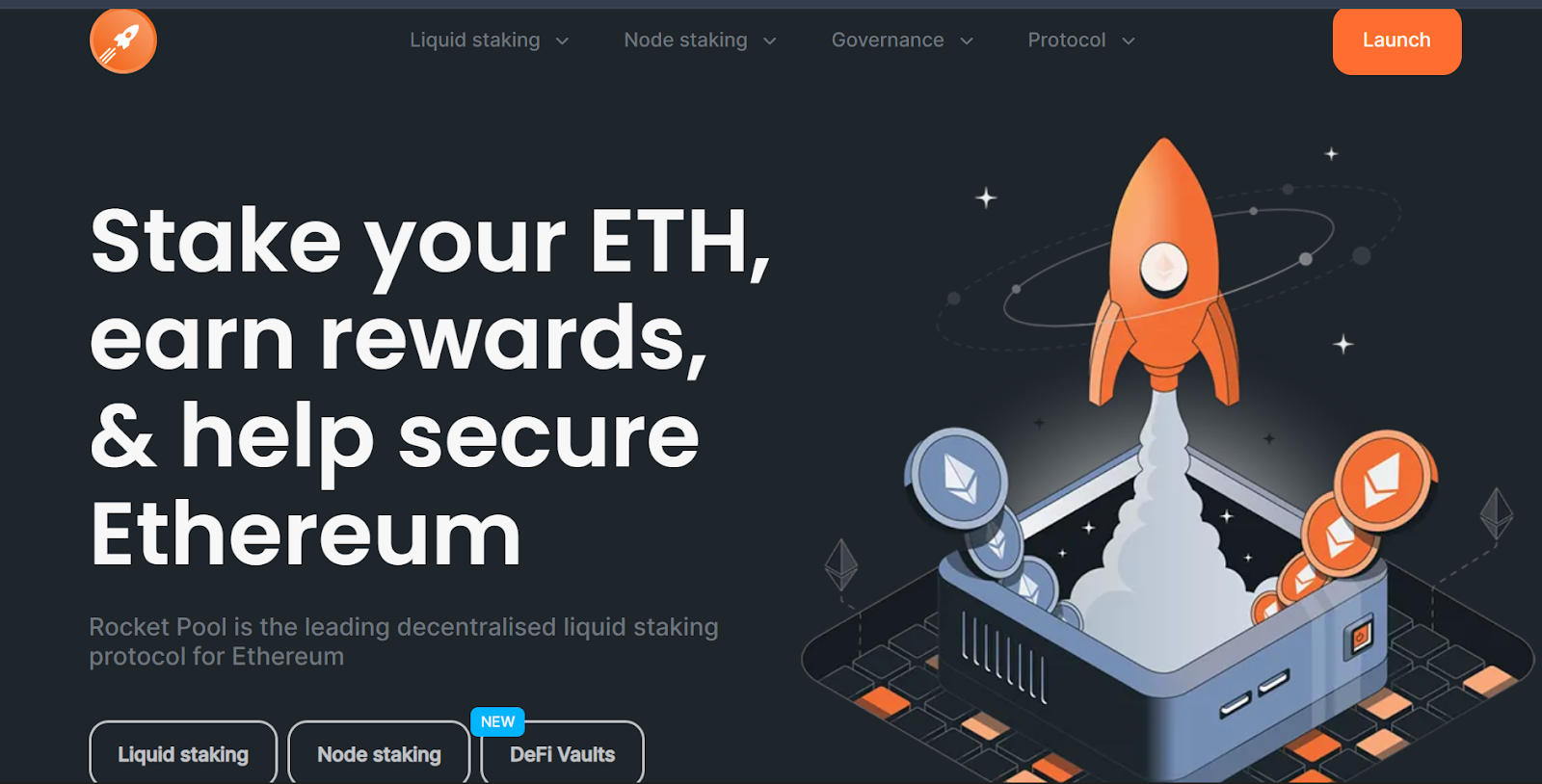
Rocket Pool is a community-driven platform that emphasizes decentralization and network health. It’s an excellent choice if you want to participate in Ethereum staking without running your own infrastructure. Rocket Pool’s focus on decentralization and security makes it a standout choice among the best DeFi staking platforms.
Rocket Pool offers liquid staking and node operation options. You can stake ETH and receive rETH tokens, which can be used across DeFi platforms. Node operators earn additional incentives, adding value to the staking process.
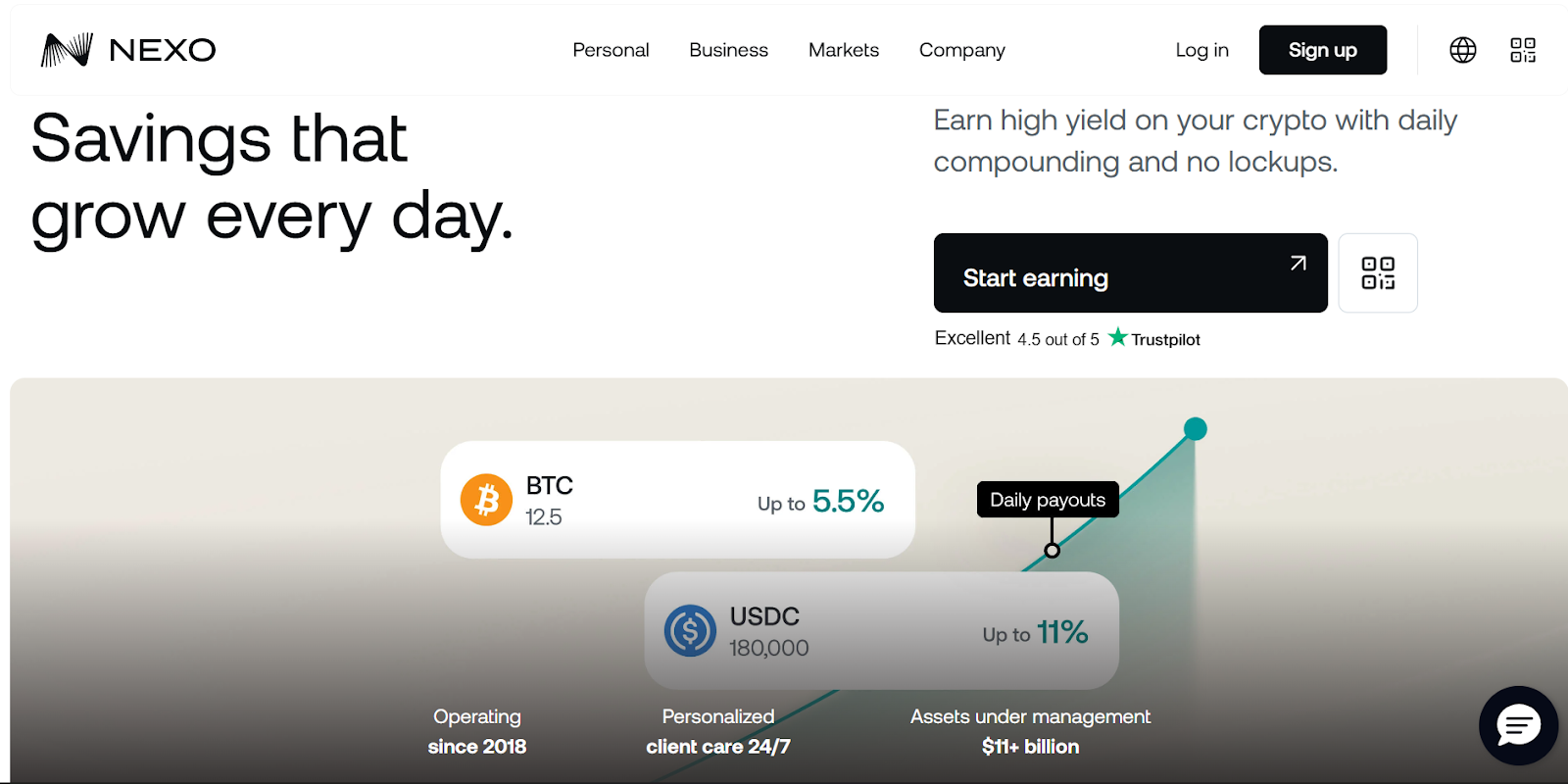
Nexo combines staking with broader earning features, making it a convenient option for passive income. With frequent payouts and clearly defined reward tiers, Nexo simplifies the staking process. Its user-friendly interface and strong security measures ensure a seamless staking experience.
Nexo supports staking for over 20 cryptocurrencies, including Ethereum (ETH) and Bitcoin (BTC). Rewards are based on loyalty levels, with higher tiers offering better returns.

Stakely is a validator service that stands out among the best crypto exchange platforms for its focus on reliability and transparency. It’s an excellent choice if you want to participate directly in network validation without the hassle of technical setup. Supporting over 30 blockchains, Stakely provides a secure and user-friendly staking experience. Its emphasis on infrastructure-focused participation makes it a trusted name in the staking community.
Stakely supports staking for a wide range of blockchains, including Ethereum (ETH), Polkadot (DOT), and Cosmos (ATOM). Rewards vary by chain, with some offering the highest APY crypto staking rates, reaching up to 34%.
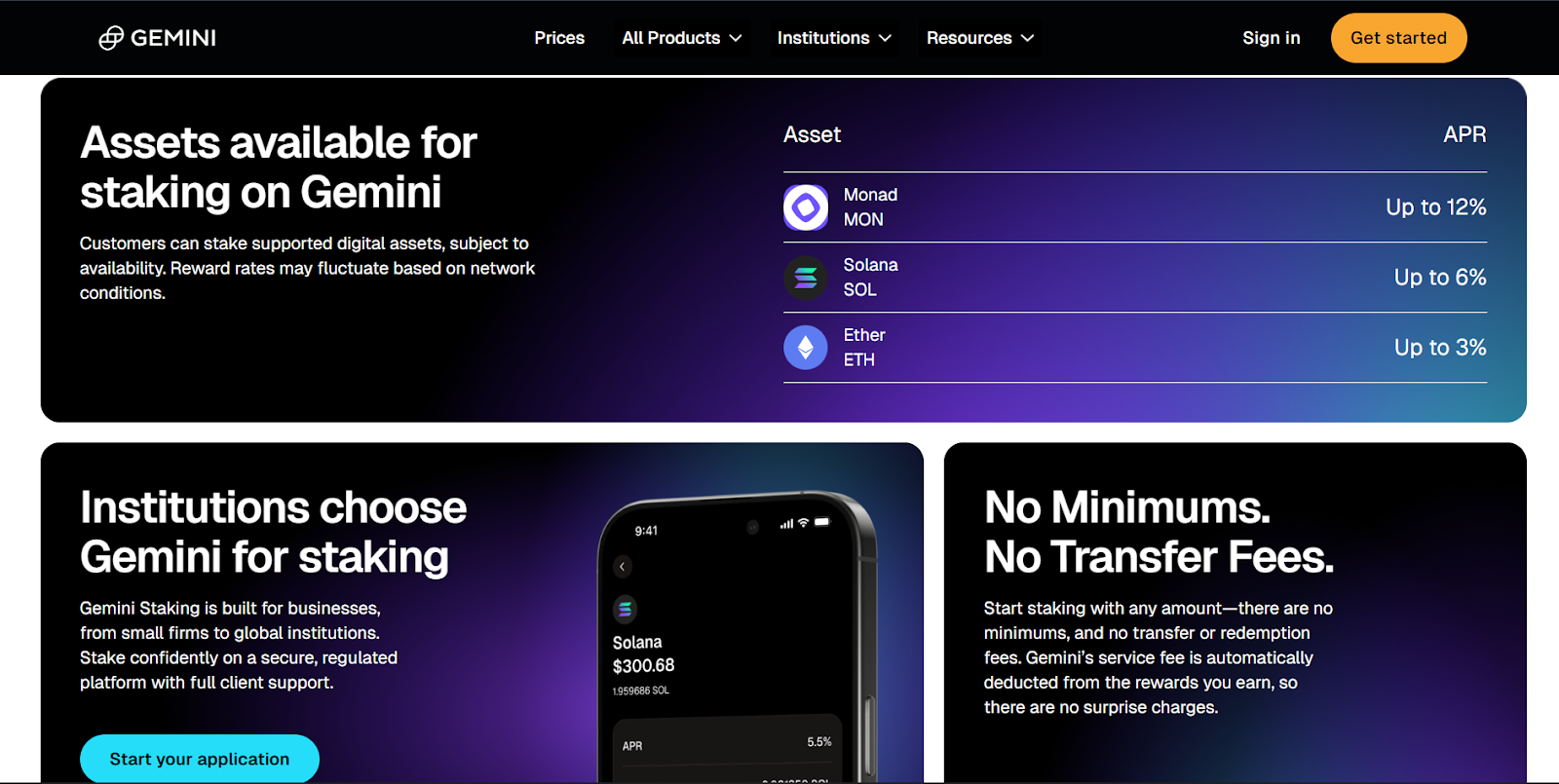
Gemini is a regulated platform that prioritizes security and compliance, making it a top choice for conservative investors. While its staking options are limited, Gemini’s focus on user protection and transparency ensures a straightforward and secure experience. If you’re looking for a platform that balances simplicity with trust, Gemini earns its place among the best staking providers.
Gemini supports staking for Ethereum (ETH), Solana (SOL), and a few other cryptocurrencies. With APY rates of up to 8%, it’s a reliable option for long-term strategies.

Margex is a versatile platform that integrates staking-style earning tools alongside trading features. It’s a great option if you want to earn passive rewards without leaving an active trading environment. Margex’s simplicity and focus on convenience make it a relevant choice among the best crypto staking platforms.
Margex supports staking for over 55 cryptocurrencies, including Bitcoin (BTC) and Ethereum (ETH). With APY rates of up to 11%, it offers competitive rewards for traders who value flexibility.
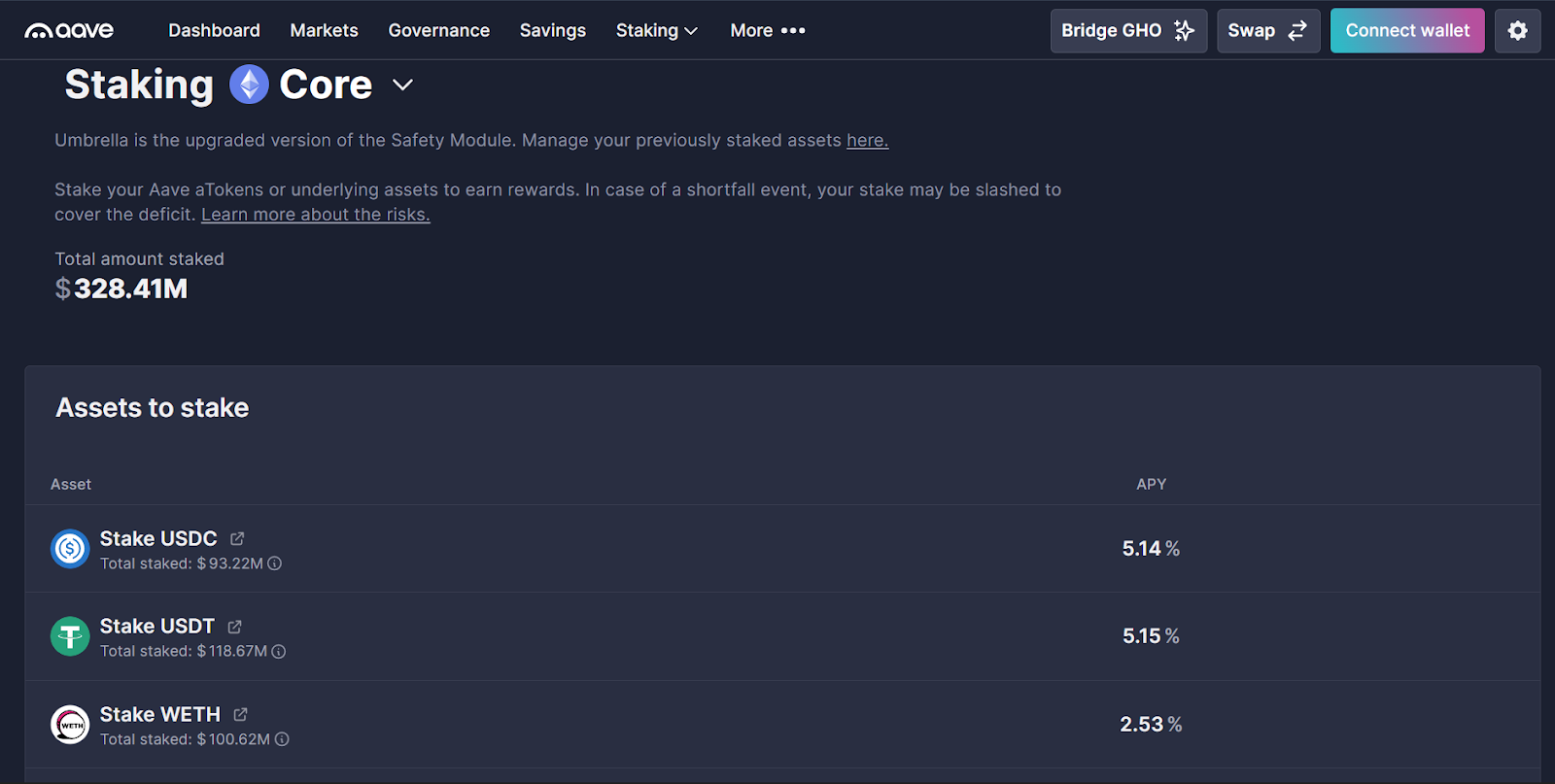
Aave is a decentralized finance (DeFi) protocol that offers staking and lending services, making it one of the best DeFi staking platforms. It’s a strong choice if you’re comfortable with DeFi mechanics and want more control over your investments. Aave’s focus on transparency and innovation ensures a rewarding experience for advanced investors.
Aave supports staking for over 30 cryptocurrencies, including stablecoins and Ethereum (ETH). Rewards depend on market demand and liquidity usage, with APY rates reaching up to 12.22%.
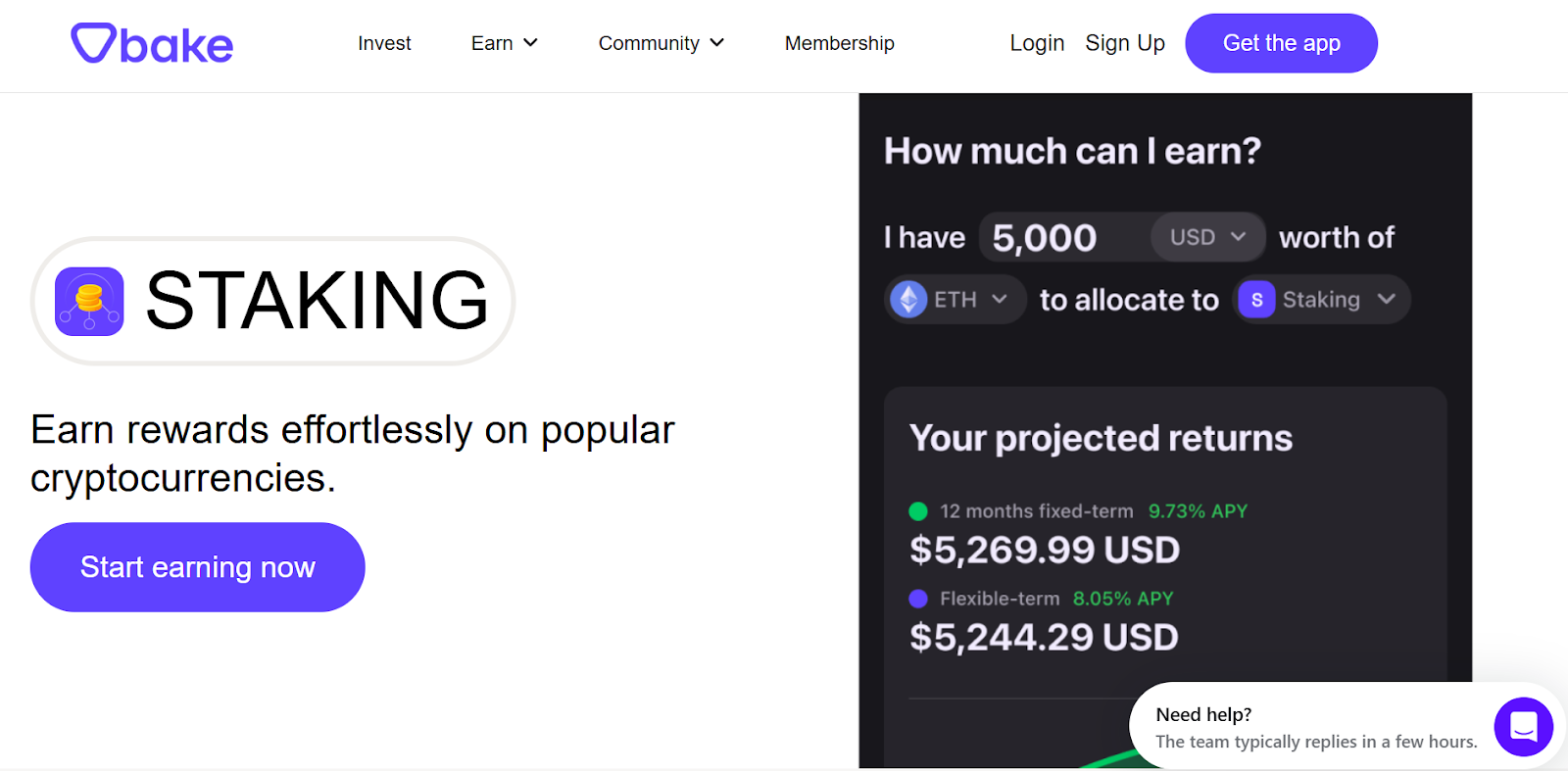
Bake simplifies decentralized earning with a beginner-friendly design and clear explanations. It’s an excellent platform if you’re transitioning from centralized platforms into DeFi. The platform emphasizes transparency by displaying reward calculations and allowing users to verify activity on-chain.
Bake supports staking for several Proof-of-Stake assets, including ETH, MATIC, DFI, and others. Depending on the asset, users may have access to flexible staking options that allow unstaking without long lock-up periods.
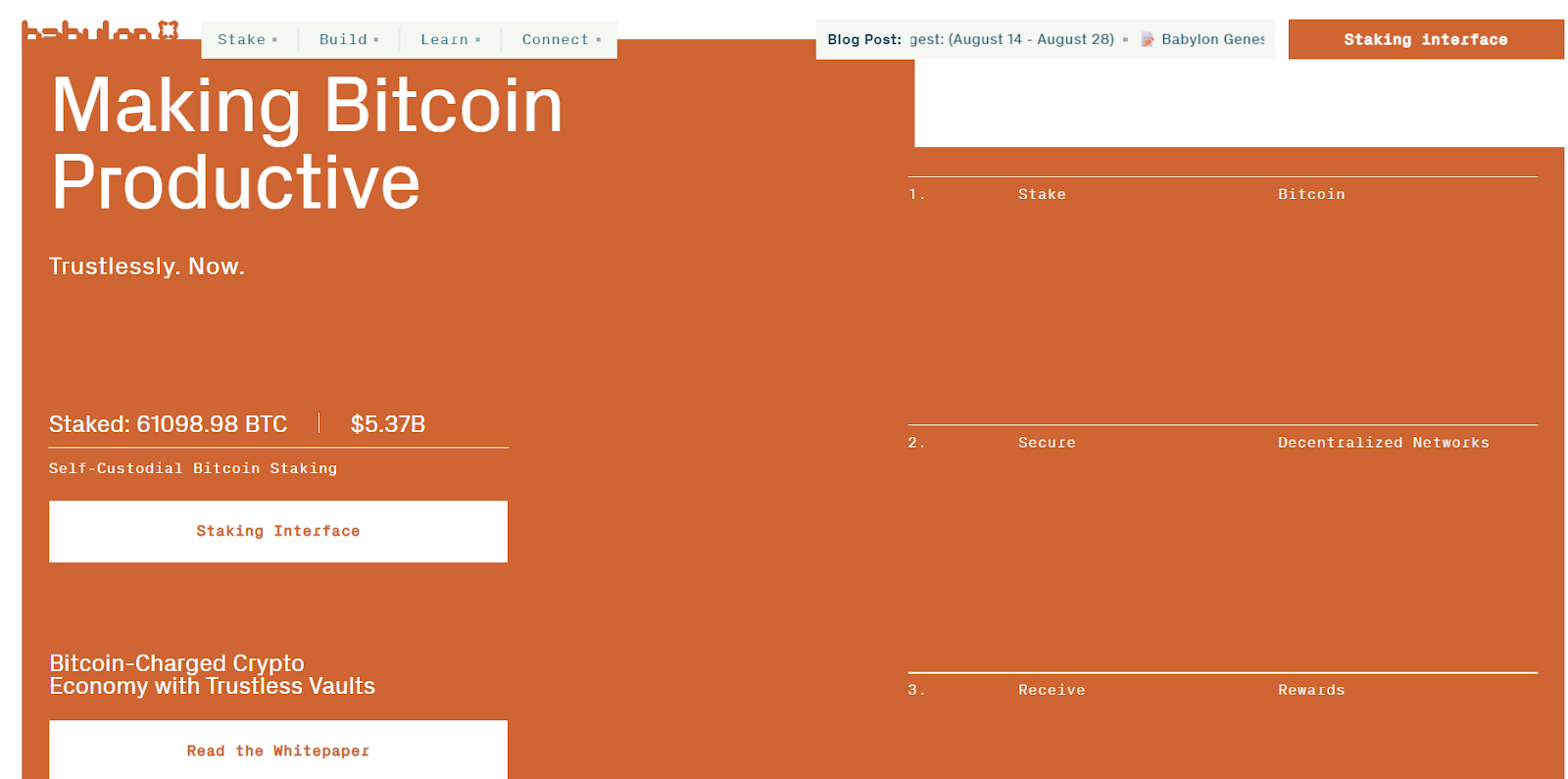
Babylon Labs is an emerging platform that focuses on security and innovation in staking infrastructure. While still developing, it shows strong potential for growth and is gaining recognition as one of the best crypto staking platforms to watch in 2025.
Babylon Labs supports staking for over 10 cryptocurrencies, with a focus on emerging networks. Specific APY rates and fees are yet to be disclosed, but the platform emphasizes decentralization and network health.
A crypto staking platform is a service or application that allows you to earn rewards by participating in the validation of blockchain transactions. In simpler terms, it’s a way to put your cryptocurrency to work and generate passive income. These platforms support proof-of-stake (PoS) blockchains, where you can lock up your assets, a process known as staking to help secure the network and validate transactions. In return, you earn rewards, often in the form of additional cryptocurrency.
If you’re wondering what is staking crypto, it’s the process of committing your digital assets to a blockchain network for a set period. This helps maintain the network’s operations and security. Staking platforms simplify this process by providing user-friendly interfaces, clear reward structures, and additional features like flexible or locked staking options. Whether you’re a beginner or an experienced investor, these platforms make it easy to participate in staking and earn rewards without needing technical expertise.
Selecting the right staking platform is crucial to maximizing your rewards and ensuring the safety of your assets. With so many options available, it’s important to evaluate platforms based on specific criteria. Here are six key factors to consider when choosing the best staking platform for your needs:
One of the first things to check is the APY or Annual Percentage Yield offered by the platform. The highest APY crypto staking options can significantly boost your earnings, especially if you are staking for the long term. However, be cautious of platforms offering unrealistically high returns, as they may come with hidden risks. Always balance high rewards with platform reliability.
Security should be a top priority when choosing a staking platform. Look for platforms with a strong reputation, robust security measures, and a history of protecting user funds. Features like two-factor authentication, cold storage, and insurance against slashing events can provide an added layer of security.
If you are interested in staking Ethereum, ensure the platform supports it. Ethereum is one of the most popular assets for staking, and platforms like Lido and Rocket Pool are often recognized as the best Ethereum staking platforms. Additionally, understanding what is Ethereum and its role in decentralized finance can help you make informed decisions about staking this asset.
Different platforms offer varying levels of flexibility. Some allow you to withdraw your funds anytime through flexible staking, while others require you to lock up your assets for a set period through locked staking. If you need liquidity, opt for platforms with flexible staking options. For higher rewards, locked staking may be a better choice.
A user-friendly interface can make a big difference, especially if you are new to staking. Platforms like Crypto.com and Binance are known for their intuitive designs, making it easy to track rewards, manage assets, and navigate the staking process. Choose a platform that simplifies the experience without compromising on features.
Fees can eat into your staking rewards, so it is important to compare the costs across platforms. Some platforms charge minimal fees, while others may have higher costs for certain services. Additionally, look for extra features like auto-compounding, staking insurance, or integration with decentralized finance protocols, which can enhance your staking experience.
Cryptocurrency staking platforms are generally considered safe, especially when you choose well-established and reputable options. These platforms operate on blockchain technology, which ensures transparency and security through decentralized networks. The safety of staking depends on several factors, including the platform’s reputation, the security measures in place, and the specific cryptocurrency being staked. Platforms like Binance and Kraken are often regarded as some of the best platforms for crypto staking due to their robust security protocols and long-standing trust in the crypto community.
When exploring the best DeFi staking platforms, understand the risks associated with decentralized finance. Unlike centralized platforms, DeFi staking involves interacting with smart contracts, which can be vulnerable to bugs or exploits. Staking rewards are typically expressed in APY, your earnings are tied to the token’s value. If the token’s price drops significantly, your rewards may not offset the loss. Comprehending what is a blockchain and how it underpins staking platforms can help you minimize risks.
Choosing the right staking platform involves evaluating factors like security, flexibility, and reward potential. Each platform caters to different needs, offering features for both beginners and experienced investors. When you assess g your options and understand the associated risks, you can select a platform that aligns with your investment goals. Staking continues to be a valuable method for growing cryptocurrency holdings while supporting
The best platform to stake crypto depends on your priorities, such as high rewards, security, or ease of use. Platforms like Binance, Kraken, and Lido are popular choices for their reliability and features.
The duration for locking up funds for staking varies by platform and cryptocurrency. Some platforms offer flexible staking with no lock-up, while others require periods ranging from a few days to several months.
Yes, you can stake crypto in the US. Many platforms, including Coinbase and Kraken, allow US-based users to stake cryptocurrencies, though availability may vary by state and regulation.
Liquid staking allows you to stake your crypto while still maintaining liquidity. You receive tokens representing your staked assets, which can be used in other transactions or DeFi activities.
Yes, staking rewards are typically taxed as income in most jurisdictions, including the US. The specific tax treatment depends on local regulations and how the rewards are classified.
The difference between PoS staking and DeFi staking lies in their purpose and mechanism. PoS staking secures blockchain networks, while DeFi staking involves locking assets in decentralized protocols to earn rewards.
The difference between centralized and non-custodial staking is control. Centralized staking involves platforms managing your assets, while non-custodial staking lets you retain full control of your private keys and funds.

“Free Bitcoin daily” is one of the most searched crypto-mining phrases going into 2026. But experienced users know that trust matters more than bold promises. In real mining, “free BTC” usually means free trial hash power, coupons, task-based rewards, or pool access—not guaranteed profits.
This guide reviews 10 trusted cloud mining and mining-related platforms that allow users to start earning Bitcoin with little to no upfront cost. The article is written to be clear, realistic, and SEO-friendly for users searching for free Bitcoin cloud mining in 2026.
| Rank | Platform | Ideal For | How You Earn “Free BTC” | Payout Style |
| #1 | AutoHash | Beginners who want a real mining trial | $100 free hash-power credit / trial | Daily rewards |
| #2 | ECOS | Users who prefer structured contracts | New-user free trial option | Contract-based |
| #3 | Bitdeer | Enterprise-grade mining brands | Coupons & limited promotions | Plan-based |
| #4 | NiceHash | Transparency-focused users | Sell hashrate / mine BTC | Frequent payouts |
| #5 | Binance Cloud Mining | Binance ecosystem users | Event promos + pool access | Wallet-based |
| #6 | ViaBTC | Pool users seeking bonuses | Trial hash events + coupons | Pool payouts |
| #7 | YouHodler Cloud Miner | Task-based reward seekers | Gamified mining rewards | Reward redemption |
| #8 | BitFuFu | Coupon-driven entry users | Trial cash / promo coupons | Plan-based |
| #9 | Mining-Dutch | Small-scale pool miners | Free pool access | Pool payouts |
| #10 | F2Pool | Long-term pool participants | Mine directly to wallet | Pool payouts |
Important note: “Free” means free to start, not guaranteed profit. Mining rewards always depend on network difficulty, fees, and platform rules.
AutoHash is positioned as a beginner-friendly cloud mining platform that allows users to start with a $100 free hash-power credit. This trial lets new users experience real mining-style daily rewards before committing capital.
What makes AutoHash stand out in 2026 is its simple onboarding, daily payout structure, and clear scaling path from free trial to paid plans. Promotional materials often highlight earning potential of up to $3,828 per day on high-tier plans—this figure represents a popular-end scenario rather than an average result.
Ideal for: users searching for a free Bitcoin cloud mining app in 2026 with a realistic trial experience.
👉 Click to visit AutoHash, claim $100, and view the mining contract!
ECOS is one of the more established names in cloud mining. It focuses on contract-based mining, and new users may access trial-style entry offers depending on availability.
The platform appeals to users who prefer fixed-term contracts, dashboards, and predictable mining operations, rather than short promotional campaigns.
Ideal for: users who value structure and long-term planning.
Bitdeer is known for its enterprise-level mining operations. While it is not a “free mining” platform in the traditional sense, it frequently offers coupons, promotional credits, and limited-time bonuses.
These promotions reduce entry cost and allow users to test mining plans with lower risk.
Ideal for: users who prefer large, well-known mining brands.
NiceHash operates as a hash-power marketplace, allowing users to earn Bitcoin by contributing computing power or purchasing hashrate on demand.
It is often chosen for its clear payout rules, visible fees, and flexible earning model, even though it does not offer free hash power.
Ideal for: users who value transparency and flexibility.
Binance Cloud Mining is integrated with Binance Pool and the broader Binance ecosystem. Users with existing Binance accounts may benefit from event-based promotions, pool incentives, and mining campaigns.
This option works for users who want mining and trading under one account.
Ideal for: active Binance users.
ViaBTC is a long-running mining pool that occasionally offers trial hash events, referral bonuses, and fee discounts.
Although it’s primarily a pool service, these incentives make it easier for users to test mining without a large upfront commitment.
Ideal for: users comfortable with pool-based mining.
YouHodler’s Cloud Miner is not traditional ASIC cloud mining. Instead, it uses a task-based reward system that simulates mining and distributes BTC rewards through user activity.
It’s simple to use and requires no technical knowledge.
Ideal for: casual users and beginners who want small daily BTC rewards.
BitFuFu periodically runs trial cash and coupon campaigns that lower the cost of entry. These offers are usually time-limited, so users should always review the terms.
Ideal for: users who want to test mining plans through promotions.
Mining-Dutch positions itself as a join-free mining pool with frequent payouts and years of operation.
It does not provide free hash power, but it allows users to mine without contracts or long-term commitments.
Ideal for: small-scale miners and pool experimenters.
F2Pool is one of the oldest mining pools in the industry. It clearly states that it provides pool services, not cloud mining investment products, which adds to its credibility.
Users mine directly to their own wallets, maintaining full control.
Ideal for: experienced users who value longevity and clarity.
Before signing up, consider:
Earning free Bitcoin daily in 2026 is possible, but it’s important to keep expectations realistic. Reliable platforms don’t give away unlimited BTC. Instead, they let users start for free through trial hash power, limited bonuses, task-based rewards, or open mining pools—so you can see how the system works before investing.
Trusted cloud mining platforms focus on clear rules, visible payouts, and stable operations, not exaggerated profit promises. The smartest approach is to treat any “free BTC” offer as a test step: verify withdrawals, understand fees, and learn how rewards are calculated.
For beginners, trial-based platforms are the easiest and safest way to get started. More experienced users may prefer mining pools or marketplaces for greater control. In the long run, successful Bitcoin mining comes from choosing platforms that are simple, transparent, and consistent—rather than chasing hype.

Blockchain technology showed its potential as the driving force behind numerous cryptocurrencies worldwide. Do you know that blockchain platforms provide the ideal foundation to create decentralized applications for different industries? The top blockchain platforms not only provide a more efficient approach for financial or data transfers but also create opportunities for innovation. Awareness of the most notable blockchain platforms can help you discover the ideal platform for your next big application.
Irrespective of the industry you work in, there is a small chance that you must have heard about blockchain. The growing demand for blockchain development in trade finance, supply chain management and other industries calls for identification of best blockchain platforms. Which platforms do you think offer the best features for blockchain development?
The first thing that you must learn about before choosing blockchain platforms is the basic purpose of blockchain technology. It will help you understand why startups and large corporations want to know answers to “what are the blockchain platforms” and how they improve the competitive advantage of a business. Blockchain platforms extend the capabilities of blockchain technology beyond serving as a ledger for maintaining transaction records.
The primary utility of blockchain platforms revolves around developing and implementing decentralized apps and smart contracts. As compared to traditional blockchains which focused only on recording transactions, blockchain platforms offer a programmable layer. Developers can use the blockchain or crypto development platforms to create sophisticated apps with capabilities for automation of complex processes and safeguarding digital interactions.
Blockchain platforms also incorporate consensus models to ensure security and data integrity in business apps. On top of it, blockchain platforms also provide the advantages of efficiency and enhanced scalability as compared to traditional development approaches.
The identity of blockchain platforms overlaps with that of core blockchain technology in many cases. You can find top blockchain and crypto projects on platforms that offer complete data transparency, traceability and enhanced security. The actual problem begins when you have to pick one out of the thousands of blockchain platforms with different capabilities. An overview of the most trusted blockchain platforms, including public and enterprise blockchain platforms can help you make the right decision.
Ask anyone in the crypto and blockchain community about the ideal blockchain platform to build your next dApp and you will receive Ethereum as a response. As a matter of fact, it is the first blockchain platform that introduced smart contract programming. You can notice a glimpse of its popularity in the large-scale adoption of Ethereum among software developers. Even with a native token that is the biggest competitor of Bitcoin, Ethereum is more popular as a blockchain platform for smart contract and dApp development.
Ethereum deserves a spot in the blockchain platforms list for its continuously evolving roadmap. For instance, the switch to Proof of Stake consensus mechanism in 2022 has enhanced the overall efficiency of Ethereum blockchain. With the new consensus mechanism, Ethereum is an ideal blockchain platform to build apps that can manage increased throughput levels.
Excited to learn the basic and advanced concepts of ethereum technology? Enroll now in The Complete Ethereum Technology Course
Solana is the next big thing in blockchain development with its unique features and advantages. It is an open-source blockchain platform that has been tailored for hosting decentralized applications with the assurance of scalability. You can notice that the popularity of Solana revolves primarily around its ability to address the concerns of scalability. Solana can not only manage more transactions but also provides the advantage of significantly lower transaction costs than Ethereum.
The most crucial reason to trust Solana is the capability to process thousands of transactions in a second. It claims better throughput than the best crypto platforms with the potential to complete almost 65,000 transactions per second. Solana uses a combination of Proof of Stake and Proof of History consensus mechanisms, which offer enhanced scalability and faster transaction speeds.
Enroll now in the Solana Development Course to understand the workings of the Anchor framework, Solana Program Library, and Solana tokens.
You cannot think about blockchain platforms without mentioning Hyperledger Fabric. It is the most popular open-source blockchain platform that serves as the top pick for developing enterprise solutions. Hyperledger Fabric is one of the top blockchain platforms for permissioned use cases that will be limited within the enterprise use case. As a result, it demands verification and authentication of all network participants before joining the network.
Businesses which prioritize security and privacy will choose Hyperledger Fabric as the first pick to create complex applications. Hyperledger Fabric leverages a modular architecture with different components that can help you develop blockchain solutions with different layers. With an extensive library of components, Hyperledger Fabric facilitates a simpler process for blockchain development while offering more flexibility.
Excited to learn the basic and advanced concepts of Hyperledger Fabric? Enroll Now in Hyperledger Fabric Course.
IBM Blockchain is another top-rated blockchain platform that you should consider for your next project. It is a common addition in every blockchain platforms list due to the popularity of IBM, which is a prominent tech giant. The blockchain platform by IBM is also one of the notable favorites of businesses for blockchain development projects. As a matter of fact, companies in different industries, such as finance, healthcare, and supply chain management, choose IBM Blockchain.
The permissioned nature of IBM Blockchain is similar to that of Hyperledger Fabric, which ensures that it fits perfectly with business use cases. Another significant advantage of IBM Blockchain is the flexibility for connecting legacy technologies and enterprise cloud platforms. Furthermore, you can also have the assurance of better data privacy and transaction throughput with the permissioned blockchain platform. IBM Blockchain offers the perfect platform for businesses that want to experiment with blockchain innovation while maintaining control.
Start your blockchain journey Now with the Enterprise Blockchains Fundamentals
Corda is also a valuable addition among blockchain platforms that you should watch out for in 2025. It was originally created to work only in the financial services industry. However, Corda has become the top blockchain and crypto development platforms in many other use cases. Corda works as a permissioned blockchain and leverages a different working mechanism that separates it from other blockchain platforms.
The distinct highlight of Corda is that it does not store transactions in blocks like other platforms. On the contrary, it facilitates real-time transaction processing, which improves efficiency and performance. It is important to note that Corda does not have its native token and does not support smart contract programming. You will have to write and deploy smart contracts on Corda with the help of Java or other programming languages.
Want to learn the basic and advanced concepts of R3 Corda Development?, Enroll now in Beginner’s Guide To Corda Development Course
You can choose the best blockchain platform for your next project by evaluating your needs. Blockchain platforms allow you to capitalize on the features of core blockchain technology in your applications. The real use cases of blockchain platforms in dApp and smart contract development across different industries showcase their potential. However, selecting the ideal blockchain platform from a crowd might be difficult with every platform claiming to offer the best features. Ultimately, you should choose a blockchain platform that offers community support, development tools and support for scalability. If the blockchain platform makes your development process easier, then it is the right pick for your project. Pursuing a Blockchain Certification can further help you make informed platform choices and enhance your expertise.


In 2025, earning passive crypto income no longer requires managing noisy hardware or high electricity bills. Thanks to smart cloud mining platforms, investors and enthusiasts can now mine Bitcoin(BTC), Litecoin(LTC), Dogecoin(DOGE), and other cryptocurrencies through automated, legally compliant systems.
These Mining platforms combine artificial intelligence, tokenization, and institutional-grade infrastructure to deliver efficient, transparent mining experiences—ideal for both newcomers and seasoned crypto users. Here are 9 of the most reliable Crypto Mining platforms helping people mine crypto legally and profitably in 2025.
As regulations tighten and energy costs rise, the demand for smart, legally structured, and fully transparent cloud mining platforms is stronger than ever. In 2025, miners—both retail and institutional—are no longer satisfied with vague promises or hidden fees. Instead, they seek data-backed contracts, real-time ROI tracking, and AI-driven allocation to maximize profits while staying compliant.
✅ DeepHash is a legally registered UK-based cloud mining platform that offers AI-powered, short-term mining contracts across nine global green-energy farms. With fully automated operation and real-time ROI dashboards, it’s ideal for users seeking hands-free, high-return mining.
✅ Each DeepHash mining contract is tied to a specific energy-efficient farm and delivers fixed daily profits with durations from 1 to 3 days. Example plans include:
👉 Click to visit DeepHash to receive $100 for free and view the full contract!

All contracts run on clean energy and include live tracking, daily settlement, and optional principal refund at term-end.
✅ New users get a $100 bonus for instant mining activation—no credit card or KYC needed. Simply register, activate a trial contract, and start earning Bitcoin or Dogecoin in real time.
✅ Start earning legally with DeepHash—AI-driven, fast-return mining for all.
Minto offers a unique model where each BTCMT token represents real mining power. Users stake these tokens to receive daily Bitcoin payouts, sourced from Minto’s physical mining facilities powered by renewable energy. The platform bridges mining and DeFi with full transparency.
✅ Operated by an ISO 27001-certified entity running hydroelectric-powered data centers
✅ BTCMT token staking yields direct Bitcoin earnings without user maintenance
Based in Armenia’s Free Economic Zone, ECOS is a licensed and legally backed crypto mining service. It provides structured Bitcoin mining contracts, a built-in wallet, and forecasting tools to help users understand their potential profits before committing.
✅ Government-approved and operating under a special economic regime
✅ Mobile-friendly and ideal for users looking for predictable, contract-based mining income
Genesis Mining is one of the longest-standing platforms in the space, trusted since 2013. It offers large-scale cloud mining contracts for Bitcoin and other proof-of-work coins, backed by real hardware and a decade-long track record.
✅ Registered in Iceland and Hong Kong with real mining farms and multi-year history
✅ Offers longer-term stability for those seeking consistent returns from crypto mining
BitDeer enables users to rent physical mining machines hosted in professional facilities around the world. Users choose specific miners and durations, and receive real-time performance and daily payouts. It’s ideal for users who want the benefits of owning a miner without operational headaches.
✅ Publicly traded on NASDAQ (BTDR)
✅ Partners include Bitmain and farms in the US, Norway, and UAE
Closely linked to Bitmain, BitFuFu provides cloud mining services with flexible contract durations. Its industrial-scale infrastructure and transparent performance metrics make it a preferred platform for those seeking scalable crypto mining with global reach.
✅ Publicly listed on NASDAQ (FUFU)
✅ Runs large-scale facilities across multiple continents
NiceHash provides a unique hashpower marketplace where users can rent or sell mining power. It also offers a smart mining app that automatically chooses the most profitable coin to mine, converting all earnings to Bitcoin for simplified withdrawals.
✅ Headquartered in Slovenia and operational since 2014
✅ Offers both hands-free mining and full control via custom mining orders
As part of the Binance ecosystem, Binance Cloud Mining allows users to purchase Bitcoin mining contracts directly through their Binance accounts. Payouts are automatic, and users can reinvest them across the broader Binance platform.
✅ Backed by Binance Pool and operates under the regulatory oversight of multiple jurisdictions
✅ No setup required; ideal for users already within Binance’s ecosystem
Hashing24 offers cloud mining contracts linked to industrial-grade partners like Bitfury. What sets it apart is the ability to trade or exit active contracts via its internal marketplace, making it one of the most flexible options in this space.
✅ Based in Ireland and active since 2016
✅ Real hardware-backed contracts with resell options for liquidity
These 9 Crypto Mining platforms prove that cloud mining in 2025 is more than just a technical hobby—it’s a smart, accessible path to passive crypto income. Whether you’re staking tokens on Minto, automating returns with DeepHash, or managing your own miners through BitDeer, there are legal and intelligent options available.
Choose the platform that fits your risk appetite, time horizon, and technical comfort level—and let smart infrastructure do the work of mining for you.

James Ding
Oct 16, 2025 21:05
Riot Platforms, a leader in Bitcoin mining, has announced its Q3 2025 earnings call scheduled for October 30, 2025, as the company continues its expansion in data centers and mining operations.
Riot Platforms, Inc. (NASDAQ: RIOT), a prominent player in Bitcoin mining and the development of large-scale data centers, has announced its third quarter 2025 earnings conference call. The call is scheduled for October 30, 2025, at 4:30 P.M. EST, during which the company will discuss its financial results for the quarter ended September 30, 2025, according to riotplatforms.com.
The conference call will be accessible via an audio-only webcast. Interested participants can register through the provided links for both the U.S. and international calls. A replay of the webcast will be available following the conclusion of the call.
Riot Platforms continues to assert its vision of being the world’s leading Bitcoin-driven infrastructure platform. The company operates Bitcoin mining facilities in Texas and Kentucky, with additional electrical engineering and fabrication operations in Denver, Colorado, and Houston, Texas. Riot’s focus remains on a vertically integrated strategy to expand its influence in the digital infrastructure sector.
As the cryptocurrency market evolves, companies like Riot Platforms are strategically positioning themselves to capitalize on the growing demand for high-performance computing and digital currency mining. The company’s ongoing expansion efforts in its mining facilities and infrastructure indicate a robust growth trajectory.
Riot Platforms’ continued investment in infrastructure and technology signifies its commitment to maintaining a competitive edge in the Bitcoin mining industry. The anticipated earnings call will likely provide insights into how these strategic initiatives are impacting the company’s financial performance and future outlook.
Image source: Shutterstock


