Qubic says 87.1% of the drained QU remains immobilized on its network, while MEXC froze the account receiving the rest…. Read the full story at The Defiant

 Live Chat
Qubic says 87.1% of the drained QU remains immobilized on its network, while MEXC froze the account receiving the rest…. Read the full story at The Defiant

Palo Alto, United States, October 12th, 2026, Chainwire
Trace, the onchain registry for rights-cleared AI training data with more than 250 million verifiable receipts, brings its training data to Sui and Walrus to power the next generation of AI models.
Sui Foundation and The DATA Foundation today announced that the DATA Network and its Trace registry are joining the Sui stack, bringing a live supply of rights-cleared AI training data onto the infrastructure Sui has built for AI workloads. Walrus, the data platform with integrity proofs anchored on Sui, becomes the default storage layer for applications operated by DATA Foundation. Separately, the DATA Network will be upgraded to run as a protocol natively on Sui.
The upgrade gives AI labs a single place to source real-world training data they are allowed to use, with its provenance recorded by Trace and the original file stored and access-controlled on Walrus.
The data AI needs next
The next generation of AI models is constrained by access to real-world data. The open internet has been scraped, and the data that comes next must be sourced from people, with consent and with provenance that regulators and legal teams will accept. The EU AI Act and ongoing litigation over training data have made provenance a procurement requirement for labs.
The data those models need sits with people rather than on the open web: a nurse describing a patient’s night in her own words, a dashcam recording of a rainy commute in Jakarta, a factory technician’s hands as they diagnose a fault, or a customer call conducted in Bengali. It is personal and often regulated, and it belongs to the people who generated it.
Trace, launched by DATA Foundation in June as an onchain registry for AI training data, was built for exactly this kind of data. It records the origin of each contribution and the rights attached to it, and settles payment to the person who contributed it. It has registered more than 250 million contributions since launch and now processes over 3M receipts per day on average. Applications writing to Trace include Kled, the largest opt-in human data marketplace with over 1.5 billion records being onboarded, along with Numo and Oto, applications that already license data to frontier AI labs and robotics companies.
Why Sui and Walrus
Sui represents every asset as a programmable object, allowing datasets and their licenses to be managed onchain like tokens. Independent transactions execute in parallel and settle in under a second, making the network capable of handling millions of daily registrations. Walrus extends this capability to large files: it stores massive AI datasets efficiently and ensures data is only readable by licensed buyers. No other network offers storage, access control, and ownership tracking built natively into a single ecosystem, together with verifiable compute.
Trace now adds a flagship supply of rights-cleared data, with existing demand from the AI labs that license it today. The result of the integration will be stronger provenance guarantees and tamper evidence. Today a Trace record proves that a file was registered and when, and with Walrus, Trace will be able to hold an encrypted, immutable copy of the contributed file itself as a reference guarantee. The hash of the record can be regenerated from the data itself rather than from metadata an application supplied, and any later processing of the file can be checked against the original.
The upgrade is backed by a long-term strategic investment. Sui Foundation is investing $30 million in the DATA Network, establishing the largest institutional stake in the network, alongside the continuing holdings of PIP Labs and the DATA Foundation. Furthering the alignment, SY Lee, Chairman of Poseidon and CEO of PIP Labs, joins Sui Foundation as Strategic Advisor.
The protocol upgrade
DATA Network will be upgraded to run as a protocol natively on Sui, and its independent chain will be retired. $DATA continues as the token of the DATA protocol on Sui, carried over one-to-one, with holder economics and governance rights at least equivalent to today. Locked and vesting positions carry over unchanged. In parallel, Walrus becomes the default storage layer for DATA Foundation applications.
Adeniyi Abiodun, Co-Founder and Chief Product Officer at Mysten Labs, the original contributor to Sui and Walrus, said: “The AI industry has reached the point where the open internet has been read, and the next frontier is defined by access to datasets with the consent and provenance that regulators require. Sui and Walrus were built to be the home where AI data is stored, licensed, and paid for, capable of operating at the scale these systems demand. The migration of DATA Network and Trace to our stack now brings massive volumes of high-quality, rights-cleared data that is already serving the world’s frontier AI labs.”
SY Lee, Chairman of Poseidon and CEO of PIP Labs, said: “The next generation of AI will be trained on data that lives with people rather than on the open web, and that data needs consent and provenance built in, along with a way to pay the people it comes from, and Trace was built to be that layer. It now becomes part of the Sui stack alongside Walrus, backed by one of the strongest engineering organizations in the industry and with Sui Foundation as the network’s largest strategic holder. This is the right home for the network we built, and I am looking forward to helping Sui make it the data layer for AI.”
Andrea Muttoni, CEO of DATA Foundation, said: “Training data is critical for continuously expanding the frontier, and making sure it is traceable, auditable and cleared to use is just as important for AI safety as it is a precursor for data quality. With Trace, we have been tracking hundreds of millions of data assets. Joining forces with Sui now allows us to build out more of the stack, offering more than just an audit trail, like encrypted reference file storage and potentially fully verifiable TEEs for evals and fine tunings in the future.”
The existing DATA Network will continue to operate until the upgrade is complete, and a detailed timeline and holder transition plan will be published prior to the upgrade.
About DATA Foundation
DATA Foundation supports the DATA Network, the protocol for tracking provenance of the real-world data AI models need. Through Trace, each contribution is registered with its provenance receipt and a full audit trail. Applications building on the network include Kled, Numo, Oto, and others. Formerly Story Foundation, the organization refocused on AI training data in June 2026. The DATA Network is being upgraded to run as a protocol on Sui.
About Sui
Sui, where money moves as freely as messages, is a next-generation Layer 1 blockchain built for onchain finance and agentic infrastructure. Founded by the core team behind Meta’s stablecoin initiative and powered by an object-centric model, Sui makes assets, permissions, and user data programmable and verifiable. Sui’s primitives offer everything necessary to create high-performance finance and AI-native applications. Learn more at sui.io.
About Walrus
Walrus is the data platform built for the demands of AI. It lets builders, enterprises, and AI agents move data across apps and models, protect it with built-in access rules, and make it verifiable by anyone. As AI takes actions with consequence, the data it runs on has to be provable. Created by the cryptographers and distributed systems engineers behind Sui and Meta’s first stablecoin initiative. walrus.xyz
Media contacts
DATA Foundation: datafoundation@150bond.com
Sui Foundation: comms@sui.io
Head of Communications
HV
DATA Foundation
henri.vues@piplabs.xyz
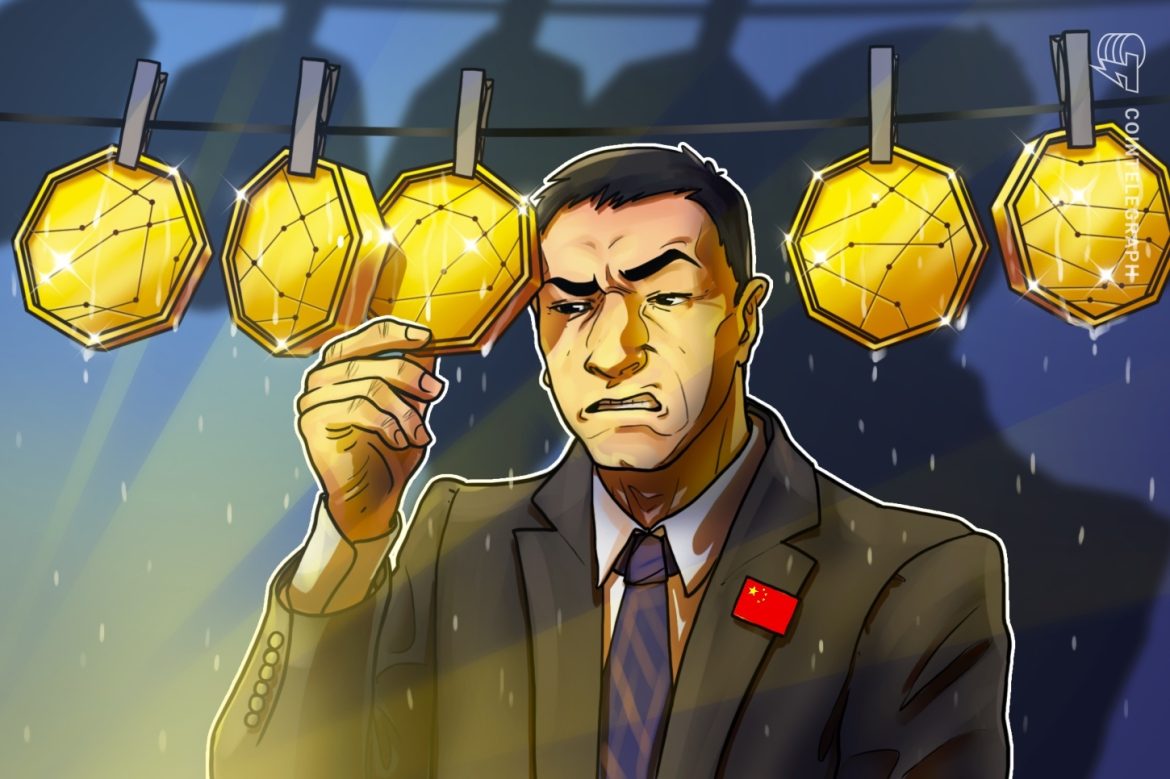
A Chinese organized crime syndicate laundered more than $1 billion stolen in multiple crypto exploits for North Korea’s Lazarus Group, according to blockchain investigator ZachXBT.
In an Oct. 5 thread on X, pseudonymous blockchain investigator ZachXBT said he posed as a paying client to infiltrate the money laundering network in February 2025, just days after the Bybit hack. He put up $349,700 in stablecoins and took a 5% loss on each order to build trust with one of the network’s operators, known as “Jimmy Green.”
ZachXBT said the operations spanned Hong Kong and mainland China, and information supplied by the launderer helped him identify a cluster of more than $12 million in Bybit-linked funds, with Tether later freezing $442,000 in associated USDt (USDT).
The investigation offers rare insight into the alleged intermediaries handling North Korea’s stolen crypto. Hackers linked to the country have stolen at least $6.75 billion in digital assets through 2025, according to Chainalysis.
North Korean hackers are known to use a multi-stage laundering process. One method involves chain-hopping and token swapping through decentralized exchanges, bridges and other services to obscure the flow of funds.
Related: SlowMist traces Bitget hack activity to Aug. 31 zero-day exploit
Chinese intermediaries have emerged as an important link in that process. In 2020, US prosecutors charged two Chinese nationals with laundering more than $100 million stolen by North Korean hackers from a cryptocurrency exchange in 2018.
Source: ZachXBT
In 2023, the US Department of the Treasury’s Office of Foreign Assets Control (OFAC) sanctioned two crypto traders, one from Hong Kong and the other from China, for their role in helping the DPRK convert stolen crypto and bypass financial controls.
ZachXBT has also linked Chinese actors to the laundering of funds from the $387.5 million Bitget exploit in September.
In a post to X on Sept. 28, ZachXBT said Chinese actors allegedly laundering funds on behalf of the North Korean hackers had been openly seeking support in public Discord servers and Telegram channels operated by services they used. ZachXBT said one of the operators had also been involved in laundering funds from the $292 million Kelp DAO exploit in April.
Magazine: Furious debate about THORChain vs NEAR shows idealism has limits
London, United Kingdom, September 16th, 2026, Chainwire
New developments extend BASIS across real-world asset and AI-native infrastructure while introducing automated reward restaking for BTC, ETH, SOL, and PAXG participants
BASIS, the institutional-grade crypto yield and staking platform built on market-neutral execution infrastructure, is continuing to expand its institutional footprint with three new developments: an ecosystem partnership with XDC Network, a collaboration with Zypher DAO, and em-dash (Auto Earn an automated) reward restaking feature now live for BTC, ETH, SOL, and PAXG participants.
Yield Infrastructure Meets Real-World Financial Infrastructure
BASIS and XDC Network have announced a new partnership exploring opportunities at the intersection of crypto yield, real-world assets (RWAs), and the broader on-chain economy. XDC Network is an EVM-compatible Layer-1 blockchain powering payments, trade finance, and real-world asset solutions.
By combining BASIS’s market-neutral yield and staking infrastructure with XDC Network’s high-throughput, enterprise-oriented blockchain, the two teams are exploring how disciplined yield execution can connect with real-world financial infrastructure from tokenized assets to trade-finance ecosystems.
Verifiable AI Meets Market-Neutral Yield
BASIS has also entered into a collaboration with Zypher DAO (Zypher Network), an AI and Zero-Knowledge (ZK) powered Web4 ecosystem building AI-native blockchain infrastructure and intelligent digital economies.
The collaboration brings together Zypher’s verifiable AI and ZK capabilities with BASIS’s market-neutral yield infrastructure, with both teams exploring new possibilities across intelligent finance, verifiable execution, and on-chain asset management.
Auto Earn Automates Reward Restaking
Separately, BASIS has launched Auto Earn, an automated process that restakes eligible unclaimed staking rewards into a user’s existing position every Monday at 00:00 UTC.
Auto Earn touches accrued-but-unclaimed rewards only. It does not create a new position, add a new lock-up, reset the lock-up timer, or change the original maturity date or booster schedule. The feature is enabled by default, and users can turn it off or back on at any time in account settings. Full documentation is available at docs.basis.pro/economics-and-rewards/auto-earn.
About BASIS
BASIS is an institutional-grade crypto yield and staking platform for BTC, ETH, SOL, and PAXG, where participants can earn rewards by staking their assets on basis.pro with rates following the platform’s live Dynamic Reward Rate (DRR), which varies with market conditions and is not fixed or guaranteed. The platform executes market-neutral strategies designed to reduce directional exposure, with capital-preservation controls including risk constraints and circuit breakers embedded across its execution and operating framework. BASIS is operated by BASIS DIGITAL INFRASTRUCTURE LTD, a Seychelles-registered IBC (LEI: 254900IX2F2KCWNSSS64), under ISO/IEC 27001:2022 and ISO/IEC 20000-1:2018 certified management systems, with execution research, systems modeling, and risk design contributed by Base58 Labs, a London-based independent research and engineering institution.
About XDC Network
XDC Network is an EVM-compatible Layer-1 blockchain powering payments, trade finance, and real-world asset solutions.
About Zypher Network (ZDAO)
Zypher Network (ZDAO) is an AI and Zero-Knowledge (ZK) powered Web4 ecosystem building the next generation of AI-native blockchain infrastructure and intelligent digital economies.
Evan Sinclair
BASIS
press@basis.pro
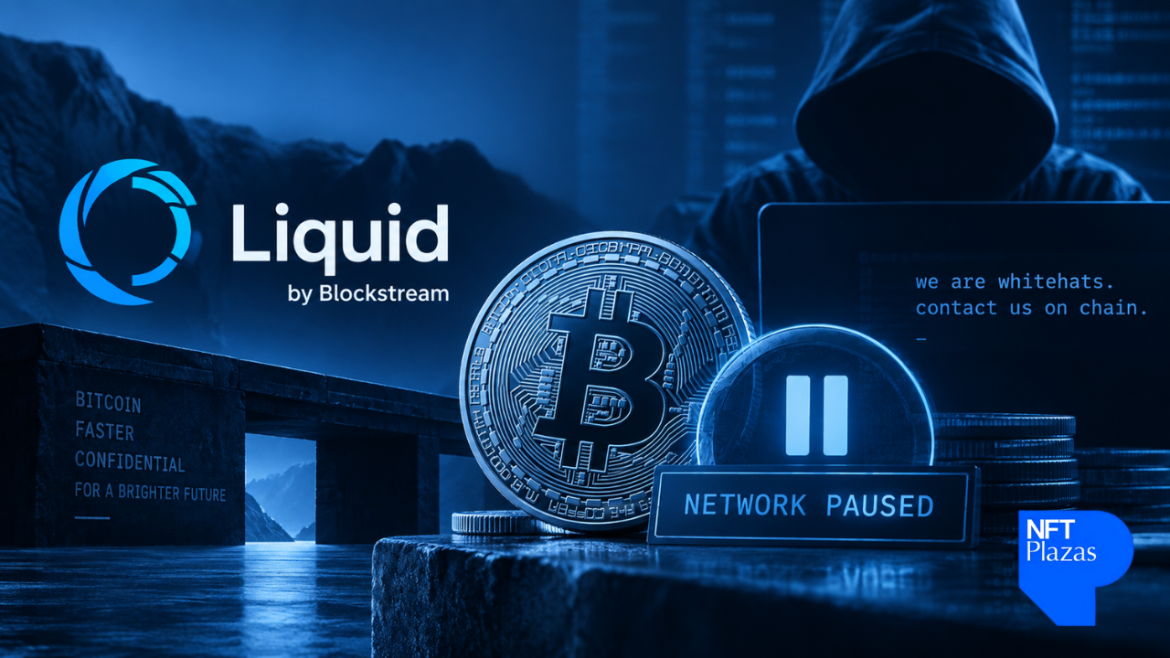
Bitcoin sidechain Liquid Network has been paused after roughly 4,000 BTC worth about $320 million was withdrawn from the federation wallet backing its L-BTC token, in an incident that appears to have exploited a vulnerability in the network’s underlying software rather than compromised its cryptographic keys.
Liquid confirmed on Sunday that purported “white-hat hackers” had removed around 4,000 BTC from the federation’s reserves. The network subsequently disabled its bridge nodes, preventing new transactions, while exchanges were asked to suspend L-BTC deposits and withdrawals.
The withdrawal represented about 95% of the roughly 4,200 BTC held in the federation wallet before the incident. Bitcoin’s main network was not affected.

Liquid Network’s Statement on X (Source: X)
The incident unfolded through Liquid’s normal peg-out process, making the exploit particularly significant.
SideSwap, a Liquid federation member that operates a peg-out service, said a customer sent 4,000 L-BTC to its service at approximately 14:05 UTC on September 6. The tokens were burned under a valid Peg-out Authorization Key (PAK) authorization.
About 23 minutes later, the Liquid Federation released approximately 3,996 BTC to the customer’s Bitcoin address.
Liquid said the transaction used SideSwap’s PAK but stressed that the key itself had not been compromised. SideSwap likewise said none of its systems had been breached.
Instead, the L-BTC used in the transaction appears to have been created through a vulnerability in Elements, the open-source software that underpins Liquid.
That distinction is central to the incident. The attacker did not apparently need to steal a federation key or break into SideSwap’s infrastructure. Instead, the vulnerability allowed L-BTC that should not have existed to enter the normal redemption process. Once those tokens passed the required checks, the federation paid out real BTC against them.
The federation wallet, which held more than 4,200 BTC before the transaction, was left with roughly 200 BTC afterward.
The precise technical root cause has not been publicly detailed by Blockstream or Liquid. A fix for the underlying vulnerability had already been added to the software codebase before the incident, but the issue had not been fully resolved across the network when the exploit occurred.
The party controlling the withdrawn bitcoin later left an on-chain message saying, “we are whitehats. contact us on chain.”
They left a message. (Source: memepool)
Blockstream responded through a signed Bitcoin transaction, providing an email address for contact. The two sides subsequently exchanged additional messages, including PGP-signed communications recorded on-chain.
The purported hackers offered to return most of the funds but attached a condition: Liquid must first patch the vulnerability and ensure that every node running the network is updated.
The actors also reportedly sent encrypted technical details about the vulnerability to Blockstream, according to Galaxy Digital research head Alex Thorn.
Blockstream subsequently acknowledged the hackers’ condition and worked to patch the affected infrastructure. However, the withdrawn bitcoin had not been returned at the time of publication.
The “white-hat” characterization has nevertheless been disputed.
Ledger Chief Technology Officer Charles Guillemet questioned whether the actors should be considered security researchers, arguing that taking hundreds of millions of dollars before disclosure differs substantially from conventional white-hat practice.
The debate highlights an increasingly difficult distinction in crypto security incidents: whether an actor who exploits a vulnerability, takes control of funds and later offers to return them after remediation should be treated as a security researcher or an attacker demanding conditions for restitution.
Liquid has kept its bridge infrastructure offline while federation members work on the vulnerability. Exchanges have also suspended, or prepared to suspend, L-BTC deposits and withdrawals.
Other assets issued on Liquid, including USDT, DePix and tokenized real-world assets, were reported to be unaffected by the incident. However, the network-wide pause has disrupted services that depend on Liquid’s ability to move assets between the sidechain and Bitcoin.
Liquid is a federated Bitcoin sidechain developed with Blockstream that is designed to enable faster, more confidential transactions and support the issuance of digital assets. BTC is locked on Bitcoin’s mainnet and represented as L-BTC on Liquid, with federation members responsible for managing the bridge between the two networks.
That architecture means the incident raises a broader question about where security risks sit in sidechain systems. In this case, the federation’s keys appear to have remained secure, yet a flaw in the software governing transaction validation was enough to put a substantial portion of the underlying reserves at risk.
For Liquid, the immediate priorities are clear: fully patch the vulnerability, update every affected node, determine whether the withdrawn bitcoin will be returned and establish that the bridge can safely reopen.
As of September 7, the funds remained outside the federation’s control, while Liquid itself remained paused. The incident is still developing, and the full technical explanation of how approximately 4,000 BTC was able to leave the reserve wallet has yet to be made public.
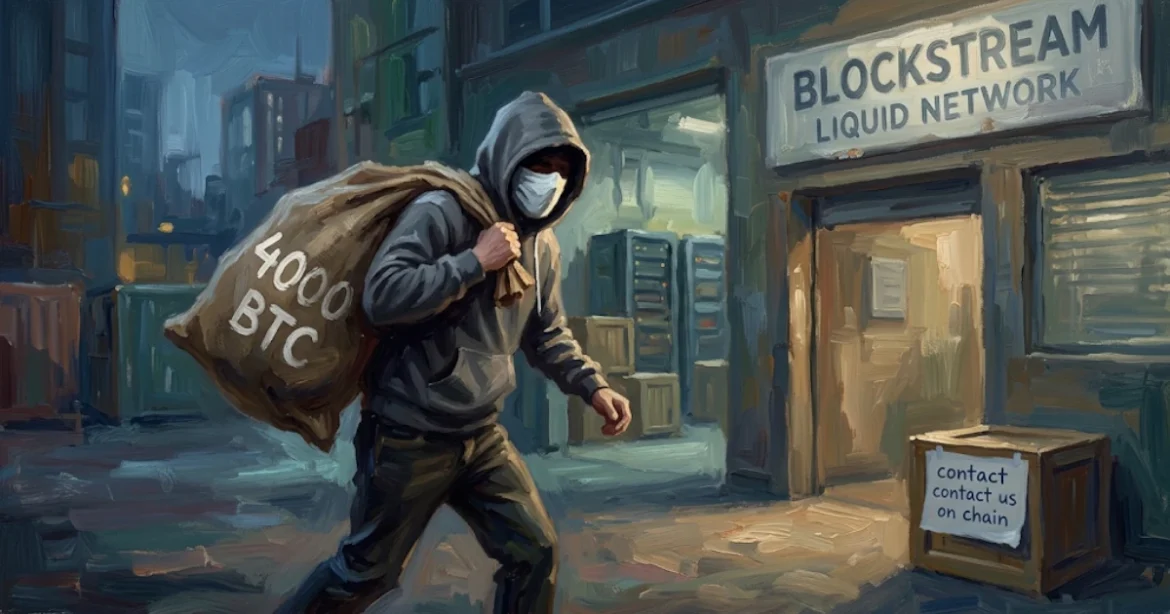
The Liquid Network said Sunday that purported white-hat hackers withdrew about 4,000 bitcoin, worth about $320 million, from the federation wallet that backs L-BTC. Bridge nodes were disabled, and the sidechain was paused. Other issued assets, including USDT, DePix and RWAs, were unaffected, the official account said on X.
The Liquid Network is a federated sidechain of Bitcoin, founded by Adam Back’s Blockstream. The Liquid chain issues a variety of assets such as LBTC, which it backs with BTC on the Bitcoin main chain, held in a large multisig of 15 corporate and known members. 11 of the 15 members need to sign a valid multi-signature transaction to move coins from the treasury. Before the hack, the treasury held over 4200 BTC; after the hack, Blockstream’s proof of reserves page reports a little over 207 BTC left.
The hackers withdrew 4,019.4 BTC from the reserve address in a peg-out transaction using the SideSwap Peg-out Authorization Key. SideWap is a bridge exchange and a member of the Liquid Federation. While details on the mechanism of the hack are not confirmed yet, it appears an inflation bug on the LBTC side chain was exploited by the hackers to create over 4,000 LBTC that did not exist before, and cash them out for on-chain bitcoin from the federation. Because the transaction appeared as valid, given the consensus bug, the federation members’ HSM security servers signed the BTC withdrawal transaction, worth roughly 320 million at the time.
The hacker moved the funds to an address ending in 6gyqjlte, from which they quickly signed a new transaction with a message on the OP_RETURN arbitrary data field saying “we are whitehats. contact us on chain.” Those coins were still at that address at the time of writing.
A small mainnet transaction to the hacker address followed by an OP_RETURN saying “Please contact [email protected]”, presumably from a Blockstream public address, though that remains unconfirmed. A later OP_RETURN spend from the hacker address carried “Please contact us on Signal @m671aw.70”, however, this may be spam and does not share a link to the address with the stolen funds.
In response to the breach, exchanges were told to pause L-BTC deposits and withdrawals. Bridge nodes on the Liquid Network have been paused, limiting access to the side chain, which continues to produce blocks.
JAN3 CEO Samson Mow said Aqua’s Liquid features were affected and that on-chain bitcoin still worked. Other wallets in the industry that use the Liquid Network are expected to be affected. Users holding LBTC now effectively have their savings at risk, since the underlying BTC is currently not redeemable. Given the private nature of the Liquid chain, user onchain analytics are scarce and not much public information is known about how much LBTC is held by retail users versus corporations of Blockstream itself. Nevertheless, should the funds not be returned, it would be a heavy blow to the Liquid Network’s user base.
Users of LBTC don’t have many options but to wait for conversations with the hackers to resolve. Given the size of the hack, it would be difficult for the hackers to get away with stealing all that bitcoin, though perhaps not impossible. What may happen is that the hackers ask for a finder’s fee and return the majority of the funds.
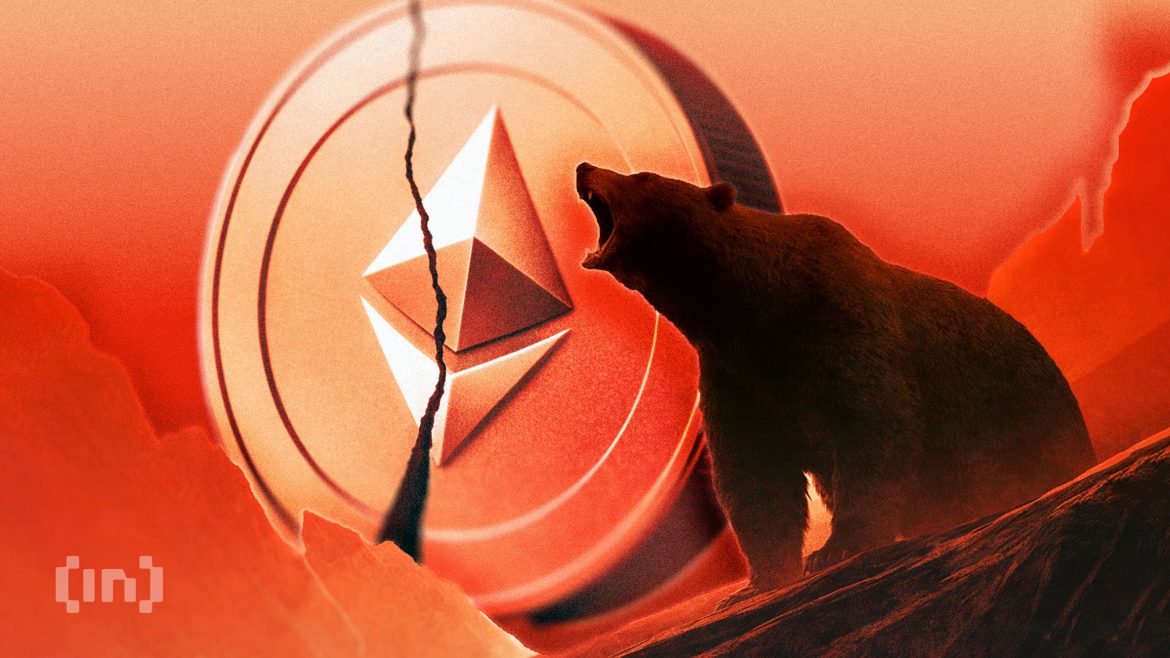
SharpLink CEO Joseph Chalom has come out against EIP-8363. This Ethereum proposal would burn validator rewards as the staking ratio rises, warning that the change would weaken decentralized finance and erase ETH’s native yield advantage over Bitcoin (BTC).
Joseph Chalom, a former BlackRock executive, laid out the opposition on Friday. Analysts, however, doubt the draft will pass.
Messari analysts explained that the proposal introduces a burn on part of each validator’s rewards tied to its assigned duties. The burn rate would increase as the amount of staked ETH grows, reaching 100% once staked ETH hits 60.25 million, or roughly half of the total supply.
The change would be implemented gradually over 18 months. As of August 7, 2026, the proposal’s pull request remains open. It would preserve the existing consensus-layer rewards and penalties.
“The proposal aims to stop consensus issuance from encouraging stake growth indefinitely while retaining strong incentives to perform validator duties,” the report reads.
Chalom opposed EIP-8363 for four main reasons. He said lower staking yields could weaken DeFi by raising on-chain borrowing costs and reducing liquidity.
The executive also argued that staking makes ETH more attractive to institutions by offering native yield alongside potential price gains. He said staking rewards also fund validators, infrastructure, developers, and other parts of Ethereum’s ecosystem.
Finally, Chalom criticized the proposal’s timing. He argued that Ethereum is gaining institutional momentum through stablecoins, tokenized assets, and major financial firms. Cutting yields now, he said, could weaken that momentum.
“EIP-8363 does not redirect that value. It destroys it. In fact, it could lead to institutions selling ETH as they unstake it,” he said.
Follow us on X to get the latest news as it happens
A Messari report calls EIP-8363 a solution in search of a problem. It notes that Ethereum’s issuance is already low, at about 0.85% per year, so the problem it targets is minor.
“EIP-8363 seeks to address valid concerns regarding stake centralization…However, the impact addresses nominal yield, when real yield from the demand side remains the core problem ETH faces,” the analysts added.
Supporters counter that the burn would curb dilution and resist staking centralization among large institutions. Messari still rates its odds of passing as low.
Subscribe to our YouTube channel to watch leaders and journalists provide expert insights
The post SharpLink CEO Warns Against New Ethereum Network Proposal EIP-8363 appeared first on BeInCrypto.

Eightco treasury composition as of July 26, 2026: $90M OpenAI equity (indirect), $18M Beast Industries equity, 16,278 ETH, nearly 302 million WLD holdings, and $142M cash and equivalents, totaling approximately $391 million
OpenAI recently announced that it submitted a confidential S-1, setting itself up for a potential future initial public offering
Eightco provides indirect exposure to some of the most innovative private companies including OpenAI and Beast Industries
EASTON, Pa., July 27, 2026 /PRNewswire/ — Eightco Holdings Inc. (NASDAQ: ORBS) (“Eightco” or the “Company”) today provided an update on its total holdings, highlighting its position across digital assets and strategic investments in leading private technology companies.
On July 24, 2026, World Foundation announced a $52.5M funding round led by Pantera Capital including Bain Capital Crypto, Eightco, Selini Capital, Susquehanna Crypto, and additional investors. World Foundation also celebrated its three-year anniversary of launching into production, as more than 39 million have joined World Network, with more than 18 million humans verified by an Orb. The network has utilized more than 475 million World ID proofs since its launch.
As of July 26, 2026, at 7:30 p.m. ET, ORBS’ holdings include a $90 million investment (indirectly, through SPVs) in OpenAI, an $18 million funded investment in Beast Industries, a $1 million investment in Mythical Games, 301,971,219 Worldcoin (WLD) at $0.36 per WLD (per Coinbase), 16,278 Ethereum (ETH), and approximately $142 million in total cash and stablecoins, for total holdings of approximately $391 million.
“Clearly, the world is getting close to very powerful AI,” Sam Altman said recently. “We care more about humans than we care about AI. And we are so hardwired to care about people that I’m not afraid for the future as long as we can tell. World ID is our effort at that, and it’s been amazing to see the progress over the last year as people have adopted this and figured out how to integrate this into a new world.”
“The reduction in the WLD token issuance, which started on July 24, cuts incremental supply by half. This should substantially improve the net supply/demand balance for WLD and thus, supports the argument for improved risk/reward in prices,” said Tom Lee, Board Member of Eightco (ORBS).
Top Headlines Driving the News:
ORBS management believes the Company’s treasury portfolio holds some of the most critical components for the future AI and digital financial system. This week’s top headlines include:
Eightco: Exposure to key mega-trends
Eightco is built around three mega-trends the Company expects to shape the next decade of innovation: artificial intelligence, digital identity, and the creator economy, with positions in each trend through indirect investment in OpenAI (23% of ORBS’ treasury holdings), Worldcoin (28%), and Beast Industries (5%).
Artificial Intelligence — OpenAI
Eightco has invested approximately $90 million in special purpose vehicles with exposure to equity interests in the parent company of OpenAI, representing approximately 23% of treasury assets, one of the highest disclosed concentrations of any listed vehicle.
ChatGPT, OpenAI’s consumer app, is the #1 consumer AI app worldwide (Sensor Tower) and crossed 900 million weekly active users in February 2026, making it the fastest-scaling consumer technology in history (UBS via Reuters).
Digital Identity — WLD Token
Eightco holds nearly 302 million WLD, approximately 8% of circulating supply, the largest publicly disclosed institutional position globally and approximately 28% of the Eightco treasury’s assets.
Worldcoin is the native token of World, a global Proof of Human network built by Tools for Humanity (co-founded by Sam Altman and Alex Blania) and stewarded by the World Foundation. Its Orb devices issue a privacy-preserving World ID that verifies a user is a unique human, not an AI agent.
Under World’s announced business model, applications pay per-verification fees while end-user verification remains free, with both credential issuers and the World protocol monetizing verified-human authentication. World identifies a $6.35 trillion combined addressable revenue opportunity across 13 industries spanning banking, e-commerce, gaming, social media, and agentic AI (per Tools for Humanity).
Creator Economy — Beast Industries
Eightco has invested $18 million in Beast Industries equity, approximately 5% of treasury assets.
Beast Industries operates one of the largest direct-to-consumer reach footprints in the world, with a combined 500 million-plus follower base across platforms, anchored by MrBeast as the most-watched person on YouTube globally. As AI commoditizes content production, distribution and audience trust become increasingly scarce assets.
About Eightco Holdings Inc.
Eightco Holdings Inc. (NASDAQ: ORBS) is a publicly traded company executing a first-of-its-kind Worldcoin (WLD) treasury strategy, providing investors single-ticker indirect exposure to three of the defining trends of this cycle: artificial intelligence through its indirect investment in OpenAI, digital identity through its position as the largest public holder of WLD and the Proof of Human protocol, and the creator economy through its equity stake in MrBeast’s Beast Industries. Backed by leading institutional investors including Bitmine Immersion Technologies Inc. (NYSE: BMNR), MOZAYYX, World Foundation, CoinFund, Discovery Capital Management, FalconX, Payward/Kraken, Pantera, and GSR, Eightco is building the infrastructure layer for human verification in the agentic AI era.
For more information:
X: @iamhuman_orbs
Website: 8co.holdings
Frequently Asked Questions
What is ORBS stock?
Eightco Holdings Inc. (NASDAQ: ORBS) is a publicly traded company on Nasdaq. ORBS provides indirect exposure to: OpenAI and Beast Industries.
Who owns the most Worldcoin (WLD)?
Eightco Holdings (NASDAQ: ORBS) holds nearly 302 million WLD, approximately 8% of circulating supply and the largest publicly disclosed institutional position globally.
What is Proof of Human?
Proof of Human is cryptographic verification that a user is a unique, living person, not a bot or AI agent. It is foundational infrastructure for social networks, banking, agentic commerce, and any system requiring “one person, one account” in the agentic AI era.
How does Eightco (ORBS) relate to Proof of Human?
Eightco Holdings (NASDAQ: ORBS) is the largest publicly disclosed institutional holder of Worldcoin (WLD), the token powering World’s Proof of Human network.
Who is the CEO of Eightco Holdings?
Kevin O’Donnell is the CEO of Eightco Holdings (NASDAQ: ORBS). The Company’s Board includes Tom Lee (Managing Partner and Head of Research at Fundstrat, and Chairman of Bitmine Immersion Technologies (NYSE: BMNR)) and, as an advisor to the Board, Brett Winton (Chief Futurist at ARK Invest).
Forward-Looking Statements
This press release contains forward-looking statements within the meaning of the Private Securities Litigation Reform Act of 1995. All statements in this press release other than statements of historical fact could be deemed forward-looking, including, without limitation, statements regarding: the Company’s expectations that artificial intelligence, digital identity, and the creator economy will shape the next decade of innovation; the Company’s belief that its treasury portfolio holds some of the most critical components for the future AI and digital financial system; statements regarding the anticipated improvement in WLD net supply/demand balance and risk/reward in prices following the reduction in token issuance; statements that blockchains will facilitate machine-to-machine transactions and will be critical to the deployment of widespread agentic AI services; the Company’s conviction that WorldID sits at the center of the interaction between AI and blockchain; statements regarding World’s addressable revenue opportunity of $6.35 trillion across industries spanning banking, e-commerce, gaming, social media, and agentic AI; statements regarding the expected reduction in WLD token issuance following July 24, 2026, including the reduction from approximately 5.1 million tokens to approximately 2.9 million tokens daily; statements that the Company holds the largest publicly disclosed WLD position globally; statements that distribution and audience trust become increasingly scarce assets as AI commoditizes content production; statements regarding the Company building the infrastructure layer for human verification in the agentic AI era; statements regarding the Company providing indirect exposure to defining trends through its investments in OpenAI, WLD, and Beast Industries; statements that OpenAI submitted a confidential S-1, setting itself up for a potential future initial public offering; and statements regarding future phases of OpenAI’s data center project in Georgia from 2028 to 2032. Words such as “plans,” “expects,” “will,” “anticipates,” “continue,” “expand,” “advance,” “develop,” “believes,” “guidance,” “target,” “may,” “remain,” “project,” “outlook,” “intend,” “estimate,” “could,” “should,” “positioned,” “view,” and other words and terms of similar meaning and expression are intended to identify forward-looking statements, although not all forward-looking statements contain such terms. Forward-looking statements are based on management’s current beliefs and assumptions that are subject to risks and uncertainties and are not guarantees of future performance. Actual results could differ materially from those contained in any forward-looking statement as a result of various factors, including, without limitation: the Company’s inability to direct the management or operations of private businesses where the Company is not a controlling stockholder, including OpenAI and Beast Industries; risk of loss or markdown on the Company’s strategic investments, including its indirect position in OpenAI equity (held through special purpose vehicles), its position in WLD, and its position in Beast Industries equity; the Company’s ability to maintain compliance with Nasdaq’s continued listing requirements; unexpected costs, charges or expenses that reduce the Company’s capital resources or otherwise delay capital deployment; inability to raise adequate capital to fund or scale its business operations or strategic investments; volatility in digital asset prices, including WLD and ETH, which could materially affect the value of the Company’s treasury holdings; regulatory changes, future legislation and rulemaking negatively impacting digital assets, artificial intelligence adoption, or biometric data collection; risks related to the development, adoption, and market acceptance of Proof-of-Human technology and the World network; uncertainty regarding the pace and trajectory of agentic AI deployment in enterprise and consumer applications; uncertainty regarding OpenAI’s product roadmap, business model developments, and the timing or success of any IPO; risks related to Beast Industries’ ability to achieve its growth projections; competition in the digital identity and AI infrastructure markets; reliance on third-party sources for the valuation of certain investments; uncertainty regarding MrBeast’s continued success and the performance of Beast Industries’ creator-driven business model; risks related to the Company’s concentrated positions in certain digital assets and private company investments; shifting public and governmental positions on digital assets or artificial intelligence-related industries; risks that WLD supply dynamics may not result in anticipated market effects; risks related to World Foundation’s funding, development, and ability to scale its network and business model; and risks associated with the timing and completion of OpenAI’s planned data center projects. Given these risks and uncertainties, you are cautioned not to place undue reliance on such forward-looking statements. For a discussion of other risks and uncertainties, and other important factors, any of which could cause Eightco’s actual results to differ from those contained in the forward-looking statements herein, see Eightco’s filings with the Securities and Exchange Commission (the “SEC”), including the risk factors and other disclosures in its Annual Report on Form 10-K filed with the SEC on April 15, 2026 and other publicly available SEC filings. All information in this press release is as of the date of the release, and Eightco undertakes no duty to update this information or to publicly announce the results of any revisions to any of the forward-looking statements contained herein to reflect actual results or any change in its expectations.


Willemstad, Curaçao, July 23rd, 2026, PlayNewswire
Leading crypto entertainment platform 1win announces the launch of its new X.com Ambassador Program, inviting content creators to join the brand’s growing global ambassador network and help shape conversations across the crypto and online entertainment communities.
As social platforms continue to advance in crypto adoption, the initiative is designed to strengthen 1win’s online presence by partnering with creators who can authentically engage their audiences and contribute to discussions around cryptocurrencies, crypto entertainment, blockchain, sports, Web3, and more.
Successful applicants will join 1win’s global ambassador ecosystem that includes internationally recognized names such as Luis Suárez, Tyga, Gable Steveson, and other members of the 1win family.
The 1win Ambassador Program offers three tracks tailored to different creator profiles:
To support collaboration and community building, all ambassadors will be coordinated through a dedicated Discord server, where participants will receive campaign updates, creative guidance, exclusive opportunities, and direct communication with the 1win team.
Applications for the program are now open to active creators interested in becoming part of the 1win ecosystem and contributing to the brand’s continued global growth.
About 1win
Founded in 2016, 1win is a crypto entertainment platform in the global gaming industry. Operating across Asia, Latin America, and Africa, 1win offers a wide range of entertainment products adapted to regional audiences. The brand has active collaborations with international public figures, including football legend Luis Suarez, martial artist Jon Jones, and Olympic champion and UFC fighter Gable Steveson. In 2026, 1win welcomed rapper Tyga and UFC legend Ilia Topuria as members of the 1win VIP community.
Press Office
1win
press@1win.pro

Pi Network spiked hard on July 15. The token hit roughly $0.086, a gain of nearly 20% in a single session, driven by two things colliding at once: an oversold technical setup and fresh U.S. inflation data that came in friendlier than traders feared.
The token had been grinding near record lows before the move. That kind of prolonged selloff tends to leave a market stretched — too many sellers, not enough buyers, and a price that’s basically coiled. When the inflation print landed and broader crypto sentiment shifted, Pi Network snapped back fast. Trading volumes climbed alongside the price, which matters. A price move without volume is pretty much noise. Volume backing a rally at least suggests real participation, not just thin-air drift.
Technical traders had been watching Pi Network’s oversold readings for a while. When an asset gets beaten down long enough, certain indicators start flashing signals that the selling may be exhausted. That doesn’t guarantee a reversal — it’s not that clean — but it does attract a specific type of buyer who hunts for beaten-down assets and bets on mean reversion.
Pi Network fit that profile heading into July 15. Record lows, depressed sentiment, and a market that had basically written the token off. So when the macro catalyst arrived, there was probably a crowd of sidelined buyers ready to act. And they did.
The U.S. inflation data seems to have done real work here. Crypto markets have grown increasingly sensitive to macroeconomic prints over the past few years. When inflation data comes in soft or signals easing financial pressure, risk appetite tends to pick up across the board — equities, crypto, speculative assets generally. Pi Network, sitting at the riskier end of the crypto spectrum, caught that tailwind directly.
Trading volumes for Pi Network rose noticeably as the price climbed. That uptick in activity suggests traders were actively moving in, likely capitalizing on the oversold setup rather than chasing the move blindly. Heightened volume during a price recovery can reinforce momentum, at least in the short run.
But it’s worth keeping perspective. A 20% single-day gain after hitting record lows isn’t necessarily a trend. It can be. It can also be a dead-cat bounce that fades within days once the initial enthusiasm cools. The crypto market has seen plenty of both.
Pi Network’s situation is probably a bit more complicated than a simple oversold bounce. The token has faced persistent skepticism around its fundamentals, its ecosystem development, and whether its massive user base translates into genuine on-chain demand. None of that changed on July 15. What changed was the macro backdrop, briefly, and the technical setup resolved in the bulls’ favor.
The broader cryptocurrency market has been navigating a choppy stretch tied to macroeconomic uncertainty. Inflation data, Federal Reserve signals, and shifting risk sentiment have all been moving crypto prices in ways that feel disconnected from project-specific developments. Pi Network’s rally fits that pattern — it’s hard to point to any Pi-specific news driving the move. It’s basically a macro trade wearing a Pi Network jersey.
For Pi Network specifically, the question is whether the bounce holds. The token climbed from record lows to $0.086. That’s meaningful in percentage terms, but in absolute dollar terms it’s still a very low-priced asset with a lot of ground to cover before anyone calls it a recovery.
Investors will watch the next round of U.S. economic data closely. If inflation continues to ease and broader risk appetite stays elevated, Pi Network could hold its gains or push higher. If the macro picture sours — say, a hotter-than-expected print down the road — the token could give back the move just as fast as it made it.
The volatility isn’t surprising. Smaller-cap crypto assets with uncertain fundamentals tend to swing harder than Bitcoin or Ethereum in both directions. A 20% day is notable but not shocking for an asset that had already been making record lows.
And the record lows themselves tell a story. Whatever drove the initial selling pressure hadn’t fully resolved before July 15’s bounce. Traders navigating Pi Network right now are basically making a bet on macro conditions and technical timing, not a clear fundamental thesis.
Volumes rose, price hit $0.086, and the oversold condition that had been building for weeks finally snapped.
The rally was driven by an oversold technical rebound and favorable U.S. inflation data that boosted buying interest, pushing Pi Network to approximately $0.086.
Before the surge, Pi Network had been trading near record lows, creating the oversold conditions that set up the sharp reversal.


