The Zcash protocol remains unaffected despite the governance clash and restructuring with Bootstrap.
launch
Prediction markets have moved directly into self-custodial wallets for the first time, with Solflare launching native prediction market trading inside its application.
The integration allows users to trade real-world event outcomes on Solana without leaving the wallet, marking a significant step toward mainstream distribution for event-based contracts.
The feature is built on the DFlow Prediction Markets API and sources liquidity from Kalshi, one of the most established regulated players in the sector.
According to Solflare, the rollout introduces prediction markets with zero added fees, full self-custody, and on-chain settlement, all within its existing wallet interface.
From niche product to wallet-native feature
Until now, prediction markets have existed mainly as standalone platforms, requiring users to move funds between wallets, exchanges, and specialized apps.
By embedding the product directly into a popular Solana wallet, Solflare is removing that friction and positioning prediction markets alongside everyday crypto activities such as token swaps, staking, and NFT management.
0⃣➡️1⃣
For the first time ever, Prediction Markets are now live in @Solflare.
Built on the DFlow Prediction Markets API with @Kalshi liquidity.
Trade real-world events on Solana with zero added fees and full self-custody.
All inside one of the most secure crypto wallets. pic.twitter.com/laqEj3yJA2— DFlow (@dflow) December 29, 2025
The launch enables users to trade on outcomes tied to politics, economics, and other real-world events while maintaining custody of their assets at all times. Positions are opened and managed directly from the wallet, with Solana handling execution and settlement.
Rather than building an isolated market, Solflare’s integration relies on Kalshi’s existing order flow and pricing.
Kalshi supplies the underlying event contracts, while DFlow provides the infrastructure layer that connects regulated prediction liquidity to on-chain wallet environments.
This model allows wallets to offer prediction markets without fragmenting liquidity across multiple venues.
Fast growth sets industry records
The launch follows a period of growth for on-chain prediction activity. Opinion, one of the fastest-scaling prediction market products built on similar infrastructure, reached $10 billion in trading volume and $100 million in open interest within just 54 days of launch, according to figures shared alongside the announcement.
Those metrics represent one of the fastest adoption curves recorded for a prediction market product, indicating rising demand for real-time sentiment trading tied to global events.
54 days. From zero to mainstream.
$10B in trading volume.
$100M in open interest.Opinion sets a new record as the FASTEST-GROWING prediction market in HISTORY. pic.twitter.com/Ugnjl08xvR— Opinion ⁒ (@opinionlabsxyz) December 29, 2025
Regulatory and market implications
While Kalshi operates under US regulatory oversight, integrating its liquidity into a self-custodial wallet introduces new questions around jurisdiction, compliance, and user access. The integration does not alter Kalshi’s contract structure but changes how end users interact with those markets.
Similar wallet-level integrations are likely to draw attention from both regulators and competitors as prediction markets continue to expand beyond specialized platforms. Industry observers note that distribution, rather than contract design alone, may determine which products achieve mainstream adoption.
The Solflare launch indicates a shift in how prediction markets are delivered to users. They are increasingly becoming embedded features within crypto ecosystems.

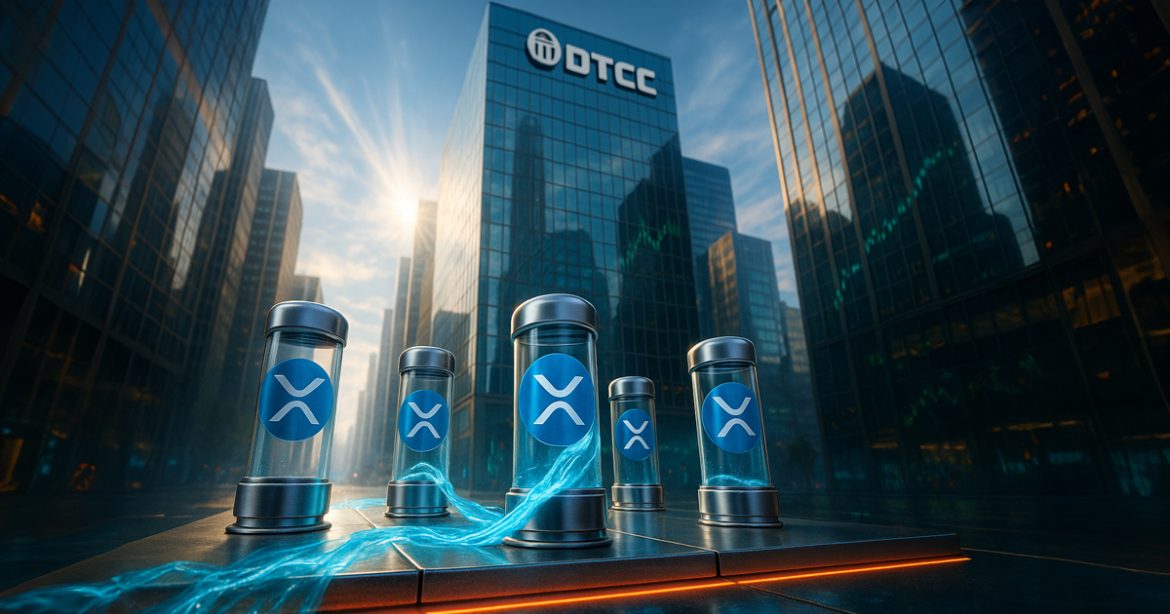
XRP jumped roughly 12% in the past 24 hours to around $2.52 after the Depository Trust & Clearing Corporation (DTCC) added five spot XRP ETFs to its “active and pre-launch” list.
These listings, visible on DTCC’s public database, have sparked speculation that the long-anticipated exchange-traded products for XRP are moving closer to launch, following the model set earlier this year by Bitcoin and Ethereum ETFs.
Why the DTCC listing matters, but doesn’t mean launch yet
The DTCC listing is a major milestone. The corporation is the core settlement and clearing utility for US securities markets, processing over $3.7 quadrillion in transactions in 2024.
Every ETF that trades on a US exchange must be registered through DTCC, making it the central node where Wall Street connects to digital assets.
However, it’s essential to note that inclusion on the DTCC site doesn’t imply that the funds are approved or ready to trade.
It signals that issuers and their custodians have completed the preparatory legwork, including creating tickers, CUSIPs, and back-end infrastructure, while awaiting approval from the SEC.
This is an important distinction. When spot Bitcoin ETFs first appeared on DTCC’s site in late 2023, markets reacted immediately, pushing BTC higher even before the products went live.
What an XRP ETF could mean for market structure and access
The same pattern repeated with Ethereum ETFs, which were listed weeks ahead of their June approval.
The XRP case follows a similar playbook: early infrastructure setup, speculative enthusiasm, and then a waiting game for regulatory approval.
If the SEC approves these funds, they would open new institutional channels to XRP exposure. Traditional brokers and asset managers could route liquidity through familiar ETF vehicles instead of navigating crypto exchanges.
This shift could reduce friction for retirement accounts and mutual fund allocators, who are typically barred from buying crypto directly.
It would also cement XRP’s status as a regulated investment product, expanding its market depth and linking it more tightly to the US financial system.
Regulatory roadblocks between listing and launch
However, several hurdles remain for XRP. The SEC has yet to formally rule on any XRP ETF filing, and no public 19b-4 submissions or S-1 forms have been cleared for trading. The DTCC listing alone doesn’t imply endorsement, as some entries on the database never progress to launch.
What it does confirm is that issuers are preparing in parallel, betting on eventual regulatory clarity following Ripple’s partial court victory last year, which classified programmatic XRP sales as non-securities.
The price reaction shows how sensitive markets remain to even small steps in institutional integration. After weeks of muted trading, XRP broke to a higher high on the hourly chart, extending gains that began earlier in the week.
The move is a breakout from consolidation, fueled by the ETF headline. Whether those gains hold will depend less on DTCC’s database and more on whether the SEC allows these products to cross from pre-launch status to live trading.
If and when that happens, XRP’s market structure could shift. ETF inflows would add a layer of demand independent of spot exchange flows, thereby smoothing volatility and linking XRP performance more closely to fund creations and redemptions.
For issuers, it’s a chance to capture yield from the asset’s liquidity and attract the same kind of institutional capital that has reshaped Bitcoin’s trading ecosystem.
The market is now waiting for the next milestone: the day the “pre-launch” label is removed and replaced with “live”. Until then, the DTCC listings remain a promise that the market is already starting to price in.
Polymarket Airdrop Farmers Have Become ‘More Sophisticated’ as Token Launch Looms
In brief
- Traders on Polymarket are anticipating a potential token launch, and some users are looking to farm it.
- Last year, airdrop farming was visibly rampant, with many users engaging in obvious wash trading methods.
- Now, however, the wash trading has gotten more sophisticated while other farmers are just optimizing their use of the prediction market.
Users attempting to farm a potential Polymarket airdrop have upped their operations in an attempt to make it harder for the prediction market to exclude them. It follows recent Decrypt reporting that Polymarket plans to release a crypto token once it has regained a foothold in the United States—likely in 2026.
Last year, as many users anticipated that a token launch would follow the U.S. election, farmers bought and sold large positions to artificially inflate their volume. They did so in an effort to position themselves for a larger allocation of a future token airdrop, which are often designed to reward a crypto protocol’s most active and fervent users.
This method was extremely easy to spot and annoying for normal users, as it clogged the activity feed—so much so that pseudonymous Polymarket whale Fhantom Bets said he’d personally report them.
Now, both Fhantom Bets and notable Polymarket user CSP Trading told Decrypt they believe farmers may have gotten “more sophisticated” in their efforts, as that previous pattern has mostly disappeared.
“Before, it was pretty obvious. They’d do huge $50,000 block buys against themselves—that was pretty obviously unsophisticated wash trading,” CSPTrading told Decrypt. “I don’t really see that for the sports markets that I’m market making; that’s the only reason I think they’ve gotten ‘more sophisticated,’ or given up.”
Fhantom Bets agreed that airdrop farming on Polymarket appears less rampant than it was last year, but is certain that people are still doing it. Previously, he said, wash traders were easily spotted as they often bought and sold shares of markets between two accounts.
Now, he speculates, wash traders are doing so with over 100 wallets to prevent this from being an outlier statistic. Fhantom Bets is now working on a project to identify these wash traders.
A pseudonymous trader known as Shady told Decrypt that they are farming the airdrop, but their method for doing so doesn’t require wash trading. Instead, they’ve identified four criteria they believe will be considered for the airdrop: volume, profit, providing liquidity, and the number of markets a user trades.
“I think [the airdrop] is likely to be tiered or follow a logarithmic curve, as a ton of the volume and liquidity rewards are done by such a small percentage of their users,” Shady told Decrypt. “There are some users and bots that will trade eight figures in volume per month, while the average user is probably not even doing six figures in volume. If they rewarded people linearly based on volume, it would create a distribution heavily skewed towards the top.”
As a result, Shady has simply used the prediction market in a way that optimizes his exposure to these potential criteria.
CSP Trading told Decrypt he is fine if a user like this is rewarded in an airdrop. Fhantom Bets jokingly said he would hate to see anyone make money other than himself and his friends.
Predictors on Myriad now believe there is a less than 15% chance that a Polymarket token will be announced this year, down from 16.4% a week ago. Sources told Decrypt that even if it were announced this year, it’s likely that the token won’t be launched until next year as the platform looks to re-enter the U.S. market—after it was effectively banned in 2022.
(Disclosure: Myriad is developed by Decrypt’s parent company, DASTAN.)
Daily Debrief Newsletter
Start every day with the top news stories right now, plus original features, a podcast, videos and more.
OpenSea is evolving to become a platform to ‘trade everything’; set to launch token in 2026

Devin Finzer, co-founder and CEO of OpenSea, the largest non-fungible token (NFT) marketplace, announced on Friday that the platform is reinventing itself to “trade everything.”
Founded in 2017, OpenSea is the largest NFT marketplace with a market share of over 55% at the time of writing, according to data from NFTScan. Its trading volume crossed $2.6 billion this month, according to Finzer.
OpenSea wants to become a one-stop destination for onchain activity
In an X post, Finzer noted that “NFTs were chapter one for us.” The platform was largely responsible for introducing digital collectibles to everyday internet users, he stated, adding:
“The sequel is the destination for the onchain economy in its entirety. Trade everything.”
By everything, Finzer meant “tokens, culture, art, ideas, the digital and the physical.” The platform aims to be an online hub that “feels like a home, not a bank.”
The platform’s goal is to ensure that users do not have to navigate through different chains, bridges, wallets, and protocols to access onchain liquidity, but trade every asset seamlessly on one platform.
OpenSea will launch its token in Q1 2026
The OpenSea Foundation will launch its native token, SEA, in the first quarter of 2026. While several platforms have launched their tokens to little success, Finzer noted that SEA is not being “created to be launched and forgotten.”
Finzer pointed out that 50% of the token’s supply will be allocated to the community. More than half of this supply will be awarded via an initial claim.
Original members of OpenSea and those who participated in the platform’s rewards programs will be “meaningfully considered” and rewarded separately, Finzer noted. He did not, however, delve into the details of how the reward system would work.
Additionally, Finzer noted that OpenSea will use 50% of its revenue at launch to purchase its native token.
The SEA token will be “deeply integrated” with the platform. This includes the ability of users to stake SEA against their favorite tokens and collections.
OpenSea’s transformation also involves plans to launch a mobile application, which is currently in the ‘closed alpha’ phase of development. The mobile app will be geared towards ensuring that both old and new users get the best experience, Finzer noted while chatting in an X Spaces conversation.
Furthermore, the platform is also working on enabling perpetual futures trading, although it is in early stages of development.
Mutuum Finance (MUTM) Progresses Toward Q4 2025 Testnet Launch With $17.6 Million Raised
Dubai, UAE, Oct. 19, 2025 (GLOBE NEWSWIRE) — Ethereum-based Mutuum Finance (MUTM) continues to make headway in the decentralized finance sector as it advances toward the launch of its Version 1 (V1) protocol on the Sepolia testnet, scheduled for Q4 2025. The project, which is building a non-custodial lending and borrowing ecosystem, has now raised over $17.6 million through its structured presale and attracted more than 17,300 holders, signaling steady market interest in its development.
Roadmap and Development Progress
Mutuum Finance recently completed Phase 1 of its four-stage roadmap, marking an early milestone in its broader rollout plan. The completed stage included several key deliverables such as the initiation of presale operations, the launch of educational materials outlining Mutuum’s ecosystem mechanics, and the formation of a legal and compliance framework.
With Phase 1 finalized, the project has now entered Phase 2, which focuses on expanding the platform’s functionality, continuing development, and preparing for the upcoming testnet debut. The team confirmed that the V1 protocol will feature essential components such as liquidity pools, mtTokens, debt tokens, and automated liquidator bots, providing the foundation for Mutuum’s decentralized lending model.
Upon launch, users will be able to lend and borrow assets like ETH and USDT, with additional tokens expected to be supported later. The testnet release will serve as an important validation step ahead of the mainnet deployment, allowing for performance testing, community feedback, and further optimization.
Structured Presale and Token Performance
Mutuum Finance’s presale has been a notable factor in its early momentum. The event follows a phase-based pricing model, which has attracted a growing community of participants through transparent progression and predictable token value increases.
The MUTM token launched at $0.01 in Phase 1 and is currently priced at $0.035 in Phase 6, reflecting a 250% increase since inception. The final listing price is set at $0.06, indicating a structured appreciation model within the presale framework.
So far, around 70% of Phase 6 has been sold, and with each subsequent stage, the price will rise by approximately 20%, aligning with the tokenomics outlined in Mutuum’s public documentation. Out of a total supply of 4 billion MUTM tokens, 1.82 billion have been allocated to the presale, with roughly 770 million tokens already sold across earlier stages.
To enhance participation and maintain transparency during the presale, Mutuum Finance has introduced a real-time dashboard that enables contributors to track their holdings and calculate potential returns based on token allocation.
Additionally, the team recently implemented a 24-hour leaderboard system designed to reward engagement within the community. Each day, the top depositor receives a $500 MUTM allocation, provided at least one transaction is made during the period. The leaderboard resets daily at 00:00 UTC, promoting consistent user activity and visibility into presale contributions.

Long-Term Development and Future Utility
Following the testnet launch, Mutuum Finance’s roadmap includes several upcoming initiatives aimed at broadening its functionality and ecosystem reach. Key future developments include Layer-2 integration to enhance scalability and reduce transaction costs, as well as the introduction of an over-collateralized stablecoin pegged to the U.S. dollar.
This stablecoin will play a central role within the ecosystem by facilitating more efficient lending and borrowing operations and channeling interest revenue back to the Mutuum treasury. The project also plans to expand across multiple chains, positioning itself within the growing multi-chain DeFi crypto environment.
Through its mtToken system, which represents deposit receipts that automatically increase in value as interest accrues, users will have access to transparent, on-chain income generation opportunities. Meanwhile, the buy-and-distribute mechanism, built into the platform’s model, will allocate a portion of protocol fees to repurchase MUTM from the open market and redistribute it to token stakers, reinforcing long-term value circulation.
Mutuum Finance’s approach places it among a select group of new crypto projects focusing on real functionality rather than speculative momentum. The project’s progress comes at a time when decentralized finance continues to grow as a core segment of the broader cryptocurrency world, driven by demand for transparent and accessible alternatives to traditional lending.
With its presale nearing completion, $17.6 million raised, and development milestones on schedule, Mutuum Finance is positioned to transition from concept to operational testing before the end of the year.
For more information about Mutuum Finance (MUTM) visit the links below:
Website: https://www.mutuum.com
Linktree: https://linktr.ee/mutuumfinance
Disclaimer: The information provided in this press release is not a solicitation for investment, nor is it intended as investment advice, financial advice, or trading advice. Investing involves risk, including the potential loss of capital. It is strongly recommended you practice due diligence, including consultation with a professional financial advisor, before investing in or trading cryptocurrency and securities. Neither the media platform nor the publisher shall be held responsible for any fraudulent activities, misrepresentations, or financial losses arising from the content of this press release.

Web3Wire – Information, news, press releases, events and research articles about Web3, Metaverse, Blockchain, Artificial Intelligence, Cryptocurrencies, Decentralized Finance, NFTs and Gaming.
Visit Web3Wire for Web3 News and Events, Block3Wire for the latest Blockchain news and Meta3Wire to stay updated with Metaverse News.
OpenSea is set to launch its long-anticipated SEA token in the first quarter of 2026, the company’s CEO Devin Finzer announced.
Half of the token’s total supply will go to the community, with a significant portion distributed through an initial claim. Users with historical activity on the platform and participants in rewards programs will receive separate consideration, Finzer wrote on social media.
The rollout comes amid a shift in focus for OpenSea, which has long been known as the largest non-fungible token (NFT) marketplace. The platform recorded over $2.6 billion in trading volume this month, with more than 90% of it attributed to token trading.
SEA will be integrated into OpenSea’s core experience, Finzer added. Users will be able to stake the token behind their favorite collections or projects, and at launch, 50% of platform revenue will be used to purchase SEA.
The token’s release comes more than a year after it was first announced. Since then, speculation has grown around its structure and timing, including bets placed on prediction markets like Polymarket.
Finzer’s announcement brought perceived odds of SEA’s token launch this year from nearly 40% to under 1%.
In the meantime, OpenSea has been rolling out new tools, including a mobile app and support for perpetual futures trading, Finzer added.
OpenSea, once the largest marketplace for digital collectibles, is preparing to launch its own native token, SEA, by the first quarter of 2026.
The plan follows a surge in platform activity after OpenSea expanded beyond NFTs to enable trading across all digital assets.
Sponsored
OpenSea Readies SEA Token Rollout
On October 17, OpenSea co-founder Devin Finzer said the new token will be the cornerstone of the platform’s evolving identity. He explained that it represents OpenSea’s vision for a more open and liquid onchain economy.
“Integrating SEA into OpenSea will be the opportunity to show the world our vision. It will shine a spotlight on everything we’re building,” Finzer said.
According to Finzer, half of SEA’s supply will go to the community, with a majority distributed through an initial claim process. Longtime users and participants in OpenSea’s loyalty programs will be prioritized.
The company also plans to allocate 50% of its launch revenue toward buying back SEA tokens, reinforcing liquidity and value alignment with users.
Moreover, SEA will include staking capabilities, allowing holders to earn rewards while supporting network growth.
Sponsored
“SEA isn’t the destination, but it’s a crucial moment everyone will be watching. You only get one TGE. While the Foundation is wrapping up the final details, we’re getting OpenSea ready,” Finzer added.
NFT Marketplace Evolves to The ‘Trade Everything’ App
Meanwhile, OpenSea’s token initiative is part of a broader transformation to make the platform “trade everything.”
The company is also developing a mobile app, perpetual futures trading, and cross-chain abstraction tools. Each feature is designed to make onchain trading as seamless as using a centralized exchange.
Finzer said OpenSea’s early years were about bringing artists, collectors, and gamers into Web3 through NFTs.
He explained that the next phase gives users a single venue to manage and trade multiple asset types without relying on custodial intermediaries.
“[Our users] shouldn’t need to navigate a maze of chains, bridges, wallets, and protocols in order to use onchain liquidity, wondering whether your balance is on Solana, an Ethereum L2, or somewhere else. [They] should just be able to trade everything in one place, seamlessly,” the OpenSea CEO stated.
Sponsored
Notably, the shift is already yielding positive results for the legacy NFT platform.
Indeed, OpenSea processed over $2.6 billion in total trading volume this month, with more than 90% coming from token trades.
Data from DeFiLlama shows that on October 15, the platform recorded its highest single-day decentralized trading volume of about $462.7 million. This makes it one of the fast-rising DEX platforms in the competitive DeFi space.
These numbers signal a comeback for a platform once overshadowed by newer players. With SEA’s debut on the horizon, OpenSea is positioning itself as a core liquidity layer for the broader onchain economy rather than just an NFT venue.

With over 6,000 developers, merchants, fintechs, and global enterprises already on board. This includes major players like Shopify, Ledger, and the Solana Foundation. MoonPay Commerce aims to make crypto payments as seamless as traditional ones.
MoonPay Expands promises faster transactions, lower fees, and greater profit retention for businesses. All while offering customers the flexibility to pay with crypto or card.
What Is MoonPay Commerce?
MoonPay Commerce is a comprehensive solution that enables businesses to accept crypto payments effortlessly. Whether you’re a developer integrating a checkout widget, a merchant setting up subscriptions, or an enterprise managing global transactions, MoonPay Commerce provides the tools to get started quickly. The platform supports various integration methods, including no-code widgets, APIs, and SDKs, catering to a wide range of business models. Additionally, it offers features like real-time analytics, customizable branding, and instant crypto settlements. This will ensure businesses can scale efficiently in the evolving digital economy.
welcome to MoonPay Commerce!
we’re live now across 6,000+ app developers, merchants, fintechs, and global enterprises https://t.co/h13L8si8nu pic.twitter.com/lDznxjYE9z
— MoonPay Commerce (@MoonPayCommerce) October 16, 2025
One notable implementation of MoonPay Commerce is its integration with Solana Pay on Shopify. This collaboration allows Shopify merchants to accept instant, low-cost crypto payments at checkout, enhancing the customer experience and expanding payment options. By leveraging MoonPay Commerce’s infrastructure, businesses can tap into the growing demand for crypto transactions, positioning themselves at the forefront of the digital commerce revolution.
🔮 the future of commerce is powered by crypto
💸 MoonPay Commerce is the easy way to sell products, services, and subscriptions, get paid faster, and keep more profit
🌎 live now, worldwide pic.twitter.com/ZP6tc62n5J
— MoonPay 🟣 (@moonpay) October 16, 2025
As more businesses integrate crypto payment solutions, the demand for platforms like MoonPay Commerce is expected to rise, potentially driving growth and value in the crypto payments sector. Additionally, MoonPay’s expansion into enterprise solutions and its partnerships with major platforms signal a strong commitment to shaping the future of commerce.
More About MoonPay
MoonPay has announced that users can now “Pay with Pengu” through MoonPay Commerce, marking an exciting step in expanding crypto payment options for businesses and consumers. This integration allows merchants to accept Pengu tokens seamlessly, providing customers with a faster and more flexible way to complete transactions.
PAY WITH PENGU
NOW AVAILABLE ON MOONPAY COMMERCE! pic.twitter.com/0mJxRdi55q
— MoonPay 🟣 (@moonpay) October 16, 2025
By adding Pengu to its platform, MoonPay Commerce continues to support a wider range of digital assets, helping businesses increase adoption, reduce friction at checkout, and tap into the growing community of crypto users.


Disclaimer
The information provided by Altcoin Buzz is not financial advice. It is intended solely for educational, entertainment, and informational purposes. Any opinions or strategies shared are those of the writer/reviewers, and their risk tolerance may differ from yours. We are not liable for any losses you may incur from investments related to the information given. Bitcoin and other cryptocurrencies are high-risk assets; therefore, conduct thorough due diligence. Copyright Altcoin Buzz Pte Ltd.
CastleCrypto.gg Acquires NFT-stats.com to Launch a New Home for Actionable NFT Stats
CastleCrypto.gg has officially completed the acquisition of NFT-stats.com and is bringing one of the most useful NFT tracking tools directly under its growing Web3 platform. All the data, charts, and analytics from the old site have now been reimagined into a very clean and more interactive space called NFT stats. Well, this new page is designed for everyone who wants to follow NFT prices, floor movements, holder activity, and collection rankings, all without getting lost in complex tools.
A Simple Vision Behind the Deal
The main idea behind this acquisition was never just to buy a website, but CastleCrypto.gg actually wanted to make NFT data easier to understand and even easier to access. You know, NFT-stats.com was already known for providing real numbers and charts, but the site was really quite minimal. Now, with Castle Crypto’s content and design team, those same stats are being turned into full-scale dashboards that also explain what those numbers mean to you.
The goal is really simple here: when you check an NFT collection, you should instantly know if it’s growing or cooling down, which marketplace has more activity, and how the floor price is actually moving. So, instead of bouncing between five different trackers, you can get a single, accurate snapshot right on one single page.
Why the Acquisition Matters Right Now
NFT markets have changed a lot in the last two years, as trading volumes have spread across Ethereum, Polygon, and Solana, while many new marketplaces keep appearing every few months. Hence, it’s no longer easy to see where the real activity is happening, and today, many NFT tracking websites show data, but few make it simple to read.
CastleCrypto.gg decided to fix that gap. So, by integrating NFT-stats.com’s backend and analytics, the team now provides live data that updates regularly and displays trends clearly. You will find that every stat is explained in human language, so you don’t need to be a data scientist to figure out what’s going on.
Inside the New NFT Stats Page
The new NFT stats page isn’t just another dashboard, but it’s built around how people actually use NFT data day-to-day. Here, the layout focuses on the main metrics that really matter when you’re looking at a project:
- Top Collections by Volume: You can check which projects are dominating the market in the last 24 hours, 7 days, or 30 days. Well, this one helps traders catch hot collections early instead of chasing after they peak.
- Floor Price and Sale History: The page now displays not just the current floor but how it’s moved over time. That small detail helps buyers understand whether they’re catching a dip or buying into a fake pump.
- Holder and Whale Distribution: The chart shows how ownership is spread, and here, if one wallet owns too much supply, that’s usually a red flag.
- Marketplace Volume Share: So, instead of assuming OpenSea leads, you can now check how much trade happens on Blur, Magic Eden, or other NFT trading platforms.
- Chain Filters: You can quickly compare projects on Ethereum, Solana, Polygon, or BNB Chain without switching pages.
- New Mint Section: You have an option to find out which new collections are trending, how fast they’re minting out, and whether there’s genuine activity.
Deep Dive: Key NFT Market Charts
Here is a short glimpse of what you will find on the new CastleCrypto.gg NFT Stats page:
Total NFT Trading Volume Chart
The new Trading Volume chart shows the full history of the NFT market in one place. It clearly highlights that the market started in 2025 with a very strong rise, reaching around $634 million in January. After that, activity slowed down, dropping to about $141 million in April.
Then the summer months showed a healthy rebound, with volumes rising again to $372 million in July and $420 million in August. Hence, seeing these ups and downs together helps you quickly spot when the market is heating up or cooling off.

Total NFT Transactions Chart
The Transactions chart tracks how many NFTs were bought and sold each month. At the start of 2025, around 1 million transactions took place, and then activity actually climbed sharply through the first half of the year. By April, monthly transactions reached about 1.6 million, and by June and July, they hit new highs of roughly 2.49 million and 2.54 million.
In total, more than 105 million NFT transactions had occurred by September 2025. When the transactions chart rises, it means more people are actively trading NFTs, even if total dollar values change month to month.


Total Buyers/Sellers Chart
Another chart compares NFT buyers and sellers to show market sentiment. So, in the early months of 2025, there were far more sellers than buyers, especially in April and May when selling pressure was strong.
As the year went on, the gap began to close, and between June and September, the market became more balanced, with both sides showing around 450,000 active wallets in September. Well, when buyers start to catch up with sellers, it often signals a stronger or more stable market ahead.
Each chart on the NFT Stats page also includes a short text caption that summarizes the data. So, for example, under the volume chart, you can see a quick note explaining the peaks and lows in simple words. These small summaries help you understand what’s happening without needing to analyze the numbers deeply.


For Users of the Old NFT-stats.com
If you were a regular visitor of NFT-stats.com, you’ll find everything you loved, and even a lot more polish. The transition keeps the old site’s clean approach but adds stronger visuals and smoother navigation. Here, data accuracy remains the top priority.
Also, old bookmarks will redirect automatically to the new Castle Crypto page, so there’s no extra step needed. The only difference you’ll notice is that the numbers now load faster, and every chart has a short and meaningful explanation next to it.
In short, you are going to get the same data but with more meaning behind it.
About CastleCrypto.gg
CastleCrypto.gg was founded in 2019 as a crypto and gaming publication focused on Web3, NFT projects, and blockchain technology. Well, over the years, it has become known for detailed yet simple reviews and explainers.
The site’s goal is to help both beginners and experienced users understand digital assets, play-to-earn games, and secure wallets without overcomplicating things. The new NFT stats hub expands that mission by adding tools that let readers see what’s trending and what’s real in the NFT world.
Media Contact