The fund will allocate 30% to crypto tokens and 70% to financial services stocks, taking both long and short positions to capitalize on market shifts.


 Live Chat
The fund will allocate 30% to crypto tokens and 70% to financial services stocks, taking both long and short positions to capitalize on market shifts.

Institutional crypto platform Anchorage Digital is looking to raise hundreds of millions of dollars of fresh capital as it eyes a potential Initial Public Offering.
The raise would be in the $200 million to $400 million range, while a possible IPO is slated for sometime next year, according to a Bloomberg report on Friday, citing people familiar with the matter who asked to remain anonymous.
Anchorage’s affiliate, Anchorage Digital Bank National Association, became the first federally chartered crypto bank in 2021 and is now well-positioned to lead stablecoin issuance and related services following the passage of the GENIUS Act in July.
Anchorage CEO Nathan McCauley said in September that he planned to double the company’s stablecoin team over the next year to accommodate the expected boom in digital dollars.
“2025 was our year of scale. We made a series of acquisitions, inked major partnerships, and launched new business lines like stablecoin issuance to solidify our lead in institutional crypto,” an Anchorage spokesperson told Bloomberg.
One of those partnerships included Tether, the issuer behind the largest stablecoin, USDT, with the two companies announcing plans in September to launch a USAT token in the US.
Anchorage also provides custody, trading, and staking services for banks, hedge funds, and venture capital firms, acting as a regulated bridge for TradFi players to access crypto.
In December, Anchorage also expanded its wealth management arm through the acquisition of Securitize For Advisors and token lifecycle management by integrating Hedgey.
Related: Goldman Sachs CEO says CLARITY Act ‘has a long way to go‘
Anchorage secured $350 million in funding late 2021, led by KKR & Co, with participation from Goldman Sachs, GIC, and Apollo credit funds.
Anchorage’s valuation was marked at over $3 billion at the time.
Meanwhile, one of Anchorage’s crypto custody competitors, BitGo, filed S‑1 IPO paperwork to list on the New York Stock Exchange in September, while crypto trading platform Kraken filed an S-1 in November and is eyeing a public listing in early 2026.
Magazine: One metric shows crypto is now in a bear market: Carl ‘The Moo
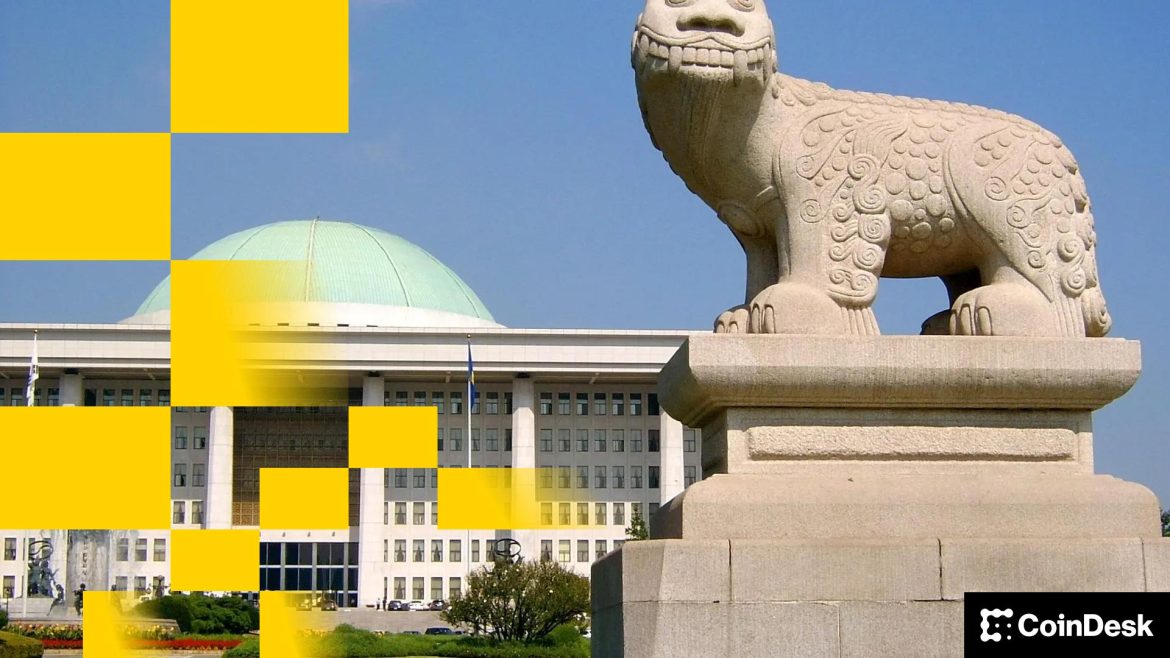
South Korea’s long-awaited Digital Asset Basic Act (DABA), a sweeping framework meant to govern crypto trading and issuance in one of Asia’s most active digital asset markets, has been delayed amid disagreements among regulators over stablecoin issuance.
The most significant disagreement centers on who should have the legal authority to issue KRW-pegged stablecoins, according to a Korea Tech Desk article. The Bank of Korea (BOK) argued that only banks with majority (51%) ownership should be permitted to issue stablecoins. It said financial institutions are already subject to stringent solvency and anti-money-laundering requirements and therefore the only ones in position to ensure stability and protect the financial system.
The Financial Services Commission (FSC), which oversees financial policy-making, is more flexible. It acknowledged the need for stability, but warned that a strict “51% rule” could stifle competition and innovation, blocking fintech firms with the technical expertise to build scalable blockchain infrastructure from participating, according to the report.
The FSC cited the European Union’s Markets in Crypto-Assets regulation, in which most licensed stablecoin issuers are digital asset firms rather than banks. It also pointed to Japan’s fintech-led yen stablecoin projects as an example of regulated innovation.
The deadlock highlights a broader global debate over whether banks or fintech firms should control fiat-backed stablecoins, a decision that could shape competition, innovation and monetary oversight.
The ruling Democratic Party of Korea (DPK) also opposes the BOK’s 51% rule, a Korea Times article reported last week.
“A majority of participating experts voiced concerns about the BOK’s proposal, with many questioning whether such a framework could deliver innovation or generate strong network effects,” DPK lawmaker Ahn Do-geol said. “It is also hard to find global legislative precedents in which institutions from a specific sector are required to hold a 51%.”
He said the BOK’s stability concerns could be mitigated through regulatory and technological measures, a view the lawmaker added, “is broadly shared among policy advisors”.
Foreign-issued stablecoins are also another key sticking point. According to an earlier draft of the government proposal prepared by the FSC, foreign-issued stablecoins would be allowed in South Korea if they are licensed and have a branch or subsidiary in the country. That would require issuers such as Circle, which issues USDC, the world’s second-largest stablecoin, to establish a local presence for the token to be legally used in the country.
The regulatory deadlock is expected to delay the bill’s passage until at least January, with full implementation now unlikely before 2026, according to AInvest. South Korea’s digital assets act marks a significant shift in a country that for nine years banned crypto, a stance that its financial watchdog began to soften earlier this year.

Start every day with the top news stories right now, plus original features, a podcast, videos and more.

According to remarks by Federal Reserve Governor Christopher J. Waller at the Payments Innovation Conference on October 21, 2025, Fed staff are examining a new kind of account that would let certain non-bank firms connect directly to the central bank’s payment system. Reports have disclosed the idea is being called a “payment account” or informally a “skinny” master account.
The plan would stop short of giving full bank privileges. The accounts would likely not earn interest and would not have access to the Fed’s discount window. Balance caps and other risk limits are expected to be part of the design. Waller said staff are still working through the details and that the concept remains exploratory rather than a finalized rule.
Regulators intend to keep guardrails. According to public comments, only “legally eligible” entities would qualify. That phrase leaves open which corporate forms — for example, trust companies, state-chartered firms or other charter types — will be allowed.
🌊 Fed opens the gates for fintech and crypto access
Federal Reserve Governor Christopher Waller revealed today that the Fed is studying a new model of “payment accounts”. Streamlined accounts that would allow fintech and crypto firms to access the Fed’s payment infrastructure,… https://t.co/QphKaopcRo
— StrongSHx (@StrongSHX) October 21, 2025
Reports note the accounts would be smaller in scope than a normal master account, with explicit restrictions aimed at reducing exposure to the payment system. Oversight, AML/KYC checks and operational risk controls are expected to be central to any application process.

The Federal Reserve. Photo: Shutterstock
Access to the Fed’s rails has long been limited to banks, which forced many fintech and crypto firms to rely on intermediary banks. Connecting directly, even in a limited way, could reduce steps in settlement and cut certain counterparty risks.
There is also context: the Fed withdrew earlier guidance on bank crypto activities this year — on April 24, 2025 — signaling a shift in tone toward integrating new players into payments.
Crypto firms and stablecoin issuers could find it easier to move funds and settle transactions. Banks that currently provide access to non-banks may face stiffer competition for those services.
At the same time, regulators and bank supervisors will still carry the burden of preventing fraud, illicit finance and operational breakdowns. Market participants are likely to watch how the Fed coordinates with the OCC and the FDIC on questions of charters and deposit insurance.
Featured image from Unsplash, chart from TradingView

Editorial Process for bitcoinist is centered on delivering thoroughly researched, accurate, and unbiased content. We uphold strict sourcing standards, and each page undergoes diligent review by our team of top technology experts and seasoned editors. This process ensures the integrity, relevance, and value of our content for our readers.

South Korea E-commerce Market
Mordor Intelligence has published a new report on the South Korea E-commerce Market, offering a comprehensive analysis of trends, growth drivers, and future projections.
Overview of the South Korea E-commerce Market
The South Korea E-commerce Market size is estimated at USD 3.23 trillion in 2025 and is expected to reach USD 8.05 trillion by 2030, at a CAGR of 20.04% during the forecast period (2025-2030). The market exhibits low concentration, providing significant opportunities for both established players and emerging businesses.
The South Korea E-commerce Market share [https://www.mordorintelligence.com/industry-reports/south-korea-ecommerce-market?utm_source=abnewswire] is expanding across multiple sectors, reflecting the growing preference for mobile commerce, digital payments, and innovative shopping experiences.
Key Trends in South Korea E-commerce Market
1.Rising Dominance of Mobile Shopping
Mobile devices, especially smartphones, lead South Korea online shopping, with apps and mobile-optimized sites boosting convenience, accessibility, and transactions.
2. Growth of Digital Payments and BNPL Options
Digital wallets and BNPL services simplify transactions, boost repeat purchases, enhance loyalty, and drive growth in the South Korea E-commerce Market.
3.Shift Toward Social and Influencer Commerce
Brands use social media and influencer marketing to engage younger, digitally active consumers, promoting products effectively, increasing interaction, and driving sales through targeted campaigns and interactive content.
4. Focus on Personalization and B2B Expansion
E-commerce platforms prioritize personalized recommendations, fast delivery, and smooth checkouts to enhance satisfaction, while B2B growth alongside B2C expands opportunities and the South Korea E-commerce Market.
Check out more details and stay updated with the latest industry trends, including the Japanese version for localized insights: https://www.mordorintelligence.com/ja/industry-reports/south-korea-ecommerce-market?utm_source=abnewswire
Segmentation of South Korea E-commerce Market
*
By Business Model:
*
B2C (Business-to-Consumer)
*
B2B (Business-to-Business)
*
By Device Type:
*
Smartphone / Mobile
*
Desktop and Laptop
*
Other Device Types
*
By Payment Method:
*
Credit / Debit Cards
*
Digital Wallets
*
Buy Now, Pay Later (BNPL)
*
Other Payment Methods
*
By B2C Product Category:
*
Beauty and Personal Care
*
Consumer Electronics
*
Fashion and Apparel
*
Food and Beverages
*
Furniture and Home
*
Toys, DIY, and Media
*
Other Product Categories
Explore Our Full Library of Technology, Media and Telecom Research Industry Reports – https://www.mordorintelligence.com/market-analysis/technology-media-and-telecom?utm_source=abnewswire
Key Players in South Korea E-commerce Market
*
Coupang Corp. – A leading South Korean e-commerce platform known for fast delivery services and a wide range of consumer products.
*
Naver Shopping – Operated by Naver, it integrates search and shopping, offering users convenient access to various products online.
*
eBay Inc. – A global online marketplace facilitating consumer-to-consumer and business-to-consumer sales in South Korea.
*
Amazon.com Inc. – International e-commerce giant providing a broad selection of products and reliable delivery services to South Korean consumers.
*
EMart – One of South Korea’s largest retailers, offering online shopping options for groceries, electronics, and household products.
Explore more insights on South Korea E-commerce Market competitive landscape: https://www.mordorintelligence.com/industry-reports/south-korea-ecommerce-market/companies?utm_source=abnewswire
Conclusion
The South Korea E-commerce Market trends indicate sustained growth driven by mobile commerce, digital payment adoption, and changing consumer preferences. Businesses that prioritize convenience, personalization, and efficient delivery systems are well-positioned to capture a larger market share.
Monitoring South Korea E-commerce Market statistics offers valuable insights into consumer behavior, payment methods, and platform usage.
For more insights on South Korea E-commerce Market, please visit the Mordor Intelligence Page: https://www.mordorintelligence.com/industry-reports/south-korea-ecommerce-market?utm_source=abnewswire
Industry Related Reports:
South Korea Quick Commerce Market [https://www.mordorintelligence.com/industry-reports/south-korea-quick-commerce-market?utm_source=abnewswire]
The South Korea Quick Commerce Market size is estimated at USD 3.16 billion in 2025 and is projected to reach USD 4.26 billion by 2030, growing at a CAGR of 6.15%. The market is driven by rising consumer demand for faster delivery, increased smartphone usage, and the adoption of app-based ordering platforms. Quick commerce services are gaining traction in urban areas, focusing on groceries, food, and daily essentials.
India E-Commerce Market [https://www.mordorintelligence.com/industry-reports/india-ecommerce-market?utm_source=abnewswire]
The India E-Commerce Market size is estimated at USD 136.43 billion in 2025 and is expected to reach USD 327.38 billion by 2030, at a CAGR of 19.13%. Growth is driven by rising internet penetration, increasing smartphone usage, and the adoption of digital payment solutions. Expanding online retail platforms and growing demand for convenience and fast delivery are further boosting market growth.
Qatar E-Commerce Market
The Qatar E-Commerce Market size is estimated at USD 4.54 billion in 2025 and is projected to reach USD 7.13 billion by 2030, growing at a CAGR of 9.43%. The market is driven by increasing internet penetration, growing smartphone adoption, and the rise of digital payment solutions. Convenience, fast delivery, and expanding online retail platforms are further fueling e-commerce growth in the region.
Get more insights: https://www.mordorintelligence.com/industry-reports/qatar-ecommerce-market?utm_source=abnewswire
About Mordor Intelligence:
Mordor Intelligence is a trusted partner for businesses seeking comprehensive and actionable market intelligence. Our global reach, expert team, and tailored solutions empower organizations and individuals to make informed decisions, navigate complex markets, and achieve their strategic goals.
With a team of over 550 domain experts and on-ground specialists spanning 150+ countries, Mordor Intelligence possesses a unique understanding of the global business landscape. This expertise translates into comprehensive syndicated and custom research reports covering a wide spectrum of industries, including aerospace & defense, agriculture, animal nutrition and wellness, automation, automotive, chemicals & materials, consumer goods & services, electronics, energy & power, financial services, food & beverages, healthcare, hospitality & tourism, information & communications technology, investment opportunities, and logistics.
For any inquiries or to access the full report, please contact:
media@mordorintelligence.com
https://www.mordorintelligence.com/
Media Contact
Company Name: Mordor Intelligence Private Limited
Contact Person: Jignesh Thakkar
Email:Send Email [https://www.abnewswire.com/email_contact_us.php?pr=south-korea-ecommerce-market-expected-to-reach-usd-805-trillion-by-2030-driven-by-mobile-shopping-and-digital-payment-adoption]
Phone: +1 617-765-2493
Address:11th Floor, Rajapushpa Summit, Nanakramguda Rd, Financial District, Gachibowli
City: Hyderabad
State: Telangana 500008
Country: India
Website: https://www.mordorintelligence.com/
Legal Disclaimer: Information contained on this page is provided by an independent third-party content provider. ABNewswire makes no warranties or responsibility or liability for the accuracy, content, images, videos, licenses, completeness, legality, or reliability of the information contained in this article. If you are affiliated with this article or have any complaints or copyright issues related to this article and would like it to be removed, please contact retract@swscontact.com
This release was published on openPR.

New feature enables businesses to remotely transform any Android device into a dynamic digital sign, kiosk, or information hub.
SINGAPORE, SG / ACCESS Newswire / October 17, 2025 / AirDroid Business announced a significant platform upgrade: a new, feature-rich Content Management Service. This empowers businesses to seamlessly transform their attended and unattended Android devices-like POS systems, kiosks, and tablets-into powerful, centrally-managed digital signage and information hubs.
The new Content Management Service addresses key industry pain points, offering a streamlined solution for organizations to efficiently distribute and manage content across geographically dispersed devices. This update solidifies AirDroid Business’s commitment to a versatile, comprehensive platform meeting modern enterprises’ evolving needs.
The service is built around three core features:
Media Library: A versatile, centralized repository where businesses can freely upload files directly from a local computer or add content via cloud-based links. This creates an organized and easily accessible hub for all materials, from promotional videos and images to corporate training materials and important announcements.
Bulk File Distribution: Enables IT administrators to remotely and simultaneously push content updates from the Media Library to a large number of devices, drastically reducing manual effort and ensuring message consistency.
Presentation Mode: Offers two distinct options for targeted display.
1) Digital Signage Kiosk Mode locks a device for dedicated, continuous content looping and prevents tampering, perfect for ads in malls or lobbies.
2) Screensaver Mode plays content during inactivity on interactive devices like POS systems, turning idle time into engagement.
Flexible and Powerful Scheduling: The service empowers users with highly flexible scheduling options. Both Digital Signage Kiosk and Screensaver modes can be configured to run at specific frequencies and during designated time periods, ensuring content is delivered to the right audience at the right time.
This enhanced functionality provides significant value across various industries:
For the Digital Advertising and Multimedia Industry: The new service offers a highly efficient way to manage content on digital billboards and advertising displays. The “advertising machine mode” allows for scheduled, uninterrupted playback of promotional content in a secure, single-application environment, providing a robust information delivery platform.
For the Retail Sector: Retailers can effortlessly turn idle POS systems and in-store tablets into dynamic marketing displays. Screensaver mode can showcase daily menus, promotions, and loyalty info, influencing purchasing decisions and enhancing the customer experience.
For the Education Sector: Educational institutions can leverage the Content Management Service to instantly distribute files and announcements to students and faculty across campus. Presentation and screen saver modes can broadcast school events, emergency notifications, and relevant information on common area devices, ensuring timely communication.
Deeply integrated with AirDroid Business’s robust monitoring and remote troubleshooting, the Content Management Service ensures 7×24 business continuity. This powerful combination lowers operational costs, reduces on-site IT needs, and maximizes hardware ROI by turning idle devices into valuable communication tools.
The new Content Management Service is available to all AirDroid Business users starting today. More information can visit: AirDroid Busines website.
SOURCE: Sand Studio

Ripple Labs is reportedly on the cusp of launching a fundraising effort to purchase $1 billion worth of its XRP token to hold in a digital asset treasury, according to Bloomberg.
The fundraiser is being organized through a special purpose acquisition company or SPAC, Bloomberg reported on Friday, citing anonymous people with knowledge of the matter.
The digital asset treasury (DAT) will consist of the freshly bought XRP (XRP) and Ripple will also throw in some of its own stockpile, but the exact terms of the transaction are still being hashed out, and could change before the deal is inked, according to Bloomberg’s sources.
Ripple Labs didn’t immediately respond to a request for comment.
Ripple had a stash of over 4.5 billion XRP, according to its May markets report, out of a total circulating supply of more than 59 billion. If the company moves forward with the reported $1 billion buy, it could scoop up another 427 million for its stash.
At the same time, Ripple Labs has another 37 billion locked in an on-ledger escrow, which is released monthly; some of this amount is sold, while the remainder is returned to escrow.

On Thursday, Ripple acquired corporate treasury management company GTreasury for $1 billion, as part of a business acquisition strategy to expand its operations.
The deal provides the company with infrastructure to manage digital assets held in corporate treasuries, including stablecoins and tokenized deposits, which can also be used to generate yield for clients.
Related: From coffee shops to airlines: Who accepts Bitcoin, Ether and XRP in 2025
Bitcoin (BTC) and Ether (ETH) are leading the crypto treasury race, with companies holding over $152 billion in Bitcoin and $23 billion in Ether.
In comparison, XRP hasn’t been as readily taken up. The leading companies with an intention to buy XRP for their treasuries include Trident Digital Tech Holdings, a Web3 company based in Singapore, which has announced that it will establish an XRP treasury of up to $500 million.
Chinese AI company Webus also flagged plans to allocate $300 million, and VivoPower said it will attempt to amass a $100-million XRP-centric reserve.
Magazine: Hong Kong isn’t the loophole Chinese crypto firms think it is

The LeaveLab by AbsenceSoft offers tools, peer collaboration, and best practices for navigating leave and accommodations management
GOLDEN, CO / ACCESS Newswire / October 16, 2025 / AbsenceSoft, the leading technology platform for absence management and accommodations, today announced the expansion of the LeaveLab by AbsenceSoft. Originally built for AbsenceSoft customers only, the community is now opening to the broader HR and partner ecosystem, providing a central resource hub to connect, learn, and share best practices for managing leave and accommodations programs.
HR teams face growing pressure as more employees increasingly seek support, making leave and accommodation programs critical tools for both retention and recruitment. Well-managed leave and accommodation programs enhance satisfaction, retention, and productivity, while poor experiences leave employees feeling undervalued and drive turnover. With 57% of HR professionals citing retention as a top challenge, effective and compliant leave management is more critical than ever.
The LeaveLab by AbsenceSoft provides HR teams with:
Exclusive Resources: Members have access to a single hub that offers practical, ready-to-use resources like state-specific guides, policy templates, checklists, and assessment tools.
Learning & Development: From intimate workshops and networking sessions to special guest talks and member-driven initiatives, members can expand their knowledge, refine their skills, and implement effective strategies.
Community Connections: The community fosters peer networking and collaboration, providing access to a directory of partners, TPAs, and PEOs, as well as industry benchmarks, surveys, and career development resources. This helps members build connections and advance their careers.
Intelligence & Insights: Members receive timely legal updates, compliance guidance, industry maturity assessments, and early access to AbsenceSoft research, ensuring they stay ahead of trends and make data-driven decisions.
“I’ve seen firsthand how critical it is for HR Professionals to connect with peers who truly understand the complexities of leave and accommodations management,” said Jess Keeney, Chief Executive Officer. “By opening the LeaveLab beyond our customer base to the broader HR community, we’re creating a space where professionals can grow their expertise while our partners engage directly with the audience they’re looking to serve. Our goal is to advance and support the entire industry through connection, collaboration, and shared knowledge.”
Early members are already seeing an impact. “I love the community that AbsenceSoft has created because it’s a one-stop shop for help,” said Elle Emerson, Senior HR Data Strategist at WaFd Bank. “It’s nice to be able to make those connections with others, and it’s a valuable tool in managing leave and accommodation cases for everyone. Having a single place to access forums, events, education, and training is such a great benefit. It saves a lot of time and effort because I don’t have to go to several different places.”
As an extension of their LeaveLab community and part of AbsenceSoft’s commitment to bringing together professionals in the leave and accommodations industry, the company is hosting its next Leave & Accommodations Leadership Summit in Philadelphia. The event will bring together senior HR executives to explore the impact of AI and automation, while having the opportunity to attend specialized, interactive breakout sessions. The Leave & Accommodations Leadership Summit will take place on Tuesday, October 28, 2025, at The Ritz-Carlton. Interested in attending? Request an invitation today.
To learn more about and join the LeaveLab by AbsenceSoft, visit: https://absencesoft.com/leave-lab/
About AbsenceSoft
AbsenceSoft is a leading provider of leave and accommodations management SaaS solutions. We deliver scalable, easy-to-use, and configurable software to easily and efficiently manage 200+ statutory policies like FMLA, ADA, and PWFA. Our software streamlines and automates leave and accommodations processes, ensuring compliance with federal and state regulations while elevating the employee experience. Built by leave professionals, for leave professionals, AbsenceSoft is trusted by employers across industries, Third Party Administrators (TPAs), and Professional Employee Organizations (PEOs) to manage over seven million lives. We are widely recognized for our top-tier customer service and robust customer community engagement. Learn more at absencesoft.com or follow the company on LinkedIn.
Media Contact
Escalate PR for AbsenceSoft
[email protected]
SOURCE: AbsenceSoft

In today’s “Crypto for Advisors” newsletter, Josh Olszewicz from Canary Capital breaks down Litecoin from its history to its growth.
Then, in “Ask an Expert”, Billy Luedtke of Institution, answers questions about decentralized finance and its growth.
Thank you to our sponsor of this week’s newsletter, Grayscale. For financial advisors near Denver, Grayscale is hosting an exclusive event, Crypto Connect, on Thursday, October 23. Learn more.
– Sarah Morton
is one of the oldest and most established cryptocurrencies still in active use. Created in October 2011 by former Google engineer Charlie Lee, Litecoin was launched as a source-code fork of Bitcoin. While Bitcoin pioneered decentralized digital money, Litecoin sought to improve on its design by offering faster settlement times, lower transaction costs, and a larger supply. For this reason, is often referred to as “the silver to bitcoin’s gold.”
Key Technical Features
Litecoin shares Bitcoin’s proof-of-work (PoW) foundation but differs in several critical areas. Its block time is 2.5 minutes, compared to Bitcoin’s 10 minutes, allowing for quicker transaction confirmations. The maximum supply is 84 million coins, four times larger than Bitcoin’s 21 million, which makes individual units more accessible. Instead of Bitcoin’s SHA-256 mining algorithm, Litecoin employs Scrypt, which was designed to make mining more broadly accessible before the advent of application-specific integrated circuits (ASICs).
Since its inception, Litecoin has maintained uninterrupted network uptime, a rarity in the blockchain sector. This reliability, paired with low transaction fees that average under 10 cents, has positioned litecoin as a practical medium of exchange rather than primarily a store of value.
Innovation and Adoption
Litecoin has also been an early testing ground for key blockchain innovations. In 2017, it became the first major network to activate Segregated Witness (SegWit), a scaling upgrade that optimizes block space and resolves transaction malleability. Shortly afterward, Litecoin helped pioneer the Lightning Network (LN), a second-layer protocol enabling instant, near-zero-cost payments. The first cross-chain Lightning transaction, routing LTC to BTC, took place shortly after SegWit activation.
Security has also been reinforced through a merged-mining arrangement with since 2014. By sharing hash power between the two Scrypt-based networks, both ecosystems benefit from stronger protection against potential 51% attacks.
Supply Dynamics and Network Health
Litecoin’s issuance schedule mirrors Bitcoin’s, with rewards halving every four years. Over 90% of the total 84 million LTC supply has already been mined, and annual inflation stands under 2%. The next halving, expected in July 2027, will reduce inflation below 1%, comparable to many traditional safe-haven assets.
On-chain activity reflects Litecoin’s steady use. Transaction counts have grown during periods of Bitcoin congestion and spikes in Dogecoin demand. Active addresses have shown resilience over time, highlighting relative utility compared with peer networks.
Hash rate, the measure of computing power securing the blockchain, has increased in recent years, supported by improved Scrypt ASIC efficiency and the incentive of combined litecoin-dogecoin mining rewards. Mining power remains concentrated among a handful of pools, but overall network security has never been higher.
Valuation Metrics
Two widely tracked crypto valuation tools, the network value to transactions (NVT) ratio and the market value to realized value (MVRV) ratio, provide context for Litecoin’s current standing. NVT, which measures market capitalization relative to on-chain activity, sits below bitcoin’s and dogecoin’s, suggesting litecoin may be more fairly valued relative to its utility. Meanwhile, MVRV, which compares market price to the average price at which coins last moved, remains below long-term bull market levels, signaling subdued speculative excess.
External sentiment indicators confirm this picture. Google Trends data for “Litecoin” has declined steadily since its 2021 peak, pointing to reduced retail enthusiasm. However, such conditions have historically aligned with undervalued entry points in previous market cycles.
Takeaways for Financial Advisors
For advisors evaluating the digital asset landscape, Litecoin represents a case study in durability. It has operated continuously for more than a decade, survived multiple market downturns, and consistently delivered on its value proposition: fast, low-cost, reliable transactions. While it does not command Bitcoin’s brand dominance or Ethereum’s smart contract ecosystem, Litecoin fills a complementary role within the broader digital asset market.
In portfolio construction, Litecoin can be considered as:
For clients exploring digital assets, Litecoin stands as one of the most tested and resilient networks in the space. Its combination of security, innovation, and practical utility underscores why it continues to endure as a key component of the crypto ecosystem.
– Josh Olszewicz, portfolio manager, Canary Capital
Q. Decentralized finance (DeFi) has experienced explosive growth, hype cycles, and is now pushing toward maturity. From your perspective, what’s the biggest gap still holding DeFi back from mainstream adoption?
A. DeFi has proven that trustless code can automate financial services at scale. But code alone isn’t enough. Even in a “trustless” system, participants constantly rely on trust: that smart contracts are secure, that oracle data is accurate, that a counterparty isn’t malicious, and that audits address the right risks. Because on-chain transactions are irreversible, failures in those trust assumptions can be catastrophic.
What DeFi lacks is a trustful interaction layer to complement trustless execution. Protocols are blind to who’s on the other side of a transaction and whether their information is credible. There’s no native way to verify identity, reputation, or track record in a structured, verifiable format. This leaves users vulnerable, prevents protocols from assessing creditworthiness, and deters institutions.
Closing this gap requires infrastructure that makes information itself verifiable and composable. At Intuition, we’re building exactly that: a trust and reputation layer for DeFiand the broader information economy.
Q. A lot of people talk about how DeFi needs better ways to handle reputation, creditworthiness, and trust. What do you see as the most promising approaches for solving those challenges?
Attestations have been part of Ethereum’s DNA from the start, the original white paper even highlighted identity as a core use case. For more than a decade, builders have experimented with attestations, or signed on-chain statements, to capture trust. Yet so far they’ve been limited to narrow flows: proving a single credential or verifying one fact at a time.
What’s missing is making attestations usable at scale in richer contexts. Instead of just asking, “does this address hold this credential?”, we should be able to analyze thousands or even millions of claims to understand an entity’s reputation. That’s the missing layer.
At Intuition, we’re building exactly that: an attestation graph that makes verifiable data portable and usable. By connecting attestations into a graph, smart contracts and AI agents can reason about history, context, and reputation, unlocking credit scores, undercollateralized lending, access control, and permissionless reputation markets.
Q. Looking ahead, what kinds of DeFi applications or innovations do you think will define the next wave of growth, and how might infrastructure like verifiable data or reputation systems play a role?
The next wave of DeFi won’t just be about moving capital faster; it will be about moving trust faster. Smart contracts gave us trustless execution, but the missing piece is verifiable context about who and what we’re dealing with.
When attestations and reputation can reliably exist on-chain, DeFi evolves beyond being purely collateral-based. Undercollateralized lending becomes possible, pool access can be gated by reputation rather than arbitrary whitelists, and governance can reward real contributions instead of idle token balances. Entire markets for reputation itself open up, where the credibility of an address or dataset can be priced, traded, or staked against outcomes.
This is also what AI agents will need as they move from executing swaps to making complex decisions under uncertainty. A verifiable trust and reputation graph provides the foundation.
– Billy Luedtke, CEO, Intuition


