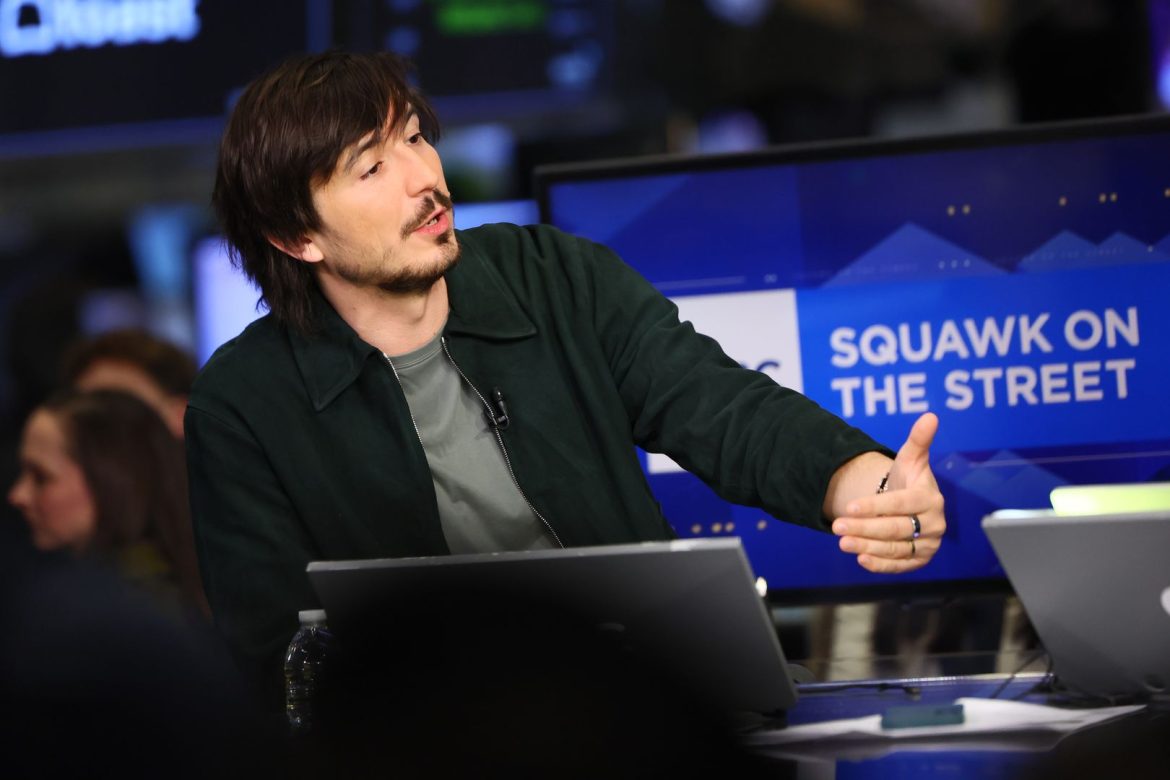
In a post on Friday, Vlad Tenev said securities issuers should control shareholder rights, but not separate products that track their publicly traded shares.

 Live Chat
In a post on Friday, Vlad Tenev said securities issuers should control shareholder rights, but not separate products that track their publicly traded shares.

STOP FLOCK. STOP AI MASS SURVEILLANCE.
Totalitarianism is when a government or another entity with overwhelming power seeks to know, control and influence everything you do, say and even think. I fear very much that if we don’t act aggressively, that is where we’re heading.…
— Sen. Bernie Sanders (@SenSanders) August 26, 2026
Start every day with the top news stories right now, plus original features, a podcast, videos and more.
Hayes revealed his new role as Flop Labs CEO and teased a “massive airdrop” from the AI inference protocol in the fourth quarter of 2026.

SharpLink CEO Joseph Chalom has come out against EIP-8363. This Ethereum proposal would burn validator rewards as the staking ratio rises, warning that the change would weaken decentralized finance and erase ETH’s native yield advantage over Bitcoin (BTC).
Joseph Chalom, a former BlackRock executive, laid out the opposition on Friday. Analysts, however, doubt the draft will pass.
Messari analysts explained that the proposal introduces a burn on part of each validator’s rewards tied to its assigned duties. The burn rate would increase as the amount of staked ETH grows, reaching 100% once staked ETH hits 60.25 million, or roughly half of the total supply.
The change would be implemented gradually over 18 months. As of August 7, 2026, the proposal’s pull request remains open. It would preserve the existing consensus-layer rewards and penalties.
“The proposal aims to stop consensus issuance from encouraging stake growth indefinitely while retaining strong incentives to perform validator duties,” the report reads.
Chalom opposed EIP-8363 for four main reasons. He said lower staking yields could weaken DeFi by raising on-chain borrowing costs and reducing liquidity.
The executive also argued that staking makes ETH more attractive to institutions by offering native yield alongside potential price gains. He said staking rewards also fund validators, infrastructure, developers, and other parts of Ethereum’s ecosystem.
Finally, Chalom criticized the proposal’s timing. He argued that Ethereum is gaining institutional momentum through stablecoins, tokenized assets, and major financial firms. Cutting yields now, he said, could weaken that momentum.
“EIP-8363 does not redirect that value. It destroys it. In fact, it could lead to institutions selling ETH as they unstake it,” he said.
Follow us on X to get the latest news as it happens
A Messari report calls EIP-8363 a solution in search of a problem. It notes that Ethereum’s issuance is already low, at about 0.85% per year, so the problem it targets is minor.
“EIP-8363 seeks to address valid concerns regarding stake centralization…However, the impact addresses nominal yield, when real yield from the demand side remains the core problem ETH faces,” the analysts added.
Supporters counter that the burn would curb dilution and resist staking centralization among large institutions. Messari still rates its odds of passing as low.
Subscribe to our YouTube channel to watch leaders and journalists provide expert insights
The post SharpLink CEO Warns Against New Ethereum Network Proposal EIP-8363 appeared first on BeInCrypto.

Mutsamudu, Comoros, July 23, 2026 – MEXC, a pioneer in 0-fee digital asset trading, released a letter from CEO Vugar Usi reflecting on his first 100 days and outlining the company’s priorities for its next phase of growth.
In the letter, Usi recalled a conversation with a MEXC user who had moved from trading only crypto to exploring IPOs, gold and oil. According to Usi, the conversation reflected a broader shift across the industry: retail investors are becoming more curious, more confident and increasingly interested in opportunities beyond crypto.
“Today’s retail investors aren’t simply crypto investors anymore. They’re opportunity investors,” Usi said.
This shift was reflected in the participation surrounding MEXC’s SPACEX (PRE) Launchpad. Across two rounds, more than 74,000 users contributed over $173 million in subscriptions, with the highest pool reaching 30 times oversubscription. Following SpaceX’s public market debut, SPCX futures trading volume on MEXC exceeded 800 million USDT in a single day on June 16.
Usi said these figures demonstrate that users are seeking earlier and more flexible access to emerging opportunities. As their interests expand, exchanges must evolve beyond offering individual trading products and instead build infrastructure that helps users move more efficiently across different markets.
The letter also reaffirmed MEXC’s long-term commitment to zero-fee trading. According to Usi, lower trading costs are not simply a promotional tool, but a way to reduce friction and help users retain more of their capital. MEXC’s zero-fee model has saved users hundreds of millions of dollars in trading fees, with one top futures trader saving approximately $1.1 million.
At the same time, Usi emphasized that broader access must be supported by stronger trust, governance and regulatory foundations. MEXC has continued strengthening transparency and user protection, including through third-party security cooperation with Hacken and ongoing efforts to pursue appropriate licensing opportunities in key markets.
As part of this next phase, MEXC appointed Robert E. MacDonald as Chief Compliance Officer to lead its global regulatory strategy and further strengthen the company’s compliance framework.
“Innovation and compliance are not opposing forces,” Usi said. “The strongest platforms will be those that can expand access while building the trust of users, partners and regulators over the long term.”
Looking ahead, MEXC will continue building around three priorities: lowering the cost of participation, expanding access to emerging opportunities and creating stronger foundations for responsible, sustainable growth.
“Our responsibility is not to predict which opportunity will matter most next,” Usi said. “It is to build a platform that helps users discover and act on those opportunities with greater efficiency and confidence.”
The letter reflects MEXC’s broader Infinite Opportunities vision and its ambition to develop a platform that evolves alongside users while earning trust through transparency, protection and responsible growth.
About MEXC
MEXC is the world’s fastest-growing cryptocurrency exchange, trusted by more than 40 million users across 170+ markets. Built on a user-first philosophy, MEXC offers industry-leading 0-fee trading and access to over 3,000 digital assets. As the Gateway to Infinite Opportunities, MEXC provides a single platform where users can easily trade cryptocurrencies alongside tokenized assets, including stocks, ETFs, commodities, and precious metals.
MEXC Official Website| X | Telegram |How to Sign Up on MEXC
For media inquiries, please contact MEXC PR team: media@mexc.com

Start every day with the top news stories right now, plus original features, a podcast, videos and more.

Circle CEO Jeremy Allaire argued that USDC’s decade-long network of integrations, liquidity and regulatory infrastructure gives it a structural advantage over new stablecoin entrants, while challenging key elements of Open USD’s proposed business model.
In a Wednesday X post, Allaire described stablecoin networks as platform businesses driven by network effects, saying sustained investment in integrations, liquidity, regulatory approvals, banking relationships and reserve management creates competitive advantages that are difficult to replicate.
He also questioned whether permanently offering free, unlimited minting and redemption would remain sustainable at scale and said returning nearly all reserve income to partners risks “starving an infrastructure.”
The comments highlight intensifying competition among stablecoin issuers as new entrants seek to challenge USDC and USDT by offering businesses a greater share of reserve income and influence over governance.
Open Standard announced Open USD (OUSD) on Tuesday, with support from over 140 payments, banking, technology and crypto companies, including Visa, Mastercard, Stripe, Coinbase, BlackRock and Google. The stablecoin is expected to go live later in 2026.
Circle’s stock performance in the last five days. Source: Yahoo Finance
Circle shares closed Tuesday at $62.63, down 17.55% from the previous session, before rising 2.44% to $64.18 in premarket trading as of 11 am UTC on Wednesday, according to Yahoo Finance data.
In a research note, analysts at Bernstein said OUSD could become the “strongest and first new entrant to challenge the duopoly of Circle and Tether,” citing its reach across payments, banking, technology and commerce.
However, Bernstein said governance, operational architecture and the revenue-sharing formula remain open questions, as coordinating more than 140 partners will require substantial work. Bernstein said Circle spends close to $500 million on marketing, infrastructure, technology and compliance, highlighting the amount of resources needed to scale a stablecoin network.
Related: MetaMask launches stablecoin yield account with card spending
Lorenzo Valente, director of research at ARK Invest, took a more skeptical view. In a post on X, Valente said that OUSD still faces the cold-start problem created by USDC and USDT’s entrenched liquidity across the crypto ecosystem. He called the announcement a “giant” letter of intent and said that many participants also support competing stablecoins or operate their own infrastructure.
“The partners are backing rivals: Stripe owns Bridge and has its own stack, Coinbase is wedded to USDC, banks are building their own deposit tokens and the card networks support every token out there,” Valente wrote.
Magazine: Japanese pension fund tips 1% in crypto, G7 urges action on NK hackers: Asia Express
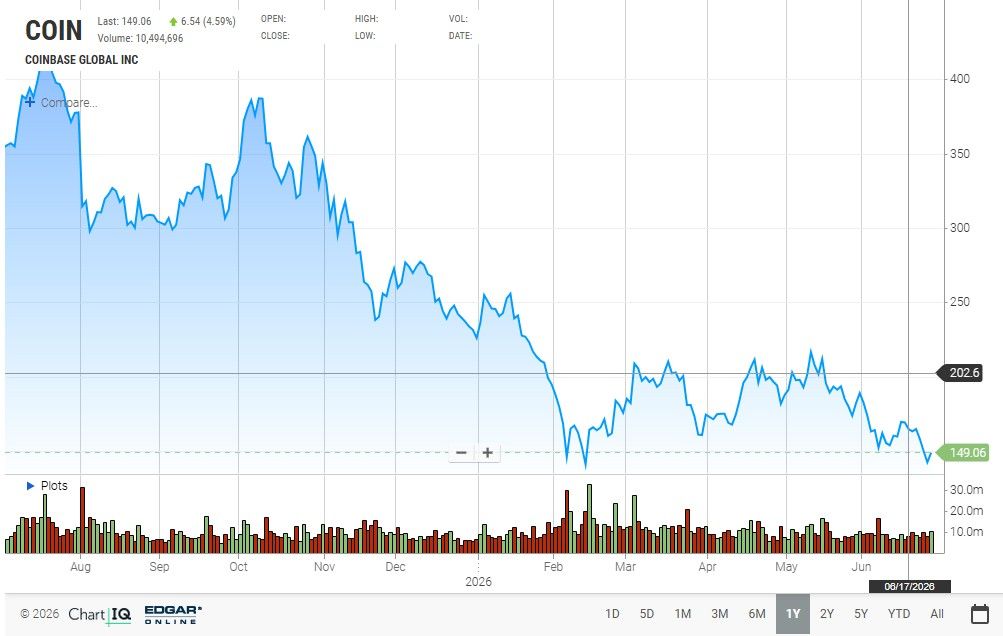
Coinbase CEO Brian Armstrong responded to criticism over the company’s promotion of high-risk products to young and financially vulnerable users. He called for responsible product design that does not restrict adult choice.
Zcash founder Zooko publicly criticized Coinbase for promoting sports betting and Bitcoin (BTC) price prediction to inexperienced users. Armstrong acknowledged the tension, noting that companies must balance user freedom against platform responsibility.
The CEO argued on X that companies should not aggressively promote high-risk products to unsophisticated users. A clear distinction exists between making products available and actively pushing them on people least equipped to handle the risks.
Three practical measures followed from that position. Platforms should offer clearer risk disclosures, built-in financial literacy tools, and user preference settings to control which products appear. Together, these options could create a more personalized experience without removing adult access.
Additionally, Zooko’s criticism targeted how Coinbase surfaces Bitcoin price prediction and sports betting to inexperienced users. That kind of aggressive in-app promotion crosses a line, Armstrong said, even if the products themselves remain available.
The Coinbase chief recently commented on Coinbase’s Bitcoin market view, noting AI cost reductions alongside broader product expansion. Responsible design, he suggested, needs to accompany that growth rather than trail it. However, those ambitions now face questions about whether user safety has kept pace.
Meanwhile, scrutiny of Coinbase’s 2026 product direction reflects the broader sentiment around the company’s trajectory. Critics have argued that feature expansion has outpaced user protections. That tension sharpened further with Zooko’s public call-out this week.
Beyond the exchange, Coinbase’s Base chain B20 push and Coinbase Luxembourg MiCA hub show a widening footprint. That scope makes it harder to enforce product design standards uniformly across user segments.
The CEO also addressed whether sports prediction markets should exist at all. Private companies should not decide that question on their own. Instead, democratic processes are better suited to establish those limits.
The position separates two types of responsibility. How a platform promotes products differs from whether those products should exist.
The Coinbase CEO supports tighter design standards, including opt-in controls and personalized risk settings. Nevertheless, the case for regulatory rather than corporate limits remains central to that position.
The post Coinbase CEO Armstrong Comments on Betting Promotion Concerns in the Base App appeared first on BeInCrypto.

Despite the growing institutional presence in crypto, retail sentiment is just as important as it was when Wall Street was largely on the sidelines, according to Swan Bitcoin CEO Cory Klippsten.
“It still does. You have to remember it’s not like BlackRock owns the Bitcoin and Fidelity owns the Bitcoin. It’s a bunch of retail accounts mostly that actually buy that,” Klippsten said during an interview with Cointelegraph published to YouTube on Tuesday.
Cory Klippsten spoke to Cointelegraph at BitcoinVegas 2026. Source: Cointelegraph
“You know they’re buying it in a wrapper. But they still have to take real supply and custody it. And it comes out of the supply. So, you know, it’s still it is real demand in ETFs,” Klippsten said, adding:
“There are some paper products and futures and things like that that are weird and take a little while to kind of work through the system. There is something to the idea that there is more supply in certain ways. But at the end of the day, if you want real on-chain Bitcoin, the fact that you can get it is what makes Bitcoin unique.”
US-based spot Bitcoin ETFs have posted a combined $2.90 billion in net outflows since May 15, according to Farside data, while Bitcoin has slid approximately 9.5% over the same period. At the time of publication, Bitcoin is trading at $73,630, according to CoinMarketCap.
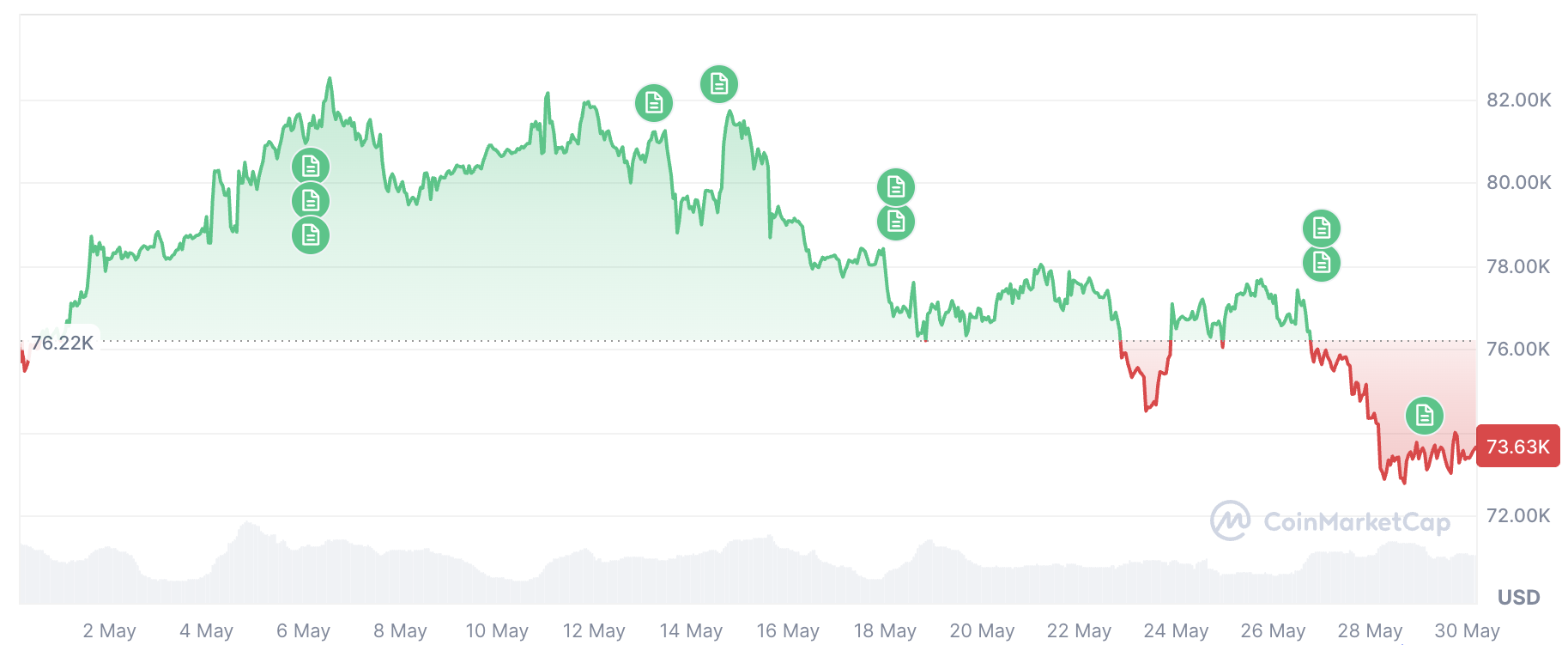
Bitcoin is down 2.87% over the past 30 days. (CoinMarketCap)
Meanwhile, sentiment toward the crypto market has been volatile in 2026. The Crypto Fear & Greed Index, which measures overall crypto market sentiment, posted an “Extreme Fear” score of 23 on Friday, signaling that investors are taking a cautious approach to the crypto market.
Klippsten said his outlook on Bitcoin hitting a new all-time high in 2026 is now looking slim.
Related: Bitcoin falls out of the global top 10 assets as market cap dips below $1.5T
He said he thought there was around a 50% chance we’d see a new all-time high this year when Bitcoin was still trading around $95,000 earlier this year, but given it has declined around 23% since then, his odds have gone down.
“I thought there was probably like a 50% chance that we’d see a new all-time high this year. And I’d say, given that we’re still in the 70s and, you know, and that we went all the way down to 60, I’d probably handicap that down to like 20 or 25% chance that we get a new [high]” he said.
Magazine: ETH bears growling, Tom Lee’s buying, XRP to ‘explode’: Market Moves

Jamie Dimon, complaining about the Clarity Act and Coinbase CEO Brian Armstrong this AM: “He’s spending hundreds of millions of dollars in Washington in this thing.”
Maria: “He said he’s representing the whole —”
Dimon: “He’s full of shit.”
Maria: “…well.” pic.twitter.com/Qik9Hnue6U
— Brendan Pedersen (@BrendanPedersen) May 29, 2026
Start every day with the top news stories right now, plus original features, a podcast, videos and more.


