Developers can now build XRPL wallets into apps via Privy, with support for XRP, RLUSD, AI agent payments and x402.

 Live Chat
Developers can now build XRPL wallets into apps via Privy, with support for XRP, RLUSD, AI agent payments and x402.

Coinbase wants to bring 24/5 perpetual futures trading to individual US stocks, with its proposed contracts now awaiting regulatory approval.

The AI-powered tool grew out of an earlier prototype as bars, brands and other businesses experiment with event contracts to offset real-world risks
A new tool aims to make one of Wall Street’s oldest risk-management strategies more accessible to small businesses, using prediction market contracts to hedge risks ranging from bad weather and rising fuel costs to the outcome of a sports promotion.
Blanket lets business owners describe an exposure in plain English, then searches live Kalshi markets for contracts that could potentially offset some of the financial impact. The tool can model how a proposed hedge might work, flag mismatches between a business risk and an available contract and tell users when it cannot find a suitable market. Blanket does not execute trades or handle customer funds; any trading takes place on Kalshi.
Fortune first reported on Blanket Friday, describing it as a new AI tool built around Kalshi’s prediction market exchange. The site was created and is owned by Lauris Zminsky, an independent financial economist who does not work for Kalshi, according to Fortune. But Zminsky has worked directly with members of the Kalshi team while developing the project, including through the exchange’s Builder’s Program.
Large companies have long used derivatives to manage exposure to risks such as interest rates, currencies and commodity prices. Prediction market contracts can potentially extend that concept to much narrower outcomes, including weather events, policy decisions and sports results. But matching one of those contracts to an actual business exposure can be complicated.
That problem has been a focus for Zminsky for months. In July, he argued that businesses should first identify the specific financial risk they want to offset, then look for an event contract that closely matches it, rather than starting with an available contract and working backward. “A hedge is not a product,” he wrote in an essay on X, saying that the relevant question is how closely an instrument offsets a company’s actual risk and what exposure remains after the trade.
Zminsky had already been exploring how the idea could apply to larger companies. Earlier this year, he built Hedgebook, a project designed to map Kalshi event contracts to companies in the S&P 500. Fortune reported that the project was developed with a Kalshi employee and was designed to identify event contracts that could correspond with risks disclosed by public companies.
Blanket grew out of a simpler experiment Zminsky launched in June. After seeing a New York bar use Kalshi contracts to offset the cost of a Knicks promotion, he built Bizhedge, a prototype that he said could “find live Kalshi markets you can use to cover a risk or run a promotion” based on a user’s description of their business. He called it “just a fun yet useful prototype,” adding, “Hedging is for everyone, not just hedge funds.”
In his July X essay, Zminsky said that he was working with members of the Kalshi team on a new demonstration of his approach through the platform’s Builder’s Program. The program supports outside developers building products around Kalshi and includes access to a pool of more than $2 million in grants, along with technical and other developer support. Kalshi says builders retain ownership of their projects. Zminsky has not said publicly whether he received funding through the program.
Earlier this week, Zminsky teased a “new build” designed to help small businesses discover event contracts with real economic uses and thanked three Kalshi team members for helping him with it.
Fortune reported Friday that Blanket had “quietly launched in stealth” and was going public this week. The site is now publicly accessible at tryblanket.app.
Blanket starts with a simple question: “What could hurt your business?” A user can describe a financial risk or promotional promise in ordinary language, with dollar figures optional, and the tool searches current Kalshi markets for a contract that could provide at least a partial offset. Blanket then explains the relationship between the business risk and the market and can model the potential cost and payout under different outcomes.
One example on the site considers a small Denver trucking company that could lose $50,000 if diesel prices spike. Blanket identifies a Kalshi market tied to crude oil prices as the closest available option, while noting that the contract does not track the company’s actual diesel bill. The example models a $45,000 gross payout at a cost of $7,605 if the specified oil-price threshold is reached.
The tool is also designed to identify when the match is too weak. A separate Gaps page catalogs risks for which Blanket found no suitable existing contract, under the heading “Markets Kalshi should make.” The site currently lists potential gaps involving weather disruptions, financing rates, energy and material costs, currency exposure and promotional liabilities, among others. Users can indicate that they face one of the same risks, potentially providing a demand signal for Kalshi about new markets businesses may want.
Blanket also works in reverse through a feature called Scout. Users can submit an existing Kalshi market and the tool analyzes which types of businesses could be financially exposed to the outcome before searching for real companies that fit those characteristics. For example, its demonstration using a Kalshi contract tied to unusually cold temperatures in Texas identifies potential exposure for businesses like plumbers, nurseries and property managers.
The site says market data and settlement rules come from Kalshi’s public API, while business discovery for Scout is powered by Bright Data and its analysis runs through OpenRouter.
Blanket is arriving after several businesses have already experimented with using Kalshi contracts to offset risks that would rarely be associated with traditional corporate hedging.
• The Jeffrey: The New York City bar, whose Knicks promotion helped inspire Zminsky’s original Bizhedge prototype, used a $5,000 Kalshi position to help cover a promotion offering customers up to $100 off their tabs if the Knicks won Game 1 of the NBA Finals. The position could pay about $13,500 if New York won, helping offset the cost of the promotion.
• TallBoy: During the World Cup, the Washington, D.C., bar offered discounts based on the U.S. margin of victory, including free tabs for a win by three goals or more, and used Kalshi contracts to hedge the potential cost. When the U.S. beat Paraguay 4-1, the free-tab promotion was triggered.
• Forme: The sportswear company partnered with promotions platform PlayAbly on an offer promising customers a full refund if the U.S. reached the World Cup final. PlayAbly used Kalshi to cover the promotional exposure.
• EGOHOME: PlayAbly later used the same model for the mattress brand, which offered customers 100% cashback if Aniya and Carl won Love Island USA. The Kalshi position reportedly cost $2,500 and could return about $55,000 if the couple won.
• 28 Wishes Ice Cream Shop: The Los Angeles shop has reportedly used Kalshi weather contracts to offset slower sales during cold weather. Owner Jason Jiang said business falls about 20% when temperatures drop below 70 degrees and that the trades have generated about $1,500 a month.
Kalshi appears to see those individual examples as the beginning of a larger commercial use case. Nicolas Hull, who handles small-business hedging at the company, told Fortune that businesses are already using Kalshi to manage exposure to weather, major sports tournaments, freight and tariffs.
He called hedging by smaller companies and businesses a “massive growth segment” for the exchange.
Kalshi is also highlighting the use case on its own Kalshi for Industry site, which promotes event contracts as tools for managing operational risks. Its examples of “hedging in practice” include both The Jeffrey and 28 Wishes alongside larger institutional users, illustrating how the company is positioning its event-contract exchange for users ranging from neighborhood businesses to professional risk managers.
Bitmine, Sharplink and Joe Lubin fund a new dedicated go-to-market organization built by Ethereum Foundation alumni
NEW YORK, July 1, 2026 /PRNewswire/ — Ethereum Institutional, an independent non-profit organization, today announced its public launch as the dedicated institutional front door for the Ethereum ecosystem. The organization consolidates a year of institutional engagement work led by the Ethereum Foundation’s go-to-market team, housing it in an independent organization with a sharper mission, broader geographic footprint and long-term funding. Bitmine Immersion Technologies, Inc. (NYSE: BMNR), Sharplink, Inc. (NASDAQ: SBET) and Ethereum co-founder Joe Lubin are anchoring the funding, along with dozens of individual and institutional contributors.
Ethereum Institutional exists so as the world’s largest financial institutions make their foundational, long-lived platform decisions about tokenization, stablecoins and onchain market infrastructure, they engage Ethereum through a credible, neutral counterpart. Ethereum does not force a single rigid configuration, but lets institutions choose the approach that fits each use case, while deriving security from the world’s most robust and reliable digital asset settlement layer.
This launch represents the second major independent steward organization for Ethereum’s ecosystem unveiled in the last week, following the announcement of Ethlabs, a research and development lab also founded by former Ethereum Foundation leaders. Together, Ethlabs and Ethereum Institutional form complementary pillars of Ethereum’s next chapter: one advancing protocol-layer innovation and core infrastructure, the other ensuring institutions have a credible, dedicated counterpart to guide them from evaluation through deployment at scale. Ethereum Institutional brings ecosystem experience and unbiased expertise to the world’s largest financial institutions.
The institutional adoption moment is now. Ethereum currently hosts roughly $180 billion of stablecoins on mainnet, approximately 60% of total stablecoin supply and roughly two-thirds of all tokenized real-world assets. Leading financial institutions across asset management, banking, payments, custody and market infrastructure are actively building on the network. Meanwhile, competing ecosystems have made institutional adoption their explicit commercial priority, each running well-funded business development organizations with dedicated mandates to land institutional deployments.
The platform decisions institutions are making in the next 12-24 months will set the topology of onchain finance for decades. Coordinated, credible representation now unifies the conversation, and supports expanding Ethereum’s robust network, which benefits its existing and future users.
Ethereum Institutional launches with a proven track record and existing momentum: the team has built over 500 institutional relationships covering the global universe of Tier-1 banks, top-tier asset managers, sovereign institutions, custodians and market infrastructure providers. The team has established a thought leader gathering through the Institutional Ethereum Forum, which brought together more than 150 senior executives and Heads of Digital Assets from institutions representing roughly $250 trillion in combined assets under management.
Ethereum Institutional will operate along five focus areas from day one: Institutional Education and Engagement, Institutional Intelligence, ETH and Ecosystem Marketing, Standards and Best Practices and Institutional Events. Geographic coverage will expand from New York, London, Hong Kong, and Singapore into additional primary financial centers including Zurich, Frankfurt, Tokyo and Abu Dhabi, with dedicated institutional leads embedded in each region operating under a shared credibly neutral mandate.
Thomas “Tom” Lee, Chairman of Bitmine. “Financial institutions are making infrastructure decisions today that will shape capital markets for decades, and Ethereum is increasingly at the center of those conversations. Ethereum Institutional arrives at exactly the right moment, creating a trusted, independent home where institutions can engage with the ecosystem, develop standards and accelerate adoption. It’s an important step toward making Ethereum the backbone of the next generation of global financial infrastructure.”
Joseph Chalom, Chief Executive Officer of Sharplink. “I spent two decades helping the world’s largest institutions adopt new technology, and I have rarely seen the conditions align the way they have for Ethereum. These institutions are moving from interest to action across tokenization, stablecoins and a new financial market infrastructure. Ethereum Institutional was built to meet them at exactly this moment.”
Joe Lubin, Ethereum co-founder and Chief Executive Officer of Consensys. “Ethereum has become the premier infrastructure for decentralized, verifiable, programmable trust. For more than a decade, the researchers, developers and ecosystem have focused on doing the hard work without cutting corners: making the network more scalable, more affordable, more usable, and protecting credible neutrality and censorship resistance via progressive rigorous decentralization. This is why it has been the first and prevailing choice for the majority of stablecoin activity, tokenized assets, DeFi and other onchain financial infrastructure. Traditional finance is already onboarding itself to Ethereum’s decentralized rails. Ethereum Institutional will help accelerate this next major chapter, enabling institutions to engage at scale, promoting the openness and permissionless innovation that make the network uniquely powerful and valuable.”
Concluding, David Walsh, Executive Director of Ethereum Institutional, said, “Ethereum’s credible neutrality is one of its greatest strengths, but neutrality without representation can often be seen as silence. The Ethereum ecosystem needs a credible, independent counterpart institutions can engage with directly; someone financial leaders can call, brief their board with, and trust to come back with honest answers. Ethereum Institutional exists to be this dedicated counterpart. Our job is to translate institutional requirements into deployments that scale, and ultimately to make Ethereum the foundational layer for institutional finance.”
Lee, Chalom and Walsh will serve as the members of the Board of Directors.
About Bitmine
Bitmine (NYSE: BMNR) is a Bitcoin miner with operations in the US. The company is deploying its excess capital to be the leading Ethereum Treasury company in the world, implementing an innovative digital asset strategy for institutional investors and public market participants. Guided by its philosophy of “the alchemy of 5%,” the Company is committed to ETH as its primary treasury reserve asset, leveraging native protocol-level activities including staking and decentralized finance mechanisms. The Company launched MAVAN (Made-in America Validator Network), a dedicated staking infrastructure for Bitmine assets, in 2026.
About Sharplink
Sharplink (NASDAQ: SBET) is a leading institutional-grade Ethereum treasury platform designed to give public market investors smarter, more productive exposure to ETH. Ethereum underpins the majority of global stablecoin, tokenized real-world assets and decentralized finance settlement. Sharplink was founded in 2019 and is headquartered in Miami, Florida. Learn more at sharplink.com.
About Ethereum Institutional
Ethereum Institutional is an independent, non-profit organization dedicated to the institutional adoption of Ethereum. The organization functions as the neutral front door for institutions to enter the Ethereum ecosystem, working directly with banks, asset managers, custodians, market infrastructures, fintechs, and sovereign institutions to translate their requirements into on-chain deployments. The organization operates five focus areas: Institutional Education and Engagement, Institutional Intelligence, ETH and Ecosystem Marketing, Industry Discovery and Requirements, and Institutional Events. Learn more at ethereuminstitutional.org.
Forward-Looking Statement
This press release contains statements regarding anticipated institutional interest in Ethereum, research focus and roadmaps, governance arrangements, funding availability, and program scaling. These statements are based on current expectations and involve risks and uncertainties that could cause actual results to differ materially, including market conditions for digital assets, regulatory changes, protocol-level developments, timing of institutional deployments, funding availability and general economic conditions. Forward-looking statements speak only as of the date of this release and are not guarantees. Ethereum Institutional and its funders undertake no obligation to update them except as required by law. This press release is for informational purposes only.
24X National Exchange has put another tokenization proposal in front of US regulators, adding to the growing push to bring traditional securities onto blockchain-linked market infrastructure.
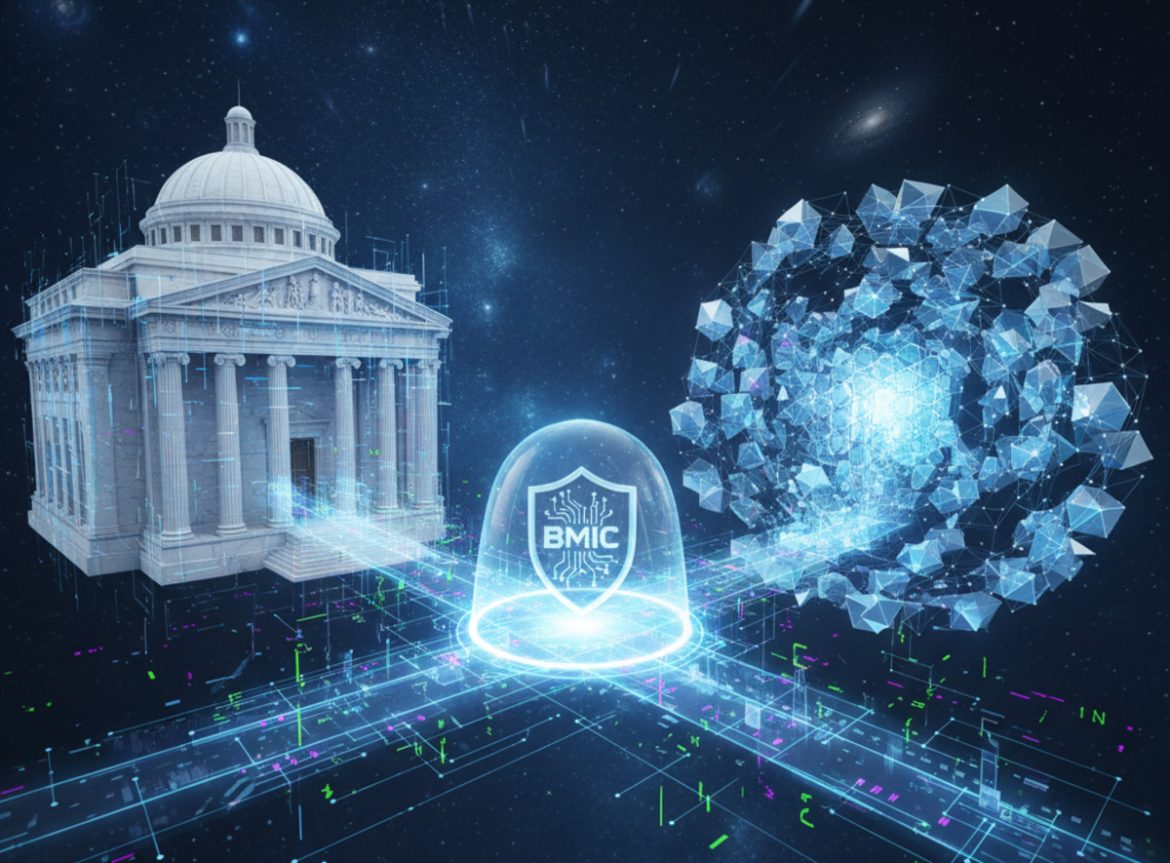
The exchange’s proposed rule change, listed as SR-24X-2026-20 in a Federal Register notice, would allow certain securities to trade in tokenized form as part of a Depository Trust Company pilot program. The proposal covers eligible securities such as Russell 1000 stocks and major exchange-traded funds, while preserving the existing market structure around order handling and trading priority.
The important point is that this is not a new crypto token market in the loose sense of the phrase. It is a proposed change to regulated securities trading rules. The filing describes how eligible members could indicate a preference for tokenized settlement while the securities continue to trade on the same book as their traditional counterparts.
Under the proposal, tokenized securities would not be treated as a separate class with a different execution priority. Instead, tokenized and traditional versions would trade alongside one another, provided they are fungible. That is an important design choice because it attempts to avoid splitting liquidity between two markets.
Participants that want tokenized settlement would use a digital flag when entering orders and provide wallet information where required. The actual clearing and settlement process would still be tied to DTC’s pilot framework, which is designed to test blockchain-based handling of eligible securities without abandoning the regulated clearing infrastructure that already supports US equity markets.
For crypto markets, this is the kind of development that matters because it moves tokenization out of theory and into the plumbing of traditional finance. The promise is not simply that stocks can be represented on-chain. The more meaningful question is whether regulated market participants can use blockchain rails while maintaining the investor protections, auditability, and settlement discipline expected in public securities markets.
Real-world asset tokenization has become one of the more durable crypto narratives because it connects blockchain infrastructure to markets that already have deep liquidity. Tokenized Treasuries, funds, and private credit products have gained traction, but public equities remain a much larger and more sensitive test case.
If proposals like 24X’s advance, they could help define how tokenized versions of mainstream securities are handled in the US. That would be especially important for institutions that want the operational benefits of tokenization without moving into loosely regulated offshore venues.
The filing also comes at a time when regulators are being pushed to clarify the boundary between crypto assets, securities, derivatives, and tokenized representations of existing financial products. A tokenized Russell 1000 stock is not the same thing as an altcoin. It is a representation of an existing security within a regulated framework, and that distinction is central to the proposal.
The caution here is simple: this filing should not be read as approval. It is a proposed rule change undergoing regulatory review. Until the SEC process is complete, there is no final green light for the market structure described in the filing.
Even so, the direction of travel is clear. Traditional exchanges and infrastructure providers are now actively exploring ways to bring tokenized settlement into regulated markets. That does not mean every proposal will be approved, but it does show that tokenization is becoming a market-structure issue rather than just a crypto-sector talking point.
For investors watching the RWA theme, 24X’s filing is another sign that the next phase of tokenization may be less about speculative tokens and more about making existing financial markets work differently behind the scenes.
This report is based on the Federal Register notice for File No. SR-24X-2026-20.
This article was written by the News Desk and edited by Samuel Rae.
Dubai, United Arab Emirates, June 12th, 2026, Chainwire
Mantle, the premier distribution layer connecting traditional finance and on-chain liquidity, today announced the listing of SPCXx, the tokenized SpaceX equity issued by xStocks, available for 24/7 on-chain trading and liquidity provision on Mantle from the day SpaceX completes the largest initial public offering in history.
The listing brings on-chain access to one of the most anticipated equity events in history through two of the ecosystem’s flagship venues, Fluxion and Merchant Moe, and opens what is expected to be a strong season of high-demand tokenized equity listings on Mantle.
Institutional-Grade Execution via Atomic RFQ
Fluxion supports native minting of SPCXx directly from the issuer, powered by xStocks’ Atomic Request for Quote (RFQ). The mechanism bypasses AMM slippage entirely, anchoring pricing to the underlying security through issuer-direct minting and redemption at live market quotes. Fluxion’s hybrid AMM and RFQ infrastructure delivers stable, issuer-direct execution with minimal liquidity requirements.
Project X: 100K $MNT incentives for Tokenized IPOs
Alongside the listing, Merchant Moe, the cornerstone liquidity hub of the Mantle ecosystem, has launched Project X, deploying up to 100,000 MNT in rewards for liquidity providers for this summer’s wave of tokenized IPOs, starting with the SPCXx/USDT0 pool. Users can bridge SPCXx assets via xBridge or other cross-chain routes, and provide liquidity to start earning incentives.
“Through Project X, Merchant Moe is proud to support the launch of SPCXx on Mantle,” said DavideFi, General Manager at Merchant Moe. “As the ecosystem’s cornerstone DEX, we are excited to back tokenized IPOs with deep liquidity and strong incentives.”
Project X extends beyond the SPCXx listing. Subsequent high-demand xStocks listings will be added to the campaign as they launch, with Merchant Moe serving as a primary liquidity venue for each new listing.
The Distribution Layer in Practice
The Mantle ecosystem gives users multiple avenues to acquire, trade, and provide liquidity for SPCXx directly on Mantle. The simultaneous on-chain availability of SPCXx alongside SpaceX’s traditional market debut marks a milestone for tokenized finance: the most anticipated listing of the decade reaching on-chain markets with no delay between the two.
The pairing reflects how Mantle approaches distribution for real-world assets. Fluxion provides institutional-grade execution through issuer-direct pricing, while Merchant Moe provides incentive-backed liquidity depth for retail participation. Together, they give a single tokenized asset both the execution quality institutions require and the accessibility a global user base expects.
With a pipeline of high-demand tokenized listings expected through the remainder of the year, the infrastructure assembled for SPCXx is designed to repeat: issuance through xStocks, execution through Fluxion, and incentivized liquidity through Merchant Moe, with each new listing arriving on Mantle the day it reaches traditional markets.
“SpaceX has been one of the most anticipated IPOs in history, and its simultaneous arrival on-chain signals how far the RWA market has come,” said Emily Bao, Key Advisor at Mantle. “Mantle’s ecosystem supports seamless execution and deep liquidity for users from day one, which marks a significant milestone for the distribution layer for real-world assets.”
About Mantle
Mantle positions itself as the premier distribution layer and gateway for institutions and TradFi to connect with on-chain liquidity and access real-world assets, powering how real-world finance flows. With over $4B+ in community-owned assets, Mantle combines credibility, liquidity, and scalability with institutional-grade infrastructure to support large-scale adoption. The ecosystem is anchored by $MNT within Bybit, and built out through core ecosystem projects like mETH, fBTC, MI4 and more. This is complemented by Mantle Network’s partnerships with leading issuers and protocols such as Ethena USDe, Ondo USDY, and OP-Succinct.
For more information, visit mantle.xyz.
For more social updates, please follow: Mantle Official X & Mantle Community Channel
About xStocks
xStocks is the industry benchmark for tokenized equities, bringing publicly listed U.S. stocks and ETFs onchain through fully collateralized, 1:1-backed tokens. Powered by Payward’s digital asset infrastructure, xStocks places traditional equities on blockchain infrastructure, expanding access to U.S. capital markets with extended availability, global reach, and seamless digital-native settlement.
Designed for interoperability, xStocks move seamlessly between centralized exchanges, self-custodied wallets, and onchain applications, unlocking new utility across trading, collateralization, and decentralized finance. Since launching in June 2025, xStocks is powering billions of dollars in transaction volume across multiple blockchain ecosystems and anchors a rapidly expanding global network shaping the future of tokenized markets.
For more information, visit https://xstocks.fi.
Marketing Lead at Mantle
Jessy
Mantle
jessy@mantle.xyz
London, United Kingdom, May 8th, 2026, Chainwire
GoMining launches GoBTC Pay a Bitcoin payment protocol that delivers on what the 2008 whitepaper promised: peer-to-peer electronic payments. GoBTC Pay enables free and instant Bitcoin payments on the core Bitcoin layer. This makes it practical to use Bitcoin at the point of sale for everyday purchases. Payments are free for end-users and merchants pay a small acquiring fee that undercuts traditional card processing.
GoBTC Pay is designed as an open infrastructure. GoMining operates the reference implementation, but any wallet provider — from Ledger to Trust Wallet to MetaMask — can integrate the protocol to offer instant Bitcoin payments to their users.
Why this matters
Bitcoin is the dominant cryptocurrency with a market cap above $1.5 trillion. Over 150 public companies hold BTC on their balance sheets. Spot Bitcoin ETFs, which didn’t exist two years ago, now manage roughly $100 billion in assets across a dozen funds. The U.S. government holds approximately 328,000 BTC. But Bitcoin still can’t process a retail transaction quickly and reliably.
The Lightning Network, introduced in 2018 to solve this problem, took seven years to reach $1 billion in monthly volume and its average transaction of $223 mostly reflects exchange-to-exchange flows, not someone paying for groceries. In the US, about 22% of adults own Bitcoin, yet there are only 2,300 U.S. businesses that accept Bitcoin directly, and the gap between how many people own Bitcoin and how many places accept it is widening.
“The first line of the Bitcoin whitepaper describes a peer-to-peer electronic cash system. Bitcoin was designed to be money, not just an asset. That promise is still unfulfilled, and we intend to deliver on it,” said Mark Zalan, CEO of GoMining. “We already serve millions of users, and run data centers on three continents. All of this provides us a unique position to enable native Bitcoin payments with GoBTC Pay.”
Mining-powered confirmation
GoBTC Pay enables free and instant payments in Bitcoin, using GoMining’s own mining infrastructure to confirm the transactions. It uses a 2-of-3 multi-signature architecture shared between the user, GoMining, and a regulated third-party custodian.
GoMining serves 5 million users globally. The company has created a dedicated mining pool for processing GoBTC Pay transactions, aiming for a 12-hour on-chain settlement by the end of 2026. Where most payment companies depend on third-party pools for confirmation, GoMining mines the blocks itself.
The pool also serves GoMining’s “digital miners” — users who own tokenized hashrate through GoMining’s app. A portion of GoBTC Pay transaction fees flows back to these miners as additional BTC yield: consumers pay with BTC, merchants earn BTC, miners earn a share of payment fees, and GoMining’s pool processes the transactions.
Any wallet provider, whether hardware, software, or custodial, can connect to the GoBTC Pay network and enable instant Bitcoin payments for their users.
Bitcoin payments for Merchants
For merchants, GoBTC Pay is a Bitcoin-native acquiring network that undercuts every major card processor on cost. Its acquiring fee of 0.2% is substantially lower than traditional card processing, which range from 1.5% to 3.5% in the US. On a $100 sale, the merchant keeps $99.80.
GoMining distributes the entire fee back into the ecosystem: half goes to the miners who confirm transactions, and half goes to the wallet provider that initiated the payment. GoMining retains nothing on third-party transactions to incentivize wallet integrations and accelerate adoption.
Merchants can receive BTC directly to their own wallet, or use GoMining’s custodial merchant solution, which offers yield on their BTC balance — including during the settlement window — and an off-ramp to fiat. GoBTC Pay will ship with a dedicated PoS terminal, a web merchant dashboard, a developer SDK, and plugins for Shopify and WooCommerce in the coming months.
The launch coincides with GoMining’s major expansion in the United States. The company is building combined data centers for Bitcoin mining and AI workloads, with a target of securing 1 GW of compute capacity in 2026.
GoMining presented a live demo of GoBTC Pay at Consensus Miami 2026 (May 5–7, Miami Beach Convention Center).
About GoMining
GoMining is an all-in-one Bitcoin ecosystem that makes it simple and secure to mine, earn, and use Bitcoin every day. GoMining serves 5 million users and ranks among the top-10 Bitcoin miners by hashrate globally, with data centers in the U.S. and internationally. The company makes Bitcoin accessible through tokenized hashrate, daily BTC rewards, and an expanding suite of payment and earning products. For more information, please visit https://gomining.com/
GoMining
support@gomining.com
When Rayls opened its public mainnet on April 30, 2026, it did so with a roster that most blockchain projects spend years assembling. The Layer 1 chain, built by Parfin (core developer of Ralys), went live recently, and was preceded by Tether made a strategic investment in Parfin, the core developer of Rayls. That backing sits alongside Rayls’ inclusion in Mastercard’s Crypto Partner Program, a J.P. Morgan Kinexys deployment and a $1 billion partnership agreement with AmFi – all secured within the 18 months preceding launch.
The institutional momentum behind the chain reflects a broader shift in how large financial organizations are approaching blockchain infrastructure. Rayls offers verifiable sub-second finality and low gas fees on its public chain, alongside full EVM compatibility – a combination that lowers the integration cost for institutions already running Solidity-based systems. The technical baseline appears to have been a decisive factor for each of the major partners.
Tether’s strategic investment in Parfin closed in November 2025. This signals the world’s largest stablecoin issuer backing the company building Rayls at the infrastructure level, rather than simply deploying a token on top of it. In March 2026, Mastercard added Rayls to its Crypto Partner Program alongside Polygon, Solana, Ripple and Stellar – a shortlist that places the chain in the company of some of the most liquid and developer-active networks in the market.
The AmFi partnership, announced in December 2025, is the deal with the largest direct volume implication. The agreement targets $1 billion in assets under management on the Rayls network by the end of 2027, with $100 million committed by July 2026 and $500 million by January 2027. The milestones represent contracted deployment rather than indicative targets, which gives the figures a different weight when assessing the chain’s near-term transaction volume.
J.P. Morgan’s Kinexys division – the bank’s blockchain and digital-assets infrastructure arm – has deployed on the network and independently assessed its privacy architecture. The Kinexys relationship also brings credibility to the chain’s regulatory positioning: Rayls is designed to operate within MiCA, CVM, BACEN and US financial-market frameworks, and J.P. Morgan’s involvement implies a level of compliance due diligence that most new chains do not receive at launch.
XP Inc., Brazil’s largest independent investment bank, and Nuclea are issuing stablecoins on Rayls. AmFi brings tokenized real-world asset deployment, while Nimofast adds a pipeline of tangible real-economy assets and cash flows. Animoca Brands rounds out the roster on the digital-assets side. Across the full partner network, the combined end-client reach exceeds 200 million users.
Parfin’s own FX desk is scheduled to migrate approximately $400 million in monthly foreign exchange flows to the Rayls network from Q3 2026. That migration represents production transaction volume rather than a pilot, and the figure gives a concrete floor estimate for the chain’s early throughput under real commercial conditions.
Beyond the corporate partner base, Rayls has engaged with the Central Bank of Brazil, the Bank for International Settlements and the European Commission on digital-asset and stablecoin policy frameworks.
The public mainnet also brings Rayls’ RLS tokenomics live. The burn mechanism is designed to connect network activity with the token’s economic model, giving the chain a clearer link between institutional demand, transaction volume and its native token layer.
With the mainnet live, the focus shifts to delivery against the contracted milestones – $100 million with AmFi by July, the $400 million FX migration from Q3, continued stablecoin issuance from XP and Nuclea, and the expansion of asset activity through Rayls Private Networks. The sub-second finality and low gas fees that attracted the partner roster now face their first test at production scale.

New York City, United States, April 21st, 2026, Chainwire
The integration embeds Decibel’s fully onchain, decentralized perpetuals exchange directly into Tria, enabling users to trade, earn, and spend from one self-custodial account, without bridges or custodial handoffs.
Tria, the self-custodial neofiance app unifying trading, yield, and payments into a single account, today announced a live integration with Decibel, a fully onchain perpetuals decentralized exchange built on Aptos. The integration, facilitated through Decibel’s Builder Code program, brings the decentralized exchange’s central limit order book (CLOB) directly into the Tria app, allowing users to place, match, and settle perpetual trades without leaving the platform or relinquishing custody of their assets.
The integration removes one of the most persistent sources of friction in digital asset markets: fragmentation. Users can now access perpetuals trading alongside yield strategies, cross-chain swaps, and card-based spending—all from the same self-custodial balance, without bridging assets or managing multiple wallets.
Decibel’s infrastructure operates entirely onchain, with every order placed, matched, and settled on Aptos. The result is sub-second finality and execution speeds that rival centralized exchanges, while maintaining full transparency and user control. Tria users can access this performance natively within the app, eliminating the need to move capital across platforms.
“Tria was built so that one account can handle everything—trading, earning, and spending,” said Parth Bhalla, Co-Founder and Tech Architect of Tria. “Integrating Decibel is a direct extension of that vision. Users can access high-performance perpetuals, put idle assets to work, and spend in the real world—all from the same self-custodial balance. That continuity is what makes onchain finance usable at scale.”
Decibel has already demonstrated significant throughput and user demand. On testnet, the platform processed more than 1 million trades per day with over 130,000 daily active users and 650,000 unique accounts. Since its mainnet launch in February 2026, Decibel has established itself as a leading onchain perpetuals venue, supported by a growing base of liquidity and institutional-grade infrastructure.
“Decibel has already proven that fully onchain trading can match the performance of centralized platforms,” said Brylee Whatley, Head of the Decibel Foundation. “The next step is distribution. By embedding directly into Tria, trading becomes something users can access instantly, not something they have to seek out. That shift is what moves onchain markets from niche to mainstream.”
Unlike traditional decentralized exchanges that require users to bridge funds into siloed environments, Tria integrates Decibel as a native financial primitive. This approach allows users to maintain a single balance across all activities, reducing operational complexity while improving capital efficiency.
Tria currently serves more than 500,000 users across 150+ countries and is backed by leading investors including P2 Ventures, Aptos, Polychain, and the Ethereum Foundation. The platform combines a self-custodial wallet with integrated financial services, including trading, yield generation, and card-based payments.
Decibel’s fully onchain CLOB architecture ensures that every transaction is verifiable on the Aptos blockchain, offering a level of transparency not typically found in high-performance trading systems. With sub-second finality and minimal transaction costs, the integration enables a seamless user experience without compromising on decentralization.
The Decibel integration is live in Tria beginning April 21, 2026.
About Tria
Tria is a self-custodial neofinance app designed to unify trading, yield, and payments into a single onchain account. Built for a global user base, Tria enables individuals to seamlessly trade digital assets, earn yield, and spend in the real world, all without relinquishing control of their funds or relying on custodial intermediaries. By integrating core financial primitives directly into one interface, Tria eliminates the fragmentation that has historically defined crypto markets, removing the need for bridging assets, managing multiple wallets, or navigating disconnected platforms. With support for cross-chain swaps, integrated yield strategies, and card-based payments, Tria delivers a cohesive financial experience where capital remains continuously accessible and productive. The platform currently serves more than 500,000 users across 150+ countries and is backed by leading investors including P2 Ventures, Polychain, and the Ethereum Foundation. Tria’s mission is to make onchain finance intuitive, efficient, and usable at global scale.
About Decibel
Decibel is a fully decentralized perpetuals exchange incubated by Aptos Labs. It operates a transparent Central Limit Order Book where order matching, settlement, and risk controls are enforced directly onchain and publicly verifiable. Designed for institutional-grade performance, Decibel emphasizes capital efficiency, deterministic risk management, deep liquidity, and high-speed execution.
About Aptos Network
Aptos is a high-performance proof-of-stake layer-one blockchain designed to power the next generation of financial systems through unparalleled throughput and low latency.
Jon Phillips
PhillComm Global
Tria@PhillComm.Global

Beast Holdings, the business entity tied to YouTube personality Jimmy ‘MrBeast’ Donaldson, has filed a U.S. trademark application for “MrBeast Financial,” with language suggesting a possible push into crypto.
The application includes services like cryptocurrency payment processing, crypto exchange, and trading through decentralized exchanges (DEXs).
The filing also mentions downloadable software and software-as-a-service (SaaS) tools for managing financial services, including crypto-related functionality.
While MrBeast, the richest YouTuber, is best known for viral stunts and philanthropic giveaways, the filing hints at more ambitious ventures in fintech and Web3.
If developed, the “MrBeast Financial” platform could serve as a crypto on-ramp, targeting the creator’s massive audience. On social media, users are speculating MrBeast could be planning a cryptocurrency exchange or crypto-linked neobank.
The application is still in its early stages and hasn’t yet been assigned to an examiner. It’s important to point out that trademark filings don’t guarantee product launches.
Still, given his massive following, such a move could bring crypto to millions.


