Aster says its insurance fund took over positions and some profitable positions were forcibly reduced. Its report announces a safeguards review but no compensation plan…. Read the full story at The Defiant
Blames
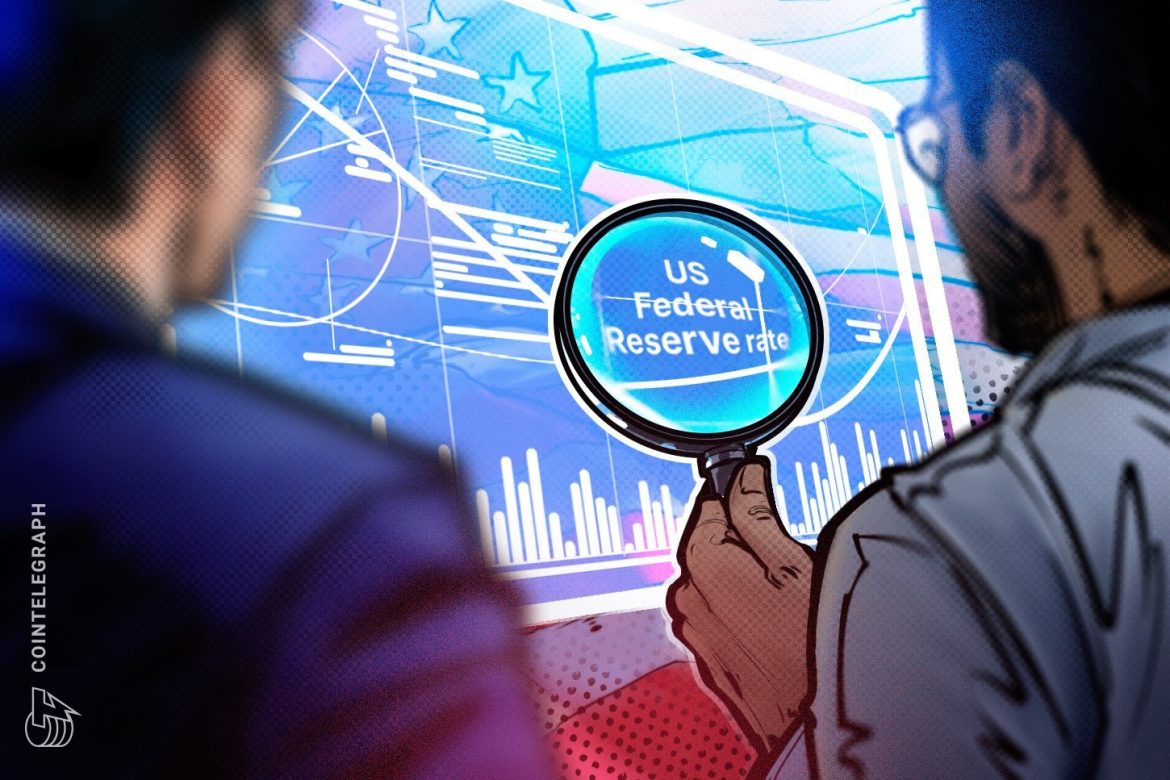
Federal Reserve officials were split last month on whether to increase interest rates or keep them steady, with many seeing accelerating demand for artificial intelligence as a driver of inflation, according to meeting minutes released on Wednesday.
The minutes covered the first monetary policy meeting under Fed Chair Kevin Warsh. Many Federal Open Market Committee members said that “ongoing strong demand for AI infrastructure would likely sustain upward pressure on prices for technology products and electricity,” according to the minutes.
AI-related inflationary pressure, colloquially known as “chipflation,” stems from the rising cost of semiconductors used by data centers. This surge in demand, along with data center competition for energy, has pushed up consumer prices for a wide range of electronic goods, devices and power, and may continue as AI demand increases.
Higher inflation is generally bad news for risk assets such as crypto, as it results in lower liquidity and spending power and higher interest rates, making borrowing more expensive and cash investments more attractive.
Inflation will remain elevated in the near term
Participants anticipated that inflation would “remain elevated in the near term” but may decline as the Middle East conflict eases. However, they judged that the “risks to the inflation outlook were still tilted to the upside.”
AI growth remained a strong theme, both boosting economic growth and contributing to inflation at the same time.
“Most participants remarked that growth in economic activity that exceeded that of potential output, owing in part to strong AI business investment, could contribute to more persistent inflationary pressures.”
Related: Central bankers sound alarms over agentic AI finance risks
The Fed’s “dot plot” signals hikes, not cuts, with nine of 18 voting members projecting at least one rate hike before the end of 2026 and six expecting two 25-basis-point increases. The central bank’s PCE inflation projection for year-end also jumped from 2.7% to 3.6%.
A hawkish dot plot signals that interest rates are likely to stay higher for longer this year. Source: Federal Reserve
The Fed kept rates steady at 3.5% to 3.75% at its June meeting, while CME futures markets currently show a 70% probability that they will remain unchanged at the next meeting on July 29.
AI infra buildout driving higher inflation
Nick Ruck, director of LVRG Research, told Cointelegraph that the Fed’s recent meeting highlights how the massive AI infrastructure buildout is “driving higher inflation through surging demand for semiconductors, energy and data centers, even as it promises future productivity gains.”
“While this short-term pressure complicates monetary policy, it also underscores the need for innovative solutions in decentralized technologies to optimize resource allocation and ease bottlenecks in the digital economy,” he said.
Analysts said this week that crypto markets could benefit from any Fed intervention to backstop the booming US equity market in a downturn.
Features: The biggest blockchain upgrades still to come in 2026
Morning Minute: Bitcoin Falls Again as JPMorgan Blames Crypto Natives for Selloff
Morning Minute is a daily newsletter written by Tyler Warner. The analysis and opinions expressed are his own and do not necessarily reflect those of Decrypt. Subscribe to the Morning Minute on Substack.
GM!
Today’s top news:
- Crypto majors very red as Bitcoin hits 4-month low at $105,700
- ETFs see biggest outflows since August with $530.9M
- Charles Schwab plans to launch crypto custody in H1 2026
- MegaETH partners with Chainlink for real-time data stream oracles
- Meteora introduced its tokenomics and airdrop checker, trades at $1.08B premarket
📉 Crypto Selloff – “The Natives Did It”
It’s been a long-standing joke: “Are the sellers in the room with us?”
Well, it turns out: Yes, indeed they are.
📌 What Happened?
According to JPMorgan, the sharp crypto correction last week in crypto and carrying through this week was largely self-inflicted.
In a note to clients, the bank said the sell pressure came from crypto-native investors, not institutions.
The data backs that up: While open interest on Binance and other offshore venues cratered, CME’s institutional contracts barely moved.
It’s very much a tale of two markets.
Regarding on-chain crypto, the more than $19 billion in liquidations that slammed the crypto market on Friday have tremendously impacted sentiment and prices, neither of which have yet to recover.
Glassnode shows nearly $12 billion in futures open interest evaporated overnight, the biggest single-day decline in dollar terms ever.
Yet, institutional flow looks calm.
The ETFs have seen steady inflows through the turbulence. Across the past two weeks:
- BTC ETF inflows: $2.4B
- ETH ETF inflows: $460M
CME’s Bitcoin open interest held steady, ETF outflows were minor, and Coinbase volumes even ticked up, suggesting that institutional money (smart money) mostly watched from the sidelines.
This was the crypto casino cleaning itself out, not TradFi calling it quits.
🧠 Why It Matters
The institutions have mostly still been buying through the pain —so who has been selling?
Answer: ancient whales and 4-year cycle believers.
There’s plenty of data showing the amount of Bitcoin sold this year from those ancient whales, many of whom were up billions. They said they were going to dump their coins on Wall St., and then they did.
And then one of the biggest anecdotal takeaways from the Asia crypto conference tour last month was that many Asian whales still believe in the 4-year cycle, and fully planned on selling this year aligned with prior cycles.
While this has put us in a painful spot, there are reasons to be optimistic.
- The ancient whales will run out of Bitcoin at some point.
- The four-year seasonality won’t last much longer.
- And the institutions don’t care about any of this, just showing up to buy week after week.
Couple those reasons along with the recent on-chain leverage flushout and you have a nice foundation to set up a healthier base for the next leg upwards—not to mention the prospective gold-to-Bitcoin rally that typically takes place when gold leads (and boy, is it leading right now).
So stay the course, bulls—this too shall pass. And we have a good shot at seeing new ATHs still here in 2025…
🌎 Macro Crypto and Memes
A few Crypto and Web3 headlines that caught my eye:
- Crypto majors are very red with Bitcoin making a new 4-month low; BTC nearly -5% at $105,200, ETH -6% at $3,765, BNB -10% at $1,060, SOL -8% at $179
- No notable top movers
- The U.S. 10-year closed at its lowest level in over a year yesterday at 3.98%
- Gold hit another new ATH yesterday near $4,400
- Charles Schwab is on track to add spot crypto trading in first half of 2026
- Eric Trump said that the Trump family has made more than $1 billion from its crypto ventures
- New developer data from the Ethereum Foundation shows new devs in 2025 are building on EVM, Solana, Bitcoin, Polygon, and Sui the most
- Coinbase announced plans to launch Coinbase Business as an all-in-one business payments platform, bundling stablecoin payouts, yield, tax tools for SMEs
- BlackRock shared plans to adapt one of its money market funds to more specifically serve stablecoins
- Visa said stablecoins have potential to revolutionize the $40T global credit market
- MoonPay introduced ‘MoonPay Commerce’ as a way for merchants to integrate seamless crypto checkout and deposit products
In Corporate Treasuries / ETFs
In Memes
- Memecoin leaders are very red; DOGE -8%, Shiba -7%, PEPE -9%, PENGU -10%, BONK -10%, TRUMP -5%, SPX -14%, and FARTCOIN -11%
💰 Token, Airdrop & Protocol Tracker
Here’s a rundown of major token, protocol and airdrop news from the day:
🚚 What is happening in NFTs?
Here is the list of other notable headlines from the day in NFTs:
Daily Debrief Newsletter
Start every day with the top news stories right now, plus original features, a podcast, videos and more.