You’re reading Crypto for Advisors, CoinDesk’s weekly newsletter that unpacks digital assets for financial advisors. Subscribe here to get it every Thursday.


 Live Chat
You’re reading Crypto for Advisors, CoinDesk’s weekly newsletter that unpacks digital assets for financial advisors. Subscribe here to get it every Thursday.
The latest rally has pushed AVAX into a major demand zone as Avalanche sees an increase in RWA activity and network developments.
AVAX gained nearly 7% over the past 24 hours after briefly tapping $6.92 on Tuesday before pulling back to $6.79. The token is also up a little over 5% on the weekly timeframe.
The move comes as several developments add activity across the Avalanche ecosystem.
Securitize has now distributed $976 million in asset value on Avalanche, which is a 123% increase over the past 30 days. The ecosystem has also seen progress on its Helicon upgrade.
The upgrade, which went live on the Fuji Testnet on July 28, brings several changes to the C-Chain. It introduces decoupled, continuous transaction execution, which separates transaction execution from block generation to improve how smart contracts process data.
Helicon also adds Auto-Renewed Staking, which allows validators to opt into automatically renewing their stake and reducing administrative work for network operators. The upgrade also lowers the minimum staking duration, thereby reducing the amount of time tokens must remain locked for staking. It further brings more efficient pricing mechanisms aimed at stabilizing transaction costs on the network.
Separately, Avalanche continues to rank among the leading stablecoin networks. The network’s stablecoin market cap currently stands near $1.5 billion.
It is also the ninth-largest blockchain by RWA holder count, with 9,218 holders, according to RWA.xyz, and ranks behind Robinhood, Solana, BNB Chain, Plume Network, Ethereum, Base, Polygon, and Stellar, while remaining ahead of Arbitrum.
Another notable development for Avalanche came from Japan. Progmat, Japan’s largest security token platform, completed its move to the blockchain last month, bringing more than $2.7 billion worth of tokenized assets onto the network.
The platform migrated from a private Corda-based ledger to a dedicated public Avalanche Layer 1. Progmat accounts for over 64% of the country’s security token issuance value and also includes major tokenized real estate and corporate bond projects.
AVAX’s latest recovery comes after a month of choppy price action. The crypto asset is trading within a long-term historical demand zone of the $6.4-$7.5 area identified by market expert ‘The Boss.’ The findings reveal that buyers are attempting to slow the decline, which makes it a potential “inflection point rather than just another support level.” The Boss further explained,
“What happens next will define the broader structure. A sustained defense of this demand zone could lay the foundation for a long-term accumulation phase, while a confirmed monthly breakdown would signal that sellers still control the higher-timeframe trend.”
The Clarity Act will likely get through despite some — older — Democrats holding it back, according to Coinbase’s Chief Policy Officer, Faryar Shirzad.
Speaking on The Hill’s morning Rising show Friday, Shirzad said that crypto was “maybe the most bipartisan issue in Washington.”
He added that while some lawmakers were holding back the long-awaited legislation, younger Democrats got it.
“A lot of the opposition is generational — so it is Democrats who oppose it — but I think younger members who understand the technology, understand that money is transforming how we should engage financially, how we need to adapt, and so it’s really a generational shift,” he said.
“I think we’ll be on the winning end of that because right now there are about 67 million Americans who own crypto,” Shirzad added. “We’ve got ethics nailed down, we’ve got nominations nailed down, we’ve got a bipartisan bill on the substance, we should be good to go.”
Lawmakers are currently mulling over the latest draft of the Clarity Act, which aims to set in stone digital asset regulation. The latest draft bans officials and their families from issuing or promoting crypto.
A new draft started circulating this month, banning officials and their families from issuing or promoting crypto — something opposition lawmakers previously had issue with.
But some Democrats are still unhappy with the bill in its current form. A group of Democrats last week said in a statement that the bill in its current form falls short.
The bill has been in a deadlock this year, partially because banking chiefs raised concerns over stablecoin yield and ethics concerns.
Banking lobbyists have said that if crypto exchanges pay attractive yields to customers, banks could lose their deposit base.
Shirzad previously said in an interview that the bill was an “extraordinarily bipartisan” piece of work.
If approved, the bill would set in stone crypto regulation in the world’s largest economy.
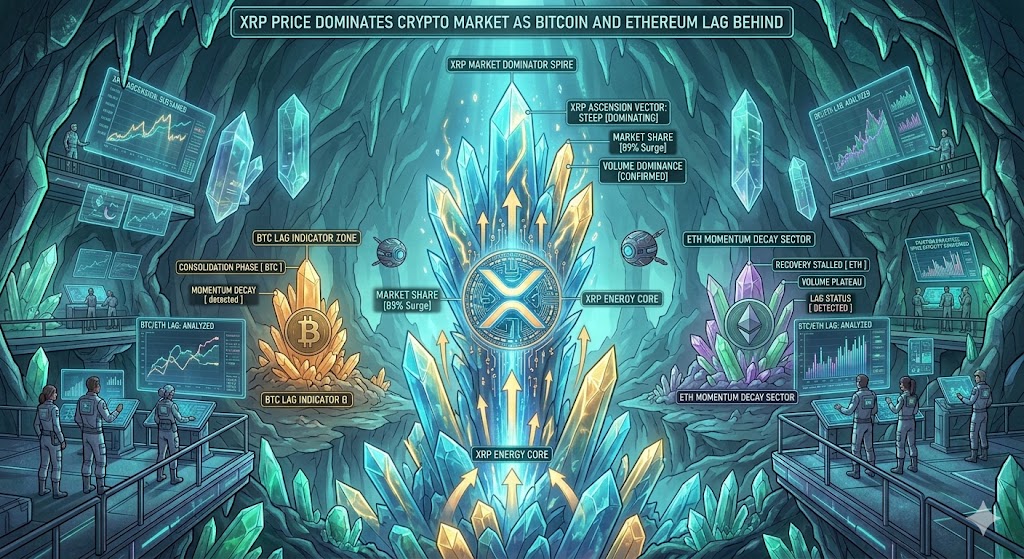
Bitcoin and Ethereum edged higher into July 31, while a small shift in market dominance suggested traders were again watching whether capital was rotating toward major altcoins.
The validated notes show Bitcoin rising 0.29% to about $64,145.86, while Ethereum traded around the $1,890 to $1,920 range, briefly dipping below $1,900 before recovering. At the same time, BTC and ETH dominance slipped slightly, pointing to a modest move into other crypto assets.
That is not enough to declare “altseason,” and it would be lazy to pretend otherwise.
But it is enough to say the market is becoming more selective. Bitcoin and Ethereum remain the anchors, while traders are scanning altcoins for relative strength, fresh narratives, and clearer catalysts.
For more details, visit the official Coinmarketcap platform.
Crypto traders love simple market-cycle labels.
Bitcoin season. Ethereum season. Altseason. Meme season. DeFi season. ETF season.
The reality is usually much messier. Capital rotates in stages, not all at once. Large caps may move first, then higher-quality altcoins, then more speculative assets. Sometimes rotation lasts days. Sometimes it fades quickly. Sometimes it is only a pause in Bitcoin dominance before BTC takes control again.
That is why the current market deserves a careful read.
Bitcoin and Ethereum are still holding the center. A slight dominance dip does not mean traders have abandoned them. It may simply mean that some capital is searching for better short-term setups elsewhere.
That can happen even while BTC and ETH move higher.
Bitcoin remains the first asset most traders watch.
When BTC is stable or rising gently, risk appetite often improves. Traders may become more comfortable moving into Ethereum, Solana, XRP, BNB, Chainlink, Sui, or other large-cap altcoins. When Bitcoin drops sharply, that appetite can vanish quickly.
So a modest BTC gain can create room for altcoin movement.
That does not make Bitcoin irrelevant. It makes Bitcoin the weather system the rest of crypto trades under.
At around $64,000, Bitcoin’s position is still strong enough to keep market confidence alive, but not necessarily explosive enough to absorb all attention. That can create the conditions for selective altcoin bids.
Ethereum’s position is a little more complicated.
ETH remains the largest smart-contract asset and a major institutional focus, but its market narrative now involves Layer 2s, ETF flows, stablecoins, DeFi revenue, mainnet fees, and competition from faster chains.
When Ethereum trades near $1,900, the market does not just ask whether ETH is rising. It asks whether Ethereum’s broader ecosystem is attracting capital.
If ETH stabilizes, some traders may look further down the ecosystem stack: Uniswap, Aave, ENS, Layer 2s, liquid staking, and other DeFi or infrastructure names. That is how Ethereum strength can sometimes spill into altcoins.
But again, that spillover is not automatic.
ETH can rise without DeFi tokens following. DeFi tokens can rally while ETH stalls. Rotation is never as clean as traders want it to be.
The biggest difference from earlier cycles is selectivity.
In older bull phases, almost everything could move once traders decided risk was back. Now, the market is more fragmented. Liquidity is thinner in many assets. Investors are more sensitive to token unlocks, revenue, governance, emissions, legal risk, and actual usage.
That means altcoin rotation may favor stronger narratives rather than every token.
Real-world assets, stablecoin infrastructure, DeFi fee switches, AI compute, exchange-linked tokens, and major ecosystem upgrades may attract more attention than generic price charts.
This is healthier, even if it feels less euphoric.
A market where traders ask “what is the catalyst?” is more mature than one where every ticker moves simply because Bitcoin paused.
The next useful signal is dominance.
If BTC and ETH keep rising while dominance continues to slip, that suggests broader participation. If dominance rebounds sharply, altcoin strength may fade. If BTC rolls over, most altcoins will likely struggle regardless of their individual setups.
So the right read is cautious optimism.
Bitcoin and Ethereum are steady enough to support risk appetite, and there are signs of selective rotation. But the market has not given enough evidence for a sweeping altseason call.
For now, traders are looking beyond the two largest assets, but they are not ignoring them.
That balance may define the next phase of the market.
This article is based on July 31 public crypto market data covering BTC, ETH, and market dominance.
This article was written by the News Desk and edited by Samuel Rae.

Samsung SDS, the IT services arm of Samsung Group, is exploring stablecoin infrastructure, digital asset systems and AI-based payment models with Dunamu, the operator of Upbit, one of the biggest local cryptocurrency exchanges.
Samsung SDS said it is discussing potential cooperation with Dunamu on stablecoin infrastructure, digital asset systems and AI-based payment business models, CEO Lee Jun-hee said during the company’s second-quarter earnings call on Thursday.
“We have already secured differentiated business capabilities in digital asset infrastructure through the Korea Securities Depository’s tokenized securities platform project and through end-to-end validation […] of the full stablecoin process from issuance to settlement,” Lee said. He said he expects the relationship with Dunamu will help Samsung SDS expand in the digital asset infrastructure market.
The news came days after Samsung Electronics unveiled plans to add stablecoin support to Samsung Wallet, broadening the company’s digital asset push.
In May 2026, Samsung Securities, Samsung SDS and Samsung Card agreed to buy a combined 4% stake in Dunamu, deepening Samsung affiliates’ ties to South Korea’s digital asset sector.
In the latest Q2 call, Lee reportedly said the company’s investment in Dunamu is a strategic move rather than a financial investment, adding that both companies plan to refine potential business models for digital financial infrastructure.
Source: Samsung SDS
“By combining Samsung SDS’s IT services, cloud, and security capabilities with Dunamu’s blockchain expertise, we aim to lead this market,” the Q2 transcript said.
Related: South Korea report proposes stablecoin rules before crypto law
Samsung SDS did not immediately respond to Cointelegraph’s request for comment, while Dunamu declined to comment.
The digital asset initiative comes amid Samsung SDS’ ongoing expansion in AI and cloud services, which helped lift Q2 revenue 5.9% year on year to 3.72 trillion Korean won ($2.6 billion), according to the quarterly earnings presentation.
Cloud revenue increased 17% from a year earlier, with external cloud business revenue jumping 75%, driven by demand for Samsung’s cloud platform and graphics processing unit-as-a-service offerings.
The company also reportedly outlined ambitious plans to expand its AI infrastructure from 110 megawatts today to 230 MW by 2029 and more than 800 MW by 2031, underscoring its broader push to build AI infrastructure alongside digital finance services.
Magazine: Fears of AI-driven DeFi hack epidemic overstated for now — but not for long

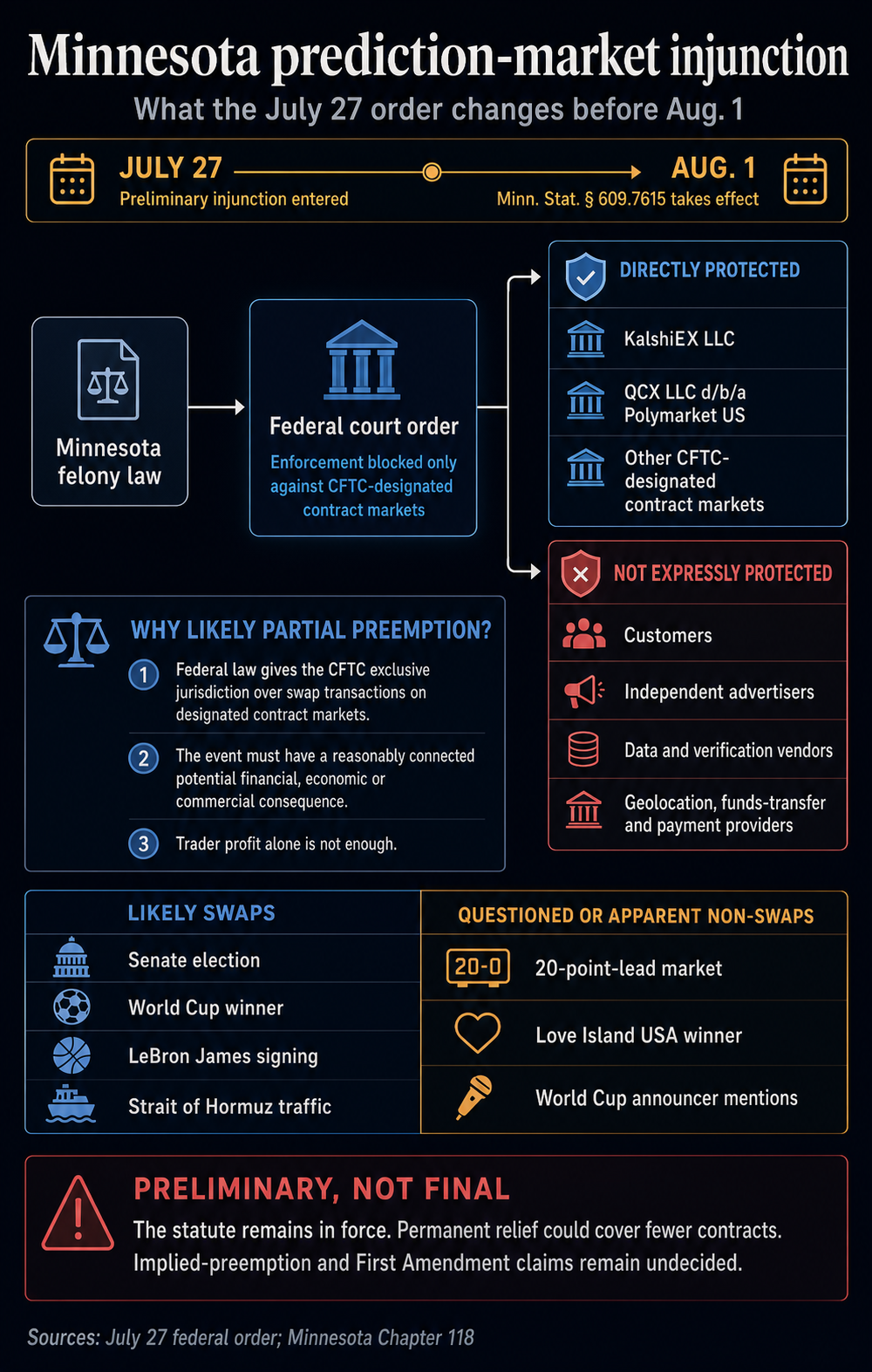
A federal judge has temporarily barred Minnesota from enforcing its new prediction-market felony law against federally regulated exchanges designated by the Commodity Futures Trading Commission as contract markets, including Kalshi and Polymarket US, days before the statute takes effect on Aug. 1.
Judge Katherine Menendez granted preliminary-injunction motions filed by the CFTC, KalshiEX and QCX, the registered entity doing business as Polymarket US. Her July 27 order prevents named Minnesota officials from enforcing Minn. Stat. § 609.7615 against CFTC-designated contract markets until the cases reach a final merits decision.
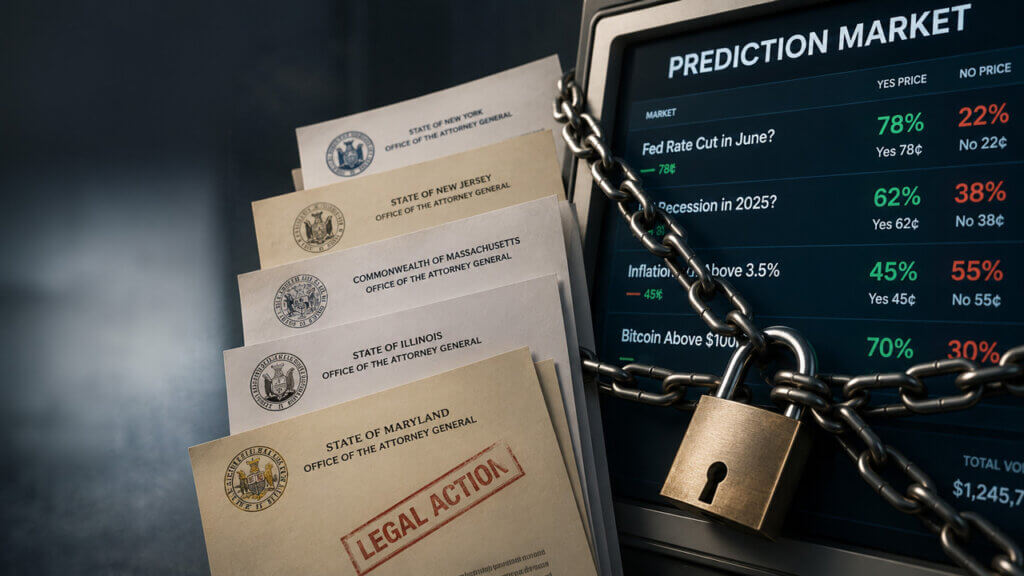
Menendez found the plaintiffs likely to prove that the Commodity Exchange Act expressly preempts part of Minnesota’s law. Federal law gives the CFTC exclusive jurisdiction over swap transactions conducted on designated contract markets, and the swap definition can include event contracts whose outcomes have a reasonably connected potential financial, economic or commercial consequence. A trader’s potential profit alone is not enough.
The order does not treat every event contract as a swap. Menendez identified markets tied to a Senate election, the World Cup winner, a LeBron James signing and Strait of Hormuz traffic as likely swaps. She questioned a 20-point-lead market and said contracts on the winning Love Island USA couple or words used by World Cup announcers appeared unlikely to qualify. Any permanent injunction could therefore apply to fewer contracts.
Chapter 118 replaced the prediction-market provisions enacted earlier in Chapter 97. The law remains scheduled to take effect Aug. 1 for crimes committed on or after that date.
Under its core offense, creating or operating a covered prediction market, or intentionally facilitating it through specified listing, funds, settlement, counterparty or pricing activity, is a felony when done for consideration and as part of a business. Other provisions cover providers who knowingly supply data directly to a market, or geolocation, funds-transfer or payment services to one, to enable or settle prohibited wagers. A separate clause criminalizes advertising or marketing financial or technological products that promote prohibited transactions.
Because the order protects only CFTC-designated contract markets, it does not expressly shield customers, independent advertisers or outside service providers. The statute remains in force, and the court has not decided the plaintiffs’ implied-preemption or First Amendment claims.
Polymarket US welcomed the ruling and said it expected to keep serving Minnesota users. Attorney General Keith Ellison said the state disagreed and would continue defending the law as the record develops.
By contrast, a New York court denied Kalshi interim protection from existing state gambling enforcement earlier in July. Both cases remain open, and the opposite preliminary results do not settle how federal registration interacts with state gambling laws nationwide.

Storj filed for bankruptcy protection on Sunday. The company says its network still works and STORJ tokens still work. Its owner made similar promises nine months ago.
Storj now wants to hand token holders a slice of the rebuilt company. But a judge must approve that. And creditors get paid first.
Storj Labs filed in a federal bankruptcy court in West Virginia. The case number is 5:26-bk-00512.
Follow us on X to get the latest news as it happens
Chapter 11 is not a shutdown. It lets a company keep trading while a court helps it clear its debts.
Storj says those debts are old. They came from an earlier phase of the business. The company cannot grow its way out of them.
“The business underneath is strong and right-sized. What holds it back are legacy obligations from an earlier chapter.”
That was Kaloyan Raev, Storj’s director of software engineering. He also signed the letter to token holders, not Chief Executive Colby Winegar.
Nothing changes for the token today, Storj says. Data still moves across tens of thousands of storage locations in more than 100 countries.
The company plans to offer holders equity in the new Storj. Equity means part-ownership. The rules for who qualifies have not been written yet.
Those rules will matter. About 143.8 million STORJ trade freely out of 425 million in total. Two-thirds of the supply sits elsewhere.
Bankruptcy also has a payment order. Creditors come before owners. Storj’s letter to token holders admits it can promise intent, not results.
Inveniam Capital Partners announced it was buying Storj on Oct. 22, 2025. It promised no changes to contracts, pricing, or leadership.
“We’re particularly excited to integrate the STORJ token into our ecosystem, driving greater utility and alignment across our platforms.”
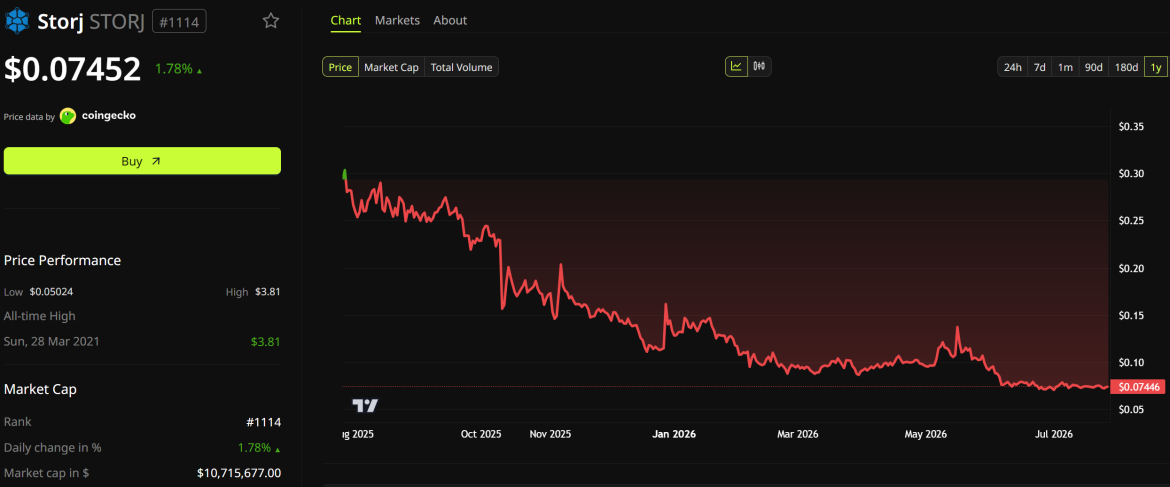
That was Patrick O’Meara, Inveniam’s chairman and chief executive. STORJ traded near $0.1872 that day. It has fallen about 60% since.
A closer warning came this month. MVMT Labs filed Chapter 11 in Delaware on July 15. Its Movement (MOVE) token hit a record low of $0.00964 ten days later.
STORJ has held up so far. It trades near $0.0745, up 1.5% on the day. Volume is $5.6 million and market value is $10.7 million.
The wider sector is soft too. Storage and infrastructure tokens have lagged even as network usage grew.
Storj says it will share court dates as they land. But the fine print of the equity offer will decide what holders actually get.
The post Storj Chapter 11 Raises the Biggest Question for STORJ Token Holders appeared first on BeInCrypto.

Poised to become the world’s most prominent “real humans’ network”, the project previously known as Worldcoin aims to establish an identity layer to distinguish unique individuals from automated bots. The protocol relies on custom hardware, known as an Orb, to issue credentials without compromising user privacy.
“World’s technology and proof of human and variations are among the most important building blocks to secure and verify interactions in an increasingly digital driven world,” said Tom Lee, an Eightco Holdings board member who also serves as the chairman of Bitmine, in a statement.
World said the investment comes as it shifts from building the network to scaling the utility.
To date, more than 39 million people have joined the World Network, with more than 18 million humans verified by an Orb, World said in the funding announcement press release. The network has utilized more than 475 million World ID proofs since its launch, scaling its capacity alongside the rollout of its updated, enterprise-ready infrastructure, it added.
World, the Sam Altman-backed digital identity project, unveiled in April what it called its most significant upgrade yet to World ID, positioning the system as “full-stack proof of human” infrastructure aimed at consumers, enterprises and AI agents.

Crypto payments help companies reach international customers, settle faster, and add another option for digital commerce. However, safe adoption depends on verified systems, financial discipline, and strong operating controls around every payment.
Crypto itself is a novel kind of payment technology. Risk grows when businesses rely on manual checks, weak wallet access, poor provider selection, or unclear approval rules. Companies exploring how to avoid crypto scams need verification, compliance, and treasury control.
Business crypto fraud usually targets people and processes rather than blockchain networks. Attackers look for rushed finance teams, incomplete payment checks, compromised vendor accounts, and employees using unofficial support channels.
A company can lose funds through a fake transaction screenshot, copied payment page, altered invoice, or payment request from a breached email account. Crypto fraud prevention for companies depends on verified monitoring, wallet security, compliance screening, and documented approvals.
Use a licensed and regulated provider
A secure crypto payment processor should apply AML and KYB procedures, screen transactions, document onboarding, and provide jurisdictional transparency. These controls help businesses assess counterparties, reduce fraud exposure, and align crypto payment activity with internal risk policies. Licensing information and compliance documents help legal and finance teams review provider suitability.
Require blockchain confirmations before fulfillment
Businesses should set confirmation thresholds before releasing goods, services, account credits, or digital balances. The required number of confirmations may vary by asset, network, transaction value, and customer risk profile. Automated settlement controls, webhook alerts, dashboards, and real-time reporting allow teams to confirm payment status.
Use secure wallet systems
Wallet security should combine access control with treasury planning. Companies should define hot wallet balances, cold storage rules, approval rights, and transfer limits. Core controls include MFA, role-based access, whitelisted addresses, multi-step approvals, withdrawal limits, and audit logs. Regular access reviews help remove outdated permissions.
Accept stablecoins instead of volatile assets
Stablecoins can reduce volatility exposure and simplify pricing for merchants. They also reduce risks linked to thinly traded assets when payment policies restrict acceptance to vetted assets. Examples include USDC on ERC-20 and Solana, EURS, USDG, and BRZ. Automated conversion to fiat can also help companies protect margins and keep accounting records consistent.
Implement internal controls
Internal controls are as important as technical tools. Companies should separate payment creation, approval, and reconciliation across different employees or teams. Vendor verification, address whitelisting, approval limits, payment logs, and staff training help reduce phishing, invoice fraud, and support-channel abuse.
Companies evaluating how to safely accept crypto payments should review licensing, AML standards, KYB processes, supported assets, settlement options, access rights, uptime, security history, documentation, account support, and reporting quality. A suitable provider should help teams manage payment acceptance, compliance, wallet access, settlement, and reporting through a controlled business environment.
Coinspaid offers high-quality blockchain solutions for businesses, including SaaS solutions designed to support crypto operations with strong control, compliance, and operational reliability. SaaS-based crypto systems can reduce manual handling, improve oversight, and connect digital asset payments with existing finance processes.
Businesses avoid crypto scams by treating digital assets as a financial channel requiring control, documentation, and ongoing oversight. Fraud prevention depends on secure systems, compliance standards, internal approvals, and provider quality.
Companies verifying payments onchain, using trusted providers, securing wallet access, accepting vetted assets, and documenting approvals can reduce avoidable fraud risk.

The information discussed by Altcoin Buzz is not financial advice. This is for educational, entertainment, and informational purposes only. Any information or strategies are thoughts and opinions relevant to the accepted levels of risk tolerance of the writer/reviewers and their risk tolerance may be different than yours. We are not responsible for any losses that you may incur as a result of any investments directly or indirectly related to the information provided. Bitcoin and other cryptocurrencies are high-risk investments so please do your due diligence.
This post is sponsored by Coinspaid.
Copyright Altcoin Buzz Pte Ltd.

The reported progress on the CLARITY Act is perhaps the most surprising.
July has been historically a positive month for bitcoin and this edition hasn’t disappointed so far. The cryptocurrency began the month on the wrong foot, dipping below $58,000 for the first time in nearly two years, but it rebounded swiftly in the following weeks.
Earlier today, it rocketed past $66,000 for the first time in over a month, gaining over $8,000 since that July 1 low. Here are some of the possible reasons behind it.
As June was coming to an end and it became known that it would be a highly painful month for the asset with a nosedive of over 20%, we outlined several factors that had to change in July for a price resurgence. One of them was the ETF inflows. The financial vehicles went on a violent eight-week withdrawal-only streak, which was finally snapped a couple of weeks ago.
Moreover, investors continued to pour funds into the ETFs, which ended two weeks in the green in a row for the first time in months. July 20 extended the streak as the funds attracted almost $227 million.
The second major reason for the price revival is whale behavior. Data shared by CryptoQuant indicated that large market participants holding between 1,000 and 10,000 BTC increased their 60-day net accumulation to roughly 66,700 units, which is close to the recent record seen a month ago.
“This is the cohort’s strongest accumulation reading since February 17, when net accumulation briefly exceeded 106,000 BTC.”
The third reason has a more macro scent. It came a week ago when the US CPI numbers for June were announced, showing softer-than-expected inflation rates. BTC rallied immediately after the news went live as lower inflation reduced the pressure on the Fed to hike interest rates. Similar market conditions are regarded as beneficial for risk-on assets like bitcoin.
Last but perhaps most importantly at the moment comes a development on the CLARITY Act. After the odds of approval dropped toward 30% just days ago, reports emerged that the White House had agreed on an ethics package for the key legislation and sent the language to certain Senate republicans for further validation.
Although the details are still scarce, industry experts believe this is a major step in the right direction for the bill, and it increases the chances for a 2026 approval.


